
Beauford White
Mass murderer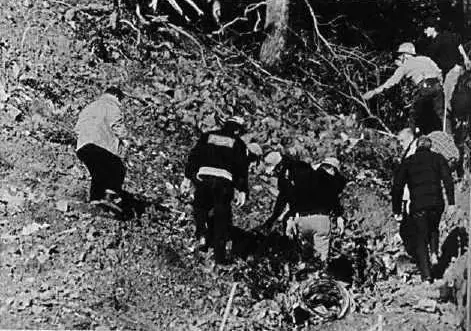 David Burke
Mass murderer · USA · 1987
David Augustus Burke (May 18, 1952–December 7, 1987) was an employee of USAir,…
43 victims
David Burke
Mass murderer · USA · 1987
David Augustus Burke (May 18, 1952–December 7, 1987) was an employee of USAir,…
43 victims
 James Huberty
Mass murderer · USA · 1984
James Oliver Huberty was a 41-year-old unemployed security guard. He was born i…
21 victims
James Huberty
Mass murderer · USA · 1984
James Oliver Huberty was a 41-year-old unemployed security guard. He was born i…
21 victims
 Ronald Gene Simmons
Mass murderer · USA · 1987
Ronald Gene Simmons was a retired United States Air Force sergeant. Over the Ch…
16 victims
Ronald Gene Simmons
Mass murderer · USA · 1987
Ronald Gene Simmons was a retired United States Air Force sergeant. Over the Ch…
16 victims
 Patrick Henry Sherrill
Mass murderer · USA · 1986
Patrick Henry Sherrill Patrick Henry Sherrill committed suicide by shooting him…
14 victims
Patrick Henry Sherrill
Mass murderer · USA · 1986
Patrick Henry Sherrill Patrick Henry Sherrill committed suicide by shooting him…
14 victims
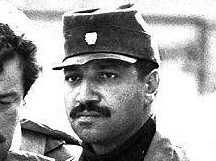 George Emil Banks
Mass murderer · USA · 1982
George Emil Banks was an American mass murderer and a former Camp Hill prison g…
13 victims
George Emil Banks
Mass murderer · USA · 1982
George Emil Banks was an American mass murderer and a former Camp Hill prison g…
13 victims
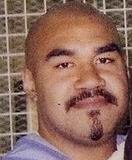 William Satele
Murderer · USA · 1998
William Satele was 20 years old. He was in jail for possession of an illegal as…
2 victims
William Satele
Murderer · USA · 1998
William Satele was 20 years old. He was in jail for possession of an illegal as…
2 victims
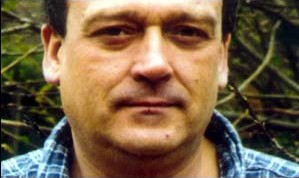 John Taylor
Murderer · United Kingdom · 2000
John Taylor Leeds teenager Leanne Tiernan, 16, disappeared at around 5pm on Sun…
1 victim
John Taylor
Murderer · United Kingdom · 2000
John Taylor Leeds teenager Leanne Tiernan, 16, disappeared at around 5pm on Sun…
1 victim
 Susan Grund
Murderer · USA · 1992
Susan Grund was convicted of murdering her husband, James Grund, and the trial…
1 victim
Susan Grund
Murderer · USA · 1992
Susan Grund was convicted of murdering her husband, James Grund, and the trial…
1 victim
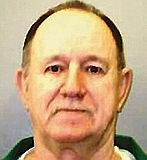 Charles Shuler
Murderer · USA · 1999
Charles O. Shuler was convicted of murdering his former girlfriend, her mother,…
3 victims
Charles Shuler
Murderer · USA · 1999
Charles O. Shuler was convicted of murdering his former girlfriend, her mother,…
3 victims
 Clara Harris
Murderer · USA · 2002
Clara Harris and David Harris were dentists and shared a thriving practice. The…
1 victim
Clara Harris
Murderer · USA · 2002
Clara Harris and David Harris were dentists and shared a thriving practice. The…
1 victim
 Jeffrey Weise
Spree killer · USA · 2005
Jeffrey Weise, a 16-year-old student at Red Lake High School in Red Lake, an un…
9 victims
Jeffrey Weise
Spree killer · USA · 2005
Jeffrey Weise, a 16-year-old student at Red Lake High School in Red Lake, an un…
9 victims
- Gender
- male
- Country
- USA
- Location
- Miami-Dade County, Florida, USA
- Date of birth
- 1926
- Age at first offence
- 51
- Characteristics
- robbery, drugs, mentally ill
- Victim profile
- 6 male
- Method of murder
- Shooting
- Date(s) of murder
- July 27, 1977
- Years active
- 1977
- Date of arrest
- September 2, 1977
- Status
-
Executed
Executed by electrocution in Florida on August 28, 1987
Case summary
Beauford White was executed by electrocution in Florida on August 28, 1987.
White was 41 when he was executed. He was executed for his role in the July 27, 1977, shooting of eight people, six fatally, during the robbery of a small-time drug dealer's home in Carol City, a Miami suburb.
White was a co-defendant with Marvin Francois, who was executed May 29, 1985.
When White was asked if he had any last words, he shook his head and said, faintly, "No, sir."
The power to the electric chair was turned on by a black-hooded executioner who was paid $150.
Timeline
- July 27, 1977, 8:15 p.m. — An adult black male posing as an employee of the power company requested permission from Margaret Wooden to enter her home and check the electrical system; after being allowed in and checking outlets in several rooms, he drew a gun, tied Ms. Wooden's hands behind her back, and blindfolded her.
- September 2, 1977 — White was arrested and confessed to his participation in the criminal episode.
- 1978 — White was convicted in Florida of six counts of first degree murder.
- 1981 — White's conviction was affirmed by the Florida Supreme Court (White v. Florida, 403 So.2d 331 (1981)); certiorari was denied.
- August 20, 1987 — Florida Supreme Court opinion (docket #70989) on a petition for extraordinary relief.
- August 25, 1987 — Florida Supreme Court opinion (docket #71020) on an application for stay of execution.
- August 27, 1987 — The United States Supreme Court denied the application for stay of execution referred to the Court by Justice SCALIA and denied the petition for writ of certiorari.
- August 28, 1987 — White was executed by electrocution in Florida.
The offence
On July 27, 1977, at approximately 8:15 p.m., an adult black male posing as an employee of the power company requested permission from Margaret Wooden to enter her home and check the electrical system.
After being allowed in and checking outlets in several rooms, the intruder drew a gun and proceeded to tie Ms. Wooden's hands behind her back and blindfold her.
The intruder, who identified himself to her as "Lucky" and was later identified as John Ferguson, asked Ms. Wooden for drugs, money and jewelry and began searching the premises.
Ferguson's coconspirators, defendant and Marvin Francois, soon entered the house. Both of these men were also armed and all three donned masks covering their faces from the nose down.
The three ransacked the house looking for valuables until about an hour later when the owner of the house, Livingston Stocker, and five of his friends arrived.
Upon their arrival, Stocker and his friends were forced to lie facedown on the floor while their hands were tied behind their backs.
A short time later, Ms. Wooden's boyfriend arrived at the house and he too was tied up.
At gunpoint the victims were asked for money and drugs, and one by one were searched.
At some point during the ordeal the mask of one of the intruders fell from his face and a discussion ensued as to the need for killing the victims.
Following this discussion, Ms. Wooden and her boyfriend were moved back to the bedroom while the other six victims were held captive in the living room.
Ferguson then shot Ms. Wooden and her boyfriend in the back of the head while Francois systematically shot the other six victims in the head.
Two victims, Margaret Wooden and Johnnie Hall, had survived despite being shot in the head, and they testified.
A fourth actor, Adolphus Archie, who had driven the three robbers to the home of Livingston Stocker where the robbery occurred, also testified pursuant to a plea agreement.
The robbery involved a "dope man" / drug house scenario, and White participated in the robbery at the home.
Investigation and evidence
White confessed to his participation in the criminal episode.
White's detailed account of what had occurred was consistent with the trial testimony of the surviving victims.
The defendant was also linked to the scene of the crimes by a single partial fingerprint lifted from the dust cover of a stereo set in the house. This fingerprint was identified by police as the fingerprint of the defendant.
Later, the Supreme Court recognized that the trial judge in his findings supporting imposition of the death penalty recognized that the defendant was opposed to the killings but also pointed out that he, nonetheless, stood by armed and allowed the shootings to take place.
The Supreme Court also noted other findings made by the trial judge in imposing the death sentence, including that victim Stocker was heard to have cried to God for his assistance in stopping what he anticipated was going to take place, and his prayers were interrupted by a shotgun blast to the back of his head, and that while these executions were carried out by individuals other than the instant defendant, he nevertheless was present and did nothing whatsoever to stop the assaults, harassments and shootings.
Trial
White was convicted in 1978 of six counts of first degree murder.
The jury recommended life imprisonment for White, but the trial judge imposed death.
Two victims, Margaret Wooden and Johnnie Hall, testified at the trial.
At trial, Hall was able to identify the defendant as one of the intruders, but both Hall and Ms. Wooden identified the other two intruders as the persons who did the actual shooting.
Adolphus Archie testified on behalf of the state pursuant to a plea agreement and identified White as a participant in the criminal scheme.
Archie testified that he and defendant had been requested to participate in the "ripoff of a dope man" but were instead duped into participating in what he said was a planned contract murder of Stocker and perhaps other persons for drug-related reasons.
Following the slayings, Archie testified that he met the other three at defendant's motel room where the proceeds of the robberies were divided among them.
Archie testified that the defendant was upset and refused to participate in the disposal of the weapons.
Sentencing
The aggravating circumstance relied upon by the trial court and the Florida Supreme Court was that the homicides were "especially heinous, atrocious and cruel."
This is drawn from Sec. 921.141(5)(h), Florida statutes.
The trial judge imposed death despite the jury's unanimous recommendation for a life sentence.
The trial judge's findings included that White opposed the killings but stood by armed and allowed shootings to take place.
The trial judge also found that victim Stocker was heard to have cried to God for his assistance in stopping what he anticipated was going to take place, and his prayers were interrupted by a shotgun blast to the back of his head.
The trial judge additionally found that although these executions were carried out by individuals other than the instant defendant, he nevertheless was present and did nothing whatsoever to stop the assaults, harassments and shootings.
Appeals and postconviction
White's conviction was affirmed in 1981 by the Florida Supreme Court (White v. Florida, 403 So.2d 331 (1981)), and certiorari was denied.
After this Court's decision in Enmund v. Florida, White filed a 3.850 petition for postconviction relief.
In the postconviction proceedings, the trial court stayed the execution and granted relief on the ground that the death sentence was impermissible under Enmund.
The trial court found that White, though present at the scene of the robbery and participating therein, neither killed nor intended to kill nor anticipated that lethal force would be used.
On appeal, the Florida Supreme Court reversed the trial court’s grant of relief, with two justices dissenting on Enmund grounds, in Florida v. White, 470 So.2d 1377 (Fla. 1985).
In its shortened form summary of the facts it had found, the Florida Supreme Court specifically found:
- At some point the mask of one of the two co-conspirators fell from his face. The three conspirators discussed the need for killing the victims with appellee verbally opposing the killings.
In the Enmund discussion on appeal, the Florida Supreme Court distinguished Enmund on the grounds that Enmund was not present at the robbery/murder scene, Enmund had no active role in the actual robbery or murders, and Enmund did not contemplate or intend that lethal force would be used, whereas White was present before, during and after the robbery and the murders; White was armed and participated fully in capturing, intimidating and guarding the robbery/murder victims; and while White verbally opposed the killings during a discussion preceding the murders, he did nothing to disassociate himself from either the murders or the robbery.
The Florida Supreme Court stated: "After the discussion relative to killing the victims, whatever [White] might have originally intended or contemplated about lethal force being used in the robbery, it can hardly be said that he did not realize that lethal force was going to be used in carrying out the robbery."
A new death warrant was issued August 22, 1985 setting execution for September 30, 1985.
White filed a federal petition for habeas corpus on August 30.
The district court denied habeas corpus relief, and the Eleventh Circuit affirmed.
The Eleventh Circuit judgment discussed and affirmed the district court's denial, including application of Enmund, the double jeopardy contention, and the constitutionality of aggravating circumstances.
Federal circuits and constitutional issues (as addressed in the case record)
Enmund issue
The major issue concerned application of Enmund v. Florida, 458 U.S. 782, and constitutional limits on imposing death where murder is committed by other participants during a felony.
The Eleventh Circuit addressed the presumption of correctness of state court findings under 28 U.S.C. Sec. 2254(d) and affirmed the district court’s conclusion that the Florida Supreme Court made a sufficient factual basis to support the imposition of the death penalty.
The Eleventh Circuit noted that while the district court and Florida courts did not find that White himself used lethal force or intended himself to use lethal force, the case turned upon White's intent or contemplation that lethal force would be employed by others.
The district court found White knew the plan was to rob a "dope house," saw a sawed off shotgun and shotgun shells and two pistols in the meeting where the robbery was planned, took possession of and carried one of the pistols, and during the robbery and before the killings began actual death threats were made in White's presence.
The Eleventh Circuit further described evidence found by the district court, including that White remained throughout armed and participated in subjugating eight individuals, binding and gagging them, forcing them to lie face down, and threatening them with death.
The Eleventh Circuit included the following verbatim statement attributed to a co-defendant: "We have to start with this little girl and then kill all of you."
The Eleventh Circuit included the following verbatim testimony attributed to Ms. Wooden, including victim and co-defendant speech: "if we had anything else, we will give it to you"
and: "[s]orry, but its got to be this way."
Double jeopardy
White contended that when the trial court, in the 3.850 proceeding, vacated the death penalty on Enmund grounds, its ruling was the functional equivalent of an acquittal that barred appellate review under the double jeopardy clause, and the death penalty could not thereafter be reimposed.
The Eleventh Circuit rejected this theory and addressed double jeopardy principles, including that the state did not need a new trial and could appeal.
Unconstitutional application of aggravating circumstance
White urged that the aggravating circumstance that homicides were "especially heinous, atrocious and cruel" could not be constitutionally applied to a non-triggerman and was overbroad.
The Eleventh Circuit rejected this contention.
Failure to consider mitigating circumstances
White argued it was a mitigating circumstance that he was not the triggerman and that neither the trial court nor the Florida Supreme Court considered this non-statutory mitigating factor.
The Eleventh Circuit discussed the Florida Supreme Court’s statements that a defendant remains free to argue as mitigating circumstance that he did not intend to kill the victim or did not act as the trigger man, and that the Florida Supreme Court rejected White’s contention that his participation was relatively minor or that he acted under extreme duress or substantial domination of another.
The Eleventh Circuit noted the trial judge’s findings that no mitigating circumstances exist which could possibly outweigh the aggravating circumstances, and that the trial judge specifically noted that "the defendant did not fire a fatal shot."
United States Supreme Court (certiorari and dissent)
The United States Supreme Court denied the petition for writ of certiorari and denied the application for stay of execution.
The following statements appear in the Supreme Court submission: "No. 87-5362 (A-172) Supreme Court of the United States August 27, 1987 On petition for writ of certiorari to the United States Court of Appeal for the Eleventh Circuit. The application for stay of execution of the sentence of death presented to Justice SCALIA and by him referred to the Court is denied. The petition for writ of certiorari is denied."
Justice BRENNAN, with Justice MARSHALL joining, dissented.
The dissent stated the following without paraphrase: "The State of Florida will execute Beauford White tomorrow morning without so much as a determination by its own courts that his death sentence is currently legal."
and: "I adhere to my view that the death penalty is in all circumstances cruel and unusual punishment prohibited by the Eighth and Fourteenth Amendments."
and: "I would vote to stay White's execution, grant his petition for writ of certiorari, and reverse the judgments below denying habeas relief."
The dissent further stated: "[T]he Florida Supreme Court purported to have found White's conduct sufficiently culpable to satisfy the Enmund test, it has to date never reconsidered that determination in light of this Court's rereading of Enmund in Tison."
and: "While the Florida Supreme Court in this case deserves any less respect than we afforded the Arizona Supreme Court in Tison."
The dissent addressed Tison and concluded: "Since the death sentence cannot stand without the requisite findings by a state court and the state court's findings are inadequate, I would reverse the judgment of the Court of Appeals."
and: "[T]he District Court should be directed to issue the writ of habeas corpus vacating [White's] death sentence but leaving to the State of [Florida] the choice of either imposing a sentence of life imprisonment or, within a reasonable time, obtaining a determination from its own courts of the factual question" that it never clearly decided.
The dissent also addressed aggravating circumstances and stated: "The trial judge found that the murders committed by White's companions were 'especially heinous, atrocious or cruel' and 'were committed in an effort to avoid arrest by eliminating witnesses to the crime.'"
and: "Such vicarious attribution 'would seem to violate the core Eighth Amendment requirement that capital punishment be based upon an 'individualized consideration' of the defendant's culpability,'"
Outcome
White's petition proceedings in the federal and state systems concluded with his execution.
Other details
- White was asked if he had any last words and responded faintly, "No, sir."
- The record described the robbery as taking place in a small, one-story, concrete block house and described the events as occurring in three connecting rooms.
Spotted an error, or have more information about this case?