
Antoinette Scieri
Serial killer Christine Malèvre
Serial killer · France · 1997
Christine Malèvre Christine Malèvre (born 1970) was a French serial killer. She…
30 victims
Christine Malèvre
Serial killer · France · 1997
Christine Malèvre Christine Malèvre (born 1970) was a French serial killer. She…
30 victims
 Hélène Jégado
Serial killer · France · 1833
Hélène Jégado (1803–1852) was a French domestic servant and poisoner. She was e…
23 victims
Hélène Jégado
Serial killer · France · 1833
Hélène Jégado (1803–1852) was a French domestic servant and poisoner. She was e…
23 victims
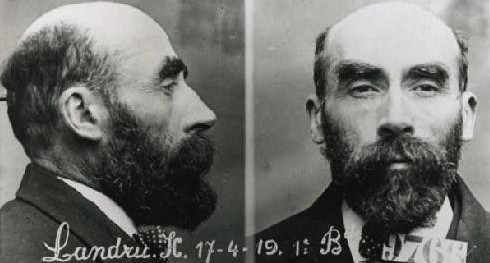 Henri Landru
Serial killer · France · 1915
Henri Désiré Landru (born April 12, 1869; died February 25, 1922) was a French…
11 victims
Henri Landru
Serial killer · France · 1915
Henri Désiré Landru (born April 12, 1869; died February 25, 1922) was a French…
11 victims
 Jeanne Weber
Serial killer · France · 1905
Jeanne Weber (born 7 October 1874) was a French child-care provider and serial…
10 victims
Jeanne Weber
Serial killer · France · 1905
Jeanne Weber (born 7 October 1874) was a French child-care provider and serial…
10 victims
 Felicitas Sanchez Aguillon
Serial killer · Mexico · 1930
Felícitas Sánchez Aguillón or Sánchez Neyra (1890 - June 16, 1941) was a Mexica…
50 victims
Felicitas Sanchez Aguillon
Serial killer · Mexico · 1930
Felícitas Sánchez Aguillón or Sánchez Neyra (1890 - June 16, 1941) was a Mexica…
50 victims
 Marcel Petiot
Serial killer · France · 1942
Marcel André Henri Félix Petiot was a French doctor. He was convicted of multip…
27 victims
Marcel Petiot
Serial killer · France · 1942
Marcel André Henri Félix Petiot was a French doctor. He was convicted of multip…
27 victims
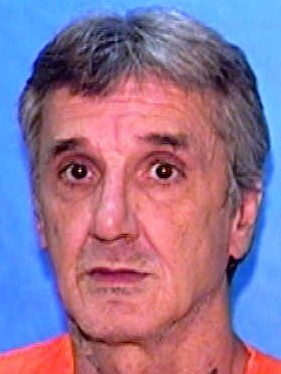 Olen Clay Gorby
Murderer · USA · 1990
Olen Clay Gorby was born on 11/27/49 and was living in a homeless shelter at th…
1 victim
Olen Clay Gorby
Murderer · USA · 1990
Olen Clay Gorby was born on 11/27/49 and was living in a homeless shelter at th…
1 victim
 Bobby Marion Francis
Murderer · USA · 1975
Bobby Marion Francis (also referred to as Bobby Marion Francis) · August 16, 19…
1 victim
Bobby Marion Francis
Murderer · USA · 1975
Bobby Marion Francis (also referred to as Bobby Marion Francis) · August 16, 19…
1 victim
 James Beauregard-Smith
Murderer · Australia · 1977
James Beauregard-Smith James George Beauregard-Smith was an Australian offender…
3 victims
James Beauregard-Smith
Murderer · Australia · 1977
James Beauregard-Smith James George Beauregard-Smith was an Australian offender…
3 victims
 Curtis Allgier
Murderer · USA · 2007
Curtis Michael Allgier (born August 25, 1979) was a white supremacist skinhead…
1 victim
Curtis Allgier
Murderer · USA · 2007
Curtis Michael Allgier (born August 25, 1979) was a white supremacist skinhead…
1 victim
- Gender
- female
- Country
- France
- Location
- St. Gilles, Gard department, France
- Date of birth
- 1890
- Age at first offence
- 34
- Characteristics
- poisoner, nurse, drug dealer
- Victim profile
- Men and women (elderly patients)
- Method of murder
- Poisoning ( herbicide pyralion)
- Date(s) of murder
- 1924 - 1925
- Years active
- 1924–1925
- Date of arrest
- —
- Status
-
Life imprisonment
Sentenced to death on April 27, 1926; commuted to life in prison
Background
Antoinette Scieri was born in Italy and emigrated to France as a child. In the early days of World War I, she worked at a casualty clearing station in Doullens.
The offence
Antoinette Scieri stole cash and jewelry from wounded people at the casualty clearing station in Doullens. She also forged signatures on letters to their families and requested money through the mail.
While billing herself as “Nurse Scieri,” she shopped for elderly patients who needed her care “at a price.” With Nurse Scieri on the scene, St. Gilles experienced a rash of sudden deaths among the elderly and ailing.
The victims named in connection with the case included:
- Drouard, a 58-year-old spinster who died in Scieri’s care after Antoinette “acted as nurse.”
- Madame Lachapelle, whose final convulsions were ascribed to “ptomaine poisoning.”
- Henri Rossignol, who died after being nursed by Antoinette and was the man she was engaged to marry.
- Joe Rossignol, Scieri’s common-law husband, who died two hours after consuming mussels prepared by Antoinette.
- Marie Martin, 67, who died after drinking coffee prepared by Antoinette.
- Madame Doyer, Marie Martin’s sister, who poured her coffee down the sink after discovering it was bitter.
- Madame Gouan-Criquet, whose health declined rapidly under Antoinette’s “nursing.”
- M. and Madame La Chapelle, who died on Christmas Day.
In custody, Scieri openly confessed her crimes and tried to implicate a neighbor, who was later cleared by the police.
Investigation
A bottle was found beneath the dead woman’s bed, containing a mixture of ether and the herbicide pyralion.
The bodies of Joe Rossignol and several other victims were exhumed for autopsy, and all contained huge doses of pyralion.
The police began suspecting Antoinette on account of the death of Rossignol, described as a powerful and healthy young man who was merely suffering from a serve attack of grippe.
The police exhumed the bodies of twelve supposed victims in connection with the investigation.
In a stable connected with the Gouant house, the police found a big bottle of pyralion, described as “a composition of arsenic, large enough to poison a hundred people.”
When questioned, M. Gouant, the father-in-law of the deceased woman, said that neither he nor any of his employees had purchased or used pyralion recently.
Investigation proved that Antoinette had obtained pyralion through a vine grower of her acquaintance. An autopsy was performed on Madame Gouant’s body and over fifteen grains of arsenic were found in her intestines.
Dr. Max Vincent testified that Antoinette had lost all sense of right and wrong, and he said it was simply the wilful wickedness of a normal mind and not a case of mental disease. He considered her fully responsible for her acts from the legal no hit of view.
The police promptly arrested Rosalie Gire, questioned her, and she denied absolutely that she had ever supplied poison to Antoinette or made any statement like that attributed to her by the other woman. The police could find no evidence to connect Rosalie Gire of complicity in the poisonings and they released her.
Key incidents described
Antoinette served up mussels to Joe Rossignol, who consumed them greedily and died two hours later. The testimony at trial described that Scieri watched his death throes, then went out to celebrate her freedom with a drunken orgy.
Madame Doyer found the coffee prepared by Antoinette bitter and poured hers down the sink when the nurse’s back was turned; Marie Martin drank hers down and shortly died.
The last death described in the main narrative was Madame Gouan-Criquet, whose health declined rapidly under Antoinette’s “nursing.” Her husband notified police of his suspicions, which led to the discovery of the ether and pyralion mixture beneath the dead woman’s bed.
Henri Rossignol poisoning and defence
The case included a description of Henri Rossignol’s illness and death after he sent for Antoinette to nurse him back to health and strength. He sent for her after being laid up with a severe attack of grippe, with violent pains in the chest, fever and headache.
The narrative stated that:
- “Antoinette immediately hurried to the bedside of her suffering lover and began to nurse him in the tenderest manner.”
- “She scarcely left him day and night, and her devotion was really beautiful to see.”
- “Under her care the headache and painful symptoms from which he had been suffering subsided.”
The narrative described that Rossignol did not grow stronger under the treatment and that on March 18 he passed away, still believing in Antoinette’s devotion.
The narrative stated:
- “The autopsy on Rossignol’s body once more revealed the presence of arsenic in the intestines.”
- “There was no probability that the dead man committed suicide.”
- “The doctor had not proscribed any medicine with arsenic in it.”
- “Antoinette had had plenty of opportunities to give him the poison in small quantities.”
- “Therefore it was almost a certainty she poisoned him.”
In her defence, Antoinette said Rosalie Gire had taught her to use pyralion:
“Rossignol was suffering cruelly at first,” said Antoinette, “and I was anxious to do something to relieve him. Rosalie told me that the medicine the doctor had given him was an excitant and was greatly increasing his suffering. She told me that the medicine she gave me was a sedative and would stop his pain. She told me to put a little in the medicine at first. “I tried it on him and was delighted to find that it acted as Rosalie said it would. I gave it to him quietly several times when the pains returned and it always stopped them.’’
Rosalie Gire then made an account of the night of Rossignol’s death:
“I went quietly into the sickroom,” said Rosalie, “and an astonishing sight, which I shall never forget, met my eyes. The dying man was lying on his back gasping, just breathing his last. Antoinette was seated at a table near the bedside, enjoying a great bottle of champagne, a cold pheasant with truffles and other delicacies. “Just as Rossignol expired, she seated herself on the bed and leaned over him and peered into his eyes as one entranced. “She was so excited that she did not notice that I was present. On her face was an expression of delirious joy, although the man I supposed she loved deeply was living. “I asked her what was the meaning of this banquet, and she answered that she had been obliged to take some refreshment to save herself from a collapse, as she had been up for three nights and days.”
The narrative stated that Antoinette was in the habit of dropping a teaspoonful of the arsenical mixture in a patient’s medicine and that French doctors often prescribe a medicine called a “tisane” in large quantities.
Trial
The jury required one hour to decide the case of Antoinette Scierri. The jury unanimously found her guilty.
The judge then sentenced her to be guillotined.
The judge’s remarks at sentence included:
“You have been called a monster, but that expression is not strong enough. You are debauched. You are possessed of all the vices. You are also a drunkard, vicious, and a hypocrite. You have no shame. I do not believe judicial history contains the records of many criminals of your type.”
Antoinette Scieri laughed as sentence was pronounced.
Sentencing
Antoinette Scieri was sentenced to die upon conviction for a dozen homicides on April 27, 1926. Her death sentence was later commuted to life imprisonment.
Timeline
- 1915 — Antoinette Scieri was jailed for the theft of an officer’s paybook.
- 1916 — Antoinette Scieri was released after the 1915 jail term.
- 1920 — Antoinette and Joseph Rossignol moved to the village of St. Gilles in southern France.
- December 11, 1924 — Drouard, a 58-year-old spinster, died in Scieri’s care.
- December 1924 — Christmas Eve saw the death of Madame Lachapelle, with final convulsions ascribed to “ptomaine poisoning.”
- Two days after Christmas Eve — Madame Lachapelle’s husband collapsed; Antoinette blamed a heart attack and a friendly physician agreed.
- December 11 — Marie Drouard died under Antoinette’s care.
- December 1924 — Antoinette Scieri lost five patients before the murder machine hit high gear.
- April 9 — Madame Gouant died while under treatment for asthma while Antoinette was acting as her nurse.
- March 18 — Henri Rossignol passed away.
- March 24 — Mlle. Martin died while being nursed by Antoinette.
- April 27, 1926 — Antoinette Scieri was condemned to die upon conviction and was sentenced to death; her death sentence was later commuted to life imprisonment.
Appeals
Her death sentence was commuted to life imprisonment.
Outcome
Antoinette Scieri subsequently died in jail.
Other details
Antoinette Scieri had been married to an Italian soldier named Salmon, and they had two children before he left her after discovering her infidelity.
She later took up with an alcoholic brute named Joseph Rossignol, who beat her regularly. Several times he was jailed on charges of assault, but they were always reconciled. They had another child outside of wedlock.
Antoinette was described as “Nurse Scieri,” and the narrative presented her as a professional nurse with a bedside manner described as gentle and tireless.
The narrative contrasted police calculations and speculation about victim totals, stating that Antoinette achieved, according to police estimate, a list of about thirty victims, while exhumations and later suspicion included a possibility of a higher number; it also said many people believed she had killed as many as a hundred victims during the last two years in the southern France region, while others believed the St. Gilles locality total would not be over thirty.
The narrative stated:
- “The deaths among Antoinette’s patients, for several months prior to her arrest, ran at the rate of one a week.”
- “Basing their calculations on this figure, many people are inclined to believe that she had killed as many as a hundred victims during the last two years in this populous region of Southern France.”
- “Others again believe that her frenzy for murder had only reached its height in the past few months, and that the total in the St. Gilles locality would not be over thirty.”
The narrative also stated that:
- “As expected, her death sentence was soon commuted to life imprisonment, and she subsequently died in jail.”
- “She shr ugged and laughed as sentence was pronounced, aware that there had been no execution of a woman in France since the end of World War I.”

Spotted an error, or have more information about this case?