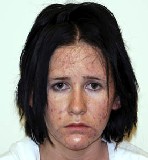
Melissa Calusinski
Murderer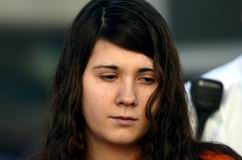 Miranda Barbour
Murderer · USA · 2013
Miranda Barbour, 19, defendant. · Elytte Barbour, 22, defendant and husband of…
100 victims
Miranda Barbour
Murderer · USA · 2013
Miranda Barbour, 19, defendant. · Elytte Barbour, 22, defendant and husband of…
100 victims
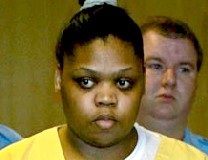 Tiffany Hall
Murderer · USA · 2006
Tiffany Hall was 24 when she was charged in September 2006. She later entered a…
5 victims
Tiffany Hall
Murderer · USA · 2006
Tiffany Hall was 24 when she was charged in September 2006. She later entered a…
5 victims
 Banita Jacks
Murderer · USA · 2007
Banita Jacks was a Washington, DC resident convicted of murdering her four daug…
4 victims
Banita Jacks
Murderer · USA · 2007
Banita Jacks was a Washington, DC resident convicted of murdering her four daug…
4 victims
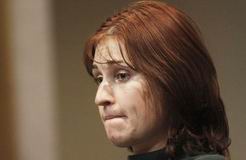 Holly Grigsby
Murderer · USA · 2011
Holly Grigsby was sentenced to life in prison without parole on July 15, 2014.…
4 victims
Holly Grigsby
Murderer · USA · 2011
Holly Grigsby was sentenced to life in prison without parole on July 15, 2014.…
4 victims
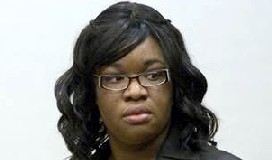 Jessica Tata
Murderer · USA · 2011
Jessica Tata was a Houston home day care owner who fled to Nigeria after a fire…
4 victims
Jessica Tata
Murderer · USA · 2011
Jessica Tata was a Houston home day care owner who fled to Nigeria after a fire…
4 victims
 Amanda Bennett
Murderer · USA · 2011
Amanda Bennett was an Indiana woman who shot her three children and set the fam…
3 victims
Amanda Bennett
Murderer · USA · 2011
Amanda Bennett was an Indiana woman who shot her three children and set the fam…
3 victims
 Louis Hastings
Spree killer · USA · 1983
Louis Hastings was a 39-year-old unemployed computer programmer during the shoo…
6 victims
Louis Hastings
Spree killer · USA · 1983
Louis Hastings was a 39-year-old unemployed computer programmer during the shoo…
6 victims
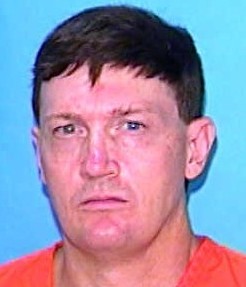 Harold Lee Harvey
Murderer · USA · 1985
Harold Lee Harvey was born on 12/30/62. He was tried in the Nineteenth Judicial…
2 victims
Harold Lee Harvey
Murderer · USA · 1985
Harold Lee Harvey was born on 12/30/62. He was tried in the Nineteenth Judicial…
2 victims
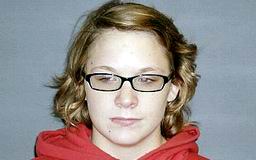 Rebecca Blackmore
Homicide · USA · 2011
Rebecca Jo Blackmore was 16 years old when her infant daughter died in 2011. Sh…
1 victim
Rebecca Blackmore
Homicide · USA · 2011
Rebecca Jo Blackmore was 16 years old when her infant daughter died in 2011. Sh…
1 victim
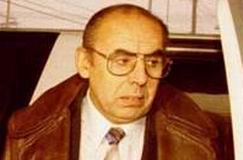 Roger Warren
Mass murderer · Canada · 1992
Roger Warren was convicted of 9 counts of second-degree murder in connection to…
9 victims
Roger Warren
Mass murderer · Canada · 1992
Roger Warren was convicted of 9 counts of second-degree murder in connection to…
9 victims
- Gender
- female
- Country
- USA
- Location
- Lincolnshire, Lake County, Illinois , USA
- Date of birth
- October 4, 1986
- Age at first offence
- 23
- Characteristics
- babysitter
- Victim profile
- Benjamin Kingan, 16-month-old
- Method of murder
- She hurled Benjamin Kingan to the floor
- Date(s) of murder
- January 14, 2009
- Years active
- 2009
- Date of arrest
- —
- Status
-
Imprisoned
Sentenced to 31 years in prison on February 22, 2012
Case record: Melissa Calusinski
Background
Melissa Calusinski worked as a daycare worker and had been a teacher’s aide at the Minee Subee in the Park day care center in Lincolnshire. She had started baby-sitting at age 13 and later became a nanny for five children before taking the job at Minee Subee in the Park.
Calusinski was 25 at the time of her sentencing. She wore a blue jail uniform and had her hands shackled when she was ordered to prison. She denied hurting Benjamin Kingan and called herself innocent.
The offence
On January 14, 2009, Melissa Calusinski was convicted for the death of 16-month-old Benjamin Kingan, a child she was caring for at the Minee Subee day care center in Lincolnshire. Police said she was alone in the classroom with Benjamin and seven other toddlers when she hurled Benjamin to the floor. Benjamin died from fatal head injuries.
Jurors heard that Calusinski’s actions occurred after Benjamin was fussing while she carried him across the room, with other children present creating a commotion that overwhelmed and frustrated her. In videotaped statements played for the jury, Calusinski said Benjamin was fussing as she carried him across the room, other children were causing a commotion, and she became overwhelmed and frustrated.
Prosecutors argued that the death was not accidental and not reckless. Assistant State’s Attorney Christen Bishop urged the jurors to convict Calusinski of murder and to reject the defense theory that Benjamin had an undetected existing head injury that he aggravated by pounding his own head on the floor.
Defense attorneys argued that police coerced Calusinski’s statements during an interrogation that involved hours of intense questioning. They also argued that Benjamin had prior, undiagnosed brain bleeding that could have been abruptly aggravated by even a minor head injury, and they presented medical evidence to support that view.
Calusinski also made different accounts during questioning. In one account, she said Benjamin could have caused his own fatal injuries when he threw himself backward to the carpeted floor and hit his head audibly shortly before his death. In another account, she said Benjamin slipped out of her hands when she got him out of a chair after a snack and hit his head on the back of another chair. She later demonstrated her account using a doll.
During the sentencing phase, Calusinski told police in two videotaped statements that she became frustrated and threw Benjamin down when he fussed as she tried to wash his hands after an afternoon snack of animal crackers and fruit juice. She told investigators she saw him crawl to a bouncy seat and then found him unconscious a few minutes later.
Investigation
During questioning, investigators told Calusinski that they knew the injury happened right before Benjamin died, when she was the only one caring for him. Round Lake Park Police Chief George Filenko and Highland Park police Detective Sean Curran questioned Calusinski.
In a pretrial hearing, the recorded confession video was shown in court. The video showed Calusinski repeatedly denying having anything to do with Benjamin’s death or knowing what happened to him for nearly 10 hours.
In the video, Filenko said:
"We've got this narrowed down to a really tight time frame. Something happened where you got frustrated, aggravated, whatever. Something happened, but it wasn't him throwing himself back."
Calusinski responded:
"That's the only thing I could possibly think of," Calusinski responds. "I never took out any frustrations out on any of my kids, ever."
Later in the video, Curran said:
"If you didn't intend on killing someone, we wouldn't want you to go to jail."
Curran also said:
"I know that you are upset, but stuff like this happens all the time. Who knows, he could have had some pre-existing condition."
Filenko told Calusinski during the interrogation:
"You're doing the right thing."
When the interrogators returned after speaking to the pathologist, Filenko said:
"We're running out of time here, and we're running out of stories."
Filenko also said:
"Every time you come up with another story it takes away some of your credibility."
Filenko added:
"We don't want to feed you a story. We want you to tell us exactly what happened here. If the doctor doesn't concur with what you're telling us here, there's going to be a determination that you are being deceptive, and that's not where you want to be."
Curran said:
"If you are lying, it looks like you intentionally killed this baby," Curran says.
Curran also told her:
"You understand this is your last opportunity to tell us the truth."
When the investigators started to walk out of the room, Calusinski asked when she would be able to go home and said she was claustrophobic in the interrogation room at the Lake Zurich Police Department, described as about 8 feet by 12 feet, and that she was nauseated from not eating all day.
As the questioning became more aggressive, Filenko said:
"Here's the deal,"
Filenko continued:
"we've got the time down to when this occurred where only one person was responsible, and that is you."
Filenko added:
"You've changed your story six times and this is absolute crap."
Filenko further said:
"You are crossing the line into intent. You're covering something up."
Calusinski responded:
"I didn't do anything," Calusinski says. "I'm telling you guys the truth, and it's like I'm getting blamed."
Filenko said:
"You need to think, because you are running out of time."
Filenko added:
"We're not going anywhere until we get the facts here."
Curran said:
"I know how hard and frustrating it is to have one baby, let alone eight."
Calusinski then began to give her confession. Curran told her:
"You had a momentary lapse in judgment. … You were angry,"
Calusinski repeated:
"I was angry,"
Calusinski stated:
"The kids were driving me up a wall while (a co-worker) was doing the dishes, and I put him down and his head hit on the ground."
Curran said:
"What we think happened here is … all the other babies are screaming, you've got Ben in your hands, he's acting up, you throw him to the floor,"
Calusinski responded:
"Yeah,"
Filenko said:
"Yes I did," Calusinski says.
Calusinski said:
"I was really frustrated because all the kids were screaming behind me."
Curran asked:
"Why did you lie to us before?"
Calusinski replied:
"I was scared," she says. "I'm very sorry."
At the end of questioning, Calusinski said she wanted to call her parents and go see her puppy. She asked if this would be "going to go on my record." Curran said:
"That's one thing we're going to have to determine,"
Curran also said:
"The main thing is, you told the truth."
Defense counsel argued for suppression and a motion to quash the arrest, with a judge expected to rule in the coming weeks on the defense motion to quash and suppress evidence at her trial.
Arrest
Calusinski had been arrested following the investigation of Benjamin Kingan’s death at the Lincolnshire day care center. Her confession was central to the pretrial phase, including recorded interrogation shown in court during the pretrial stage.
Trial
A Lake County jury deliberated for about seven hours before finding Melissa Calusinski guilty of first-degree murder and aggravated battery in the death of 16-month-old Benjamin Kingan.
During trial, the defense team persuaded Lake County Circuit Judge Daniel Shanes to allow jurors to consider two lesser offenses. Judge Shanes agreed to tell the eight women and four men on the jury they could convict Calusinski of involuntary manslaughter or reckless conduct if they did not believe she was guilty of murder or aggravated battery. The jury convicted Calusinski of first-degree murder.
Calusinski was convicted in November, after a two-week trial. Her defense team argued that she never harmed the boy left in her care at the Minee Subee day care center.
Paul DeLuca said:
“We will appeal everything,” defense attorney Paul DeLuca said upon leaving the courtroom.
DeLuca also said:
“Melissa is devastated, just devastated, and I think the combination of a child's death and a confession were too much to overcome.”
Prosecutors called physicians to testify that Benjamin was a normal healthy toddler until the day he died. Dr. Eupil Choi performed the autopsy on Benjamin and testified that the boy hit the floor with a force equal to that of a fall from a two-story building.
Defense attorneys argued Choi’s autopsy was flawed and that he failed to detect numerous signs of previous injury. DeLuca suggested the injury may have been inflicted in the October before Benjamin died, when the staff at Minee Subee saw a bump on the back of his head just before a regularly scheduled doctor visit. DeLuca said:
“Two days later, he is in the doctor's office and there wasn't a CT Scan, there wasn't an MRI,” DeLuca said. “Maybe it would have detected something, but we will never know.”
DeLuca also asked jurors to disregard Calusinski’s admissions to police, arguing they were the result of professional interrogators who exploited her low IQ and inexperience. DeLuca said:
“These guys are good, they are pros,” DeLuca said. “By the time they were done with her, Melissa Calusinski thought she was going home; that is how messed up she was."
Christen Bishop told the jury:
“This is not an accident, this is not reckless, this is not a bump on the head and this is not Benjamin throwing himself backwards,” Bishop said.
Bishop also said:
“Benjamin Kingan was not a ticking time bomb who exploded on her watch.”
Sentencing
On February 22, 2012, Judge Daniel Shanes sentenced Melissa Calusinski to 31 years in prison for the January 14, 2009 killing at the Lincolnshire day care center.
Before imposing the prison term, Shanes said:
“In two to three seconds, people can lose everything. In two to three seconds, a person can lose his life,” Judge Daniel Shanes said
Shanes described the case as a “civilized society’s nightmare.” Shanes also said:
“Whatever the court does, it cannot undo the tragic events of that day,”
Shanes sentenced Calusinski after she had faced a possible life sentence following conviction in November of first-degree murder and aggravated battery.
Calusinski was ordered to prison and remained behind bars until she was in her 50s, according to the sentencing report. She said she was innocent:
“I want everyone to know I am innocent of this crime. I did not abuse or hurt him in any way,” she said. “I will never stop fighting this. And I will always maintain my innocence.”
After the sentencing, Paul DeLuca said:
“We believe in her innocence,” defense attorney Paul DeLuca said after the sentencing, adding Calusinski was prepared for the lengthy prison term. “She was ready for it. She’s a strong person,” he said.
Assistant State’s Attorney Christen Bishop sought a 65-year prison term and described Benjamin as a “happy, healthy baby boy” before Calusinski threw him down. Bishop said:
“She forever altered the lives of so many people by ending the life of one,” Bishop said. “This defendant is accountable for her actions that day in harming and killing Ben."
Benjamin’s mother, Amy Kingan, made statements during the sentencing. Amy Kingan said:
“He had so much life ahead of him and she took it away from him and us,” Amy Kingan said, her voice breaking as her husband, Andy, sat beside her, holding her hand.
Amy Kingan also said:
“He will never experience his first day of school, learn to ride a bike, play sports, graduate high school, fall in love, get married or give us grandchildren.”
After the sentencing, Amy Kingan said:
“We wish so badly we could hold him in our arms just one last time,” Amy Kingan said.
During the sentencing, a victims’ impact statement read by Amy Kingan said she and her husband believed Calusinski caused their son’s death. Amy Kingan said:
“Because of Melissa's actions, our children have been forever affected,” Amy Kingan said.
Amy Kingan also said:
“The kids wonder if their teachers at school are going to kill them. There is no way to comprehend what Melissa has done to us, our family, our friends and most importantly little Ben.”
Calusinski repeated at sentencing that her statements were false but she had no choice but to admit them. She said:
“My statements were false, but I had no choice but to admit those things,” she said. “I was so scared — I did not understand what the detectives were telling me to say.”
Calusinski also said:
“I was so scared,” and told the court she did not understand the detectives’ actions. She said she was taking things “one day at a time” and was reading, writing, and drawing portraits of other inmates’ children while in jail. She said: “I'm scared and worried because it is a new environment,” she said. “But I'm going to continue to stay strong. I know I am not going to be in there for a long time.”
Appeals
At a hearing regarding a new trial request, Calusinski’s attorneys argued that a key prosecution witness lied about credentials.
Defense attorney Paul DeLuca said that pathologist Dr. Manny Montez failed an exam to become board-certified and that the omission violated Calusinski’s rights. DeLuca said:
“He lied to the jury,” DeLuca said of Dr. Manny Montez
DeLuca also said Montez was:
“Dr. Montez was a significant witness for the state.”
Lake County Judge Daniel Shanes rejected the request for a new trial. Shanes said:
“I just don’t see how the defendant was prejudiced,”
Shanes also dismissed the dispute as “much ado about nothing.” Shanes said:
“I do not find Dr. Montez lied. There is no perjured testimony in that regard,” Shanes said.
DeLuca and co-counsel Dan Cummings said they were “disappointed” by the ruling and expected to raise the issue when they appealed Calusinski’s murder conviction and 31-year prison sentence.
During the trial, DeLuca questioned Montez, and Montez testified he was not board-certified in pathology, saying he hadn’t taken the required exam. Medical records subpoenaed after the trial indicated he failed a board exam in anatomic pathology in 2001 and hadn’t taken an exam for forensic pathology, according to defense attorneys’ argument.
Prosecutors argued Montez did not lie because he told jurors he was not board-certified and that the details of the lack of certification would not have affected the jury verdict. Assistant State’s Attorney Christen Bishop said:
“It didn’t matter to the case,”
Outcome
Melissa Calusinski was convicted of first-degree murder and aggravated battery connected to the death of 16-month-old Benjamin Kingan on January 14, 2009 while he was at the Minee Subee day care center in Lincolnshire. She was sentenced to 31 years in prison on February 22, 2012.
Judge Daniel Shanes rejected the request for a new trial at a later hearing, stating he did not believe the omission about Dr. Manny Montez’s medical background violated Calusinski’s rights to a fair trial.
Aftermath
After her arrest and conviction, Calusinski continued to proclaim innocence. In media interviews, she said she was prepared to prove her innocence and that she believed she would get out of jail and continue fighting.
Calusinski said she confessed because she was “very scared.” She said:
“I wanted to get out of there. … I was so isolated,” Calusinski said
She also said:
“I thought, 'I'll tell them what they wanted to hear so we can all go home.' I didn't think about jail. They made it clear I was going home.”
Calusinski said she immediately protested after being charged. She stated:
“I was like, 'You guys are making a huge mistake, I did nothing to him,'”
She also said:
“They ignored me.”
Other details
- Benjamin Kingan’s parents were Andy and Amy Kingan.
- Benjamin had a twin sister, Emily, who was also at the day care center when he died.
- Calusinski denied hurting Benjamin, including during sentencing and post-conviction interviews.
- Police said Calusinski was alone in the classroom with Benjamin and seven other toddlers when she hurled Benjamin to the floor.
- The case involved a defense argument about possible prior undiagnosed brain bleeding and a prosecution argument that Benjamin was normal and healthy until the day he died.
- Defense counsel Paul DeLuca argued during trial that police interrogators exploited Calusinski’s low IQ and inexperience and that jurors should disregard her admissions.
Spotted an error, or have more information about this case?