James Terry Roach
Homicide Edward Charles Allaway
Homicide · USA · 1976
Edward Charles Allaway Edward Charles Allaway was found not guilty by reason of…
7 victims
Edward Charles Allaway
Homicide · USA · 1976
Edward Charles Allaway Edward Charles Allaway was found not guilty by reason of…
7 victims
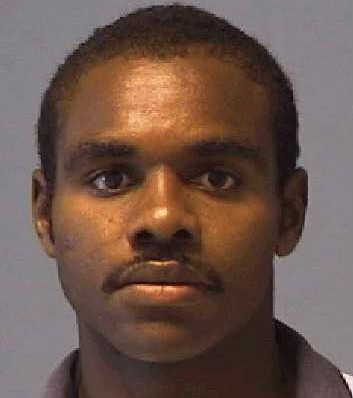 Clinton Bankston
Homicide · USA · 1987
15 August 1987 — Ann Morris (63), her sister Sally Nicholson (59), and Sally’s…
5 victims
Clinton Bankston
Homicide · USA · 1987
15 August 1987 — Ann Morris (63), her sister Sally Nicholson (59), and Sally’s…
5 victims
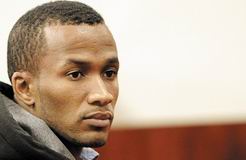 Johannes Kana
Murderer · South Africa · 2013
Johannes Kana was convicted for the rape and murder of Anene Booysen. Anene Boo…
1 victim
Johannes Kana
Murderer · South Africa · 2013
Johannes Kana was convicted for the rape and murder of Anene Booysen. Anene Boo…
1 victim
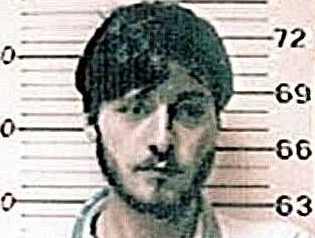 Jerry Scott Heidler
Mass murderer · USA · 1997
Jerry Scott Heidler (defendant) Heidler briefly lived with the Daniels family w…
4 victims
Jerry Scott Heidler
Mass murderer · USA · 1997
Jerry Scott Heidler (defendant) Heidler briefly lived with the Daniels family w…
4 victims
 Leszec Pekalski
Homicide · Poland · 1984
1984–1992 — Leszek Pękalski was believed to have killed at least 17 people. · 1…
17 victims
Leszec Pekalski
Homicide · Poland · 1984
1984–1992 — Leszek Pękalski was believed to have killed at least 17 people. · 1…
17 victims
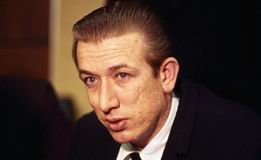 Richard Speck
Mass murderer · USA · 1966
Richard Speck (December 6, 1941–December 5, 1991) was a mass murderer who syste…
8 victims
Richard Speck
Mass murderer · USA · 1966
Richard Speck (December 6, 1941–December 5, 1991) was a mass murderer who syste…
8 victims
 Philip Markoff
Murderer · USA · 2009
Philip Haynes Markoff (February 12, 1986 – August 15, 2010) was an American med…
1 victim
Philip Markoff
Murderer · USA · 2009
Philip Haynes Markoff (February 12, 1986 – August 15, 2010) was an American med…
1 victim
 Sabine Hilschenz
Murderer · Germany · 1988
Sabine Hilschenz was a German woman convicted of infanticide involving eight of…
9 victims
Sabine Hilschenz
Murderer · Germany · 1988
Sabine Hilschenz was a German woman convicted of infanticide involving eight of…
9 victims
- Gender
- male
- Country
- USA
- Location
- Richland County, South Carolina, USA
- Date of birth
- 1960
- Age at first offence
- 17
- Characteristics
- juvenile (17), rape
- Victim profile
- Tommy Taylor, 17, and Carlotta Hartness, 14
- Method of murder
- Shooting ( .22 caliber rifle)
- Date(s) of murder
- October 29, 1977
- Years active
- 1977
- Date of arrest
- November 3, 1977
- Status
-
Executed
Executed by electrocution in South Carolina on January 10, 1986
Case details
James Terry Roach was executed by electrocution in South Carolina on January 10, 1986.
Background
James Terry Roach pleaded guilty as a principal to two counts of murder on December 13, 1977. He pleaded nolo contendre to two counts of conspiracy.
Roach was 17 years old at the time of the October 1977 slayings of Tommy Taylor, 17, and Carlotta Hartness, 14. Roach was scheduled to die at 5 A.M. on January 10, 1986.
Roach appealed for a stay of execution to Chief Justice Warren E. Burger, who referred the matter to the full court. Justices Thurgood Marshall and William J. Brennan Jr. were dissenters. The Supreme Court refused to grant a stay to Roach with two dissenting votes.
Roach’s lawyers said he should be allowed to live because he was 17 and had symptoms of Huntington's disease, a brain disorder, when he pleaded guilty. Javier Perez de Cuellar, Secretary General of the United Nations, urged South Carolina to respect an international convention against executing criminals who committed crimes while under the age of 18. Earlier, Gov. Richard W. Riley rejected pleas for mercy from Mother Teresa, the winner of the Nobel Peace Prize, and former President Jimmy Carter.
Roach was represented by a court-appointed attorney who was under investigation for irregularities in his legal practice. On appeal, lawyers submitted evidence of diminished intellectual capacity, with an IQ of 75 to 80, and possible signs of Huntingdon’s Disease. The record described Roach as mentally retarded and suffering from an antisocial personality disorder.
Roach’s accomplice received a sentence in exchange for testimony. The younger accomplice testified in exchange for a lighter sentence. Shaw was said to have testified against Roach and to have been guaranteed no more than a life sentence.
The offence
In the morning of October 29, 1977, Roach, Joseph Carl Shaw, and Ronald Eugene Mahaffey spent the morning drinking beer and taking drugs. In the early afternoon, Roach, Shaw and Mahaffey decided, in the words of Mahaffey, "find a girl to rape." They drove to a baseball park outside of Columbia, South Carolina, where they saw a parked car occupied by 17-year old Thomas Taylor and 14-year old Carlotta Hartness.
Shaw pulled up beside the parked car. Roach, sitting in the front passenger seat of Shaw's car, aimed a .22 caliber rifle at Taylor and demanded money. Taylor gave the wallet to them.
Shaw and Mahaffey got out of Shaw's car. Mahaffey took the keys to Taylor's car. Shaw forced Miss Hartness to get into the backseat of Shaw's car with Mahaffey. Shaw then got back into his car and said to Roach, "OK, Now." Roach fired the rifle into the parked car and killed Taylor.
The three drove Miss Hartness to a dirt road a short distance away. She was forced to disrobe. She was repeatedly raped by all three and was forced to perform oral sex with Shaw and Mahaffey. While Shaw was raping the girl, Roach and Mahaffey looked through Taylor's wallet. The stolen wallet was later buried in the area.
Shaw asked who would shoot the girl and Roach volunteered. Shaw ordered the girl to put her face to the ground but she refused. After pleading for her life several times, Miss Hartness finally complied and put her face to the ground. Roach shot her in the head several times, causing her body to convulse. Shaw took the rifle from Roach and again shot the girl in the head.
The three disposed of the rifle and bullets and returned to Taylor's body to make sure he was dead.
Investigation and arrest
Several days later, Roach, Shaw, and Mahaffey were arrested.
In the context of federal habeas litigation, Roach also relied on his statement to Lt. Walter Powell of the State Law Enforcement Division (SLED), in which he admitted to having been present at the time of the crimes but denied either raping Miss Hartness or shooting either victim.
Pleas and sentencing
On December 13, 1977, Roach pleaded guilty as a principal to two counts of murder, criminal sexual conduct, armed robbery, and kidnapping. He also pleaded nolo contendre to two counts of conspiracy.
A sentencing hearing took place on December 14, 15, and 16, 1977, before the court sitting without a jury. The sentencing judge considered evidence in mitigation and aggravation and made findings based on such evidence, including beyond a reasonable doubt the existence of three statutory aggravating circumstances:
- murder committed while in the commission of rape
- murder committed while in the commission of kidnapping
- murder committed while in the commission of armed robbery
The sentencing judge found mitigating circumstances beyond a reasonable doubt as well, including:
- Roach had no significant history of prior criminal activity involving the use of violence against another person
- the murder was committed while he was under the influence of extreme mental or emotional disturbance
- he acted under duress or under the domination of another person
- his capacity to appreciate the criminality of his conduct or to conform his conduct to the requirements of the law was substantially impaired
The sentencing judge also considered that Roach was suffering from mental retardation and an antisocial personality disorder and was below the age of 18 at the time of the crime.
The sentencing judge found as an affirmative fact that the evidence warranted imposition of the death penalty upon Roach and was not the result of prejudice, passion or any other arbitrary factor. Roach was sentenced to death on the two murder charges.
Roach received a sentence of 30 years’ imprisonment on the criminal sexual conduct charge; a sentence of 5 years’ imprisonment on each of the conspiracy charges; a sentence of 25 years’ imprisonment on the armed robbery charge; and no sentence for the kidnapping charge. Each sentence imposed was to run consecutive to all other sentences.
Trial and co-defendants
Roach and Joseph Carl Shaw both pleaded guilty and were sentenced to death.
Shaw’s guilty pleas included charges of murder as well as armed robbery, kidnapping, and criminal sexual conduct. State v. Shaw, 273 S.C. 194, 255 S.E.2d 799 (1979), cert. denied, 444 U.S. 1026 (1980), reh. denied, 444 U.S. 1104 (1980).
Appeals
South Carolina Supreme Court and U.S. Supreme Court
On direct appeal, Roach’s convictions and sentences were affirmed by the South Carolina Supreme Court in State v. (Roach), Shaw, 273 S.C. 194, 255 S.E.2d 799 (1979).
The United States Supreme Court denied Roach's petition for certiorari, 444 U.S. 1026 (1980), and later denied his petition for rehearing, 444 U.S. 1104 (1980).
Roach then sought post-conviction relief in state courts under S.C.Code Sec. 17-27-10 et seq. The state post-conviction court conducted an evidentiary hearing and denied Roach's petition by order of July 9, 1980. Roach appealed to the South Carolina Supreme Court, which dismissed the appeal, finding no error of law present. Roach v. State, Memo.Op. No. 81-MO-197 (S.C. July 17, 1981). The South Carolina Supreme Court denied Roach’s motion for a stay of execution, and the date of execution was set for September 18, 1981.
Federal habeas corpus proceedings (Fourth Circuit)
Roach filed a petition for federal habeas corpus relief. On September 4, 1981, the district court granted Roach’s petition for a stay of execution pending resolution of the issues stated in the petition. Proceedings were stayed while Roach sought direct review by the United States Supreme Court. When that Court again denied Roach’s petition for certiorari on January 25, 1982, the stay of proceedings was dissolved.
The case was referred to a United States Magistrate to review the pleadings and submit findings of fact and recommendations of disposition. The magistrate recommended summary judgment in favor of respondents without an evidentiary hearing. The district court granted summary judgment in favor of the State, from which Roach appealed.
The Fourth Circuit case was Roach v. Martin, 757 F.2d 1463 (March 20, 1985). The court stated that Roach’s contentions were without merit, affirmed the district court’s denial of the petition, and granted summary judgment in favor of South Carolina authorities.
Roach alleged that an evidentiary hearing was mandatory under Townsend v. Sain, 372 U.S. 293 (1963), and 28 U.S.C. Sec. 2254(d). The Fourth Circuit rejected Roach’s arguments and found that the state factfinding procedure afforded Roach a full and fair hearing.
Roach also argued that newly-discovered evidence entitled him to an evidentiary hearing. The Fourth Circuit rejected this argument, including reliance on a PET Scan reference and discussion that Dr. Still could not diagnose Roach as suffering from Huntington's disease at that time. The court concluded Roach was not entitled to an evidentiary hearing on the basis of newly-discovered evidence.
On ineffective assistance of counsel, the Fourth Circuit applied Strickland and discussed Roach’s claims related to drug investigation and Huntington’s disease, including that trial counsel relied on Dr. Wayne Lockhart’s opinion that Roach was competent at the time of the offenses and competent to stand trial.
Regarding alleged conflict of interest involving lead counsel Walter Brooks, the Fourth Circuit stated Roach failed to show an actual conflict of interest and noted that Brooks was not under investigation by the same authorities that were prosecuting Roach. The Fourth Circuit also noted it could not accept a per se rule of unconstitutional ineffectiveness where an attorney was under investigation for disbarment.
On voluntariness of the guilty pleas, the Fourth Circuit stated that the South Carolina Supreme Court and the state post-conviction court found the pleas voluntary and that the district court found them valid under Henderson v. Morgan and Boykin v. Alabama. The Fourth Circuit found Roach entered informed, intelligent, and voluntary pleas of guilty.
The Fourth Circuit rejected constitutional challenges to the South Carolina Death Penalty Statute, including due process and equal protection claims, and rejected claims that the death sentence was disproportionate.
Finally, the Fourth Circuit affirmed the district court and dissolved any stays of execution.
U.S. Supreme Court certiorari and stay petitions
United States Court of Appeals for the Fourth Circuit Roach v. Martin, 757 F.2d 1463 was cited along with “Petitioner James Terry Roach appeals the denial of his petition for writ of habeas corpus…”
U.S. Supreme Court ROACH v. AIKEN, 474 U.S. 1039 (1986). On petition for writ of Certiorari to the United States Court of Appeals for the Fourth Circuit, the application for stay of execution of the sentence of death scheduled for Friday, January 10, 1986, presented to THE CHIEF JUSTICE and by him referred to the Court was denied. The petition for a writ of certiorari was denied. Justice BRENNAN, with whom Justice MARSHALL joins, dissented.
Justice BRENNAN dissented and stated:
I adhere to my view that the death penalty is in all circumstances cruel and unusual punishment prohibited by the Eighth and Fourteenth Amendments, Gregg v. Georgia, 428 U.S. 153, 227, 2950, 49 L. Ed.2d 859 (1976) (BRENNAN, J., dissenting). Accordingly, I would vacate the death sentence and remand the case so that the state court can determine what sentence-other than death-may be appropriate. In addition, this case affords us an opportunity to address the important question whether an accused may, consistent with the Eighth and Fourteenth Amendments, be sentenced to death for a capital offense he committed while a juvenile. Although "[c]rimes committed by youths may be just as harmful to victims as those committed by older persons, . . . they deserve less punishment because adolescents may have less capacity to control their conduct and to think in long-range terms than adults." Twentieth Century Fund Task Force on Sentencing Policy Toward Young Offenders, Confronting Youth Crime 7 (1978). As we stated in Eddings v. Oklahoma, 455 U.S. 104 (1982): "[Youth] is a time and condition of life when a person may be most susceptible to influence and to psychological damage. Our history is replete with laws and judicial recognition that minors, especially in their earlier years, generally are less mature and responsible than adults. Particularly 'during the formative years of childhood and adolescence, minors often lack the experience, perspective, and judgment' expected of adults. Bellotti v. Baird, 443 U.S. 622, 635, 3043 (1979)." Id., 455 U.S., at 115 - 116 (footnotes omitted). The need for solicitude for the particular susceptibility of juveniles is well reflected by the facts of this case. The trial judge found that petitioner acted under duress or under the domination of an older person, and that he was suffering from mental retardation and a personality disorder. See Roach v. Martin, 757 F.2d 1463, 1468-1469 (CA4) ( 1985). In addition, petitioner now presents evidence suggesting that he suffers from the debilitating effects of Huntington's disease. Under these circumstances, even accepting the Court's current interpretation of the Eighth Amendment, sentencing petitioner to death may be inconsistent with the " 'evolving standards of decency that mark the progress of a maturing society,' " Gregg v. Georgia, supra, 428 U.S., at 173 (1976) (quoting Trop v. Dulles, 356 U.S. 86, 101, 598 (1958) (plurality opinion of Warren, C.J .)), and may provide no more than "marginal contributions to any discernible social or public purposes." Furman v. Georgia, 408 U.S. 238, 312 , 2764 (1972) (WHITE, J., concurring). " Even if some percentage of adults are deterred by the death penalty, the deterrent effect tends to lose much of its power when imposed upon an adolescent." Streib, Death Penalty for Children: The American Experience with Capital Punishment for Crimes Committed While Under Age Eighteen, 36 Okla.L.Rev., 613, 639 (1983). I would grant the petition for certiorari to resolve this important issue, and would stay petitioner's execution until we decide the matter. At the very least, in light of the evidence suggesting that petitioner suffers from Huntington's disease, I agree with Justice MARSHALL that the stay should be granted and the case held pending our decision in Ford v. Wainwright, cert. granted, 474 U.S. 1019 (1985).
Justice MARSHALL, with whom Justice BRENNAN joins, dissented and stated:
The State of South Carolina intends to execute petitioner James Terry Roach tomorrow, January 10, 1986, at 5 a.m. At approximately noon today, four hours after he presented his federal habeas claims to the Court of Appeals and was denied all relief, petitioner came to this Court, seeking a stay of execution and a writ of certiorari. Among other claims, Roach's counsel contends that Roach has been rendered so mentally incompetent by Huntington's disease that his execution would offend the contemporary standards of decency embodied in the Eighth Amendment. One month ago, this Court granted certiorari to resolve the issues whether the execution of the presently mentally incompetent offends the Eighth Amendment and, if it does, what process is due a condemned prisoner who might lack any understanding of the penalty he faces. Ford v. Wainwright, cert. granted, 474 U.S. 1019 (1985). Because in the 17 hours allowed it by the regime of Barefoot v. Estelle, 463 U.S. 880 , 103 S. Ct. 3383 (1983),* this Court has decided to allow Roach to go to his death while the question of his execution's constitutionality is yet to be resolved, I must dissent from the denial of petitioner's application for a stay of execution. In 1977, several months before his 18th birthday, petitioner pleaded guilty to two counts of murder and charges of criminal sexual assault, kidnaping and armed robbery. At the capital sentencing hearing, a psychiatrist appearing on Roach's behalf testified that while Roach was mentally retarded, he could not, at that time, be diagnosed as suffering from Huntington's disease. Huntington's disease is an inherited disorder of movement, personality, and thought that often does not manifest itself until an individual has reached adulthood. Roach v. Martin, 757 F.2d 1463, 1473 (CA4 1985). After considering this and other mitigating factors, however, the trial judge sentenced Roach to death on both murder counts. The conviction and sentence were upheld on direct review, State v. Shaw ( Roach), 273 S.C. 194, 255 S.E.2d 799 (1979), and this Court denied certiorari, 444 U.S. 1026 (1980). In his first federal habeas petition, Roach urged that he had indeed inherited Huntington's disease from his mother, who had already been diagnosed as having that disorder in an early stage. Roach further alleged that, were he given the opportunity to prove this fact, he could raise doubts as to both his competency to stand trial and the appropriateness of his death sentence. It appears that Roach did not press any claim of his present incompetence to be executed, for, in affirming the District Court's denial of his habeas petition, the Court of Appeals concluded: "[E]ven assuming arguendo that Roach does in fact have the Huntington's gene, in which case HD [Huntington's disease] will inevitably manifest its symptoms, we can see no way that this fact alone would alter Roach's conviction and sentence. In other words, a determination today that Roach has the HD gene would not affect the findings that Roach was sane at the time of the offenses and that he was competent to stand trial, and is now competent." 757 F.2d, at 1474. The petition now before this Court, however, goes beyond mere allegations that Roach suffers from an as-yet-unmanifested genetic disorder. Accompanying his petition is an affidavit by Dr. William H. Olsen, a distinguished neurologist who, less than two weeks ago, was the first neurologist to have examined Roach in the last five years. Dr. Olsen not only found that there is a "reasonable degree of certainty" that Roach suffers from Huntington's disease, but also made a preliminary finding that Roach suffers from the mental deterioration that is a characteristic symptom of the disorder. Dr. Olsen's conclusion, though admittedly preliminary, raises substantial doubts as to whether Roach has any understanding that he is scheduled to die tomorrow morning. Certainly, nothing in the State's papers assuages these doubts. Neither this Court nor the State of South Carolina is now in a position to ascertain whether Roach is indeed sufficiently competent to face his execution with the dignity that is the final right we allow even the most heinous criminals. What we can do is allow Roach's counsel and experts the time and opportunity to make such a showing. The Court's refusal to do so even while it prepares to hear a case in which another condemned man raises a similar claim, provides yet another stark example of the arbitrariness with which the death penalty is administered in the United States today. I would grant the stay and defer consideration of Roach's petition for certiorari pending this Court's decision in Ford v. Wainwright, supra.
Outcome
Roach made a final statement: “To my family and friends, there is only three words to say: I love you.”
Other details
Charges pleaded and context in the sentencing hearing
Roach pleaded guilty as a principal to two counts of murder and was charged with criminal sexual conduct, armed robbery, and kidnapping. The sentencing hearing was conducted without a jury.
Drinking and drug use described in mitigation and habeas discussion
The sentencing record showed Roach, Shaw, and Mahaffey spent the morning of October 29, 1977 drinking beer and taking drugs.
During the sentencing hearing, Roach’s psychiatric examiner, Dr. Edmond Camp, III, testified that Roach told him that on the date of the murders he had consumed a lot of beer, smoked a lot of marijuana, and had injected a substance called "Diamond Crystal THC" into his veins. Dr. Camp testified that THC was an hallucinogenic drug and that Roach told him Roach was in a psychotic state after he injected the drug. The Fourth Circuit discussed that Roach later maintained that he was under the influence of phencycodine (PCP) at the time of the murders, and counsel for Roach sought testimony from Dr. Candace Pert that PCP induces symptoms indistinguishable from paranoid schizophrenia.
The Fourth Circuit stated that the sentencing judge was aware that Roach was under the influence of some type of drug and that the sentencing judge attached significance to such evidence by finding in mitigation that Roach’s capacity to conform his conduct to the requirements of the law was substantially impaired and that the crimes were committed while Roach was under the influence of extreme mental or emotional disturbance.
Huntington’s disease and related medical claims
The Fourth Circuit described Huntington’s disease (HD) as an inherited neuropsychiatric disorder with genetic transmission and discussed that Roach’s mother had been diagnosed with HD in an early stage and that Roach had a 50% chance of inheriting the gene.
At the post-conviction stage, Dr. Charles N. Still was ordered by the state post-conviction court to examine Roach and his family and testified that he could not diagnose Roach as suffering from HD at that time because no accepted reliable presymptomatic test existed at that time.
The Fourth Circuit included the following excerpt from an undated memorandum:
HUNTINGTON'S DISEASE * * * PET RESEARCH. An increasing number of grantees in the NINCDS positron emission tomography (PET) program are using PET to study the brains of HD patients. This brain imaging technique allows scientists to study the brain's metabolic activity in live patients. Research work on PET offers hope for the development of early diagnostic and therapeutic techniques for HD. (Emphasis added)
The Fourth Circuit discussed that the court was aware of Roach’s contentions but found no basis to support the contention that HD could be diagnosed presymptomatically and held that even assuming HD gene presence would not affect findings that Roach was sane and competent.
Additional quoted statements
Shaw said to Roach, "OK, Now." Mahaffey said, "find a girl to rape." Roach’s final statement was:
Spotted an error, or have more information about this case?