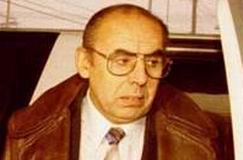
Roger Warren
Mass murderer Marc Lepine
Mass murderer · Canada · 1989
Marc Lépine committed a shooting at the École Polytechnique engineering school…
14 victims
Marc Lepine
Mass murderer · Canada · 1989
Marc Lépine committed a shooting at the École Polytechnique engineering school…
14 victims
 David Shearing
Mass murderer · Canada · 1982
David Shearing was arrested after police received a caller tip about him in a c…
6 victims
David Shearing
Mass murderer · Canada · 1982
David Shearing was arrested after police received a caller tip about him in a c…
6 victims
 Pierre Lebrun
Mass murderer · Canada · 1999
Pierre Lebrun committed suicide by shooting himself on April 6 1999, after carr…
4 victims
Pierre Lebrun
Mass murderer · Canada · 1999
Pierre Lebrun committed suicide by shooting himself on April 6 1999, after carr…
4 victims
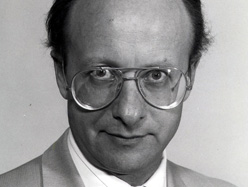 Valery Fabrikant
Mass murderer · Canada · 1992
Valery Fabrikant was a former associate professor of mechanical engineering at…
4 victims
Valery Fabrikant
Mass murderer · Canada · 1992
Valery Fabrikant was a former associate professor of mechanical engineering at…
4 victims
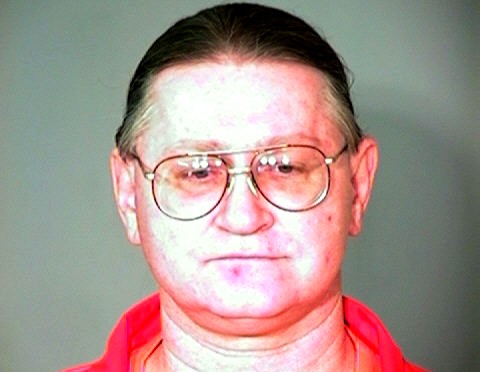 James Harrod
Murderer · USA · 1988
James Cornell Harrod was convicted of murdering Jeanne Tovrea. The prosecution…
1 victim
James Harrod
Murderer · USA · 1988
James Cornell Harrod was convicted of murdering Jeanne Tovrea. The prosecution…
1 victim
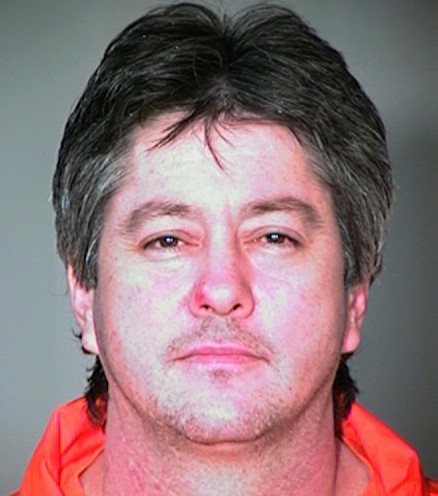 Brian Dann
Murderer · USA · 1999
Brian Dann killed Andrew Parks, Shelly Parks, and Eddie Payan in Andrew Parks’…
3 victims
Brian Dann
Murderer · USA · 1999
Brian Dann killed Andrew Parks, Shelly Parks, and Eddie Payan in Andrew Parks’…
3 victims
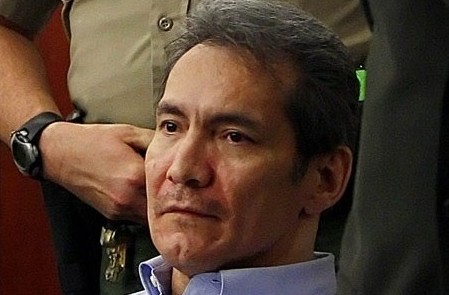 Floyd Maestas
Murderer · USA · 2004
Floyd Eugene Maestas was repeatedly convicted of violence against elderly women…
1 victim
Floyd Maestas
Murderer · USA · 2004
Floyd Eugene Maestas was repeatedly convicted of violence against elderly women…
1 victim
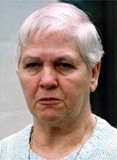 Marie Noe
Murderer · USA · 1949
Marie Noe was convicted in June 1999 of murdering eight of her children. Betwee…
8 victims
Marie Noe
Murderer · USA · 1949
Marie Noe was convicted in June 1999 of murdering eight of her children. Betwee…
8 victims
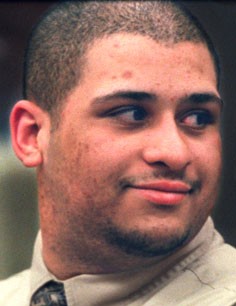 Raymond Oscar Butler
Murderer · of Los Angeles · 1994
Raymond Oscar Butler was sentenced to death on July 29, 1996. The killings invo…
3 victims
Raymond Oscar Butler
Murderer · of Los Angeles · 1994
Raymond Oscar Butler was sentenced to death on July 29, 1996. The killings invo…
3 victims
- Gender
- male
- Country
- Canada
- Location
- Yellowknife, Northwest Territories, Canada
- Date of birth
- December 17, 1943
- Age at first offence
- 49
- Characteristics
- —
- Victim profile
- Vern Fullowka, Norm Hourie, Chris Neill, Joe Pandev, Shane Riggs, Robert Rowsell, Arnold Russell, Malcolm Sawler and Dave Vodnoski (miners)
- Method of murder
- B omb explosion
- Date(s) of murder
- September 18, 1992
- Years active
- 1992
- Date of arrest
- —
- Status
-
Life imprisonment
Sentenced to life in prison with no chance of parole for 20 years in 1995
Case details
Roger Warren was convicted of 9 counts of second-degree murder in connection to the 1992 Giant Mine bombings near Yellowknife, Northwest Territories, Canada.
Timeline
- 8:45 a.m. — 18 Sept. 1992 — A rail car transporting the replacement workers hit the trip wire, setting off an explosion at Giant Mine, killing nine replacement miners.
- May 22, 1992 — Roger Warren testified that Royal Oak locked the Giant Mine workers out a day before they had planned to strike.
- May 23, 1992 — The miners planned to walk at 12 a.m. but were locked out the day before.
- September 1992 — The killings occurred during a violent 18-month strike-lockout.
- 1993 (October) — Roger Warren confessed to the killings and led Royal Canadian Mounted Police investigators on a long route down Giant’s mine maze to the scene of the crime.
- 1994 (fall) — A civil lawsuit launched in 1994 was described as scheduled for trial.
- 1995 — Warren was convicted (on nine counts of second-degree murder) and sentenced to life in prison with no chance of parole for 20 years.
- January 2003 — Warren confessed to two lawyers representing the victims’ families in a civil lawsuit that would start the following fall.
- July 10, 2003 — Warren’s admission was described as made public.
- July 2004 — During testimony in a lawsuit filed by the widows of the victims, Warren blamed poor security, his union and the company that owned the mine, Royal Oak Mines Incorporated.
- 16 Dec. 2004 — The widows of nine men killed by a bomb at Yellowknife’s Giant mine in 1992 were awarded $10.7 million in damages in a civil lawsuit.
The offence
The Giant Mine bombings occurred underground at Giant Mine near Yellowknife during a bitter labour dispute.
On Sept. 18, 1992 at 8:45 a.m., the rail car transporting the replacement workers hit the trip wire, setting off an explosion so powerful that it drove bits of their flesh and bone deep into the hard rock ceiling. The nine miners killed were described as the replacement workers:
- Vern Fullowka
- Norm Hourie
- Chris Neill
- Joe Pandev
- Shane Riggs
- Robert Rowsell
- Arnold Russell
- Malcolm Sawler
- Dave Vodnoski
A separate account stated that Warren planted a bag of explosive powder and two sticks of dynamite on the track carrying mine cars 200 metres underground, and that the nine men were killed when their mine car hit the deliberately set bomb.
During the 18-month strike-lockout, there were daily confrontations and two other explosions, as well as skirmishes with RCMP.
Background
Labour dispute at Giant Mine
Giant Mine opened in 1948. In the late 1980s, the yield declined. Mining executive Peggy Witte and her Vancouver-based company, Royal Oak Mines Inc., bought Giant in 1990.
Relations with mine staff and their union, the Canadian Association of Smelter and Allied Workers, deteriorated. The collective agreement expired in the spring of 1992. In 1992, Witte announced pay cuts would be sought and the miners planned to walk.
The owners locked the miners out the day before the planned strike and had replacement workers on standby, helicoptering them into the mine site within hours. It was described as the first time in 45 years that a Canadian mining company tried to break a strike.
The RCMP responded by flying in a riot squad from Alberta. Royal Oak replaced its security company with Pinkerton’s, described as an American company known for crushing coal mine strikes.
Tense confrontations occurred on the picket line, including threats of retribution and petty acts of vandalism. Over the course of the summer, violence increased; factions fought in downtown bars and police and strikers skirmished on the picket line. The federal government was described as ignoring repeated pleas from local and territorial officials to step in and legislate an end to the dispute.
“Cambodian Cowboys” and sabotage
A squad of miners calling themselves the “Cambodian Cowboys” began to sneak onto the mine property at night, harassing the Pinkertons and engaging in acts of sabotage, including toppling hydro poles and shorting wires. In late June, three “Cowboys” travelled underground to paint anti-scab graffiti on the walls and machinery and stole blasting caps, fuses, and sticks of powder from one of the mine’s unlocked and unguarded explosive sheds.
In July, Bettger, nicknamed “The Bear,” tried to topple the mine’s huge satellite dish with a stick of high explosives. At the beginning of September, Bettger and Shearing, dubbed “The Weasel” by his foes, set off a larger bomb near equipment that pumped air underground to the miners.
Names mentioned in the dispute narrative
The narrative included reference to:
- Peggy Witte (described as later reverting to her maiden name Peggy Kent and owning a meat-packing business in Ferndale, Wash.)
- Bill Schram (described as leading the union local through the first months of the dispute)
- Al Shearing and Tim Bettger (described as “Cowboys” involved in earlier bombing and sabotage actions)
- Norma Jarvis (described as married to David Jarvis, who worked in management at the mine)
- David Jarvis
- Kathy Hrynczuk (described as Shearing’s wife)
- Helen (described as the mother of Ann)
- Ann (described as Warren’s older daughter)
- Doreen Hourie (described as the widow of Norm Hourie, who crossed the picket line)
- Glen Rutland (described as a Justice Department spokesman)
- Pat McMahon (described as the former mayor of Yellowknife)
Investigation and confession
RCMP investigation and initial admissions
Roger Warren was described as a former miner active in local sports and as having been on the picket line in the early morning hours before the explosion.
Investigators focused on Warren because he claimed to have seen two unidentified men walking on the mine property and because police suspected he knew more than he was saying. Investigators also discovered that Warren owned a pair of boots of the same make and size as boots the killer was believed to have worn.
Warren’s confession came as a shock to the RCMP. He had steadfastly denied involvement, taken two lie detector tests (with results deemed inconclusive), and had not been known to have taken part in the “Cambodian Cowboys” sorties. An outsider, Gregg McMartin, described as a polygraph expert from the Calgary detachment, was said to have decided Warren was directly involved. McMartin spent six hours alone with Warren, challenging, begging, accusing, and cajoling him until he admitted to planting the bomb.
Events following the confession
After confessing, Warren took officers on a tour of the mine, retracing the long route down from an isolated shaft to the site of the explosion in the 750-drift and providing details only the killer would know, as police described. Warren then led investigators to:
- a pond where they found a satchel containing parts for a triggering mechanism, and
- a river where they found burned remains of a different pair of boots.
Quoted remarks
Roger Warren was described as having said during an interview published by Maclean’s:
"I've seen more guys tell lies at work just to avoid getting in a little trouble," Warren told Maclean's in an interview last summer. "I wouldn't even lie about how many rock bolts I put in. If I did 99, I'd say 99, not 100. If I put in one loose one I would tell the guy."
The polygraph consultant Gregg McMartin was quoted as saying about the confession:
"The one striking thing about Roger Warren was that when he did confess he showed absolutely no remorse. I really found it strange. Most killers show some emotion, some regret, but to him the miners were still 'f---ing scabs,'" says McMartin.
Warren responded with quoted remarks:
"That's his impression," he says icily. "I had no remorse because I never had nothing to do with the killings."
Warren was also quoted in relation to his response about the widows:
"I don't know what you say that would ever be adequate," he says, finally. "Nobody wants to see anybody suffer that kind of loss."
"I didn't have nothing to do with killing their husbands, that's all I can say."
Widow Doreen Hourie was quoted as saying:
"Nobody is writing the story about these men, our husbands, who paid this ultimate price. People are so worried that Roger was wrongfully convicted. My husband was wrongfully killed!" she snaps. "Roger's in jail, his family can go visit him. He's still alive. He didn't leave us with anything."
Union or dispute-related remarks included a quote from Bill Schram:
"When somebody scabs you it's worse than being robbed in the street," says Bill Schram. "They rob your family, they steal the food off your table, take the roof over your head. They're thieves of the worst kind."
Other quoted remarks included a political or community remark by Pat McMahon:
"This kind of strike with the violence, and the pitting of family against family, neighbour against neighbour, it impacts a community for a long time," says Pat McMahon, the former mayor.
A newspaper editorial comment was quoted:
"Some naive people, who seem to care nothing for the families of the dead men or for justice, suggest Warren made a false confession for his fellow workers," thundered the Yellowknifer newspaper in an editorial. "If such were true, it would make Warren an extraordinary person, certainly a candidate for sainthood. But it wasn't true and he's only extraordinary in killing nine innocent men."
Recantation and later confession
Warren recanted after his confession to the RCMP, and he maintained that position during his trial, arguing he was innocent.
In 2003, it was reported that Warren again confessed to the bombing, saying that he acted alone. The second confession followed a reported decision by the Association in Defence of the Wrongly Convicted not to re-open the case.
In January (reported as part of 2003 in relation to public disclosure), Warren confessed his crime to two lawyers representing the victims’ families in a civil lawsuit scheduled to start the following fall. This confession was described as being made in a deposition for a civil suit.
Warren called the bombing an “ill-advised act” and said he underwent psychological testing because he hoped “to atone in some small way” and hoped the victims’ families would understand their loved ones “were not targets of hate, but unfortunate victims of a reckless act”.
Trial
Warren was convicted in 1995 of nine counts of second-degree murder.
A psychologist, Robert Ley, described as an authority on false confessions, examined Warren in the run-up to trial, spending 25 hours examining him. Ley described Warren as displaying traits common to those who take responsibility for crimes they did not commit, including low self-esteem, passivity, and compliance, and said Warren was clinically depressed at the time of the confession and guilt-ridden about many things in his life, with personal, psychological and situational factors raising the possibility of a false confession.
The trial judge refused to allow Ley to testify about anything other than Warren’s state of mind, ruling scientific evidence about false confessions was too scant. A jury at trial heard arguments about inconsistencies and found Warren guilty, concluding that doubts were not reasonable.
Warren’s stated account at trial
At trial, Warren claimed he had been deeply depressed the day he marched into the RCMP offices and took the rap. He also said:
- he had heart trouble,
- medication had left him listless and impotent,
- he found a growth in his groin and was convinced it was cancer,
- voices in his head urged him to sacrifice himself so his friends could go back to work.
Sentencing
In 1995, Warren was sentenced to life in prison with no chance of parole for 20 years.
He was described as serving a life sentence at Stony Mountain Penitentiary near Winnipeg, and later as being an inmate at Manitoba’s Stony Mountain Penitentiary.
Appeals and challenge to conviction
An appeal court upheld the conviction. The Supreme Court of Canada refused to take another look at his case.
The Association in Defence of the Wrongly Convicted (AIDWYC) was described as having helped clear David Milgaard, Guy Paul Morin and other falsely accused prisoners. The organization was reported as thinking of taking on Warren’s case, interviewing Warren’s friends and family, and considering the possibility of false confession hallmarks.
The jury at his trial was described as forbidden to hear expert testimony about Warren’s state of mind and why some people are motivated to take responsibility for crimes they did not commit.
A false-confession discussion included the statement that AIDWYC would bring an international expert on false confessions to consult on the case, and that the only hurdle appeared to be whether Warren might be covering for somebody else.
On AIDWYC’s advice, Warren refused to discuss the circumstances of his confession.
Civil lawsuit and damages
Civil suit defendants and claims
A civil lawsuit launched in 1994 was described as scheduled for trial in a specially built courtroom. Families of the deceased miners claimed millions in damages from multiple defendants and third parties including:
- Royal Oak Mines and its then-president Peggy Witte
- the territorial government
- the mine union
- the company providing security at the mine
- Roger Warren, convicted of setting the blast.
Plaintiffs argued that Royal Oak and Witte failed to provide a safe working environment for the nine miners. It was described that the nine dead miners had crossed picket lines to work and that the murders came during the violent 18-month strike-lockout.
Trial setting and process
The judge-alone trial was described as being held in a makeshift courtroom on the fifth floor of a downtown office building near the courthouse, with walls moved and furniture installed to create a courtroom 30 metres long and 10 metres wide. The described estimated cost was $1 million. The year-long lease cost to the territorial government was stated as $325,000.
There were 38 seats for families of the plaintiffs, reporters, and members of the public. Lawyers for the nine families said they were not sure how many people would be in the courtroom Monday, and evidence was expected to continue into February. Lawyers described their list of witnesses as a “work-in-progress.”
Warren was described as having no lawyer and as it being not known if he would testify. A witness, Joe Pandev, described as having lost his dad Josef in the bombing, said he had no desire to see Warren on the stand, quoting:
"It (the case) has been beat to death,"
Warren’s role and testimony in the civil case
During testimony described as occurring at a July 2004 lawsuit filed by the widows of the victims, Warren blamed:
- poor security,
- his union,
- Royal Oak Mines Incorporated, for provoking him.
He claimed that a simple screen and padlock over a broken window would have dissuaded him. He also claimed he was only capable of the bombing because strike-breakers had been “dehumanized” by his union. He also said: “(his) termination resulted in the deaths of nine men.”
Outcome
Publicly reported confession and civil-case effects
It was reported in 2003 that Warren admitted guilt again. The civil trial was described as continuing as scheduled.
Damages award
On Thu. Dec. 16 2004, the widows of nine men killed by a bomb at Yellowknife’s Giant mine in 1992 were awarded $10.7 million in damages. The Supreme Court of the Northwest Territories released its judgment.
The suit was filed on behalf of the victims’ families by the Workers Compensation Board, after Warren confessed to bombing the mine and killing nine workers.
The court found that Royal Oak Limited and the union shared almost as much blame for the killings as Warren himself.
It was stated that security was tight for Warren’s testimony and spectators were forced to go through metal detectors. The estimated cost of the judge-alone trial was $1 million.
Aftermath and additional narrative details
Persons and families affected
The violence at Giant was described as forging a close group including eight widows and 27 children whose lives changed. Doreen Hourie described calls from the girls and said: “We call each other because we know what each other is going through.”
Another family member, Joe Pandev, described being numb over time and said:
"When it drags on for such a long time, the emotion gets deadened."
"You get numb to it after a while."
Roger Warren’s older daughter Ann was quoted about living in Yellowknife:
"We feel comfortable living here because we know he's innocent," says Ann. "It's a tough and tragic situation for everyone involved, but we've been hoping for a long time that someone would take a look at all of this."
Persons connected to alleged other perpetrators
Al Shearing was described as:
- having been watched by RCMP investigators for 13 months,
- having been interrogated three times,
- refusing to take a polygraph test on the advice of his lawyer,
- as having a steady stream of phone calls from well-wishers while it was two days before his wedding.
Shearing was described as having married Kathy Hrynczuk on July 20 (the wedding described as occurring in Yellowknife after his return there in 1996 at the end of his 2 1/2-year sentence for a vent shaft bombing).
Shearing was quoted:
"I can take it," he says, laughing. "I know I didn't have nothing to do with it."
He was also quoted about the difficulty during surveillance and interrogation:
"It was a hassle," Shearing recalls. "No matter where I turned around there was always a cop in my face saying, 'We know you did it' and 'We're going to get you' and all that crap."
Shearing was quoted about theorizing with Warren before the blame was taken:
"Every one of us was capable physically, technically. But no one had the balls," he says, waving his cigarette in the air.
He was also quoted regarding the impact:
"Even if it was scabs that was blown up, it was nine people. It would play on your mind."
When asked about sleeping, Shearing was quoted:
"I got no problems at all," he says. "And Roger's the same way."
Prior suspects and other named individuals
The narrative described that Roger Warren was never one of RCMP’s primary suspects and that the dubious honour went to Bettger and Shearing, who both ended up serving time for their “Cowboy” raids.
Film and media references
Roger Warren was described as being portrayed by Frank Moore in the 1996 CBC Television film Giant Mine.
Other details
Security and evidence issues raised in the narrative
The narrative described issues that did not “add up” about Warren’s confession and evidence against him:
- investigators said he had to travel on foot deep underground, construct a bomb, and escape within a four-hour window, and it was described as an awfully tight proposition,
- no trace of a timing device or trip mechanism was found at the scene of the explosion,
- RCMP experts had difficulty getting the bomb Warren described to them to work,
- it was described that the boots seized from Warren’s home were believed to be the ones worn by the killer, while Warren was also said to have burned and disposed of a different pair.
A jury found Warren guilty and concluded any doubts were not reasonable.
Portrayal of later discussions and legal status
By 2003, it was described that Warren continued to proclaim his innocence from his jail cell, and later recounted another confession and deposition steps in the civil lawsuit.
Warren refused to discuss circumstances of his confession on AIDWYC’s advice.
Spotted an error, or have more information about this case?