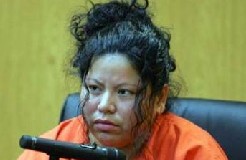
Angela Camacho
Murderer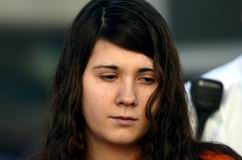 Miranda Barbour
Murderer · USA · 2013
Miranda Barbour, 19, defendant. · Elytte Barbour, 22, defendant and husband of…
100 victims
Miranda Barbour
Murderer · USA · 2013
Miranda Barbour, 19, defendant. · Elytte Barbour, 22, defendant and husband of…
100 victims
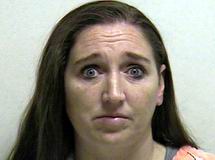 Megan Huntsman
Murderer · USA · 1996
Megan Huntsman was 40 at sentencing. She was a mother of three children who wer…
6 victims
Megan Huntsman
Murderer · USA · 1996
Megan Huntsman was 40 at sentencing. She was a mother of three children who wer…
6 victims
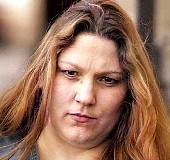 Angela Johnson
Murderer · USA · 1993
Angela Jane Johnson was convicted in federal court of aiding and abetting the m…
5 victims
Angela Johnson
Murderer · USA · 1993
Angela Jane Johnson was convicted in federal court of aiding and abetting the m…
5 victims
 Michele Kalina
Murderer · USA · 1996
Michele Kalina pleaded guilty to murder for one of five infants she initially w…
5 victims
Michele Kalina
Murderer · USA · 1996
Michele Kalina pleaded guilty to murder for one of five infants she initially w…
5 victims
 Tiffany Hall
Murderer · USA · 2006
Tiffany Hall was 24 when she was charged in September 2006. She later entered a…
5 victims
Tiffany Hall
Murderer · USA · 2006
Tiffany Hall was 24 when she was charged in September 2006. She later entered a…
5 victims
 Banita Jacks
Murderer · USA · 2007
Banita Jacks was a Washington, DC resident convicted of murdering her four daug…
4 victims
Banita Jacks
Murderer · USA · 2007
Banita Jacks was a Washington, DC resident convicted of murdering her four daug…
4 victims
 Carl Johnson
Murderer · USA · 1978
Carl Johnson (#633) was executed by lethal injection in Texas on September 19,…
1 victim
Carl Johnson
Murderer · USA · 1978
Carl Johnson (#633) was executed by lethal injection in Texas on September 19,…
1 victim
 Theresa Knorr
Murderer · USA · 1984
Theresa Knorr (née Cross) was convicted of torturing and murdering two of her c…
2 victims
Theresa Knorr
Murderer · USA · 1984
Theresa Knorr (née Cross) was convicted of torturing and murdering two of her c…
2 victims
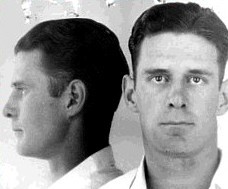 Roland Cochrane
Murderer · USA · 1935
Roland H. Cochrane was an inmate identified in the case as Inmate 009880. · Def…
1 victim
Roland Cochrane
Murderer · USA · 1935
Roland H. Cochrane was an inmate identified in the case as Inmate 009880. · Def…
1 victim
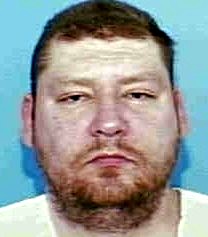 John William Byrd
Murderer · USA · 1983
John William Byrd, Jr. was executed by lethal injection for the murder of conve…
1 victim
John William Byrd
Murderer · USA · 1983
John William Byrd, Jr. was executed by lethal injection for the murder of conve…
1 victim
 Manuel Martínez Coronado
Mass Murderer · Guatemala · 1995
Manuel Martínez Coronado was a farmer and a mass murderer from Guatemala. A lan…
7 victims
Manuel Martínez Coronado
Mass Murderer · Guatemala · 1995
Manuel Martínez Coronado was a farmer and a mass murderer from Guatemala. A lan…
7 victims
- Gender
- female
- Country
- USA
- Location
- Brownsville, Cameron County, Texas, USA
- Date of birth
- 1979
- Age at first offence
- 24
- Characteristics
- parricide, decapitation, abuse
- Victim profile
- Julissa Quezada, 3; John Esthefan Rubio, 1; and Mary Jane Rubio, 2 months (her children)
- Method of murder
- Smothering, stabbing and decapitating
- Date(s) of murder
- March 11, 2003
- Years active
- 2003
- Date of arrest
- Same day
- Status
-
Imprisoned
Pleaded guilty; sentenced to 3 concurrent life prison sentences on June 30, 2005
Case information
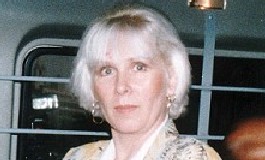
Angela Camacho was convicted in a case involving the decapitation deaths of her three young children.
Timeline
- June 30, 2005 — Angela Camacho pleaded guilty; she received 3 concurrent life prison sentences.
- 2003 — The decapitation deaths of three children occurred; Camacho and her common-law husband were accused of the killings, and Camacho competent to stand trial was later discussed in connection with mental health issues.
- May 7, 2004 — A competency hearing was discussed after more than a year after Camacho was charged; defense attorneys said she was competent to stand trial.
- May 5, 2003 — A letter dated May 5, 2003 was described as having been sent to Judge Ben Euresti diagnosing Camacho as incompetent at that time.
- March 14, 2003 — A first IQ test was described as being administered.
- March 5, 2004 — A last IQ test was described as being administered.
- May 17 — A retardation hearing (Atkins motion) was described as scheduled for 8:30 a.m.
- March 11, 2003 — Camacho gave her first statement to police, on the same day as the murders.
- March 12, 2003 — Camacho gave her second statement to police.
- March 13, 2003 — Camacho gave her third statement to police; it was videotaped and played for the jury at trial.
- September 12, 2007 — An appellate opinion was delivered, reversing the conviction of John Allen Rubio and remanding the cause to the trial court.
People
- Angela Camacho (mother) — Pleaded guilty to 3 counts of capital murder; she was 25 in connection with her guilty plea. Her legal case involved arguments about mental capacity and eligibility for the death penalty. She answered state District Judge Benjamin Uresti’s questions in Spanish when she accepted her guilty plea.
- John Allen Rubio (common-law husband; alleged co-defendant/accomplice) — He was accused alongside Camacho. He was convicted and sentenced to death in 2003; his lawyers appealed the sentence. The appellate opinion referenced him as the appellant.
- Children (victims)
- Julissa Quezada (age 3) — Decapitation death.
- Mary Jane Rubio (age 2 months) — Decapitation death.
- John Esthefan Rubio (age 1; also referred to as John E. Rubio age 14 months) — Decapitation death.
- Detectives and police
- Detective Chris Ortiz — Took/was involved with statements; his role was described in relation to the first written statement read to the jury.
- Detective Thomas Clipper — Read a written statement to the jury; involved with the second statement.
- Detective Sam Lucio — Took/gave the third statement (along with Clipper).
- Officer Efrain Cervantes — Responded to a domestic disturbance call and observed the scene.
- Judges and attorneys
- District Judge Benjamin Uresti — Addressed Camacho during her guilty plea.
- Alberto Pullen — One of Camacho’s attorneys; comments included that Camacho would face deportation if released.
- Ernesto Gamez — Camacho’s attorney in the competency discussion.
- Nat Perez — Defense lawyer mentioned in relation to objections during a separate trial.
- Bruce Tharpe — Court-appointed attorney mentioned in connection with motions regarding no-bond status and an examining trial.
- Judge Ben Euresti (spelled Euresti in the competency narrative) — Recipient of a referenced letter dated May 5, 2003.
- County Court-at-law Judge Janet Leal — Mentioned as signing search warrants.
- Other named individuals
- Carlos Garcia — Brownsville Police Chief referenced in relation to autopsy and investigation statements.
- Conrado Cantu — Sheriff referenced in relation to detention and custody.
- Tony Torres — Justice of the Peace referenced in relation to autopsy results.
- Dr. Marguerite DeWitt — Completed the children’s autopsies.
- Carlos Garcia, Conrado Cantu, Tony Torres, Dr. Marguerite DeWitt — involved in scene/autopsy and detention references in the investigation account.
- Lorena (Jose Manuel Hernandez) — Testified during Rubio’s first trial; described as a transvestite and prostitute.
The offence
Angela Camacho and John Allen Rubio were accused of killing and decapitating their three children, including strangling and decapitation.
Autopsies were described as showing that the children were smothered and stabbed several times before their heads were severed. The decapitated bodies had several stab wounds, and the children died of asphyxiation, according to the autopsy narrative.
Statements about possession and motivation
In police statements discussed in the related appeal material, both Camacho and Rubio described the children as possessed by evil spirits and tied the killings to that belief. The same materials also included Camacho’s later account that the reason for the killings was money problems.
Camacho’s legal submissions and related trial proceedings included the issue of mental capacity and whether she was mentally retarded, which would affect death-penalty eligibility.
Investigation
A relative called police. Officers found the girls stuffed in a trash bag and the boy on a bed. The investigation narrative included the children being found headless, with details about the apartment’s condition and items found during the scene entry.
Autopsies resulted in findings that the children died of asphyxiation and that the decapitated bodies had several stab wounds. Police officers identified three knives that possibly were used in the slayings.
Police described that the mother held the children’s bodies while Rubio severed their heads.
Arrest and detention
The narrative described Camacho and Rubio being transferred from Brownsville Municipal Jail to county jail facilities early Friday. The sheriff said Mexican Consulate authorities called to contact Camacho, who was from Matamoros, but she refused to speak with them.
Court-appointed attorney Bruce Tharpe met with Camacho and Rubio and filed motions to reconsider no-bond status and to conduct an examining trial.
Trial (related appeal material involving Rubio; Camacho’s statements)
Charges and pleas (appellate discussion of Rubio’s case)
John Allen Rubio was indicted on four counts of capital murder related to the killing and decapitation of his three children: Julissa Quesada (age 3), John E. Rubio (age 14 months), and Mary Jane Rubio (age 2 months).
Rubio pleaded not guilty by reason of insanity to all four counts. The jury found him guilty and rendered a verdict on the issue of punishment requiring the trial court to sentence him to death.
Motions were described as being granted to try Camacho and Rubio separately.
Camacho’s statements and admissibility issue
Camacho invoked her Fifth Amendment right not to testify in open court. The state offered three statements made to police: two written statements and one oral statement recorded on videotape. The trial court admitted all three statements over the appellant’s objection.
The appellate material discussed that Rubio was never able to cross-examine Camacho either at the time the statements were made or during the trial.
The appellate decision held that the trial court erred in admitting Camacho’s statements. It then addressed whether the error was prejudicial, focusing on the insanity defense.
Sentencing (Camacho)
Angela Camacho pleaded guilty to 3 counts of capital murder and was sentenced to 3 concurrent life prison sentences on June 30, 2005.
She was described as being eligible for parole in 40 years.
Defense arguments were described as failing to prove she was mentally retarded and therefore ineligible for the death penalty, but the plea agreement spared her.
Appeals and appellate outcome (Rubio’s conviction)
Although Angela Camacho’s status was resolved by her guilty plea and life sentences, the provided case text included appellate proceedings involving John Allen Rubio.
Appellate holding
The appellate court reversed the verdict of guilt and remanded the cause to the trial court.
The appellate decision was delivered on September 12, 2007 and published.
Outcome
Angela Camacho pleaded guilty and received 3 concurrent life prison sentences.
John Allen Rubio’s conviction discussed in the appellate material was reversed and remanded.
Other details
Judge’s remarks at the guilty plea
When Camacho accepted her guilty plea, District Judge Benjamin Uresti said:
“I hope that God will touch your heart and that you ask for forgiveness,” Uresti said.
“Good luck to you.”
Attorney remarks about deportation
Alberto Pullen, one of Camacho’s attorneys, said she would face deportation if released from prison. He also said she wanted to stay in the U.S.
Mental health and competency discussion
Defense attorneys said Camacho was getting better and was competent to stand trial. The competency discussion referenced a psychiatrist, Dr. David Moron, diagnosing Camacho as incompetent in a letter dated May 5, 2003, and then describing improvement after medication with Lexapro and Risperdal.
The competency narrative quoted Ernesto Gamez:
“Angela is getting better,” said Ernesto Gamez, one of Camacho’s attorneys. “Our psychiatrist Dr. David Moron has had her on medication for a year now, and she is now, in his opinion, competent to stand trial.”
The narrative also included a quote attributed to Gamez:
“Without (Camacho’s) current medicine, she is not quite all there,” Gamez said. “We’re talking about a lady that is hallucinating and has seen her children appear in her jail cell; (she’s) seeing ghosts.”
Atkins motion and IQ testing
The provided material described a retardation hearing known as an Atkins motion scheduled for 8:30 a.m. on May 17 at the 107th state District Court. It stated that if Camacho were found retarded, she could avoid the death penalty based on a Supreme Court decision in 2002 described as deeming it “cruel and unusual” to execute mentally retarded individuals.
Defense claims described that Camacho scored below the retardation line in four IQ tests, including:
- March 14, 2003 (first test)
- March 5, 2004 (last test) It stated that a score below 70 on an IQ test marked the legal line for retardation.
Alberto Pullen was quoted:
“It would be the first case in the history of the United States that the death penalty against a Mexican national would be avoided,” Pullen said.
Statements quoted in the appellate material (Camacho)
The appellate material included verbatim excerpts from Camacho’s police statements. These included the following quoted lines:
Camacho recounted:
“I would like to start saying that yesterday I told the detectives that witchcraft was the reason that John and I killed our children. That was not true. The reason that we decided to kill the children was because of money problems.”
In response to being asked about children’s suffering, Camacho said:
“Uh-huh.”
Regarding the reason they decided to kill, Camacho said:
“It is better for the children to die than to suffer.”
On being asked why she would go along with the plan, Camacho said:
“because we were afraid. I didn’t want to lose my husband again, since he had gone to jail before. I was afraid because I had never been in jail before.”
On feeling like they were going to jail:
“Yes, because we did something wrong.”
In response to what was wrong, Camacho said:
“We did wrong in killing the children, in the way - in that way, with the government. I only thought that the children were not going to suffer anymore. That's the only thing I had in my mind. I didn't have in mind that we were going to jail until the end.”
Appellate quoted testimony (Camacho and appellant)
The appellate material included a quoted exchange attributed to the appellant and the police detective during the appellant’s videotaped statement. One portion included:
[The appellant]: And she started talking in like, demonized - like, she was looking at me, like, weird.
[Police detective]: Give me an example of what she was saying.
A: Like (descriptive sound). She was, like, acting weird, like - I don't know. I can't do it like she did.
Q: She was only making sounds; she wasn't saying anything?
A: She was making sounds, and then she was, like - and she doesn't know English. I was, like (speaking Spanish).
It also included Camacho-quoted lines as part of the same appellate material:
“Mary Jane started staring right at my eyes, real bad, like with anger, and evil at the same time.”
And additional quoted lines included:
“Because . . . we had no money. No way to take care of them. It is better that they go with God.”

Spotted an error, or have more information about this case?