
Linda Calvey
Murderer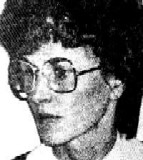 Heather Arnold
Murderer · United Kingdom · 1986
Heather Arnold was a mathematics teacher at Kingsdown Comprehensive School, War…
2 victims
Heather Arnold
Murderer · United Kingdom · 1986
Heather Arnold was a mathematics teacher at Kingsdown Comprehensive School, War…
2 victims
 Jane Andrews
Murderer · United Kingdom · 2000
Jane Andrews (born 1967) was a former Royal dresser for Sarah, the Duchess of Y…
1 victim
Jane Andrews
Murderer · United Kingdom · 2000
Jane Andrews (born 1967) was a former Royal dresser for Sarah, the Duchess of Y…
1 victim
 Marie-Thérèse Kouao
Murderer · United Kingdom · 2000
Marie-Thérèse Kouao Victoria Climbié was born on 2 November 1991 in a small Afr…
1 victim
Marie-Thérèse Kouao
Murderer · United Kingdom · 2000
Marie-Thérèse Kouao Victoria Climbié was born on 2 November 1991 in a small Afr…
1 victim
 Susan Barber
Murderer · United Kingdom · 1981
Susan Barber married Michael Barber in 1970. Susan was 17 years old and had a d…
1 victim
Susan Barber
Murderer · United Kingdom · 1981
Susan Barber married Michael Barber in 1970. Susan was 17 years old and had a d…
1 victim
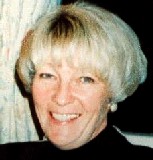 Susan May
Murderer · United Kingdom · 1992
Susan May (principal carer for her aunt) was convicted of the murder of Hilda M…
1 victim
Susan May
Murderer · United Kingdom · 1992
Susan May (principal carer for her aunt) was convicted of the murder of Hilda M…
1 victim
 Tracie Andrews
Murderer · United Kingdom · 1996
Tracie Marguerite Andrews (born 1969) was an English woman who murdered her fia…
1 victim
Tracie Andrews
Murderer · United Kingdom · 1996
Tracie Marguerite Andrews (born 1969) was an English woman who murdered her fia…
1 victim
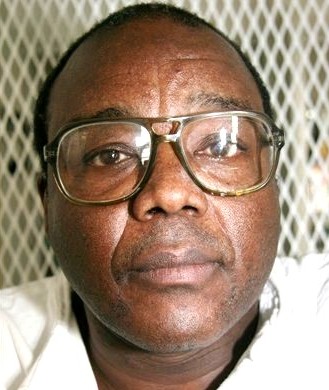 Johnny Ray Johnson
Murderer · USA · 1994
Johnny Ray Johnson was convicted and sentenced to death in Texas for capital mu…
3 victims
Johnny Ray Johnson
Murderer · USA · 1994
Johnny Ray Johnson was convicted and sentenced to death in Texas for capital mu…
3 victims
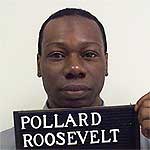 Roosevelt Pollard
Murderer · USA · 1985
Roosevelt Pollard · Maurice Alexander · Michael Hammon · Robert Sands · Howard…
1 victim
Roosevelt Pollard
Murderer · USA · 1985
Roosevelt Pollard · Maurice Alexander · Michael Hammon · Robert Sands · Howard…
1 victim
 Trevor William Hamilton
Murderer · United Kingdom · 2003
Trevor William Hamilton was convicted of the murder of Bridgit Attracta Harron…
1 victim
Trevor William Hamilton
Murderer · United Kingdom · 2003
Trevor William Hamilton was convicted of the murder of Bridgit Attracta Harron…
1 victim
 Thomas Wyatt
Murderer · USA · 1988
Thomas Anthony Wyatt, born 01/06/64, was sentenced to death on February 22, 199…
4 victims
Thomas Wyatt
Murderer · USA · 1988
Thomas Anthony Wyatt, born 01/06/64, was sentenced to death on February 22, 199…
4 victims
 Steven Spader
Homicide · USA · 2009
Steven Spader was convicted in connection with the October 4, 2009 home invasio…
1 victim
Steven Spader
Homicide · USA · 2009
Steven Spader was convicted in connection with the October 4, 2009 home invasio…
1 victim
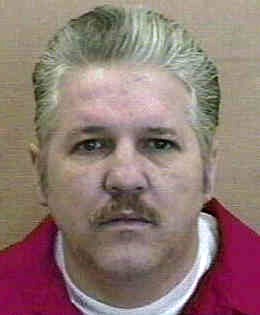 Ricky Lee Sanderson
Murderer · USA · 1985
March 14, 1985 — Hugh Holliman's sixteen-year-old daughter disappeared. · March…
1 victim
Ricky Lee Sanderson
Murderer · USA · 1985
March 14, 1985 — Hugh Holliman's sixteen-year-old daughter disappeared. · March…
1 victim
- Gender
- female
- Country
- United Kingdom
- Location
- East London, England, United Kingdom
- Date of birth
- April 8, 1948
- Age at first offence
- 42
- Characteristics
- murder for hire, armed robbery
- Victim profile
- Ronald Cook (her lover)
- Method of murder
- Shooting (shotgun)
- Date(s) of murder
- November 19, 1990
- Years active
- 1990
- Date of arrest
- —
- Status
-
Released
Sentenced to life in prison on November 12, 1991. Released in 2008
Case details
Linda Calvey was a female convicted murderer and armed robber. She was known as the "Black Widow" because all of her lovers ended up either dead or in prison.
The offence
In 1990, Linda Calvey killed her lover Ronnie Cook. The killing took place in East London. Calvey paid a hitman, Daniel Reece, £10,000 to kill Cook. Reece lost his nerve at the last minute, and Calvey picked up the gun and shot the victim at point blank range while he kneeled in front of her.
Calvey was the deceased’s long-term lover and also a friend (platonic) of Daniel Reece. She picked Reece up from prison at Portland on a Friday, and picked the deceased up from Maidstone Prison on the Monday morning. She took the deceased back to her house in London E.16, and a minute after arrival he was shot dead by Reece, who then made off.
The trial judge described the offence as "A contract killing by shotgun in East London of a prisoner then serving a long sentence in Maidstone Prison, but unofficially ‘out’ for the day. The killer was Reece, also a serving prisoner, but out of prison on weekend leave. Linda Calvey was the deceased’s long term lover and also a friend (platonic) of Reece. She had picked Reece up from prison at Portland on a Friday, and picked the deceased up from Maidstone Prison on the Monday morning. She took him back to her house in London E.16, where, a minute after arrival, he was shot dead by Reece, who then made off …. Linda Calvey was clearly from the evidence a woman who had lived with and around armed robbers for most of her adult life, and had served a sentence for robbery herself. She regularly visited her lover, the deceased, in prison: he was approaching the end of his sentence and was shortly due for release. The prosecution case was that she had arranged for another prisoner friend, Reece, to kill her lover. Daniel Reece was serving a very long sentence for a number of serious offences (13½ years). The facts behind the conviction showed that he was a dangerous man …. The killing was a totally cold-blooded affair …."
Although the trial judge described it as a contract killing, the Lord Chief Justice commented that it was not clear why Calvey wished the victim to be killed or what the inducement was for Reece to kill him.
Calvey continued to claim her innocence, but she accepted that the court had to proceed on the basis of the jury’s verdict.
Investigation
The issues at trial included the identity of the killer, joint enterprise and intention. The jury decided all those issues against both defendants.
Trial
On 12 November 1991 at the Central Criminal Court, after a trial before Mr Justice Hidden and a jury, Linda Calvey and Daniel Reece were convicted of murder.
The trial jury was told that Calvey originally hired a hit man, Daniel Reece, for £10,000 to carry out the murder in November 1990. It was also stated that Reece lost his nerve at the last minute, and Calvey forced Cook to kneel in front of her before carrying out the killing.
Both Calvey and Reece denied murdering Cook at Calvey's home in Plaistow, east London, in November 1990.
Calvey was nicknamed the Black Widow because of her habit of dressing in black after her husband Mickey was shot dead by police in 1978 while he was carrying out an armed robbery.
A High Court bid for freedom later described the trial judge’s minimum period recommendation as seven years, and stated that the then Home Secretary more than doubled the tariff to 15 years in 1993. That later material also stated the tariff was reviewed and reset in 1998.
Sentencing
Linda Calvey and Daniel Reece were sentenced to life imprisonment.
The Home Secretary notified a minimum period which should be served by each before release on licence as 15 years.
The trial judge recommended a minimum period of 7-8 years. The Lord Chief Justice commented on the lack of clarity about Calvey's motivation and Reece’s inducement, and continued: “If this was simply a cold blooded killing for money or money’s worth, as appears likely, then I would suggest that 15 years would be a proper minimum in each case. There is, however, a shortage of detail, and my assessment is accordingly provisional.”
The Secretary of State notified a tariff of 15 years in line with that provisional recommendation.
In later reasons for decision on Calvey’s minimum term application, the court reasoned that the offence involved the use of a firearm and that it was a contract killing, even though the nature of the inducement was not known. The court also stated that Calvey’s criminal record, including a 5 year custodial sentence for a robbery offence, was an aggravating factor.
The court stated it was required by paragraph 3(1)(a) of schedule 22 that the minimum term specified by it must not be greater than the minimum term notified by the Secretary of State. The specified period was therefore calculated as 15 years less the 11 months 5 days spent in custody on remand.
Appeals
Minimum term review application under schedule 22
Calvey applied under paragraph 3 of schedule 22 to the Criminal Justice Act 2003 for the court to determine her minimum term.
The court noted that it was directed by schedule 22 provisions, and considered the Home Office file including the report of the trial judge and previous representations made on Calvey’s behalf. It also considered detailed submissions made in solicitor’s letters dated 19 April 2004 and 10 November 2004, together with enclosures, as well as Calvey’s own letter dated 17 November 2004. There was no request for an oral hearing, and the court stated there was nothing in the circumstances to justify a hearing.
The court stated that the trial judge recommended a minimum period of 7-8 years and that the Secretary of State notified 15 years. It stated that the contrast between the trial judge’s recommendation and the Secretary of State tariff lay at the heart of submissions on Calvey’s behalf.
The court reached the conclusion that it must come down to the notified minimum term of 15 years, accounting for time spent on remand.
High Court bid for freedom and judicial review argument
Calvey later launched a new High Court bid for freedom, seeking permission to challenge the Home Secretary’s failure to refer her case to the Parole Board. Her counsel Alan Newman QC accused Home Secretary David Blunkett of acting unlawfully and in breach of the European Convention on Human Rights.
The High Court bid material stated that Calvey had served 12 years of her life sentence and was held at Highpoint Prison, Suffolk. It described her as convicted in November 1991 of the murder of Ronald Cook.
It stated that at her Old Bailey trial the jury was told she had hired a hit man, Daniel Reece, for £10,000, Reece lost his nerve, and Calvey forced Cook to kneel before the killing.
It stated that at the time the then Home Secretary more than doubled the tariff to 15 years in 1993, and that the tariff was reviewed and reset in 1998. It also stated that in November the previous year, the House of Lords ruled in the case of Anderson that it was incompatible with human rights laws for the Home Secretary to set tariffs for mandatory lifers.
The bid material stated that Article 6 of the European Convention on Human Rights required minimum periods in custody to be set by an "independent and impartial tribunal". It stated that Calvey asked the Home Office to refer her case to the Parole Board as a matter of urgency, but her request was turned down.
The bid material stated Mr Newman told Mr Justice Jackson that the Home Secretary’s failure was unreasonable and breached Article 5 of the convention, guaranteeing a prisoner's right to have their case reassessed if the basis for detention changed. The bid material included the quotation: “irrelevant”. It also quoted counsel as saying it was “irrelevant” that the Lord Chief Justice had also concluded that the tariff should be 15 years.
It stated the Home Secretary had taken the view that Calvey would have to wait until she could take advantage of new legislation passing through Parliament dealing with the position of lifers' tariffs, and counsel argued that by then she would probably have served the full 15-year tariff and that this would amount to a "cruel punishment" contrary to the 1688 Bill of Rights. Counsel also argued the case could affect many other murderers serving life sentences, and included the quotation: “The present application raises important and difficult points of law. Whatever may be the eventual outcome, even if at the end of the day the Secretary of State's view prevails, this case clearly should be allowed to proceed to a full hearing."
Outcome
In a later update, Calvey was described as having been sentenced to life in prison on 12 November 1991 and released in 2008. At the time of an earlier High Court bid, she was described as held at Highpoint Prison, Suffolk.
Other details
Relationships and background
Calvey was described as having begun her criminal career as a lookout, later becoming a getaway driver, and eventually wielding guns during robberies.
A later narrative described that Calvey regularly visited her lover Cook in prison, and that Cook was approaching the end of his sentence and was shortly due for release.
Calvey’s husband Mickey was described as being shot dead by police in 1978 while he was carrying out an armed robbery. Calvey’s habit of dressing in black after Mickey’s death contributed to the Black Widow nickname.
A later narrative said Calvey was a prison hairdresser and had assumed the title of the longest-serving female prisoner in the country when Myra Hindley died.
Myra Hindley was described as being a relationship in prison in which Calvey dyed Hindley’s hair regularly.
In the narrative, Calvey claimed she had not done the killing of Ronald Cook and said she had always held her hands up to what she had done, stating she had done armed robbery, while denying that she killed Ron.
The narrative included the quotation about her continued claim of innocence: “I did not kill Ron and should not have done that sentence, but I know full well that it was my lifestyle that put me in prison for that murder, and that is a terrible thing to live with.”
Quotes in reasons for decision material
The court included the trial judge’s report quotation beginning “A contract killing by shotgun in East London...”.
The court included the Lord Chief Justice quotation: “If this was simply a cold blooded killing for money or money’s worth, as appears likely, then I would suggest that 15 years would be a proper minimum in each case.
The High Court bid included counsel’s quotation: “The present application raises important and difficult points of law.

Spotted an error, or have more information about this case?