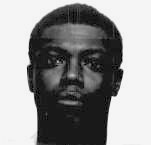
Carl Johnson
Murderer Ervil LeBaron
Murderer · USA · 1972
Ervil Morrell LeBaron (1925 to August 16, 1981) was the leader of a polygamous…
35 victims
Ervil LeBaron
Murderer · USA · 1972
Ervil Morrell LeBaron (1925 to August 16, 1981) was the leader of a polygamous…
35 victims
 Brian Kevin Rosenfeld
Murderer · USA · 1985
Brian Kevin Rosenfeld Brian Kevin Rosenfeld was sentenced to three concurrent l…
23 victims
Brian Kevin Rosenfeld
Murderer · USA · 1985
Brian Kevin Rosenfeld Brian Kevin Rosenfeld was sentenced to three concurrent l…
23 victims
 Marvin Gray
Murderer · USA · 1975
Marvin Gray was convicted killer who claimed responsibility for 23 slayings and…
23 victims
Marvin Gray
Murderer · USA · 1975
Marvin Gray was convicted killer who claimed responsibility for 23 slayings and…
23 victims
 Yahweh ben Yahweh
Murderer · USA · 1980
Yahweh ben Yahweh was born and legally named Hulon Mitchell Jr. (October 27, 19…
23 victims
Yahweh ben Yahweh
Murderer · USA · 1980
Yahweh ben Yahweh was born and legally named Hulon Mitchell Jr. (October 27, 19…
23 victims
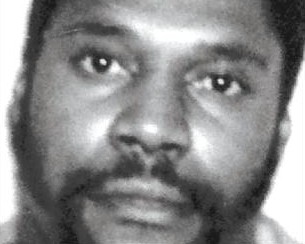 Ronald Bernard Bennett
Murderer · USA · 1985
Ronald Bernard Bennett was executed by lethal injection in Virginia on November…
1 victim
Ronald Bernard Bennett
Murderer · USA · 1985
Ronald Bernard Bennett was executed by lethal injection in Virginia on November…
1 victim
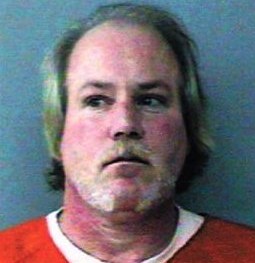 Scott Harlan Thorpe
Homicide · USA · 2001
Scott Harlan Thorpe, 40, opened fire at Nevada County's mental health office in…
3 victims
Scott Harlan Thorpe
Homicide · USA · 2001
Scott Harlan Thorpe, 40, opened fire at Nevada County's mental health office in…
3 victims
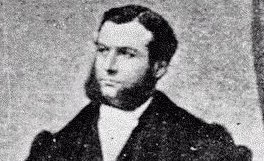 Edmond de la Pommerais
Murderer · France · 1862
Edmond de la Pommerais presented himself as a count and married a woman from a…
2 victims
Edmond de la Pommerais
Murderer · France · 1862
Edmond de la Pommerais presented himself as a count and married a woman from a…
2 victims
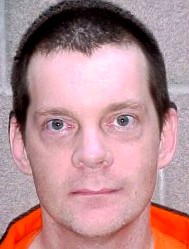 Milo Stanley
Murderer · USA · 1986
Milo Stanley was convicted in Yavapai County of fatally shooting his wife, Susa…
2 victims
Milo Stanley
Murderer · USA · 1986
Milo Stanley was convicted in Yavapai County of fatally shooting his wife, Susa…
2 victims
 Angelo Colalillo
Murderer · Canada · 1993
Angelo Colalillo was suspected of committing serial sexual assaults and murders…
3 victims
Angelo Colalillo
Murderer · Canada · 1993
Angelo Colalillo was suspected of committing serial sexual assaults and murders…
3 victims
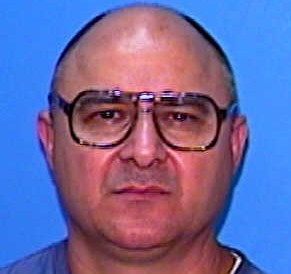 Gerardo Manso
Murderer · USA · 1991
Gerardo Manso was convicted of one count of first-degree murder and four counts…
2 victims
Gerardo Manso
Murderer · USA · 1991
Gerardo Manso was convicted of one count of first-degree murder and four counts…
2 victims
- Gender
- male
- Country
- USA
- Location
- Harris County, Texas, USA
- Date of birth
- March 5, 1955
- Age at first offence
- 23
- Characteristics
- robbery, drugs, drug addict, alcohol, attempt to collect insurance money
- Victim profile
- Ed Thompson, 75 (security guard)
- Method of murder
- Shooting (.38 caliber revolver)
- Date(s) of murder
- October 6, 1978
- Years active
- 1978
- Date of arrest
- —
- Status
-
Executed
Executed by lethal injection in Texas on September 19, 1995
Case details
Carl Johnson (#633) was executed by lethal injection in Texas on September 19, 1995. Carl Johnson was 40 years old. He had an education level of 8th grade.
Background
On Oct. 6, 1978, Johnson and an accomplice entered a family-owned food store in northwest Houston to rob it. The accomplice later testified against Johnson in exchange for a reduced charge, and was sentenced to 40 years in prison.
Johnson had no criminal convictions.
Johnson turned to drugs and alcohol as a child and was described as having been physically and emotionally abused as a child and abandoned by his parents. He became very involved in religion before his death and became a Muslim seeking inner peace.
Johnson became religious and repentant while in prison. He had no significant disciplinary violations. He worked in prison and crafted religiously-inspired art. He got his high school equivalency diploma.
The offence
On Oct. 6, 1978, Johnson and Carl Baltimore, a “so-called” friend and accomplice, decided to rob Wayne’s Food Mart in Houston. Ed Thompson was the 75-year-old security guard on duty that night.
When the two came in armed, demanding money, Thompson pulled his gun and fired a shot. Johnson then turned and pointed his .38 revolver toward Thompson and fired back five times. Johnson later claimed he fired in self-defense and said he did not intend to kill the guard. The robbers got away with only some change.
Thompson died of fatal shots to the head.
Johnson was caught after he was arrested for another robbery, after which he confessed to the slaying of Thompson. Baltimore had turned him in to receive a decreased punishment for himself.
Investigation
Johnson was caught when he was arrested for another robbery. After that arrest, he confessed to the slaying of Ed Thompson.
Trial
Johnson was tried in 1979.
Johnson’s trial process included “a lot of technical legal problems throughout the trial” and was described as being affected by Johnson having bad lawyers. David Dow, one of Johnson’s many attorneys, said:
“There had been a lot of technical legal problems throughout the trial because Johnson had bad lawyers”
Johnson’s lead counsel, Joe Cannon, slept through jury selection and half the trial. Johnson’s other court-appointed attorney was described as a recent law school graduate who wasn’t considered incompetent, just inexperienced.
The lawyers did not bring up issues that needed to be objected to or clarify specific circumstances of the case to the jury. For example, the jury was uninformed about the possibility of rehabilitation with life in prison as opposed to the death penalty.
The only person who testified on Johnson’s behalf was Reverend Shelvy Brown:
“I didn’t know him outside of the church,”
“I didn’t know how he was around others, he was always respectful towards me.”
Because Brown didn’t know Johnson outside of church, the prosecutor objected to the testimony. Johnson’s lawyers did not object, and as a result the jury was told to disregard Brown’s testimony.
Johnson received the death penalty.
Prosecutor Chris A. Lorenzen said:
“I remember this guy and I remember the age of the victim.”
“That old security guard couldn’t have harmed a fly.”
Sentencing
Johnson was sentenced to death and received the ultimate punishment, the death penalty.
Appeals
After the trial process, Johnson’s case went through a seven-year appeals process. David Dow said:
“By the time I came in, the mistakes that had already been made were unchangeable, there was nothing that I could do”
Outcome
Carl Johnson was executed by lethal injection.
Johnson’s execution took place on Sept. 19, 1995 at 12:24 a.m. He was only 40 years old. It took only eight minutes for him to die.
Johnson’s final statement was:
“I want the world to know that I’m innocent and that I’ve found peace. Let’s ride. I’m ready.”
Other details
David Dow wrote “Justice Denied” on uhlawblog.com dated July 19, 2007, and discussed George W. Bush’s governorship of Texas and execution scheduling for Johnson in relation to other clemency matters.
The narrative described George W. Bush becoming governor of Texas in 1994 when he upset Ann Richards. It described Johnson as being scheduled for execution after killing a security guard during a holdup of a convenience store. It also described that the guard had opened fire first, and that Johnson accepted responsibility and was remorseful.
The narrative described that Johnson had been robbing the convenience store to support an expensive heroin habit that he picked up in Vietnam after being drafted.
The narrative described Johnson’s trial representation as “one of the most notoriously inept death penalty lawyers in history” and stated the lawyer slept through numerous trials, including Johnson’s, and was eventually no longer permitted to represent capital murder defendants.
It also stated that Johnson’s co-defendant pleaded guilty and was released from prison by the time Johnson’s execution date rolled around.
The narrative stated that the governor cannot commute a death row inmate’s sentence without approval of the Board of Pardons and Parole, and that the governor appoints members of the board and they take their cues from him. It described Governor Bush signing a commutation recommendation in 1998 regarding Henry Lee Lucas.
The narrative described David Dow asking then-Gov. Bush to grant my client a 30-day reprieve as a way to signal the board that Johnson’s death sentence should be commuted to life, and that the request was denied along with 56 other reprieve requests for death row inmates.
It also compared the situation to commutation of I. Lewis Libby and mentioned pardons and commutations in relation to equality and constitutional principles.

Spotted an error, or have more information about this case?