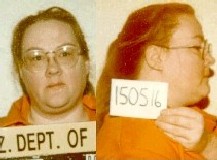
Doris Carlson
Murderer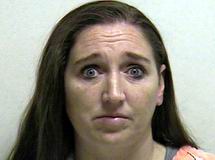 Megan Huntsman
Murderer · USA · 1996
Megan Huntsman was 40 at sentencing. She was a mother of three children who wer…
6 victims
Megan Huntsman
Murderer · USA · 1996
Megan Huntsman was 40 at sentencing. She was a mother of three children who wer…
6 victims
 Angela Johnson
Murderer · USA · 1993
Angela Jane Johnson was convicted in federal court of aiding and abetting the m…
5 victims
Angela Johnson
Murderer · USA · 1993
Angela Jane Johnson was convicted in federal court of aiding and abetting the m…
5 victims
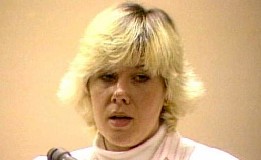 Catherine May Wood
Murderer · USA · 1987
Catherine May Wood was an American caregiver who worked at the Alpine Manor Nur…
5 victims
Catherine May Wood
Murderer · USA · 1987
Catherine May Wood was an American caregiver who worked at the Alpine Manor Nur…
5 victims
 Michele Kalina
Murderer · USA · 1996
Michele Kalina pleaded guilty to murder for one of five infants she initially w…
5 victims
Michele Kalina
Murderer · USA · 1996
Michele Kalina pleaded guilty to murder for one of five infants she initially w…
5 victims
 Tiffany Hall
Murderer · USA · 2006
Tiffany Hall was 24 when she was charged in September 2006. She later entered a…
5 victims
Tiffany Hall
Murderer · USA · 2006
Tiffany Hall was 24 when she was charged in September 2006. She later entered a…
5 victims
 Amy Bishop
Murderer · USA · 1986
Amy Bishop — biology professor and perpetrator · James Anderson — Bishop’s husb…
4 victims
Amy Bishop
Murderer · USA · 1986
Amy Bishop — biology professor and perpetrator · James Anderson — Bishop’s husb…
4 victims
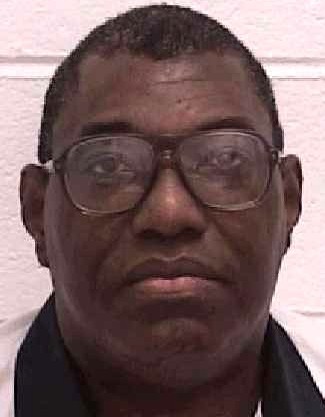 Robert Lewis Collier
Murderer · USA · 1978
Robert Lewis Collier was sentenced to death in August 1978. His death sentence…
1 victim
Robert Lewis Collier
Murderer · USA · 1978
Robert Lewis Collier was sentenced to death in August 1978. His death sentence…
1 victim
 Awilda Lopez
Murderer · USA · 1995
Awilda Lopez was born on April 28, 1966. She was sentenced in relation to the b…
1 victim
Awilda Lopez
Murderer · USA · 1995
Awilda Lopez was born on April 28, 1966. She was sentenced in relation to the b…
1 victim
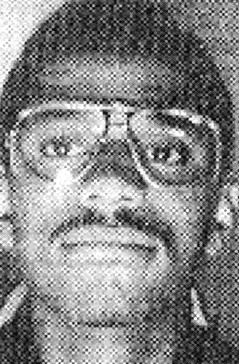 Dwayne Weeks
Murderer · USA · 1992
Dwayne Weeks was convicted in Delaware of the 1992 murder of his estranged wife…
2 victims
Dwayne Weeks
Murderer · USA · 1992
Dwayne Weeks was convicted in Delaware of the 1992 murder of his estranged wife…
2 victims
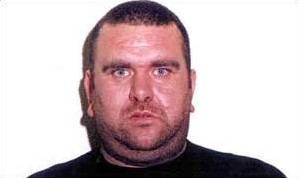 Philip John Smith
Spree killer · United Kingdom · 2000
Philip John Smith was a former fairground worker and taxi driver who was servin…
3 victims
Philip John Smith
Spree killer · United Kingdom · 2000
Philip John Smith was a former fairground worker and taxi driver who was servin…
3 victims
 Mayra Perez
Murderer · USA · 2013
Mayra Perez was 23 and lived in northeast Denver with her husband, Ricky Perez,…
2 victims
Mayra Perez
Murderer · USA · 2013
Mayra Perez was 23 and lived in northeast Denver with her husband, Ricky Perez,…
2 victims
- Gender
- female
- Country
- USA
- Location
- Maricopa County, Arizona, USA
- Date of birth
- February 4, 1962
- Age at first offence
- 34
- Characteristics
- murder for hire, financial gain
- Victim profile
- Mary Lynne Carlson (her elderly mother-in-law)
- Method of murder
- Stabbing with knife
- Date(s) of murder
- October 25, 1996
- Years active
- 1996
- Date of arrest
- November 21, 1996
- Status
-
Sentenced to death
Sentence reduced to natural life without the possibility of parole on June 27, 2002; sentenced to death on March 31, 2000
Case record: Doris Carlson
Status
Doris Ann Carlson was sentenced to death on March 31, 2000. The sentence was reduced to natural life without the possibility of parole on June 27, 2002.
People
- Doris Ann Carlson (Defendant)
- David Carlson (codefendant; Defendant’s husband; Lynne’s only child and beneficiary of Lynne’s trust and both annuities)
- Mary Lynne Carlson (victim; Defendant’s boarder/house resident; diagnosed with multiple sclerosis; confined to a wheelchair; later died from knife attack)
- John Daniel McReaken (Dan) (boarder; Defendant approached him to find someone who wanted to make $20,000 by killing Lynne)
- Scott Smith (Scott) (seventeen-year-old; offered to help Dan; agreed to receive half of the $20,000)
Timeline
- July 27, 1999 — A jury found Doris Ann Carlson guilty of first-degree murder, conspiracy to commit first-degree murder, and first-degree burglary.
- March 31, 2000 — The trial court sentenced Carlson to death for the murder; life imprisonment without the possibility of parole for twenty-five years on the conspiracy count; and an aggravated term of twenty-one years for the burglary, with all sentences concurrent.
- November 21, 1996 — Defendant, David Carlson, Dan McReaken, and Scott Smith were arrested less than a month after the attack.
- October 25, 1996 — After just after 1:00 a.m., Defendant drove Dan and Scott to Lynne’s apartment; Dan stabbed Lynne eight to ten times.
- October 24, 1996 — Defendant told Dan that Lynne needed to be killed really soon; Dan relayed the message to Scott; Scott dressed in black with Dan, and they got gloves and knives; Defendant gave them a key to Lynne’s apartment and offered to drive them there.
- October 23, 1996 — Defendant and David went to see Lynne and asked her to sign annuity documents to get money to help pay the mortgage; Lynne refused without consulting her financial advisor.
- Late September or early October 1996 — Defendant approached boarder Dan McReaken and asked if he knew anybody who wanted to make $20,000 by killing Lynne.
- July 1996 — Lynne moved into a residential care facility.
- April 21, 1997 — Lynne died from the knife attack.
- June 27, 2002 — The Arizona Supreme Court, case CR1996-012554, affirmed the convictions and reduced the sentence from death to natural life without the possibility of parole.
- June 27, 02 — conviction affirmed and sentence reduced from DEATH to NATURAL LIFE without the possibility of parole.
Background
In 1996, Doris Ann Carlson and her husband, codefendant David Carlson, lived in a house in Peoria, Arizona, shared with David’s mother, the victim Mary Lynne Carlson. Defendant and David were financially dependent on Lynne. Lynne received about $850 each month from a trust fund valued at several hundred thousand dollars, and she also had two annuities with a combined value of approximately $140,000. Lynne received roughly $800 per month from the first annuity and was allowed to draw on the principal from the second. David was Lynne’s only child and was the beneficiary of the trust and both annuities.
Several years earlier, Defendant and David moved from Illinois to Arizona. Lynne withdrew $70,000 from her second annuity and bought the Peoria house to accommodate all of them. Defendant and David depended on Lynne’s trust and annuities to pay their living expenses.
Lynne had multiple sclerosis and was confined to a wheelchair, with trouble controlling her bodily functions. Defendant was impatient with Lynne, claimed Lynne was only pretending to have multiple sclerosis, and yelled and cursed at her. Several times a week, Defendant suggested Lynne should be killed so that she and David could get Lynne’s money.
Because Lynne needed more care than David and Defendant could give at home, Lynne moved into a residential care facility in July 1996. After Lynne moved, the trust stopped paying the utility bills and had them redirected to the home address. Lynne’s trust fund and annuity checks stopped coming to the house, leaving Defendant and David broke.
The offence
Defendant approached Dan McReaken in late September or early October 1996 and asked if he knew anybody who wanted to make $20,000 by killing Lynne. Dan accepted Defendant’s offer. Another boarder, seventeen-year-old Scott Smith, offered to help Dan. Dan agreed to give Scott half of the $20,000.
Defendant gave Dan money to buy gloves to use when killing Lynne. Dan and Scott already had the weapons, each having his own butterfly knife. Several days later, Defendant drove Dan and Scott to Lynne’s residential care facility to locate Lynne’s apartment and familiarize themselves with the area around it, including different ways into and out of the facility.
On October 23, 1996, Defendant and David went to see Lynne and asked her to sign annuity documents in order to get money to help pay the mortgage so they would not lose the house. Lynne refused to sign without first consulting her financial advisor, which made Defendant angry.
The next evening, October 24, Defendant told Dan that Lynne needed to be killed really soon, and Dan relayed the message to Scott. When Scott got home from work that evening, Scott and Dan dressed in black and got their gloves and knives. Defendant gave them a key to Lynne’s apartment and offered to drive them there.
Sometime after 1:00 a.m. on October 25, 1996, Defendant drove Dan and Scott to a supermarket near Lynne’s care facility and told them she would wait for them there. Once in Lynne’s apartment, Scott stayed in the living room and disconnected the television, and moved the items from it to make it appear there had been a burglary. Dan went into the bedroom, hesitated, closed his eyes, and stabbed Lynne eight to ten times. Dan later told Scott that he had stabbed Lynne in her throat and upper body and that she should die.
After returning to the car, Defendant asked whether they had done it, and Scott replied that they had. Defendant then drove them back to the house.
At about 5:00 a.m. that same morning, a nursing assistant went to Lynne’s apartment to make her regular check. As she was unlocking the door, Lynne called out the assistant’s name and yelled at her for help, telling her she had fought “them” off as hard as she could.
Lynne underwent several operations, but she never recovered from the knife attack and died on April 21, 1997.
Investigation and arrest
Following Lynne’s death, Defendant, David, Dan, and Scott were arrested on November 21, 1996, less than a month after the attack. Based on the evidence presented, the jury found Defendant guilty of first-degree murder.
Trial
On July 27, 1999, a jury found Doris Ann Carlson (Defendant) guilty of first-degree murder, conspiracy to commit first-degree murder, and first-degree burglary.
Because the trial judge sentenced Defendant to death for the murder, direct appeal to the Arizona Supreme Court was automatic.
Under the Arizona system, the special sentencing hearing after conviction for first-degree murder was conducted without a jury, and the judge made the factual findings that determined whether Defendant was to be sentenced to life imprisonment or death (A.R.S. § 13-703(B)).
Sentencing
In Defendant’s aggravation/mitigation hearing, the judge determined that the state had proven three aggravating factors beyond a reasonable doubt:
- Defendant procured Lynne’s murder by promise of payment of something of pecuniary value, namely $20,000 (A.R.S. § 13-703(F)(4)).
- Lynne’s murder was committed in expectation of Defendant’s pecuniary gain (A.R.S. § 13-703(F)(5)).
- Lynne’s murder was committed in an especially heinous, cruel, or depraved manner (A.R.S. § 13-703(F)(6)).
The judge found one statutory mitigating circumstance:
- Duress (A.R.S. § 13-703(G)(2)).
The judge found two non-statutory mitigating circumstances:
- No prior criminal history.
- Brain damage.
The judge determined that the mitigating evidence, when weighed against the aggravating evidence, was insufficient to call for leniency. The court sentenced Defendant to death.
The sentencing included:
- Death for the murder charge.
- Life imprisonment without the possibility of parole for twenty-five years on the conspiracy count.
- An aggravated term of twenty-one years for the burglary. All sentences were concurrent.
Appeals
After sentencing to death, direct appeal to the Arizona Supreme Court occurred automatically. The Arizona Supreme Court case CR-00-0161-AP (with reference to CR1996-012554 dated 06-27-02) addressed Defendant’s appeal.
The Arizona Supreme Court affirmed the convictions and reduced the sentence from death to natural life without the possibility of parole.
Outcome
The Arizona Supreme Court:
- Affirmed convictions.
- Reduced the sentence from death to natural life without the possibility of parole on June 27, 2002.
Other details
Defendant and David were financially dependent on Lynne’s trust and annuities. Lynne’s trust fund and annuity checks stopped coming to the house after she moved into residential care, and the trust redirected utility bills to the home address. Defendant suggested several times a week that Lynne should be killed so Defendant and David could get Lynne’s money.
On October 25, 1996, Scott disconnected the television and moved items from it to make it appear there had been a burglary.


Spotted an error, or have more information about this case?