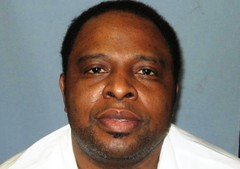
Willie McNair
Murderer Brian Kevin Rosenfeld
Murderer · USA · 1985
Brian Kevin Rosenfeld Brian Kevin Rosenfeld was sentenced to three concurrent l…
23 victims
Brian Kevin Rosenfeld
Murderer · USA · 1985
Brian Kevin Rosenfeld Brian Kevin Rosenfeld was sentenced to three concurrent l…
23 victims
 Yahweh ben Yahweh
Murderer · USA · 1980
Yahweh ben Yahweh was born and legally named Hulon Mitchell Jr. (October 27, 19…
23 victims
Yahweh ben Yahweh
Murderer · USA · 1980
Yahweh ben Yahweh was born and legally named Hulon Mitchell Jr. (October 27, 19…
23 victims
 Russell Ellwood
Murderer · USA · 1991
Russell Ellwood was a former taxi driver. Authorities suspected him of killing…
20 victims
Russell Ellwood
Murderer · USA · 1991
Russell Ellwood was a former taxi driver. Authorities suspected him of killing…
20 victims
 Robert Martines Perez
Murderer · USA · 1994
Name: Robert Martines Perez · Other name used in proceedings: Robert Martinez P…
15 victims
Robert Martines Perez
Murderer · USA · 1994
Name: Robert Martines Perez · Other name used in proceedings: Robert Martinez P…
15 victims
 Lawrence Jefferson
Murderer · USA · 1985
Lawrence Joseph Jefferson (42) was convicted of felony murder during the commis…
1 victim
Lawrence Jefferson
Murderer · USA · 1985
Lawrence Joseph Jefferson (42) was convicted of felony murder during the commis…
1 victim
 Andre Rand
Murderer · USA · 1972
Andre Rand was born Andre Rashan in 1943. He later used the name “Rand” and emp…
4 victims
Andre Rand
Murderer · USA · 1972
Andre Rand was born Andre Rashan in 1943. He later used the name “Rand” and emp…
4 victims
 Albert Burrows
Murderer · United Kingdom · 1920
Albert Burrows (also named Albert Edward Burrows): married farm labourer who to…
4 victims
Albert Burrows
Murderer · United Kingdom · 1920
Albert Burrows (also named Albert Edward Burrows): married farm labourer who to…
4 victims
 John Wayne Gacy
Serial killer · USA · 1972
John Wayne Gacy was executed by lethal injection in Illinois on May 10, 1994. H…
33 victims
John Wayne Gacy
Serial killer · USA · 1972
John Wayne Gacy was executed by lethal injection in Illinois on May 10, 1994. H…
33 victims
 Wilford Lee Berry
Murderer · USA · 1989
Wilford Lee Berry, Jr. was executed by lethal injection in Ohio on February 19,…
1 victim
Wilford Lee Berry
Murderer · USA · 1989
Wilford Lee Berry, Jr. was executed by lethal injection in Ohio on February 19,…
1 victim
 Eugéne-Marie Chantrelle
Murderer · United Kingdom · 1878
Eugéne-Marie Chantrelle was a French-born school teacher who lived in Edinburgh…
1 victim
Eugéne-Marie Chantrelle
Murderer · United Kingdom · 1878
Eugéne-Marie Chantrelle was a French-born school teacher who lived in Edinburgh…
1 victim
- Gender
- male
- Country
- USA
- Location
- Montgomery County, Alabama, USA
- Date of birth
- November 18, 1964
- Age at first offence
- 26
- Characteristics
- robbery, drug addict
- Victim profile
- Ella Foy Riley (female, 68)
- Method of murder
- St abbing with knife - Strangulation
- Date(s) of murder
- May 21, 1990
- Years active
- 1990
- Date of arrest
- Next day
- Status
-
Executed
Executed by lethal injection in Alabama on May 14, 2009
Case record: Willie McNair
Other names and identifiers
- Inmate name: MCNAIR, WILLIE
- Gender: M
- Race: B
- Date of birth: 11/18/1964
- DOC#: 00Z528
- Prison: Holman
- Prison received: 5/16/1991
- County: MONTGOMERY
- Charge: MURDER
- Citation references included: McNair v. State, 653 So.2d 320 (Ala.Cr.App. 1992); Ex parte McNair, 653 So.2d 353 (Ala. 1994); McNair v. State, 706 So.2d 828 (Ala. 1997); McNair v. Campbell, 416 F.3d 1291 (11th Cir. 2005)
Timeline
- May 21, 1990 — Willie McNair and another man went to the home of Ella Foy Riley; McNair asked to borrow twenty dollars, asked for a glass of water, then attacked Riley by grabbing her by the neck and stabbing her in the throat; the blade of the knife broke off in Riley’s neck, and McNair stabbed her again after his companion retrieved another knife; evidence indicated McNair also strangled Riley for several minutes as she bled to death; after killing Riley, McNair took Riley’s purse and fled with his companion; they drove several miles down a rural road, rummaged through the purse, and then dumped it; Riley died from the cuts to her throat and strangulation.
- April 18, 1991 — McNair was convicted of capital murder in the course of a robbery.
- April 18, 1991 — McNair was found guilty after a jury trial of the capital offense charged in the indictment.
- May 16, 1991 — The trial court sentenced McNair to death after adopting the jury’s recommendation.
- July 12, 1990 — McNair was indicted for the capital offense of murder committed during a robbery in the first degree or an attempt thereof.
- July 24, 1992 — On direct appeal, the case was remanded for new sentencing proceedings because evidence of McNair’s prior Florida conviction based upon a plea of nolo contendere had been improperly admitted and considered in sentencing proceedings.
- January 25-28, 1993 — A new sentencing proceeding was held before a new jury after McNair’s motion for a change of venue had been granted and the case had been transferred to Montgomery County; the jury recommended life imprisonment without the possibility of parole by a vote of eight to four.
- February 26, 1993 — After a separate sentencing hearing, the trial court rejected the jury’s recommendation and sentenced McNair to death.
- April 23, 1993 — The circuit court filed its return to remand.
- August 13, 1993 — The case was remanded again to reconsider the sentence determination; to enter a new sentencing order with specific written findings on the statutory aggravating and mitigating circumstances and any additional nonstatutory mitigating circumstance; and to supplement the record with a presentence report.
- August 18, 1993 — The trial court entered an amended sentencing order in response to the second remand.
- August 23, 1993 — The trial court filed a return to remand.
- September 30, 1993 — The case was remanded a third time because the amended sentencing order only partially complied with the remand instructions.
- October 6, 1993 — The trial court entered yet another sentencing order.
- October 14, 1993 — The trial court filed its return to remand.
- January 21, 1994 — The Court of Criminal Appeals affirmed the conviction and sentence of death.
- September 2, 1994 — The Alabama Supreme Court affirmed the conviction and death sentence.
- February 21, 1995 — The United States Supreme Court denied McNair’s petition for certiorari review.
- July 5, 1995 — McNair filed his post-conviction petition in Henry County pursuant to Rule 32.
- July 27, 1995 — The district attorney filed a motion for summary disposition.
- August 1, 1995 — The attorney general filed an answer and a motion for partial dismissal as to claims asserted to be procedurally barred and insufficiently pleaded.
- August 3, 1995 — The circuit court granted the attorney general’s motion for partial dismissal.
- August 24, 1995 — McNair filed an amendment to his petition.
- August 30, 1995 — The circuit court entered an order finding that all issues raised in the petition as amended were barred, except ineffective assistance of counsel, failure of the state to turn over exculpatory evidence, and unconstitutionality of the death penalty due to a pattern of racial bias; those issues were set for evidentiary hearing.
- October 24, 1995 — McNair filed a second amendment to his petition.
- November 8, 1995 — An evidentiary hearing was held.
- November 13, 1995 — The circuit court denied the Rule 32 petition.
- August 18, 1998 — McNair filed a federal habeas corpus petition in the United States District Court for the Middle District of Alabama.
- March 12, 2004 — The district court granted the habeas petition with respect to the death sentence on ineffective assistance of counsel grounds; the petition was denied on all other grounds.
- May 14, 2009 — McNair was executed by lethal injection in Alabama.
Background
Willie McNair was convicted of robbing, strangling and stabbing to death Ella Foy Riley, a woman for whom he had done yard work. Riley lived alone as an elderly widow and occasionally hired McNair to do yard work. McNair and another man went to Riley’s home on the night of May 21, 1990.
McNair’s family and victim’s family were described as watching the execution. Riley had six children, and the children wore buttons bearing their mother’s photograph with the words “You are not forgotten.”
The offence
On the night of May 21, 1990, McNair asked Ella Foy Riley if he could borrow twenty dollars. Riley told McNair she had no money to lend him. McNair then asked if he could have a glass of water. Riley invited him in. When Riley turned around, McNair grabbed her by the neck and stabbed her in the throat. The blade of the knife broke off in Riley’s neck. McNair’s companion retrieved another knife from the kitchen and McNair stabbed Riley in the neck again. The wounds severed Riley’s carotid artery and jugular vein.
Evidence indicated that McNair also strangled Riley, who struggled for several minutes as she bled to death. After killing Riley, McNair took Riley’s purse from the kitchen counter and fled the scene with his companion. The pair drove several miles down a rural road, rummaged through Riley’s purse, and then dumped it. Riley died from the loss of blood due to the cuts to her throat and strangulation.
Investigation and arrest
When an officer came to McNair’s house the next morning, McNair admitted killing Riley and was arrested. McNair subsequently directed officers to the place where he had dumped Riley’s purse and gave detailed descriptions of the murder to investigators. McNair’s confession included admitting stabbing Riley in the throat and taking her purse.
Trial
McNair was indicted for the capital offense of murder committed during a robbery in the first degree or an attempt thereof, a violation of § 13A-5-40(a)(2), Code of Alabama 1975.
On April 18, 1991, McNair was found guilty after a jury trial of the capital offense charged in the indictment. The jury, by a vote of 10 to 2, recommended a sentence of death. The trial court adopting the jury’s recommendation sentenced McNair to death on May 16, 1991. McNair did not testify at trial.
Defence theory
McNair’s defence, as argued on the basis of the statements given by McNair, was that he was guilty of the lesser included offense of intentional murder. The defence version described McNair as having gone with Olin Grimsley to ask Riley to lend him some money; when Riley refused, McNair “lost control” and stabbed her; and the purse was taken only as an afterthought. The essence of the defence was that although intentional, the murder was not committed during the course of a robbery.
Prior conviction and sentencing issues on direct appeal
At the jury sentencing hearing, the prosecutor proved that on August 4, 1989, in the Circuit Court of St. Lucie County, Florida, McNair entered a plea of nolo contendere, was convicted of the felony charge of “strong armed robbery,” and was sentenced to 130 days in the county jail followed by three years’ probation. McNair was on probation when he killed Riley on May 21, 1990—nine months after the Florida conviction.
The Florida conviction was offered to prove the aggravating circumstance that “[t]he capital offense was committed by a person under a sentence of imprisonment.” Ala.Code 1975, § 13A-5-49(1). By statutory definition, a defendant was considered “under sentence of imprisonment” even while on probation or parole.
The trial court considered the nolo contendere conviction in determining the non-existence of the mitigating circumstance that “[t]he defendant has no significant history of prior criminal activity.” Ala.Code 1975, § 13A-5-51(1). The State suggested in its brief that the case be remanded for the trial court to resentence without considering the Florida conviction to negate the mitigating circumstance.
Direct appeal procedural holding
In McNair v. State, 653 So.2d 320 (Ala.Cr.App. 1992), the Court of Criminal Appeals held that prior conviction resulting from a no contest plea was inadmissible in sentencing hearing, and remanded with directions. In McNair v. State, 653 So.2d 353 (Ala. 1994), the Alabama Supreme Court affirmed.
Sentencing
First death sentence
The trial judge accepted the recommendation of the jury and sentenced McNair to death.
Sentencing remand and second death sentence
Because the sentencing judge improperly considered as an aggravating factor a prior conviction resulting from a no contest plea, the case was remanded for a new sentencing hearing.
After remand, the second jury recommended life without parole by a vote of eight to four. The court rejected this recommendation and again sentenced McNair to death.
The Alabama Court of Criminal Appeals affirmed the conviction and sentence after the sentencing was twice remanded for correction of the sentencing order before finally being affirmed on direct appeal.
On second remand, instructions required the trial court:
- to enter a specific written finding concerning the mitigating circumstance defined in § 13A-5-51(1): “The defendant has no significant history of prior criminal activity,” and
- to reconsider the finding of the aggravating circumstance that the offense was “especially heinous, atrocious, or cruel,” § 13A-5-49(8), under the standard of Ex parte Kyzer, 399 So.2d 330, 334 (Ala.1981), and determine whether the homicide was one of “those conscienceless or pitiless homicides which are unnecessarily torturous to the victim.”
The trial court entered an amended sentencing order on August 18, 1993, filed a return on August 23, 1993, and only partially complied; the court was then remanded a third time on September 30, 1993. On October 6, 1993, the trial court entered another sentencing order and filed its return on October 14, 1993.
On January 21, 1994, the Court of Criminal Appeals affirmed the conviction and death sentence, and the Alabama Supreme Court affirmed the conviction and death sentence on September 2, 1994.
Appeals and post-conviction
United States Supreme Court
The United States Supreme Court denied McNair’s petition for certiorari on February 21, 1995 (McNair v. Alabama, 513 U.S. 1159).
State post-conviction (Rule 32)
McNair filed his post-conviction petition pursuant to Rule 32 on July 5, 1995. The court granted partial dismissal and set issues for an evidentiary hearing. On November 8, 1995, an evidentiary hearing was held, and on November 13, 1995, the circuit court entered an order denying the petition.
The Alabama Court of Criminal Appeals affirmed the denial of post-conviction relief in McNair v. State, 706 So.2d 828 (Ala. 1997).
Federal habeas
McNair sought federal habeas corpus relief after his state-court murder conviction and death sentence were upheld on direct appeal and after state postconviction relief was denied. The district court granted the petition in part and held an evidentiary hearing on ineffective assistance of counsel at the penalty phase. The district court later granted the petition with respect to the death sentence based on ineffective assistance of counsel at the penalty phase and denied it on all other grounds.
On appeal, McNair v. 2005), held:
- the district court erred in granting McNair an evidentiary hearing and in granting habeas relief on ineffective assistance of counsel,
- the district court erred in failing to apply the procedural bar with respect to the extraneous evidence claim, and
- McNair was not entitled to relief on the merits of the extraneous evidence claim, and not entitled to relief on Batson claims. The decision was “AFFIRMED IN PART AND REVERSED IN PART.”
Co-defendant
McNair’s accomplice, Olin Grimsley, received a life sentence for first-degree robbery for his role in the attack. In the described proceedings, Grimsley was acquitted of the capital murder charge but found guilty of robbery in the first degree, and the conviction was reversed and retried; he was later found guilty again and sentenced to life imprisonment. The court remanded for a Batson hearing after considering Ex parte Thomas.
Aftermath and execution
McNair was executed by lethal injection in Alabama on May 14, 2009.
Execution procedure and attendance
McNair was pronounced dead at 6:17 p.m. after lethal injection was administered at Holman Prison in Atmore. A procedure of 17 minutes was described. He did not look at Ella Foy Riley’s children, declined to pray with the prison chaplain, made no final public statement, and spent his last moments staring at the ceiling as the injection began at 6 p.m.
Riley’s six children watched from a witness room steps away behind a glass partition. The children wore buttons reading “You are not forgotten.”
Statements by Riley’s children
Pat Jones and her brothers Calvin, Don, John, Bobby and Wayne Riley wore buttons with their mother’s photograph for the execution, with the words “You are not forgotten.”
Wayne Riley issued a statement afterward:
“I thank God for keeping myself, my four brothers and my sister alive and in good health so that we were able to see justice finally done. I ask that you pray for my family in the coming days and for the Willie McNair family, too, for they ... have suffered for what he has done.”
Wayne Riley also said:
“I can forgive Willie McNair for what he did because he paid the price with his life.”
After the execution, Patricia Riley Jones made a statement afterward at a post-execution news conference:
“It was too easy.”
John Riley said:
“He would not face us today.”
Wayne Riley added:
“It took us 19 years to see this happen,”
and in a written statement Wayne Riley said:
“I thank God for keeping myself and my four brothers and my sister alive and in good health so that we were able to see justice finally done. I ask that you pray for my family in the coming days and for the Willie McNair family because they, too, have suffered for what he has done.”
Other reported execution details
The witness allowance was described as being changed by Gov. Bob Riley through signing a bill allowing up to six people from the victim’s side and six from the inmate’s side to witness a state execution; previously it was two from each side. No relatives for McNair witnessed the execution, at his request. McNair’s lawyer and a spiritual adviser were on hand.
District Attorney Doug Valeska was described as prosecuting McNair.
McNair turned down breakfast and limited himself to only sodas during the day. In his will, McNair left a check for $1.11 to attorney Randy Susskind and left various belongings to fellow Death Row inmates:
- McNair gave a television to Robin Myers
- McNair gave a radio and headphones to Michael Ervin
- McNair gave a Bible to Earl McGahee
- McNair gave a pair of white Nikes tennis shoes to Robert Ingram
McNair had eight visitors during the day, including two of his sisters and two of his attorneys. Susskind and Donald Blocker, described as McNair’s spiritual adviser, were the only two witnesses he requested to watch his execution.
Other details
Victim details
- Victim: Ella Foy Riley
- Age: 68-year-old
- Role: elderly widow who lived alone and occasionally hired McNair to do yard work
- Place of killing: her Abbeville home
- Victim’s daughter: Patricia Riley Jones, 62 (reported in the execution coverage)
- Victim’s other children: five brothers (Calvin, Don, John, Bobby and Wayne Riley), making six children total
Drug-related description
McNair’s defense version included that he had smoked crack cocaine a few hours before, got angry, “lost control,” and stabbed Riley. Another description in the case material characterized McNair as a cocaine addict and described him as having done yardwork before the attack. McNair’s federal habeas discussion included arguments about his alleged history of drug abuse and alleged use of crack cocaine on the day of the crime.
Spotted an error, or have more information about this case?