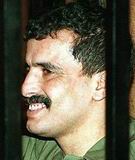
Ahmad Musa Dakamseh
Mass murderer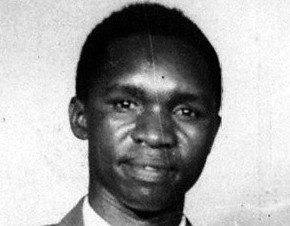 Joseph Kibweteere
Mass murderer · Uganda · 2000
Joseph Kibweteere led a breakaway sect known as the Movement for the Restoratio…
1000 victims
Joseph Kibweteere
Mass murderer · Uganda · 2000
Joseph Kibweteere led a breakaway sect known as the Movement for the Restoratio…
1000 victims
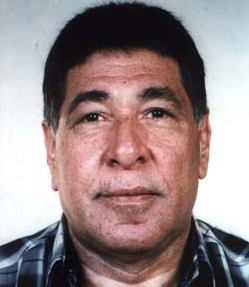 Gameel Al-Batouti
Mass murderer · USA · 1999
Gameel Al-Batouti (also rendered “Gamil ElBatouty” or “El Batouty” in U.S. offi…
216 victims
Gameel Al-Batouti
Mass murderer · USA · 1999
Gameel Al-Batouti (also rendered “Gamil ElBatouty” or “El Batouty” in U.S. offi…
216 victims
 Kim Dae-Han
Mass murderer · South Korea · 2003
Name: Kim Dae-Han · Age: 56 · Occupation/background: He was an unemployed forme…
198 victims
Kim Dae-Han
Mass murderer · South Korea · 2003
Name: Kim Dae-Han · Age: 56 · Occupation/background: He was an unemployed forme…
198 victims
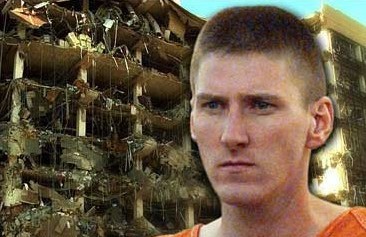 Timothy McVeigh
Mass murderer · USA · 1995
Timothy James McVeigh (April 23, 1968 – June 11, 2001) was a United States Army…
168 victims
Timothy McVeigh
Mass murderer · USA · 1995
Timothy James McVeigh (April 23, 1968 – June 11, 2001) was a United States Army…
168 victims
 Zhang Pilin
Mass murderer · China · 2002
Zhang Pilin (张丕林) died in the plane crash of China Northern Airlines Flight 613…
111 victims
Zhang Pilin
Mass murderer · China · 2002
Zhang Pilin (张丕林) died in the plane crash of China Northern Airlines Flight 613…
111 victims
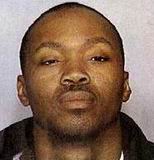 Arohn Kee
Serial killer · USA · 1991
February 19, 1999 — Miami Police arrested a 25-year-old man, Arohn Kee, at the…
3 victims
Arohn Kee
Serial killer · USA · 1991
February 19, 1999 — Miami Police arrested a 25-year-old man, Arohn Kee, at the…
3 victims
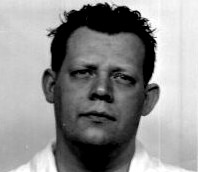 Ronald Clark O'Bryan
Murderer · USA · 1974
Ronald Clark O'Bryan (also recorded as Ronald C. O’Bryan) was executed by letha…
1 victim
Ronald Clark O'Bryan
Murderer · USA · 1974
Ronald Clark O'Bryan (also recorded as Ronald C. O’Bryan) was executed by letha…
1 victim
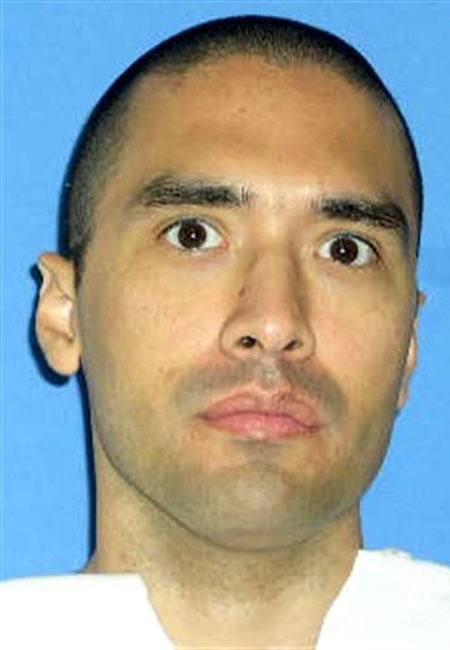 Rolando Ruiz
Murderer · USA · 1992
Rolando Ruiz was convicted of capital murder and was sentenced to death in Bexa…
1 victim
Rolando Ruiz
Murderer · USA · 1992
Rolando Ruiz was convicted of capital murder and was sentenced to death in Bexa…
1 victim
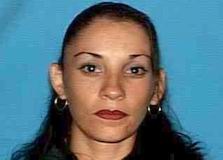 Guadalupe Ronquillo-Ovalle
Mass murderer · USA · 2013
Guadalupe Ronquillo-Ovalle killed her husband, Israel Alvarez, and their three…
4 victims
Guadalupe Ronquillo-Ovalle
Mass murderer · USA · 2013
Guadalupe Ronquillo-Ovalle killed her husband, Israel Alvarez, and their three…
4 victims
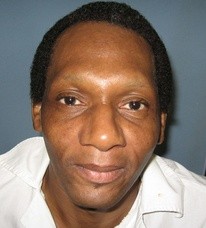 Jimmy Lee Dill
Murderer · USA · 1988
Jimmy Lee Dill was the defendant and death row inmate. · Leon Shaw was the vict…
1 victim
Jimmy Lee Dill
Murderer · USA · 1988
Jimmy Lee Dill was the defendant and death row inmate. · Leon Shaw was the vict…
1 victim
 Michael Julius Ford
Murderer · USA · 2006
June 25, 2006 — Michael Julius Ford, 22, went on a shooting spree at a Safeway…
1 victim
Michael Julius Ford
Murderer · USA · 2006
June 25, 2006 — Michael Julius Ford, 22, went on a shooting spree at a Safeway…
1 victim
- Gender
- male
- Country
- Jordan
- Location
- Baqoura, Jordan
- Date of birth
- 1968
- Age at first offence
- 29
- Characteristics
- revenge
- Victim profile
- Seven Israeli schoolgirls
- Method of murder
- Shooting ( M-16 rifle)
- Date(s) of murder
- March 13, 1997
- Years active
- 1997
- Date of arrest
- Same day
- Status
-
Imprisoned
Sentenced to 25 years in prison in 1998
Name
Ahmad Musa Dakamseh
Background
Ahmad Dakamseh served as a Jordanian soldier. His family said that he had psychological problems but no history of violence and no ties to militant groups. Mousa Dakamseh, 62, cried while cradling a picture of his son, Corporal Ahmed Mousa Daqamseh, 28, and said: "He was never violent,".
The offence
In 1997, Ahmad Dakamseh shot to death seven Israeli schoolgirls on a field trip. He opened fire with an automatic rifle on junior high school girls on a field trip to the "Island of Peace" in the Jordan River. Six other girls were wounded in the rampage. The victims were Israeli schoolgirls and teachers standing atop the "Island of Peace" looking eastward toward the Jordanian hills.
The gunman grabbed a comrade's assault rifle and fired from an observation tower. After seizing the rifle, he descended and chased the screaming junior high girls down a hill while firing. Other Jordanian soldiers overpowered him and shouted "majnoun" (madman) / "Madman! Madman!"
A Jordanian soldier identified as Lance Cpl. Ahmed Yousef Moussa was described as a 26-year-old Jordanian army driver who patrolled the area and opened fire from a guard tower about 50 yards away. In the same incident, Rosa Himi, a teacher and chaperone, said: "We screamed to the kids to hide in the bushes and get down and he came within a few feet of us, still firing. Then he really became annoyed because he finished his first magazine [of bullets], but couldn't get the next magazine in."
Witnesses described the eighth-grade class crossing through the checkpoint and following a winding, dirt road up the hill. Most of the girls were between 12 and 14 years of age. Hila Ivry, 13, said: "Some guy started to shoot on us," and continued: "All my friends ran and cried for their mothers. My teacher came to help me. She was hurt in the back." She also said: "I saw him," and: "He was with a long gun and he shot on us . . . They [other schoolgirls] ran into the trees and flowers. Many girls were hurt."
Yehudit Twito, 13, said: "Then I saw more soldiers coming and I thought they were going to shoot us, but they helped us and stopped him when he couldn't change his magazine. We had gone through the gate. . . . They had checked our ID's. We thought it was safe. We didn't think anything would happen."
Deputy Education Minister Moshe Peled said his office investigated whether the girls should have been allowed to visit such a site during high tensions between Arabs and Israelis. The incident was described as occurring during the close of each school year class trip.
Seven victims were taken to nearby Jordan Hospital, and five were dead on arrival, according to Jordan's health minister, Dr. Aref Batayneh. The dead were draped in white shrouds and flown to Israel. At Poriya Hospital, wounded victims were treated while parents and teachers wept. Shoshi Cohen, who teaches Bible lessons at the Feirst School, said: "She defended one of the children with her body," referring to teacher Yafa Shukman who was wounded.
Investigation
A bid to escape was described in June 1997. Lieutenant Colonel Muhannad Hijazi, a military prosecutor, told a military hearing that Corporal Ahmed Daqamseh "tried to flee from soldiers while in detention in a military office as he was on his way to the restroom."
A psychiatrist testified that Ahmad Daqamseh had a personality disorder and tried to commit suicide in 1989. Dr. Nabil Hmoud, a Jordanian army major, told a military hearing that Cpl. Ahmed Daqamseh, 26, is mentally sound but suffers from a personality disorder that may lead him to harm himself or others. Dr. Hmoud did not say what the personality disorder was.
Arrest
Other Jordanian soldiers overpowered Dakamseh after he was firing. He was in the custody of Jordanian security officials.
Trial
Ahmed Daqamseh was charged with premedinated murder in the case that involved seven Israeli schoolgirls.
On 28 May 1997, a Jordanian soldier charged with premeditated murder of seven Israeli schoolgirls pleaded not guilty at his military trial. Ahmed Daqamseh stood in a black cage as four charges including premeditated murder and military disobedience were read out in the courtroom at a military base a few miles south of Amman.
On 5 June 1997, Ahmad Daqamseh was described as being known as "the sex man" because he talked constantly about sex, according to fellow soldiers who told a military hearing.
On 20 July 1997, a military court convicted a Jordanian soldier and sentenced him to life in prison. The gunman stood silently reading the Koran while the sentence was pronounced.
Sentencing
The military tribunal sentenced Ahmad Dakamseh to life in prison. The provided case status also recorded that he was sentenced to 25 years in prison in 1998.
Appeals
No appeal information was included in the provided record.
Outcome
Seven Israeli schoolgirls were killed and six other girls were wounded.
On 20 July 1997, the court convicted the soldier and sentenced him to life in prison. The record also states that he was later sentenced to 25 years in prison in 1998.
Aftermath
In March 1997, the motives of Dakamseh were described as never clear. The then king Hussein cut short a visit to Europe and rushed home to condemn the attack. He traveled to Israel to offer his condolences to the families of the murdered schoolgirls, and Jordan also paid compensation.
On May 26, 1999, sources at the Jordan Bar Association said that Prime Minister Abdul Raouf Rawabdeh recently told the association's president that the "government may decide to free " the incarcerated rampager.
On February 14, 2011, Jordan's justice minister Hussein Mujalli described a Jordanian soldier serving a life sentence for killing seven Israeli schoolgirls in 1997 as a "hero". Mujalli said: "I support the demonstrators' demand to free Ahmad Dakamseh. He's a hero. He does not deserve prison," and also: "If a Jewish person killed Arabs, his country would have built a statue for him instead of imprisonment."
Mujalli, who was named minister last week and was described as Dakamseh's lawyer, said: "It is still my case and I will still defend him. It is a top priority for me," and: "Dakamseh needs a special pardon. Only the king can issue a special pardon," which the state-run Petra news agency quoted.
Israel responded with a foreign ministry statement saying: "Israel is shocked and recoils from these comments in revulsion," and: "This call is all the more serious as it came from the minister in charge of law and order. Israel has demanded clarifications from Jordan and has made it known very strongly that the murderer must serve the sentence handed down by the Jordanian court,".
Maisara Malas, who heads a trade unions' committee to support and defend the soldier, told AFP he handed a letter to Mujalli demanding Dakamseh's release. The letter said: "We cannot imagine that a great fighter like Dakamseh is in jail instead of reaping the rewards of his achievement,".
Jordan's powerful Islamist movement and the country's 14 trade unions, which have more than 200,000 members, repeatedly called for Dakamseh's release.
Timeline
- 1997 — Ahmad Dakamseh shot to death seven Israeli schoolgirls and wounded other girls during a field trip to the "Island of Peace" in the Jordan River.
- 28 May 1997 — Ahmad Dakamseh pleaded not guilty at his military trial.
- June 1997 — Ahmad Dakamseh tried to escape from detention while in a military office as he was on his way to the restroom.
- 20 July 1997 — A military court convicted Ahmad Dakamseh and sentenced him to life in prison.
- 1989 — Ahmad Dakamseh tried to commit suicide, according to testimony at a military hearing.
- 1998 — Ahmad Dakamseh was sentenced to 25 years in prison.
- 26 May 1999 — Prime Minister Abdul Raouf Rawabdeh told the Jordan Bar Association's president that the government may decide to free the incarcerated rampager.
- 14 March 1997 — Reports described the killings and wounded victims during the school trip.
- 15 March 1997 — Reports described Dakamseh's family saying he had psychological problems but no history of violence and no ties to militant groups.
- 16 March 1997 — Reports described villagers viewing Dakamseh as unbalanced and medicated.
- 17 June 1997 — A psychiatrist testified about a personality disorder and attempted suicide in 1989.
- 22 June 1997 — A military prosecutor described Ahmad Dakamseh's failed escape attempt.
- 14 February 2011 — Justice minister Hussein Mujalli called for Ahmad Dakamseh to be freed and described him as a hero.
Other details
The attack was said to have occurred on Baqoura, described as a scenic peninsula on the Jordan River near the Israeli border. The land where the incident occurred was described as a small piece of land the kingdom retrieved from Israel under their 1994 peace treaty.
The incident was discussed in connection with escalating tensions in the region, including disputes over peace talks and Israel's actions in East Jerusalem.
A teacher and chaperone, Rosa Himi, described the shooting and magazine issue. Another witness, Deputy Education Minister Moshe Peled, discussed whether the girls should have been allowed to visit such a site during high tensions.
Israeli Foreign Minister David Levy called the killings a "repulsive crime" and said: "These were innocent children, defenseless children . . . killed by a madman." Levy also said: "Recent declaration created a psychological atmosphere that could lead to such tragic acts," and told Jordan's prime minister, Abdul-Karim Kanariti.
President Clinton called the shooting "senseless" and said: "There's no reason to believe this was politically motivated."
Netanyahu told mourners delivering an eulogy last night at the funeral of four of the girls: "If anyone thinks the murder of little girls will bring this people to its knees . . . or that we will relinquish our birthright, holy land and eternal capital, he does not know the strength that exists in each person standing here around me today and in the entire nation."
King Hussein called the shootings a "vile crime." He said: "never thought it would break the way it did today" when he spoke of violence, and "but I was fully within my responsibility to try to warn one and all that we had come too far." He also said: "The shooting also was "aimed at me, my children, the people of Jordan,".
Jordanian and Israeli leaders attempted to calm passions by saying peace negotiations would move forward, including Hussein, Netanyahu, and Palestinian head Yasir Arafat.
A Jordanian general in Amman gave permission for Israeli ambulances to cross the border, along with army troops to search for missing children in the bushes, according to senior Israeli commanders.
On the winding dirt paths of a farming village in northern Jordan, people would cross the street to avoid Ahmed Mousa Daqamseh, described as short and thin with few distinguishing physical characteristics, and known by everyone in the village as unbalanced: medicated, sleepy and angry. One man remembered him beginning a fist fight at a wedding because he didn't like the song being played.
A woman who said she was the soldier's mother told reporters in Jordan that he was mentally ill.
A comparison was made to the events of Jan. 1 involving an off-duty Israeli soldier, Noam Friedman, who opened fire in an Arab outdoor market in the West Bank town of Hebron, where five Palestinians were wounded before he was overpowered by other Israeli soldiers. It was later determined he was mentally disturbed.
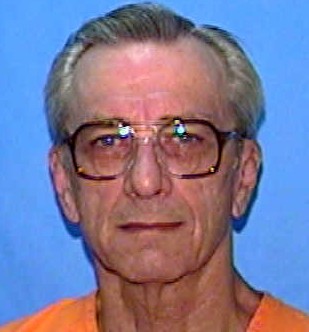
The provided record included an image caption: Jordanian soldier Ahmad Musa Mustafa Dakamseh is seen during his hearing at an Amman military court in 1997.
Spotted an error, or have more information about this case?