
Beatrice Cenci
Murderer Edlira Dobrushi
Murderer · Italy · 2014
Edlira Dobrushi, aged 37, killed her 3 children in their beds in Lecco near Mil…
3 victims
Edlira Dobrushi
Murderer · Italy · 2014
Edlira Dobrushi, aged 37, killed her 3 children in their beds in Lecco near Mil…
3 victims
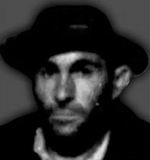 Ernesto Picchioni
Murderer · Italy · 1944
March 12, 1949 — He was sentenced to life in prison. · 2016 — The case record l…
16 victims
Ernesto Picchioni
Murderer · Italy · 1944
March 12, 1949 — He was sentenced to life in prison. · 2016 — The case record l…
16 victims
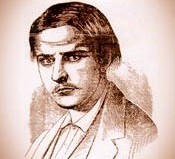 Vincenzo Verzeni
Murderer · Italy · 1869
Vincenzo Verzeni was born in Bettanuco, in the Bergamasco region, in 1849. He m…
12 victims
Vincenzo Verzeni
Murderer · Italy · 1869
Vincenzo Verzeni was born in Bettanuco, in the Bergamasco region, in 1849. He m…
12 victims
 Andrea Volpe
Murderer · Italy · 2004
The Beasts of Satan were a suspected satanic cult in Italy. Members of this gro…
3 victims
Andrea Volpe
Murderer · Italy · 2004
The Beasts of Satan were a suspected satanic cult in Italy. Members of this gro…
3 victims
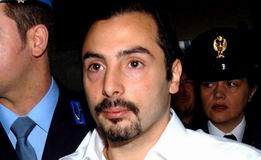 Nicola Sapone
Murderer · Italy · 2004
Nicola Sapone was one of the members of the suspected satanic cult “The Beasts…
3 victims
Nicola Sapone
Murderer · Italy · 2004
Nicola Sapone was one of the members of the suspected satanic cult “The Beasts…
3 victims
 Gianluca Casseri
Murderer · Italy · 2011
Gianluca Casseri committed suicide by shooting himself the same day after an ar…
2 victims
Gianluca Casseri
Murderer · Italy · 2011
Gianluca Casseri committed suicide by shooting himself the same day after an ar…
2 victims
 Reyhaneh Jabari
Murderer · Iran · 2007
Reyhaneh Jabari was an Iranian woman born around 1988 who was convicted of murd…
1 victim
Reyhaneh Jabari
Murderer · Iran · 2007
Reyhaneh Jabari was an Iranian woman born around 1988 who was convicted of murd…
1 victim
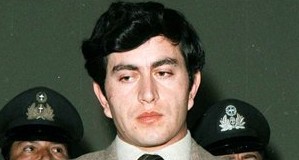 Kyriakos Papaxronis
Serial killer · Greece · 1981
Kyriakos Papaxronis (Κυριάκος Παπαχρόνης) was a serial rapist and murderer, kno…
3 victims
Kyriakos Papaxronis
Serial killer · Greece · 1981
Kyriakos Papaxronis (Κυριάκος Παπαχρόνης) was a serial rapist and murderer, kno…
3 victims
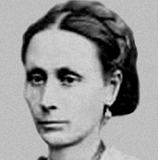 Lydia Sherman
Murderer · USA · 1864
Lydia Sherman was also known as “The Derby Poisoner.” She was born in 1824 in B…
10 victims
Lydia Sherman
Murderer · USA · 1864
Lydia Sherman was also known as “The Derby Poisoner.” She was born in 1824 in B…
10 victims
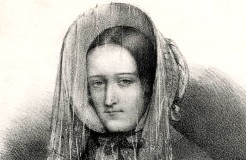 Marie Lafarge
Murderer · France · 1840
Marie-Fortunée Lafarge (née Capelle) was a Frenchwoman convicted of murdering h…
1 victim
Marie Lafarge
Murderer · France · 1840
Marie-Fortunée Lafarge (née Capelle) was a Frenchwoman convicted of murdering h…
1 victim
- Gender
- female
- Country
- Italy
- Location
- Rome, Italy
- Date of birth
- February 6, 1577
- Characteristics
- parricide, incest, abuse
- Victim profile
- Francesco Cenci (her father)
- Method of murder
- Beating with a hammer
- Date(s) of murder
- September 9, 1598
- Years active
- 1598
- Date of arrest
- —
- Status
-
Executed
Executed by beheading with a sword on September 11, 1599
Background
Beatrice Cenci (6 February 1577 – 11 September 1599) was an Italian noblewoman. She was the daughter of Francesco Cenci, an aristocrat who had been in trouble with papal justice more than once. Francesco Cenci and Beatrice lived in Rome in the rione Regola, in the Palazzo Cenci, built over the ruins of a medieval fortified palace at the edge of Rome's Jewish ghetto.
Beatrice lived with her elder brother Giacomo, Francesco's second wife, Lucrezia Petroni, and Bernardo, the young boy born from Francesco's second marriage. The family also possessed a castle, La Rocca of Petrella Salto, a small village near Rieti, north of Rome.
The offence
Abuse and reported incest
According to the legend described in the case material, Francesco Cenci abused his wife and his sons, and had reached the point of committing incest with Beatrice. In the narrative of the trial materials and later discussion, Beatrice tried to inform authorities about the frequent mistreatments, but nothing happened while Francesco remained under the protection and leniency associated with nobles.
Beatrice faced allegations and claims connected to her father’s sexual abuse and alleged incest, and the question of incest later arose as part of her defence and the legal discussion surrounding mitigation.
Plot to kill Francesco Cenci
The narrative states that when Francesco discovered that Beatrice had reported against him, he sent Beatrice and Lucrezia away from Rome to live at the family’s country castle.
The case material states that the four Cenci decided that they had no alternative but to try to get rid of Francesco and “all together organised a plot.” In 1598, during one of Francesco's stays at the castle, two vassals helped the family by drugging Francesco, but the attempt failed to kill him. Following this failure, Beatrice, her siblings, and stepmother Lucrezia were described as bludgeoning Francesco to death with a hammer and throwing the body off a balcony to make it look like an accident.
The case material also states that the other murderers included:
- Olimpio Calvetti, described as the castellano (manager) of La Rocca and the husband of Plautilla Calvetti, who later transpired as Beatrice’s lover.
- Marzio Catalano, also named as Marzio da Fiorani, described as a hired accomplice.
The case material states that the murder was organised by Francesco’s immediate family: Lucrezia, Beatrice, and Giacomo.
How Francesco’s death was staged
Initial reporting in the case material described Francesco’s death as falling from a wooden balcony and causing a broken fall into a dense patch of scrub called the “warren,” below the castle rock. The account included details about the drop into the warren and the appearance of a partially collapsed balcony section.
However, later examination and witness observations led people to suspect that Francesco’s death was not an accident. During the washing of the body, wounds were found on the side of Francesco’s head, including wounds on the right temple, and a deeper wound near the right eye.
The case material describes witnesses’ views that the wounds had been made with a sharp instrument rather than by a fall. It also describes a deep bruise on the Count’s arm above the left wrist. The narrative further describes the investigation’s conclusion that Francesco had been drugged and then attacked while he slept by two men entering his bedroom.
Investigation
The case material describes an investigation by Neapolitan authorities who controlled the province of Abruzzo Ulteriore. The investigation was described as thorough, and it was asserted that “Count Cenci had indeed been murdered, horribly.”
The narrative in the case material states that while Francesco slept, drugged by a sleeping draught prepared by Lucrezia, two men entered his bedroom. Despite the drug, it was described that Francesco awoke. One man held him down, and the other placed an iron spike against his head and drove it in with a hammer. The narrative further describes that the two slighter wounds were probably botched blows before a final coup de grâce. It states that the conspirators dressed the body, took it to the edge of the balcony, and threw it down into the warren, leaving a “half-hearted hole in the balcony floor” to make it look like an accident, alongside blood-soaked evidence.
The case material also states that the investigation included interrogation under torture. It says that Beatrice refused to confess even under torture, and that her lover (Olimpio Calvetti in the narrative) was tortured and died without revealing the truth.
Arrest
The case material states that the plot was discovered, and the four members of the Cenci family were arrested, found guilty, and sentenced to death.
Trial
The case material describes a “judicial process” lasting exactly a year. It states that the two murderers died during this period.
It also describes that Olimpio Calvetti was captured after being on the run and was killed by a bounty-hunter with his head sliced off with a hatchet. It describes that Marzio Catalano died under torture in the interrogation rooms of the Tordinona Prison in Rome.
The case material states that Giacomo, Lucrezia, and Beatrice were executed outside the Castel Sant’Angelo on the banks of the Tiber.
Defence position and role of the incest question
The case material describes that Beatrice maintained she was entirely innocent of the murder and argued that she had no motive for killing her father. It states that the question of incest arose later, during the long and crucial summing-up by her lawyer, Prospero Farinacci, presented as a mitigation.
In the case material, Corrado Ricci is quoted with the assertion: ‘in all the trial records from November 1598 until August of the following year – in more than fifty examinations – there is not the slightest hint of any such deed.’
It also states that Beatrice reported in her last examination on 19 August 1599 that her stepmother Lucrezia urged her to kill her father, with the words: ‘he will abuse you and rob you of your honour.’
A further quoted account includes testimony from a former servant, Calidonia Lorenzini, describing what she heard, including: ‘I do not want to be burned!’
The case material includes further claims from Girolama, including the reported account that Francesco used to go about the house “in just a shirt and doublet and a pair of drawers,” and that when he urinated “it was necessary to hold the urinal for him under his shirt,” and “sometimes [Beatrice] was obliged to hold it.”
Sentencing
The case material states that the four Cenci family members were arrested, found guilty, and sentenced to death.
It further states that Pope Clement VIII showed no mercy. It states that the common people protested against the tribunal’s decision, obtaining a short postponement of the execution, but that the execution proceeded.
The case material states that it had been decreed that Bernardo should then become a galley slave for the remainder of his life; however, he was released a year later.
Appeals
No appeal outcome is explicitly stated in the provided case material.
Outcome
Execution of Beatrice Cenci
The case material states that on 11 September 1599, at dawn, Beatrice and other condemned individuals were taken to Sant'Angelo Bridge, where the scaffold was usually built. It describes the execution order and the public execution scene.
It states that:
- Giacomo was subjected to continual torture in the cart to the scaffold.
- On reaching the scaffold, Giacomo’s head was smashed with a mallet, and his corpse was then quartered.
- Lucrezia was executed first and Beatrice last.
- Lucrezia and Beatrice were beheaded, with Beatrice beheaded with a sword.
The case material also provides a status-like statement of the main execution date: On 11 September 1599, at dawn, the condemned were taken to the bridge scaffold, and Beatrice was beheaded with a sword.
Treatment of Bernardo
The case material states that only the 12-year-old, Bernardino (also named as Bernardo in other portions of the case material), was spared. It states he was led to the scaffold and forced to witness the execution of his relatives, before returning to prison and having his properties confiscated to be given to the pope's own family.
It states that the decree required he become a galley slave for the remainder of his life, and that he was released a year later.
Aftermath
Beatrice was buried in the church of San Pietro in Montorio.
The case material describes that Beatrice became a symbol of resistance against the aristocracy in Rome and states that a legend arose about her returning to the bridge carrying her severed head on the night before her death.
Other details
Place, persons, and family relationships mentioned in the case material
- Beatrice’s father: Francesco Cenci.
- Beatrice’s stepmother: Lucrezia Petroni.
- Beatrice’s brother: Giacomo Cenci.
- Beatrice’s stepbrother/younger brother: Bernardo (also called Bernardino in one part of the case material).
- Olimpio Calvetti: described as castellano (manager) of La Rocca; husband of Plautilla Calvetti; described as Beatrice’s lover.
- Marzio Catalano, also named Marzio da Fiorani: described as a hired accomplice.
- Plautilla Calvetti: described as combing flax and hearing shouting from the castle.
- Dorotea: named as one of the women deputed to wash the body.
- Priests named in the narrative: Don Scossa and Don Tomassini.
- Witnesses named: Porzia Catalano and others.
- Prospero Farinacci: described as Beatrice’s lawyer.
- Calidonia Lorenzini: described as a former servant who appeared before the prosecutor.
- Girolama: described as a person knowledgeable about life inside the Cenci household.
- Pope Clement VIII: described as the pope who showed no mercy.
- Cardinal Camillo: mentioned in relation to quoted dialogue in the literary discussion.
Quotes reproduced verbatim from the case material
Beatrice (via Lucrezia’s urging as reported in her last examination):
Calidonia Lorenzini’s reported exclamation: ‘I do not want to be burned!’
Corrado Ricci’s quoted statement about trial records:
A quoted statement in the literary discussion of Pope’s remark: ‘In the great war between the old and young I, who have white hairs and a tottering body, Will keep at least blameless neutrality.’
A quoted statement in the literary discussion attributed to Beatrice in Mary Shelley’s context: ‘Accuse me if you wish, but I am innocent … According to your justice you will certainly be able to prove that I am guilty of my father’s death. But you will never be able to prove that I am not at the same time innocent according to another justice – a justice which you cannot know, still less administer.’
Property, burial, and confers mentioned in the case material
- Beatrice’s burial: church of San Pietro in Montorio.
- Confiscation and transfer: Bernardo’s properties were confiscated to be given to the pope's own family (as described in the case material).
- A burial procession and burial niche details: Lucrezia’s decapitated corpse was carried in procession along Via Giulia, across Ponte Sisto, and down the tree-lined Via del Gianicolo to the Church of San Pietro in Montorio, where Beatrice’s confessor laid it in a burial niche in the apse.
Additional names and allegations discussed in the case material’s later narrative and literary history
The case material includes extensive discussion of literature and later portrayals, including characters and descriptions. It also includes claims about a judge’s comment on testimony: ‘This sounds as bad as truth.’
It also mentions literary works and related figures such as Percy Bysshe Shelley, Mary Shelley, Prospero Farinacci, and other writers and composers. It includes references to an opera and multiple literary adaptations, but the core factual outcome for Beatrice remained execution by beheading with a sword on September 11, 1599.

Spotted an error, or have more information about this case?