Willie Watson
Murderer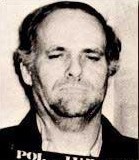 Ervil LeBaron
Murderer · USA · 1972
Ervil Morrell LeBaron (1925 to August 16, 1981) was the leader of a polygamous…
35 victims
Ervil LeBaron
Murderer · USA · 1972
Ervil Morrell LeBaron (1925 to August 16, 1981) was the leader of a polygamous…
35 victims
 Brian Kevin Rosenfeld
Murderer · USA · 1985
Brian Kevin Rosenfeld Brian Kevin Rosenfeld was sentenced to three concurrent l…
23 victims
Brian Kevin Rosenfeld
Murderer · USA · 1985
Brian Kevin Rosenfeld Brian Kevin Rosenfeld was sentenced to three concurrent l…
23 victims
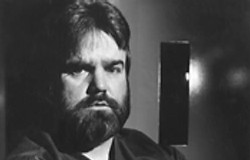 Marvin Gray
Murderer · USA · 1975
Marvin Gray was convicted killer who claimed responsibility for 23 slayings and…
23 victims
Marvin Gray
Murderer · USA · 1975
Marvin Gray was convicted killer who claimed responsibility for 23 slayings and…
23 victims
 Yahweh ben Yahweh
Murderer · USA · 1980
Yahweh ben Yahweh was born and legally named Hulon Mitchell Jr. (October 27, 19…
23 victims
Yahweh ben Yahweh
Murderer · USA · 1980
Yahweh ben Yahweh was born and legally named Hulon Mitchell Jr. (October 27, 19…
23 victims
 Russell Ellwood
Murderer · USA · 1991
Russell Ellwood was a former taxi driver. Authorities suspected him of killing…
20 victims
Russell Ellwood
Murderer · USA · 1991
Russell Ellwood was a former taxi driver. Authorities suspected him of killing…
20 victims
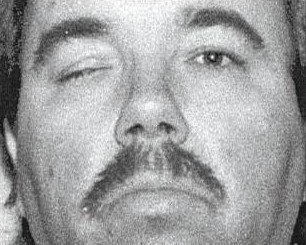 Dennis Wayne Eaton
Mass murderer · USA · 1989
Dennis Wayne Eaton was executed by lethal injection in Virginia on June 18, 199…
4 victims
Dennis Wayne Eaton
Mass murderer · USA · 1989
Dennis Wayne Eaton was executed by lethal injection in Virginia on June 18, 199…
4 victims
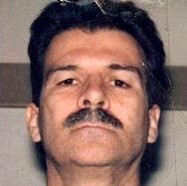 William Mentzer
Murderer · USA · 1983
William Mentzer was a contract killer with ties to drug syndicates. He was also…
5 victims
William Mentzer
Murderer · USA · 1983
William Mentzer was a contract killer with ties to drug syndicates. He was also…
5 victims
 Mary Bell
Homicide · United Kingdom · 1968
Mary Flora Bell was convicted of manslaughter on the grounds of diminished resp…
2 victims
Mary Bell
Homicide · United Kingdom · 1968
Mary Flora Bell was convicted of manslaughter on the grounds of diminished resp…
2 victims
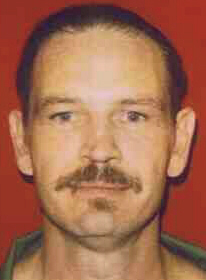 James Neil Tucker
Murderer · USA · 1992
James Neil Tucker was imprisoned and later sentenced to death in South Carolina…
2 victims
James Neil Tucker
Murderer · USA · 1992
James Neil Tucker was imprisoned and later sentenced to death in South Carolina…
2 victims
 Vernon Brown
Serial killer · USA · 1980
Vernon Brown · October 24, 1986 — Nine-year-old Janet Perkins left Cole School…
5 victims
Vernon Brown
Serial killer · USA · 1980
Vernon Brown · October 24, 1986 — Nine-year-old Janet Perkins left Cole School…
5 victims
- Gender
- male
- Country
- USA
- Location
- St. Charles Parish, Louisiana, USA
- Date of birth
- 1951
- Age at first offence
- 30
- Characteristics
- kidnapping, rape, robbery
- Victim profile
- Kathy Newman, 25 ( Tulane University medical student )
- Method of murder
- Shooting
- Date(s) of murder
- April 5, 1981
- Years active
- 1981
- Date of arrest
- —
- Status
-
Executed
Executed by electrocution in Louisiana on July 24, 1987
Other details
Willie Watson was executed by electrocution in Louisiana on July 24, 1987.
Timeline
- April 5, 1981 — Willie Watson abducted Kathy Newman, a third-year Tulane University medical student, at gunpoint as she arrived at her apartment building in the Carrollton section of New Orleans; he forced Newman to drive to an isolated area in St. Charles Parish where he robbed her of her jewelry and raped and sodomized her; Watson instructed Newman to dress herself; as she did so, he shot her in the back of the head, mortally wounding her; Watson later confessed to the murder, stating that he shot Newman because he feared that she could identify him.
- June 5, 1981 — A St. Charles Parish jury found Watson guilty of first degree murder, La.Rev.Stat.Ann. Sec. 14:30.
- March 18, 1985 — The United States Court of Appeals for the Fifth Circuit rendered its decision in Watson v. Blackburn, 756 F.2d 1055.
- March 16, 1985 — Watson filed a petition in federal district court alleging principally that certain jurors were improperly disqualified for cause and that his sentence was determined in accordance with an unconstitutionally vague statute.
- March 19, 1985 — Watson sought habeas corpus relief from an execution scheduled for the early morning hours of Tuesday, March 19, 1985.
- August 6, 1986 — The dissenting opinion in Willie Watson, Jr. v. Frank Blackburn discussed the Supreme Court’s grant of a stay of execution in Berry v. Phelps.
- August 25, 1986 — The dissenting opinion in Willie Watson, Jr. v. Frank Blackburn discussed the Supreme Court’s denial of a stay of execution in Wicker v. McCotter.
- September 2, 1986 — The United States Court of Appeals for the Fifth Circuit decided Willie Watson, Jr. v. Frank Blackburn, 798 F.2d 872.
- September 5, 1986 — The New York Times described the Supreme Court blocking a scheduled execution of Willie Watson.
- July 21, 1987 — The Supreme Court-related sequence described that the Court of Appeals affirmed the judgment in No. 87-3391 (ED La. July 21, 1987).
- July 23, 1987 — The Supreme Court of the United States denied Watson’s application for stay of execution; Justice WHITE referred the application to the Court.
- July 24, 1987 — Willie Watson was executed by electrocution in Louisiana.
- July 25, 1987 — The New York Times published an account of Watson’s execution.
The offence
On the evening of April 5, 1981, Willie Watson abducted Kathy Newman, a third-year Tulane University medical student, at gunpoint as she arrived at her apartment building in the Carrollton section of New Orleans. Watson forced Newman to drive to an isolated area in St. Charles Parish where he robbed her of her jewelry and raped and sodomized her. Watson instructed Newman to dress herself; as she did so, he shot her in the back of the head, mortally wounding her.
The case narrative included that Watson was convicted of the kidnapping, rape, and murder of Kathy Newman in St. Charles Parish on April 5, 1981.
Investigation
Willie Watson later confessed to the murder, stating that he shot Newman because he feared that she could identify him.
Trial
Watson was found guilty of first degree murder, La.Rev.Stat.Ann. Sec. 14:30, by a St. Charles Parish jury on June 5, 1981.
After finding three aggravating circumstances:
- the offender was engaged in the perpetration or attempted perpetration of aggravated rape;
- the offender was engaged in the perpetration or attempted perpetration of armed robbery; and
- the offender had a significant prior history of criminal activity,
the jury recommended the death sentence (La.Code Crim.Proc.Ann. art. 905.4).
On Watson’s direct appeal, the Louisiana Supreme Court affirmed the conviction but reversed the sentence of death because of an erroneous jury instruction given by the trial court (State v. Watson, 423 So.2d 1130 (La.1982)). After remand for a new sentencing hearing, a jury again recommended the death sentence. In Watson’s second appeal of his death sentence, the Louisiana Supreme Court affirmed, rejecting Watson’s fourteen assignments of error (State v. Watson, 449 So.2d 1321 (La.1984)). Certiorari was denied by the Supreme Court (Watson v. Louisiana, --- U.S. ----, 105 S.Ct. 939, 83 L.Ed.2d 952 (1985)).
Sentencing
Watson was sentenced to death for the 1981 kidnapping, rape and murder of Kathy Newman, a 25-year-old Tulane University medical student. The New York Times account stated that Watson was scheduled for midnight, and that the execution was delayed two hours after the United States Supreme Court rejected his appeal on a 4-to-4 tie vote and his lawyers made a last-minute plea to Gov. Edwin W. Edwards in Baton Rouge.
Appeals
United States Court of Appeals for the Fifth Circuit (habeas corpus)
Watson filed an instant petition in federal district court seeking habeas corpus relief, 28 U.S.C. Sec. 2254, from his execution scheduled for the early morning hours of Tuesday, March 19, 1985. On March 18, 1985, the district court entered judgment denying all relief.
In the decision Watson v. Blackburn, 756 F.2d 1055, the Fifth Circuit granted Watson’s motion to proceed in forma pauperis but denied the application for stay of execution and for certificate of probable cause. The Court concluded that Watson had not made a “substantial showing of the denial of [a] federal right,” citing Barefoot v. Estelle, 463 U.S. 880, 103 S.Ct. 3383, 3394, 77 L.Ed.2d 1090 (1983).
Within that decision, Watson contended:
- that the exclusion of jurors from the guilt-innocence phase of his trial denied him his sixth amendment right to trial by a fair cross section of the community;
- that he was sentenced pursuant to an unconstitutional statute because La.Code Crim.Proc.Ann. art. 905.4(c) was void for vagueness.
The opinion addressed that the Louisiana Supreme Court had held that the portion of article 905.4(c) permitting imposition of the death penalty when the accused has a significant prior history of criminal activity is unconstitutionally vague under State v. David, No. 82-KA-0150 (La.S.Ct. Nov. 26, 1984). It also addressed that a death sentence supported by at least one valid aggravating circumstance need not be set aside simply because another aggravating circumstance is invalid in the sense that it is insufficient by itself to support the death penalty, citing Zant v. Stephens and other cases.
The Court rejected Watson’s contentions and affirmed the district court’s judgment denying habeas relief. The motion for leave to proceed in forma pauperis was granted; the application for stay of execution was denied; the application for a certificate of probable cause was denied; and the judgment of the district court was affirmed.
The Fifth Circuit decision noted that Watson also contended:
- he had been denied a full and fair hearing in his previous state court proceedings;
- comparative appellate review of his sentence undertaken by the Louisiana state courts was constitutionally inadequate;
- his sentence was excessive and disproportionate;
- his sentence was arbitrary and capricious;
- electrocution was a cruel and unusual punishment;
- the death penalty as applied in Louisiana invidiously discriminates against blacks, the poor, and males;
- capital punishment was an excessive penalty; and
- the cumulative effect of violations of Watson’s rights in the trial and review of his case was itself a violation of his constitutional rights.
The Court stated it had reviewed each of Watson’s contentions and found them to be without merit.
United States Court of Appeals for the Fifth Circuit (second habeas appeal)
In Willie Watson, Jr. v. Hilton Butler, 798 F.2d 872, the Fifth Circuit considered one issue only: a claim of discrimination in the imposition of the death penalty on blacks who murder whites.
The panel agreed with the district court that Wicker v. McCotter, 798 F.2d 155 (5th Cir.1986) represented the law of the circuit and foreclosed the claim. The Fifth Circuit granted the motion of Mr. Jed Stone to participate as co-counsel in the appeal, affirmed the judgment denying habeas relief, and denied the applications for a certificate of probable cause and for a stay of execution.
A dissenting opinion by Circuit Judge JOHNSON stated:
“Being of the view that Willie Watson's application for a stay of execution should be granted, I respectfully dissent.”
The dissent discussed uncertainty about legal standards applicable to Watson’s application, the Supreme Court’s actions in Berry v. Phelps, and the conflict between Berry and Wicker. The dissent argued that granting a stay at that level would help ensure that no petitioner erroneously would be executed, and stated:
“To remove all uncertainty and avoid an unnecessary risk to the life of Mr. Watson, I would grant the application for a stay of execution and let the Supreme Court vacate the stay if indeed we are to be guided by Wicker rather than Berry.”
Supreme Court of the United States (stay of execution denial)
The Supreme Court of the United States docketed the matter as Willie Watson, Jr. v. Hilton Butler, No. A-78 (87-5161). On July 23, 1987, the Supreme Court denied the application for stay of execution of the sentence of death presented to Justice WHITE and referred to the Court.
The Supreme Court entry included dissenting opinions by Justice BRENNAN and Justice MARSHALL, with Justice BLACKMUN joining in Parts II and III.
Justice BRENNAN and Justice MARSHALL stated they would grant the stay application and the petition for writ of certiorari because they adhered to their views that the death penalty is in all circumstances cruel and unusual punishment prohibited by the Eighth and Fourteenth Amendments, citing Gregg v. Georgia.
The dissent also argued that the Court should grant the stay application to hold the case for Lowenfield v. Phelps, No. 86-6867, because of the constitutionality of a death-sentencing procedure where the aggravating factor found by the jury duplicates the jury’s findings in the guilt phase and fails to narrow the class of defendants eligible for the death penalty.
The dissent explained that Watson was found guilty of first-degree murder because he killed while “engaged in the perpetration or attempted perpetration of aggravated kidnapping, aggravated escape, aggravated arson, aggravated rape, aggravated burglary, armed robbery, or simple robbery.” It stated that Louisiana law required the sentencing jury to find beyond a reasonable doubt that at least one statutory aggravating factor exists before a death sentence may be imposed, and quoted Article 905.4’s description of aggravating circumstances as subsections labeled (a) through (j).
The dissent noted:
- that the jury found Watson committed the acts described in subsection (a);
- that the jury in Watson’s case found armed robbery and aggravated rape; and
- that if armed robbery and aggravated rape constituted only a single aggravating circumstance, then Watson presented the same claim as Lowenfield.
The dissent also included:
“The Court today thus permits Mr. Watson's legal claim to stay alive while condemning Watson himself to die under a sentencing scheme that within a matter of months the Court may conclude is unconstitutional.”
The dissent concluded:
“We dissent.”
The Supreme Court entry also included a footnote noting:
- that the jury also found a second aggravating circumstance that Watson had “a significant prior history of criminal activity,” which had since been invalidated by the Louisiana Supreme Court as unconstitutionally vague under the Eighth Amendment in State v. David, 468 So.2d 1126 (1984);
- that the District Court denied Watson’s claim and stated only: “Suffice it to say that the Fifth Circuit Court of Appeals, whose ruling binds this court has decided this claim adversely to petitioner. Lowenfield v. Phelps, 817 F.2d 285 (1987).”
Outcome
Willie Watson went calmly and silently to his death in the electric chair early on July 24, 1987 for the rape, robbery and murder of a Tulane University medical student.
The New York Times account stated that Kathy Newman, 25 years old, had been abducted, raped and shot to death in 1981. The account also stated that Watson, 30, confessed that he killed her, attributing the crime to his drug addiction while an adolescent growing up in New Orleans housing projects.
Execution details
The execution was scheduled for midnight but was delayed two hours after the United States Supreme Court rejected Watson’s appeal on a 4-to-4 tie vote and Watson’s lawyers made a last-minute plea to Gov. Edwin W. Edwards in Baton Rouge.
At 1:58 A.M., Watson walked into the death chamber. His head had been shaved of the shoulder-wide Afro hairstyle he had the day before when he appeared at the state Pardon Board in a futile appeal. Watson was asked if he wanted to make a final statement, and Watson shook his head no.
Watson was strapped into the wooden electric chair. Before his face was masked, he looked at his spiritual adviser, Sister Lee Scardina, and mouthed:
“I love you, Sister Lee.”
The account stated that Watson received the first of four jolts of electricity at 2:02 A.M. and was pronounced dead at 2:09.
After the execution, Sister Lee Scardina went to Jed Stone, Watson’s lawyer, who was outside the death chamber, and cried on his shoulder.
The New York Times account also stated that Hilton Butler, the warden, said Watson had spurned a final meal before the execution.
Aftermath
The New York Times account stated that on the last day, Watson visited with his girlfriend, his mother, three sisters, and the adviser.
The account also stated that outside the prison, six advocates of the death penalty marched in the darkness.
The account stated that Willie Celestine, 30, of Lafayette, was put to death Monday for raping, beating and strangling an 81-year-old woman in 1981, and described Celestine as the 12th person to die in Louisiana’s electric chair since executions resumed, and also as the 12th person to die in Louisiana’s electric chair since executions resumed.
Spotted an error, or have more information about this case?