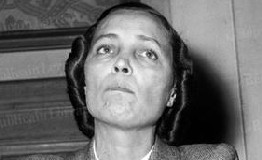
Yvonne Chevallier
Homicide Gaston Dominici
Homicide · France · 1952
Gaston Dominici was convicted of the triple murder of three Britons in France i…
3 victims
Gaston Dominici
Homicide · France · 1952
Gaston Dominici was convicted of the triple murder of three Britons in France i…
3 victims
 Constance Fisher
Homicide · USA · 1954
Constance Fisher · 3 August 1954 — Constance Fisher drowned her three children…
6 victims
Constance Fisher
Homicide · USA · 1954
Constance Fisher · 3 August 1954 — Constance Fisher drowned her three children…
6 victims
 Alain Lamare
Homicide · France · 1978
Alain Lamare (born 1956) was a French gendarme known to the public under the ni…
1 victim
Alain Lamare
Homicide · France · 1978
Alain Lamare (born 1956) was a French gendarme known to the public under the ni…
1 victim
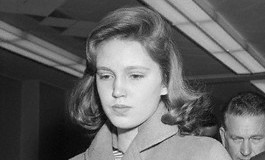 Cheryl Crane
Homicide · USA · 1958
Cheryl Christina Crane (born July 25, 1943) was the only child of actress Lana…
1 victim
Cheryl Crane
Homicide · USA · 1958
Cheryl Christina Crane (born July 25, 1943) was the only child of actress Lana…
1 victim
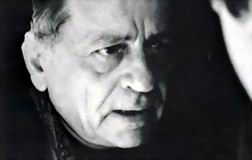 Henri-Antoine Charrière
Homicide · France · 1930
Henri-Antoine Charrière was born in Ardèche, France. He had two older sisters.…
1 victim
Henri-Antoine Charrière
Homicide · France · 1930
Henri-Antoine Charrière was born in Ardèche, France. He had two older sisters.…
1 victim
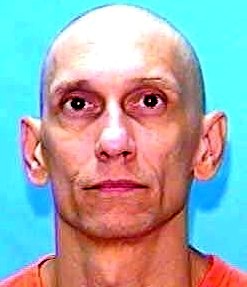 Donald Dufour
Serial killer · USA · 1982
Donald Dufour On the afternoon of July 15, 1982, a postman working Henry Balch…
5 victims
Donald Dufour
Serial killer · USA · 1982
Donald Dufour On the afternoon of July 15, 1982, a postman working Henry Balch…
5 victims
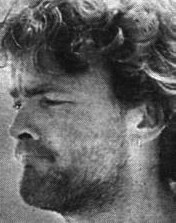 Paul Stephen Osborne
Murderer · Australia · 1995
Paul Stephen Osborne was a 36-year-old man formerly of Wurtulla on the Sunshine…
2 victims
Paul Stephen Osborne
Murderer · Australia · 1995
Paul Stephen Osborne was a 36-year-old man formerly of Wurtulla on the Sunshine…
2 victims
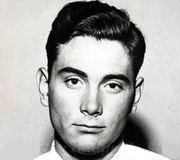 Fred McManus
Spree killer · USA · 1953
Fred McManus was 18 years old and was described as a Marine from Long Island. H…
5 victims
Fred McManus
Spree killer · USA · 1953
Fred McManus was 18 years old and was described as a Marine from Long Island. H…
5 victims
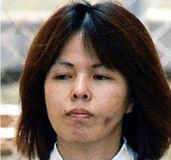 Junko Ogata
Serial killer · Japan · 1996
Junko Ogata (緒方 純子 Ogata Junko, born February 25, 1962) was a Japanese woman wh…
7 victims
Junko Ogata
Serial killer · Japan · 1996
Junko Ogata (緒方 純子 Ogata Junko, born February 25, 1962) was a Japanese woman wh…
7 victims
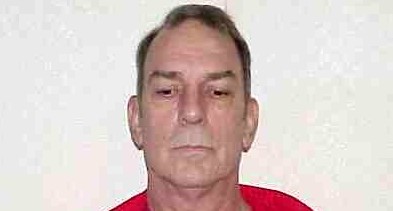 Parramore Sanborn
Murderer · USA · 1983
Parramore Lee Sanborn was born 8-3-45. The case involved the kidnapping, rape,…
1 victim
Parramore Sanborn
Murderer · USA · 1983
Parramore Lee Sanborn was born 8-3-45. The case involved the kidnapping, rape,…
1 victim
 Andrew Yellowbear
Murderer · USA · 2004
Andrew John Yellowbear Jr. (born September 5, 1974) was the defendant in a Wyom…
1 victim
Andrew Yellowbear
Murderer · USA · 2004
Andrew John Yellowbear Jr. (born September 5, 1974) was the defendant in a Wyom…
1 victim
- Gender
- female
- Country
- France
- Location
- Orléans, Loiret Department, France
- Date of birth
- 1911
- Age at first offence
- 40
- Characteristics
- jealousy, parricide
- Victim profile
- Pierre Chevallier, 42 (her husband)
- Method of murder
- Shooting ( Mab 7.65mm handgun)
- Date(s) of murder
- August 12, 1951
- Years active
- 1951
- Date of arrest
- Same day
- Status
-
Acquitted / overturned
Found "not guilty" by a jury on November 5, 1952
Name
Yvonne Chevallier
Status
Yvonne Chevallier went on trial on November 5, 1952, and a jury found her "Not Guilty" after deliberating for 45 minutes.
Background
Yvonne Chevallier met Pierre Chevallier in 1935 in the city of Orleans, France, where Pierre was a promising young medical student at Orleans Hospital and Yvonne worked as a midwife. Their attraction overcame social inequalities: Pierre was from an old and distinguished family, while Yvonne was raised on a peasant farm. Yvonne and Pierre married four years later, and their first son, Mathieu, was born in 1940. Pierre joined the French resistance and rose to become a leading figure, receiving the French Legion d'Honneur and Croix de Guerre for heroism during the war. After the war, Pierre was elected Mayor of Orleans, and in 1945 Yvonne gave birth to their second son, Thugal.
Pierre spent more time in Paris while Yvonne was left in Orleans to care for their children. Pierre was described as handsome, dashing and socially adept, while Yvonne was described as dull, witless, and socially unacceptable. Over time Pierre looked at Yvonne with growing contempt, and at one point he told her, "you disgust me." Yvonne attempted to win back Pierre’s love by reading about art, literature and politics, frequenting fashionable beauty salons, and buying more flattering clothes, but she did not succeed. She eventually turned to drugs and booze to provide comfort that Pierre denied her.
In the spring of 1951, Yvonne received an anonymous letter suggesting Pierre was having an affair. While searching Pierre’s closet for evidence, she found a love letter in the pocket of one of Pierre’s suits. The letter read, "Without you life would have no beauty or meaning for me." It was signed "Jeannette." Yvonne believed "Jeannette" was her neighbor Jeanne Perreau, wife of Leon Perreau, owner of one of Orleans' most prestigious department stores. Jeanne Perreau was described as beautiful, intelligent and ultra sophisticated.
Other people
Pierre Chevallier
Pierre Chevallier was Yvonne Chevallier’s husband. He was described as a leading French resistance figure, a recipient of the French Legion d'Honneur and Croix de Guerre, and later a mayor of Orleans and a government minister for education, youth and athletics.
Pierre told Yvonne, "you disgust me."
Mathieu Chevallier
Mathieu Chevallier was the couple’s oldest child. He burst into the room during the shooting and saw his father lying on the floor.
Thugal Chevallier
Thugal Chevallier was the couple’s second son.
Jeanne Perreau
Jeanne Perreau was Leon Perreau’s wife and Yvonne’s neighbor. In testimony, Jeanne Perreau said she was proud and unflappable despite hissing from the gallery. She gave basic biographical information, including her age as 34, and testified that the affair began in May 1950 and continued up until the day Pierre was killed. She testified that she and Pierre met in Paris two or three times a week and that she was not ashamed of the affair, replying, "Not at all." She said she felt pity for Mrs. Chevallier but had deep affection for Pierre and did not plan to end the affair.
Leon Perreau
Leon Perreau was Jeanne Perreau’s husband and owner of one of Orleans' most prestigious department stores. In court, he testified that he knew of the affair and deemed Pierre Chevallier worthy of his wife’s affection. He also testified that Pierre was his favorite among his wife’s lovers and said, "It may seem strange, but I found him more likable. I got on with him very well."
The offence
Yvonne Chevallier shot Pierre Chevallier. While Pierre was in his dressing room changing his clothes for a public appearance, Yvonne confronted him again about their marriage. The confrontation ended with Pierre refusing to discuss his affair and treating her with contempt.
Yvonne fled from the room, retrieved the gun from the linen closet where she had hidden it, and returned to Pierre’s dressing room. She threatened to kill herself if he tried to leave her for another woman. Pierre mocked her and told her to go ahead and kill herself but wait until he left the room. Yvonne then fired four shots, hitting Pierre in the chest, forearm, thigh, and chin. After their oldest child, Mathieu, burst into the room and saw his father slumped on the floor, Yvonne led Mathieu back downstairs and asked the maid to look after him. After an interval, a fifth and final shot was fired, and the fifth shot hit Pierre in the back. Yvonne then called the Orleans police station and spoke with Commissaire Gazano, stating, "Please come here at once. My husband needs you urgently."
The maid asked, "What is happening?" Yvonne replied, "Nothing at all."
Investigation and arrest
After Yvonne called the Orleans police station and asked for police assistance, she waited for the gendarmes and was arrested when they arrived. She was described as waiting in widow’s weeds when the gendarmes arrived.
Trial
Yvonne Chevallier went on trial on November 5, 1952. The trial proceeded with a jury and involved testimony from Jeanne Perreau. The proceedings were moved to Reims in an attempt to reduce the public spectacle, and the jury consisted of seven men. In the trial, Yvonne’s demeanor included sobbing and muttering "Im sorry. Im sorry. Im sorry..." during the judge’s remarks.
Witness testimony: Jeanne Perreau
Jeanne Perreau testified that the affair began in 1950 and continued up until the day Pierre was killed. She testified that she and Pierre met in Paris two or three times a week. When asked whether she was ashamed, she replied, "Not at all." She testified that she felt pity for Mrs. Chevallier but had no intentions of ending the affair.
Judges’ remarks
The presiding judge, M. Raymond Jadin, gave Yvonne a fatherly lecture for failing to conquer her "animal passion" she felt for her husband. He said, "this passion overwhelmed your whole life, without any attempt on your part to control it. I understand your cavalier action, but do not condone it."
During the proceedings, Judge Jadin also said, "You should have conquered it and have realized that you have no right to take the life of another person, Jadin said. This passion overwhelmed your whole way of lifewithout any attempt on your part to control it.
An exchange during questioning involved the use of the phrase "Cest faux !" with the meaning "(Thats not true!)" appearing in the narrative:
Jadin asked, You told Madam Perreau that you were going to kill your husband? No! Mrs. Chevallier replied. You added that it would be a crime passionnel and you would be acquitted? Cest faux ! (Thats not true!) she cried.
After a 15-minute recess, Judge Jadin asked Yvonne to explain the circumstances of the fifth shot. She replied that she had intended to return to the bedroom and commit suicide beside her beloved Pierre, and that the gun fired accidentally, striking her husband in the back.
Evidence and remarks in court
The prosecutor read into evidence a love letter from Pierre to Jeanne Perreau that said he felt only pity, not love or compassion, for his wife, and the prosecutor called the letter cynical.
Statements and testimony: Leon Perreau
Leon Perreau testified that he was fond of Pierre Chevallier, that he knew of the affair, and that he deemed the war hero worthy of his wife’s affection. He testified that Chevallier was his favorite among his wife’s lovers. Leon Perreau said:
"It may seem strange, but I found him more likable. I got on with him very well."
Prosecution and defense framing in court
The trial narrative describes that by trial’s end, observers felt the judge and prosecutor were on Yvonne Chevallier’s side. The narrative also describes that the French penal code at the time included a love-triangle provision that absolved from punishment any man who committed homicide after finding his wife in the bed with another man, and that the case was widely viewed as a gender-reversed application of the provision.
Outcome
After deliberating for 45 minutes, the jury returned a verdict of "Not Guilty" on November 5, 1952.
Aftermath
Yvonne Chevallier rejoined her sons on her family’s farm. The Catholic Church granted Yvonne absolution for the killing. She attempted to resume a normal life, but her reputation as a crime-passion case caused her notoriety and guilt. She moved with her sons to French New Guinea, in West Africa, and worked for years as a volunteer nurse at a hospital for the poor until her death in the 1970's.
Spotted an error, or have more information about this case?