Sarah Clark
Murderer Diane Spencer
Murderer · USA
Diane Louise Spencer was sentenced to life in prison in Michigan on March 13, 1…
1990 victims
Diane Spencer
Murderer · USA
Diane Louise Spencer was sentenced to life in prison in Michigan on March 13, 1…
1990 victims
 Miranda Barbour
Murderer · USA · 2013
Miranda Barbour, 19, defendant. · Elytte Barbour, 22, defendant and husband of…
100 victims
Miranda Barbour
Murderer · USA · 2013
Miranda Barbour, 19, defendant. · Elytte Barbour, 22, defendant and husband of…
100 victims
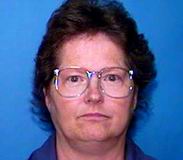 Bobbie Sue Terrell
Murderer · USA · 1984
Bobbie Sue Dudley Terrell was a Pinellas County nurse and worked as the night s…
12 victims
Bobbie Sue Terrell
Murderer · USA · 1984
Bobbie Sue Dudley Terrell was a Pinellas County nurse and worked as the night s…
12 victims
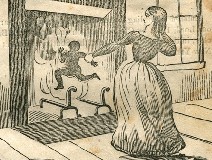 Patty Cannon
Murderer · USA · 1821
Martha “Patty” Cannon (circa 1760 – May 11, 1829) led a gang in the early 19th…
11 victims
Patty Cannon
Murderer · USA · 1821
Martha “Patty” Cannon (circa 1760 – May 11, 1829) led a gang in the early 19th…
11 victims
 Lem Tuggle
Murderer · USA · 1971
Lem Tuggle was executed by lethal injection in Virginia on December 12, 1996. L…
2 victims
Lem Tuggle
Murderer · USA · 1971
Lem Tuggle was executed by lethal injection in Virginia on December 12, 1996. L…
2 victims
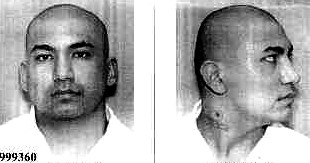 Juan Martin Garcia
Murderer · USA · 1998
Juan Martin Garcia was convicted of capital murder in Harris County, Texas, und…
1 victim
Juan Martin Garcia
Murderer · USA · 1998
Juan Martin Garcia was convicted of capital murder in Harris County, Texas, und…
1 victim
 Lonnie Weeks
Murderer · USA · 1993
Lonnie Weeks was convicted of murdering a state trooper during a 1993 traffic s…
1 victim
Lonnie Weeks
Murderer · USA · 1993
Lonnie Weeks was convicted of murdering a state trooper during a 1993 traffic s…
1 victim
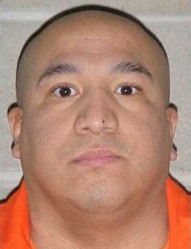 William Herrera
Murderer · USA · 1988
Defendant: William Herrera Victim: Caucasian (Deputy Sheriff Vernon Marconnet)…
1 victim
William Herrera
Murderer · USA · 1988
Defendant: William Herrera Victim: Caucasian (Deputy Sheriff Vernon Marconnet)…
1 victim
 Richard Chase
Spree killer · USA · 1977
Richard Trenton Chase (May 23, 1950 – December 26, 1980) was an American serial…
6 victims
Richard Chase
Spree killer · USA · 1977
Richard Trenton Chase (May 23, 1950 – December 26, 1980) was an American serial…
6 victims
- Gender
- female
- Country
- USA
- Location
- Cumberland County, Pennsylvania, USA
- Date of birth
- 1766
- Age at first offence
- 32
- Characteristics
- poisoner, jealousy
- Victim profile
- John Carothers and his wife, Mary
- Method of murder
- Poisoning (arsenic)
- Date(s) of murder
- February 26, 1798
- Years active
- 1798
- Date of arrest
- June 12, 1798
- Status
-
Executed
Executed by hanging on October 30, 1799
Background
Sarah Clark lived in the family of John Douglas and contracted a strong attachment for Mr. Douglas’s son. At the same time, Mr. Douglas’s son was paying attention to Miss Ann Carothers, who was daughter of John Carothers and who lived near Silver Spring as a neighbor of Mr. Douglas. Sarah Clark became determined to destroy the life of Ann Carothers and gain the object of her affections. She left the employ of Mr. Douglas and became a serving girl in the house of John Carothers.
Sarah Clark was a local woman “born about 1766 within two miles of Carlisle.”
The offence
Sarah Clark purchased arsenic to poison Ann Carothers. She desired to poison only Ann, but no suitable opportunity offering arose, and she grew desperate and put the arsenic in a pot of leaven. The family ate bread made from the leaven and became sick.
The family members living at home who became sick included John, Mary, Ann, and Andrew. John Carothers died on February 26, and his wife, Mary, died soon afterward. Ann Carothers, the intended victim, survived. Andrew Carothers survived as well but was a cripple for life.
Sarah Clark also made a second purchase of yellow arsenic after Ann did not die. She intended to give Ann a “dose to herself.” This portion was put in a crock in Thomas Carother’s spring house. It was discovered along with arsenic she still had in her possession.
Investigation
By June 12, Sarah Clark was in the county jail on suspicion of murdering the family. Neighbors who came to help the family became ill from eating butter that had been poisoned, but they were not in danger. Ann was felt likely to recover, but Andrew was not expected to recover.
R. L. Sibbet wrote that “It is saicl cf Dr. McCoskry that he analyzed the butter into which a large quantity of arsenic had been introduced by Sally Clark; and that his testimony before the court of Carlisle secured the conviction and execution of the girl. . .”
Arrest
By the following week, she had confessed to James McCormick Esq., a justice of the peace.
Trial
Sarah Clark was tried at the October term of Oyer and Terminer. James Riddle sat as President Judge. Samuel Laird and John Montgomery served as Associates. Sarah Clark was convicted of murder in the first degree. The trial was only for the death of John Carothers. Bennet Bellman stated she was convicted of murder in the first degree.
Sentencing
Sarah Clark’s sentencing took place on August 5, 1799. She received “the awful sentence of DEATH.”
James Riddle Esq., president of the court of Oyer and Terminer, spoke to Sarah:
It is considered and ordered by the court that you, Sarah Clark be taken to the goal of Cumberland County, the place from whence you came and from there to the place of execution and there be hanged by neck until you are dead! May God have mercy on your soul.
Outcome
The execution took place on October 30, 1799 on the commons east of Carlisle sometime between 12 and 2. Sarah Clark was attended to the place of execution by the Rev. Mr. Hauts and the Rev. Mr. Herbt, the two German clergymen of this place. She appeared very penitent and received her fate with resignation and seeming resolution. The moment previous to her entering into eternity, she declared herself “dying an innocent murderer.”
Other details
The poisoning was described as occurring in the family of John Carothers of East Pennsboro Township, with the hanging held “on the commons east of this town.”
John Carothers was born in 1739, and his wife Mary was born in 1740. John Carothers and his wife appeared in East Pennsborough in 1767 when they acquired 266 acres of land by warrant dated March 31, 1767. The farm eventually consisted of “2 dwelling houses, two barns, one of them a large stone bank barn, a stone spring house with never-failing limestone spring, a good bearing orchard, 30 acres of good meadow and about 130 acres of plow land clear.” The farm could be identified on the 1858 map as the property of Michael Kreider, located today on the present Rich Valley Road.
John Carothers and Mary had seven children: James, William, John, Thomas, Andrew, Jean, and Ann. John Carothers was a justice of the peace of the county. In 1798, five of the children were married. Sarah Clark’s intended victim was Ann Carothers; Andrew Carothers was also affected.
John Carothers married Sarah Hogue, daughter of Jonathan, 1725–1800. Records variously called his wife “Sallie or Sally.” John Carothers was the Sheriff of Cumberland County. John Carothers and Mary were living in Carlisle in a stone home owned by Jacob Hindle.
James Carothers married Elizabeth. Thomas also had a wife Elizabeth. William was married to Margaret. Jean Carothers, also called Jane, was married to James Bell. In 1798, James and William shared a property bordering John Orr. Thomas lived in a large stone house belonging to John Walker, Esq. Andrew Carothers had been trained in cabinet making, and after the poisoning left him crippled, he could not pursue that career. He left cabinetry behind and became a lawyer “by a course of reading and study with such aids as he could obtain at home.” Andrew Carothers married Catherine Loudon of East Pennsborough on June 11, 1812. After Catherine Loudon’s death in 1820, Andrew married Isabella Alexander in 1824. Andrew was a trustee of Dickinson College, and he died on July 27, 1836. Bennet Bellman stated, “Mr. Carothers was remarkable for his amiability of temper, his purity of character, his unlimited disposition to charity and his love of justice.” His obituary noted that “he early made his way to competence and distinction.”
John Carothers was buried the next day at the Silver Spring Meeting House. The newspaper said, “the funeral was uncommonly large; his friends and acquaintances from a considerable distance attending in great numbers to testify their regret at the loss of a man respectable for his social and domestic qualities.” Mary Carothers lingered until the third of June when she died, and a second burial took place at the Silver Spring Meeting House. Kline’s Gazette said of Mary Carothers: “she possessed all the virtues calculated to promote domestic happiness being a dutiful, an affectionate mother, a good neighbor.”
Ann and Andrew Carothers did not die as a result of the poisoning. When the Carothers plantation was sold to John Noble of Carlisle for 2,169 pounds six shillings on October 28, 1800, Ann and Andrew were listed as heirs. The property contained 295 acres and 145 perches and a fourth. It was bounded by the land of Andrew Irvine, William Walker, Matthew Loudon, and Joseph McClure.
A recent article in Cumberland County History, “Chloe’s Story,” written by Nancy Loughridge, described a murder of two small daughters of Andrew and Mary Carothers in 1801 by their slave Chloe. The events in 1801 were described as having no direct relationship to the deaths of John and Mary Carothers in 1798.
John Carothers, son of John (Sheriff of Cumberland County), who had the death warrant for Chloe issued, was described as the cousin of Andrew, father of the dead children. The gravestones of John, Mary, and Andrew Carothers remained readable in the graveyard of Silver Spring Presbyterian Church.
The incident was connected to Cumberland County history and poetry, including a book of poetry published in 1805 by Miss Isabella Oliver, daughter of James Oliver and a friend of the families involved. Included among her poems was “Melancholy Instance of Human Depravity.” The poem began:
Upon the bank of a slow winding flood
The good Alphonso's modest mansion stood;
A man he was throughout the county known
Of sterling sense, to social converse prone.
He walked the plains with such majestic grace
When time had drawn its furrows on his face,
Twas easy to infer his youthful charm,
When first the fair Maria blessed his arms;
Maria-Oh! what mixed emotions rise,
Grief, pity, indignation and surprise,
At thought of thee! Thy sweetness might have moved the harshest mind;
Thy kindness taught th'ungentlest to be kind;
And yet a fiend enshrined in female mould
Could thy heartrending agony behold;
When by her cruel wiles thy wedded heart
Was basely severed from its dearest part…
Timeline
- March 31, 1767 — John Carothers and Mary acquired 266 acres of land by warrant.
- Fall 1797 — Sarah Clark purchased “one ounce of white arsenic” from Dr. Gustine.
- February 26, 1798 — Captain John Carothers died.
- June 3, 1798 — Mary Carothers died.
- June 12, 1798 — Sarah Clark was in the county jail on suspicion of murdering the family.
- October 28, 1800 — The plantation was sold to John Noble of Carlisle for 2,169 pounds six shillings.
- October 30, 1799 — Sarah Clark was executed by hanging on the commons east of Carlisle sometime between 12 and 2.
- August 5, 1799 — Sarah Clark received the “awful sentence of DEATH.”
- October 30, 1799 — The execution took place on the commons east of Carlisle sometime between 12 and 2.
- October 30, 1799 — The execution occurred after Sarah Clark was convicted at the October term of Oyer and Terminer.

Spotted an error, or have more information about this case?