
Dora Cisneros
Murderer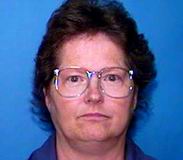 Bobbie Sue Terrell
Murderer · USA · 1984
Bobbie Sue Dudley Terrell was a Pinellas County nurse and worked as the night s…
12 victims
Bobbie Sue Terrell
Murderer · USA · 1984
Bobbie Sue Dudley Terrell was a Pinellas County nurse and worked as the night s…
12 victims
 Megan Huntsman
Murderer · USA · 1996
Megan Huntsman was 40 at sentencing. She was a mother of three children who wer…
6 victims
Megan Huntsman
Murderer · USA · 1996
Megan Huntsman was 40 at sentencing. She was a mother of three children who wer…
6 victims
 Angela Johnson
Murderer · USA · 1993
Angela Jane Johnson was convicted in federal court of aiding and abetting the m…
5 victims
Angela Johnson
Murderer · USA · 1993
Angela Jane Johnson was convicted in federal court of aiding and abetting the m…
5 victims
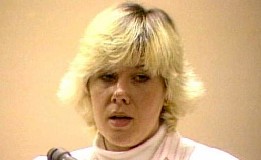 Catherine May Wood
Murderer · USA · 1987
Catherine May Wood was an American caregiver who worked at the Alpine Manor Nur…
5 victims
Catherine May Wood
Murderer · USA · 1987
Catherine May Wood was an American caregiver who worked at the Alpine Manor Nur…
5 victims
 Michele Kalina
Murderer · USA · 1996
Michele Kalina pleaded guilty to murder for one of five infants she initially w…
5 victims
Michele Kalina
Murderer · USA · 1996
Michele Kalina pleaded guilty to murder for one of five infants she initially w…
5 victims
 Amy Bishop
Murderer · USA · 1986
Amy Bishop — biology professor and perpetrator · James Anderson — Bishop’s husb…
4 victims
Amy Bishop
Murderer · USA · 1986
Amy Bishop — biology professor and perpetrator · James Anderson — Bishop’s husb…
4 victims
 Joseph Vacher
Serial killer · France · 1894
Joseph Vacher (November 16, 1869 – December 31, 1898) was a French serial kille…
11 victims
Joseph Vacher
Serial killer · France · 1894
Joseph Vacher (November 16, 1869 – December 31, 1898) was a French serial kille…
11 victims
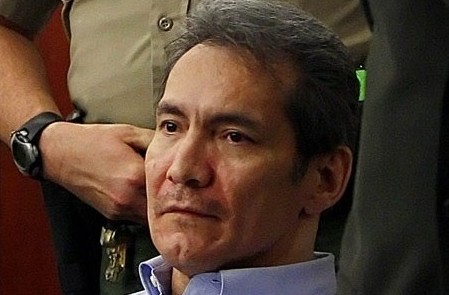 Floyd Maestas
Murderer · USA · 2004
Floyd Eugene Maestas was repeatedly convicted of violence against elderly women…
1 victim
Floyd Maestas
Murderer · USA · 2004
Floyd Eugene Maestas was repeatedly convicted of violence against elderly women…
1 victim
 Azad Abdullah
Murderer · USA · 2002
Azad Abdullah Sentenced to death on November 2004 Azad Abdullah was accused of…
1 victim
Azad Abdullah
Murderer · USA · 2002
Azad Abdullah Sentenced to death on November 2004 Azad Abdullah was accused of…
1 victim
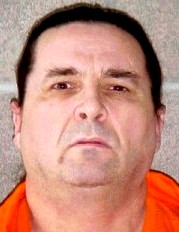 Bobby Lee Tankersley
Murderer · USA · 1991
Bobby Lee Tankersley lived in a hotel in Yuma, Arizona, in the same place as th…
1 victim
Bobby Lee Tankersley
Murderer · USA · 1991
Bobby Lee Tankersley lived in a hotel in Yuma, Arizona, in the same place as th…
1 victim
 Bobby Glen Cook
Murderer · USA · 1993
Bobby Glen Cook was convicted of capital murder involving Edwin Earl Holder. ·…
1 victim
Bobby Glen Cook
Murderer · USA · 1993
Bobby Glen Cook was convicted of capital murder involving Edwin Earl Holder. ·…
1 victim
- Gender
- female
- Country
- USA
- Location
- Brownsville, Texas, USA
- Date of birth
- 1938
- Age at first offence
- 55
- Characteristics
- murder-for-hire, motive unclear
- Victim profile
- Joey Fischer, 18 ( her daughter's ex-boyfriend)
- Method of murder
- Shooting
- Date(s) of murder
- March 3, 1993
- Years active
- 1993
- Date of arrest
- —
- Status
-
Life imprisonment
Sentenced to 30 years to life in prison on April 19, 1994
Case record: United States v. Dora Garcia Cisneros (United States Court of Appeals for the Fifth Circuit)
Parties
- United States of America (Plaintiff-Appellee)
- Dora Garcia Cisneros (Defendant-Appellant)
Status and procedural posture
The matter was considered by the United States Court of Appeals for the Fifth Circuit. The appellate panel issued its decision on October 28, 1999.
Timeline
- March 3, 1993 — Joey Fischer was shot and killed outside his home as he was washing his car.
- April 5, 1993 — Maria Mercedes Martinez was arrested at her house.
- April 6, 1993 — Dora Cisneros was arrested for capital murder while in her car as she was giving Maria Mercedes Martinez $500.
- April 19, 1994 — Dora Cisneros was sentenced to 30 years to life in prison.
- October 28, 1999 — The Fifth Circuit affirmed Cisneros’s conviction.
Background
Dora Cisneros was the mother of five children and was described as a doctor’s wife. She was also described in relation to her youngest daughter, Christina.
Joey Fischer was described as a high school student. He began dating Christina Cisneros (“Christina”) in the spring of 1992. The relationship ended after only several weeks.
Dora Cisneros first sought to persuade Joey Fischer to change his mind. When that did not work, she went to a fortuneteller, Maria Martinez (also identified as Maria Mercedes Martinez), and asked about whether Fischer was destined to marry Christina. After tarot cards did not provide the answer Cisneros wanted, Cisneros told Martinez to put a curse on Fischer. Near the end of October, Cisneros turned to a more mundane solution and asked Martinez to find someone to beat up Fischer. By winter, Cisneros decided to have him murdered.
The offence
Joey Fischer was shot and killed. The conduct described included:
- a plan arranged through a fortuneteller and a middleman,
- telephone calls and travel described as involving Mexico,
- a scheme implemented through gunmen.
Murder
On March 3, 1993, Joey Fischer was shot and killed in his driveway as he was washing his car. The killing was described as occurring near the time he was preparing for school.
Investigation
Initial scene evidence and early investigative leads
Police found a yellow business card lying near Joey Fischer’s body. The card was from a bail-bond company in McKinney, Texas and included a handwritten telephone number with a 214 area code. Investigators later linked this handwriting to a bail-bond application with the same distinctive handwriting.
Daniel Garza as a key figure
Investigators tracked down people who had stayed at a motel and eventually came up with Daniel Garza (described with the nickname “El Güero”). He was described as having family trouble and as having gone to a curandera.
Investigators described Garza as a middleman involved in arranging the killing.
The fortuneteller: Maria Mercedes Martinez
Maria Mercedes Martinez was described as a fortuneteller and Mexican faith healer. Police described a relationship between Martinez and Dora Cisneros.
Martinez was described as being a seventy-two-year-old woman who charged five dollars to “tirar las barajas” (“throw the cards”).
Arrest
Arrest of Martinez
On April 5, a month after Joey Fischer was killed, Maria Mercedes Martinez was arrested at her house.
Arrest of Cisneros
On April 6, officers arrested Dora Cisneros in her car as she was giving Martinez $500.
A detail in the narrative described an item discovery in the course of events around that time: park workers discovered a bulky brown paper shopping bag dumped into a resaca, containing paraphernalia described as brujería items and tarot cards. Antonio Zavaleta was called to photograph and document the items.
Trial
State court proceedings
Cisneros was described as being convicted in state court for capital murder and later having that conviction overturned by a Texas appeals court for insufficiency of evidence linking her to the murder.
Federal prosecution under the murder-for-hire statute
After the state proceedings, the case was turned over to federal prosecutors. Cisneros was charged under 18 U.S.C. § 1958 and was convicted.
Trial length and jury deliberation (as described)
A federal jury deliberated and returned a verdict; the narrative described the decision as coming after about three hours of deliberations.
Sentencing
Appeals
The appeal was decided by the United States Court of Appeals for the Fifth Circuit on October 28, 1999.
Opinion and issues addressed
The opinion stated that Cisneros argued multiple instances of insufficient evidence and error. The court addressed whether the government presented sufficient evidence to show the interstate/foreign commerce requirement for a federal murder-for-hire conviction under 18 U.S.C. § 1958.
The opinion quoted and discussed statutory language in relevant parts for 1993.
Statutory language discussed by the court (verbatim)
(a) Whoever travels in or causes another (including the intended victim) to travel in interstate or foreign commerce, or uses or causes another (including the intended victim) to use the mail or any facility in interstate or foreign commerce, with intent that a murder be committed in violation of the laws of any State or the United States as consideration for the receipt of, or as consideration for a promise or agreement to pay, anything of pecuniary value, shall be fined not more than $10,000 or imprisoned for not more than ten years, or both; and if personal injury results, shall be fined not more than $20,000 and imprisoned for not more than twenty years, or both; and if death results, shall be subject to imprisonment for any term of years or for life, or shall be fined not more than $50,000, or both.
(b) As used in this section and section 1959 ․ (2) “facility of interstate commerce ” includes means of transportation and communication. 18 U.S.C. § 1958 (emphasis added).
The opinion addressed the meaning of “facility in interstate or foreign commerce” and whether the definition in subsection (b) applied.
The opinion also discussed a “rule of lenity” and legislative history describing concerns about creating concurrent federal jurisdiction over murder cases.
Evidence discussed in the opinion (verbatim quoted testimony/phrases)
The opinion described Garza’s testimony regarding phone calls from Mexico, and also described defense and government evidence.
The opinion used the following phrases and quoted statements in the factual discussion, including:
- the description of what Cisneros told Martinez,
- Garza’s discussions with Martinez,
- details of the implementation of the scheme.
Among the quoted references included in the narrative portion of the opinion were:
- “the client” wanted the boy killed.
- “casetas,” booths where a caller pays for the call after making it.
- Garza’s description about collect calls from Mexico being difficult.
- Garza testified he had made the calls from Mexico towns: “San Fernando and Matamoros.”
- “the boy” and “her client” in relation to Martinez asking about finding someone to kill Fischer.
The opinion included the following quoted detail about the relevant entry and plate:
- Border authorities recorded its Mexican license plate number as “821 THE7.”
Judicial disposition regarding sufficiency
The Fifth Circuit affirmed the conviction, stating in its “For the reasons stated herein” portion that the conviction was affirmed.
Verbatim holding
For the reasons stated herein, Cisneros's conviction is in all respects AFFIRMED.
Outcome
- Cisneros’s conviction was affirmed by the United States Court of Appeals for the Fifth Circuit.
Other details
Names and roles included in the narrative
- Joey Fischer (Albert Joseph Fischer Jr.) — victim; described as a high school student and boyfriend/ex-boyfriend of Christina.
- Christina Cisneros (“Christina”) — daughter of Dora Cisneros; described as a former girlfriend of Joey Fischer.
- Maria Mercedes Martinez — fortuneteller/faith healer; described as involved in the scheme.
- Daniel Garza (“El Güero”) — middleman described as facilitating arrangements and using telephone calls.
- Israel Bazaldua Cepeda — described as an alleged hit man in the narrative.
- Heriberto “Eddie” Pizana — described as an alleged hit man in the narrative.
- Ramon Palomares — described as another Cuellar hit man referenced in the appellate opinion.
- Ramiro Moya — described in the appellate discussion related to hearsay and involvement.
- Rudy Cuellar — described as part of the drug smuggling and auto theft operation referred to in the appellate opinion.
- Victor Moreno — described as involved in Cuellar’s organization and testimony regarding the Fischer murder.
Quotations from the appellate materials (as included in the narrative)
The narrative included multiple quotations and defined terms used in the appellate decision, including the quotes already reproduced above (e.g., “the client,” “casetas,” “the boy,” “her client,” and “821 THE7”).
Limitation: statute discussed
The opinion stated that it addressed the relevant parts of the statute in 1993 and noted later amendments affecting capital punishment.
Case caption and docket
The appellate record included:
- No. 98-40955
- Case caption: United States of America v. Dora Garcia Cisneros
Spotted an error, or have more information about this case?