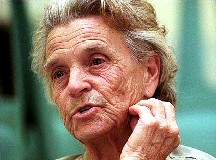
Faye Copeland
Serial killer Genene Jones
Serial killer · USA · 1977
Genene Anne Jones (born July 13, 1950) was a former pediatric nurse who worked…
11 victims
Genene Jones
Serial killer · USA · 1977
Genene Anne Jones (born July 13, 1950) was a former pediatric nurse who worked…
11 victims
 Dorothea Puente
Serial killer · USA · 1982
Dorothea Puente was a convicted serial killer. In Sacramento, California, she r…
9 victims
Dorothea Puente
Serial killer · USA · 1982
Dorothea Puente was a convicted serial killer. In Sacramento, California, she r…
9 victims
 Debra Brown
Serial killer · USA · 1984
Debra Denise Brown was an African-American serial killer and the partner-in-cri…
8 victims
Debra Brown
Serial killer · USA · 1984
Debra Denise Brown was an African-American serial killer and the partner-in-cri…
8 victims
 Aileen Wuornos
Serial killer · USA · 1989
Aileen Carol Wuornos was an American serial killer who killed seven men in Flor…
7 victims
Aileen Wuornos
Serial killer · USA · 1989
Aileen Carol Wuornos was an American serial killer who killed seven men in Flor…
7 victims
 Diana Lumbrera
Serial killer · USA · 1976
Diana Lumbrera (1976–1990) systematically suffocated 6 of her own children and…
7 victims
Diana Lumbrera
Serial killer · USA · 1976
Diana Lumbrera (1976–1990) systematically suffocated 6 of her own children and…
7 victims
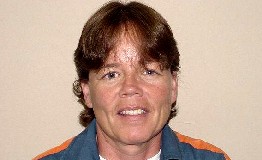 Gwendolyn Graham
Serial killer · USA · 1987
Gwendolyn Graham worked as a nurse’s aide at the Alpine Manor Nursing Home in W…
5 victims
Gwendolyn Graham
Serial killer · USA · 1987
Gwendolyn Graham worked as a nurse’s aide at the Alpine Manor Nursing Home in W…
5 victims
 Michael Anthony Mullen
Murderer · USA · 2005
Michael Anthony Mullen was an inmate at Stafford Creek Corrections Center. He w…
2 victims
Michael Anthony Mullen
Murderer · USA · 2005
Michael Anthony Mullen was an inmate at Stafford Creek Corrections Center. He w…
2 victims
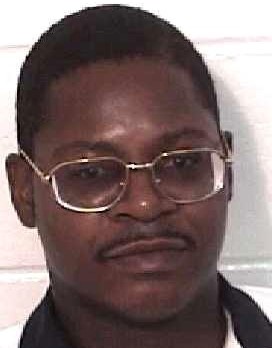 Roger Collins
Murderer · USA · 1977
Name: Roger Collins Age: 38 Status/outcome: Sentenced to death on February 17,…
1 victim
Roger Collins
Murderer · USA · 1977
Name: Roger Collins Age: 38 Status/outcome: Sentenced to death on February 17,…
1 victim
 Monique Berkley
Murderer · USA · 2005
Monique Berkley was a Clayton, North Carolina woman at the center of a fatal lo…
1 victim
Monique Berkley
Murderer · USA · 2005
Monique Berkley was a Clayton, North Carolina woman at the center of a fatal lo…
1 victim
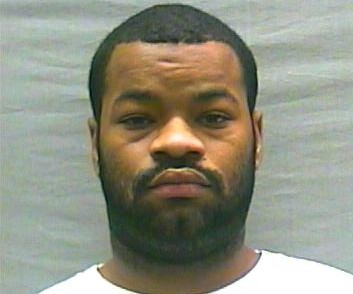 Lloyd Massey
Murderer · USA · 2000
Lloyd Massey II was convicted of gunning down three Pleasantville men in an amb…
3 victims
Lloyd Massey
Murderer · USA · 2000
Lloyd Massey II was convicted of gunning down three Pleasantville men in an amb…
3 victims
 Zheng Minsheng
Mass murderer · China · 2010
Zheng Minsheng was the perpetrator of the Nanping school massacre (福建南平校园惨案) at…
8 victims
Zheng Minsheng
Mass murderer · China · 2010
Zheng Minsheng was the perpetrator of the Nanping school massacre (福建南平校园惨案) at…
8 victims
 Alexander Pichushkin
Serial killer · Russia · 1992
Alexander Yuryevich “Sasha” Pichushkin (Russian: Алекса́ндр Ю́рьевич Пичу́шкин,…
49 victims
Alexander Pichushkin
Serial killer · Russia · 1992
Alexander Yuryevich “Sasha” Pichushkin (Russian: Алекса́ндр Ю́рьевич Пичу́шкин,…
49 victims
- Gender
- female
- Country
- USA
- Location
- Mooresville, Missouri, USA
- Date of birth
- 1921
- Age at first offence
- 65
- Characteristics
- kidnappings, the bodies were never found, abuse
- Victim profile
- Paul Jason Cowart, 21 / John W. Freeman, 27 / Jimmie Dale Harvey, 27 / Wayne Warner, age unknown / Dennis Murphy, 27
- Method of murder
- Shooting (.22 caliber Marlin bolt-action rifle)
- Date(s) of murder
- October 1986 - May 1989
- Years active
- 1986–1989
- Date of arrest
- October 17, 1989
- Status
-
Died in custody
Sentenced to death on April 27, 1991; commuted to life in prison in 1999; died in prison on December 30, 2003
Background
Faye Della Copeland was born in 1921 and died on December 30, 2003. She was described as white.
Ray Copeland was her husband. He was born in 1914 and died of natural causes in October 1993 while awaiting execution. Faye was 69 and Ray was 76 at the time of sentencing. The Copelands were described as the oldest couple ever sentenced to death in the United States.
Prior to the murder convictions, Ray had a long history of crimes, ranging from petty theft to grand larceny, and he had been convicted of writing bad checks on a number of occasions.
Faye had written a list of names that included the murdered drifters. Each of whom had an X next to his name, as did 7 others who remained missing.
Neighbours believed Ray beat Faye and their four children. It was described that the marriage between Ray and Faye was fraught with abuse, and that Faye was a battered wife.
The offence
Faye and Ray Copeland were found guilty of murdering four white males in four separate incidents during the late 1980s. The four white males were Paul Jason Cowart (age 21), John W Freeman (age 27), Jimmie Dale Harvey (age 27), and Wayne Warner (age unknown).
The case also included reference to killing of five drifters, and it was stated that they likely killed at least seven more, though no bodies were recovered. It was stated that five drifters were killed and “likely killed at least seven more.”
Authorities determined that each man had been shot in the back of the head at close range.
A handmade quilt was made out of the dead victim's clothing.
Investigation
In October 1989, Missouri police received a tip that a human skull and bones could be found on farmland owned by Ray and Faye Copeland. The investigation expanded after police searched the property.
Five decomposing bodies were found buried in shallow graves around the farm.
A register with names of transient farmhands who had worked for the Copelands helped police identify the bodies. Twelve of the names, including the five victims found, had a crude “X” in Faye’s handwriting, marked by the name.
Authorities found a .22-calibre Marlin bolt-action rifle inside the Copeland home. Ballistics tests proved it was the same weapon as the one used in the murders.
In a later account, it was stated that on August 20, 1989, at 7:30 p.m., a Crime Stoppers toll-free hotline received an anonymous tip. The caller accused Copeland of murdering farm hands and reported seeing a skull and human bones buried on the land, then hung up.
It was also stated that for three years local police had tracked a string of bad checks passed by transients working for Copeland, involving cattle auctions, exorbitant bids, and bad checks that bounced after the cattle were resold.
One account stated that investigators uncovered another corpse in the barn: Wayne Warner. Another stated that the final body was Dennis Murphy, with remains found in a well on another farm.
It was described that the drifter Jack McCormick, described as boozy, had been tracked down in September 1989 in Oregon. McCormick was said to have been charged with bouncing checks in Missouri and to have offered details of how Copeland operated and boasted that he knew where bodies were buried.
In one quoted statement, McCormick told reporters:
"I came close to being killed before I got out of there."
In the same account, McCormick described himself as:
"common gutter tramp and drunk"
Arrest
The Copelands were charged with murder after a drifter spotted human remains on their land.
Faye Copeland faced a jury on November 1, 1990.
The Copelands were charged with five counts of first-degree murder.
Trial
During Faye Copeland’s trial, her attorney tried to prove that Faye was another one of Ray’s victims and that she suffered from Battered Women Syndrome. The jury convicted her anyway.
It was stated that it took 2-1/2 hours of deliberation to decide she was guilty, and three more hours to set the penalty at death.
The jury found Faye Copeland guilty of four counts of murder and one of manslaughter. She was sentenced to death by lethal injection.
Ray Copeland was found guilty and sentenced to death as well.
Sentencing
Faye Copeland was sentenced to death on April 27, 1991.
She was sentenced to death by lethal injection and sobbed uncontrollably when sentenced.
Ray Copeland escaped execution and died of natural causes in October 1993.
Faye’s death sentence was commuted to life in prison in 1999.
Appeals
Faye Copeland’s death sentence was overturned on appeal, but not her conviction.
Aftermath
On August 10, 2002, Faye Copeland suffered a stroke that left her partially paralyzed and unable to speak.
In September 2002, Governor Holden authorized a medical parole for Faye. She was paroled to a nursing home in her hometown.
Faye Della Copeland died at the Morningside Center nursing home in Chillicothe, Missouri, on December 30, 2003. The Livingston County coroner, Scott Lindley, described her death as natural causes (disease).
Faye left behind five children, seventeen grandchildren, and twenty-five great-grandchildren.
It was stated that the story was fictionalized in a comic book titled Family Bones written by Faye Copeland's nephew, Shawn Granger. The case was also documented in a Forensic Files episode and an episode of Wicked Attraction titled “Murder at Twilight.”
The play Temporary Help by David Wiltse appeared off Broadway in 2004 and was also based on this story. References included The Copeland Killings by Tom Miller and Family Bones by Shawn Granger, and references also included an item titled “Ray and Faye Copeland — Their Retirement Years: Serial killers share similar backgrounds and often begin their killing spree when they are young adults. However, for Ray and Faye Copeland, their lust for killing came with their retirement years. Why this couple, both in their 70s, went from being loving grandparents to serial killers, who used the clothing of their victims to make a warm winter quilt to snuggle under, is both morbid and perplexing. Here is their story.”
In one account, when Ray Copeland was told about the verdict on his wife, his reply reportedly was, “Well, those things happen to some you know”; it was also stated he apparently never asked about Faye again.
Other details
Faye’s age at sentencing was 69.
Faye’s age at death was 82.
Ray and Faye were described as the oldest couple on Death Row and Faye was described as the oldest woman on death row until her sentence was commuted to life in prison in 1999.
It was stated that at least a dozen men had worked with Copeland from 1986 to the summer of 1989, and that five vanished after stealing a total of $32,000 with phony bank accounts and bad paper.
It was stated that Faye claimed she did not know her husband was a murderer and that she stuck to her story even after being offered a deal to change her murder charges to conspiracy to commit murder in exchange for information about the remaining seven missing men listed in her register.
It was stated that although a conspiracy charge would have meant spending less than a year in prison, Faye continued to insist she knew nothing about the murders.
Ray first tried to plead insanity but eventually gave up and tried to work out a plea agreement. It was stated that the authorities were not willing to go along and that first-degree murder charges remained intact.


Spotted an error, or have more information about this case?