
Debra Brown
Serial killer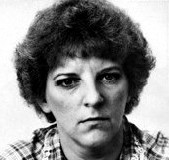 Genene Jones
Serial killer · USA · 1977
Genene Anne Jones (born July 13, 1950) was a former pediatric nurse who worked…
11 victims
Genene Jones
Serial killer · USA · 1977
Genene Anne Jones (born July 13, 1950) was a former pediatric nurse who worked…
11 victims
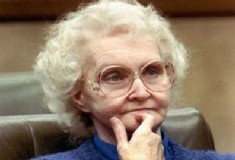 Dorothea Puente
Serial killer · USA · 1982
Dorothea Puente was a convicted serial killer. In Sacramento, California, she r…
9 victims
Dorothea Puente
Serial killer · USA · 1982
Dorothea Puente was a convicted serial killer. In Sacramento, California, she r…
9 victims
 Aileen Wuornos
Serial killer · USA · 1989
Aileen Carol Wuornos was an American serial killer who killed seven men in Flor…
7 victims
Aileen Wuornos
Serial killer · USA · 1989
Aileen Carol Wuornos was an American serial killer who killed seven men in Flor…
7 victims
 Diana Lumbrera
Serial killer · USA · 1976
Diana Lumbrera (1976–1990) systematically suffocated 6 of her own children and…
7 victims
Diana Lumbrera
Serial killer · USA · 1976
Diana Lumbrera (1976–1990) systematically suffocated 6 of her own children and…
7 victims
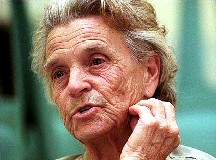 Faye Copeland
Serial killer · USA · 1986
Faye Della Copeland was born in 1921 and died on December 30, 2003. She was des…
5 victims
Faye Copeland
Serial killer · USA · 1986
Faye Della Copeland was born in 1921 and died on December 30, 2003. She was des…
5 victims
 Gwendolyn Graham
Serial killer · USA · 1987
Gwendolyn Graham worked as a nurse’s aide at the Alpine Manor Nursing Home in W…
5 victims
Gwendolyn Graham
Serial killer · USA · 1987
Gwendolyn Graham worked as a nurse’s aide at the Alpine Manor Nursing Home in W…
5 victims
 Ershad Sikder
Murderer · Bangladesh · 1990
Ershad Sikder was an influential political figure in the south-western city of…
30 victims
Ershad Sikder
Murderer · Bangladesh · 1990
Ershad Sikder was an influential political figure in the south-western city of…
30 victims
 Christer Pettersson
Murderer · Sweden · 1970
Christer Pettersson was a Swedish criminal and a suspect in the assassination o…
2 victims
Christer Pettersson
Murderer · Sweden · 1970
Christer Pettersson was a Swedish criminal and a suspect in the assassination o…
2 victims
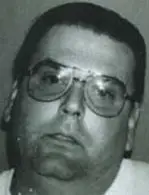 James Allen Kinney
Murderer · USA · 1997
James Allen Kinney was convicted for the rape and murder of Keri Lynn Sherlock.…
3 victims
James Allen Kinney
Murderer · USA · 1997
James Allen Kinney was convicted for the rape and murder of Keri Lynn Sherlock.…
3 victims
 Rachael Mullenix
Homicide · USA · 2006
Defendant: Rachael Scarlett Mullenix (also referred to as Rachael Mullenix), 16…
1 victim
Rachael Mullenix
Homicide · USA · 2006
Defendant: Rachael Scarlett Mullenix (also referred to as Rachael Mullenix), 16…
1 victim
 Martha Marek
Serial killer · Austria · 1932
Martha Lowenstein Marek was guillotined in Vienna on December 6, 1938. Martha M…
4 victims
Martha Marek
Serial killer · Austria · 1932
Martha Lowenstein Marek was guillotined in Vienna on December 6, 1938. Martha M…
4 victims
 Jason Hann
Murderer · USA · 1999
Jason Hann was convicted of killing his 2-month-old daughter, Montana, and also…
2 victims
Jason Hann
Murderer · USA · 1999
Jason Hann was convicted of killing his 2-month-old daughter, Montana, and also…
2 victims
- Gender
- female
- Country
- USA
- Location
- Indiana/Ohio/Illinois, USA
- Date of birth
- November 11, 1962
- Age at first offence
- 22
- Characteristics
- kidnappings, rape, armed robbery
- Victim profile
- Vernita Wheat, 9 / Tamika Turks, 7 / Donna Williams, 25 / Virginia Temple and her daughter Rachelle, 9 / Tonnie Storey, 15 / Marlene Walters, 44 / A 77-year-old man
- Method of murder
- Strangulation
- Date(s) of murder
- May-July 1984
- Years active
- 1984
- Date of arrest
- July 20, 1984
- Status
-
Life imprisonment
Death sentence in Indiana; previously commuted in Ohio to life imprisonment
Case record: Debra Brown
Names and identity
Debra Denise Brown was an African-American serial killer and the partner-in-crime of Alton Coleman.
Status and incarceration
Brown received the death penalty in Indiana. Her death sentence in Ohio was later commuted to life because of her low IQ scores, a non-violent history prior to meeting Coleman, and a dependent personality making her susceptible to Coleman's control. Brown was serving sentence in the Ohio Reformatory for Women. She still faced the death penalty in Indiana.
Legal proceedings and quotes
Indiana post-conviction relief
In Brown v. State, Debra Denise Brown, appellant (defendant below), v. State of Indiana, appellee (plaintiff below), No. 45S00-9212-PD-939, Brown appealed the denial of post-conviction relief with respect to her convictions for Murder 1 and Attempted Murder, 2 and her sentence of death. The Supreme Court of Indiana affirmed the denial of post-conviction relief with respect to her convictions for Murder and Attempted Murder and sentence of death.
The Supreme Court of Indiana described the background of Brown’s convictions as involving “stomping a seven-year old girl to death and attempting to choke a nine-year old girl to death with a belt after sexually assaulting the latter,” and as part of a crime spree that took Brown and Coleman to Ohio, Michigan and Illinois.
Brown’s post-conviction arguments included claims that:
- The State violated its obligation to disclose material exculpatory evidence by failing to disclose prior to trial certain psychological profiles and related materials compiled by the FBI.
- She was denied the effective assistance of counsel at the penalty phase because counsel failed fully to investigate, develop and present evidence.
- Counsel failed to present evidence of Brown’s borderline mental retardation in support of the contention that Brown’s confession had been involuntary.
- She was denied the effective assistance of appellate counsel.
The Supreme Court of Indiana addressed Brown’s claim under Kyles v. Whitley and found the documents could not be reasonably taken to put the whole case in such a different light as to undermine confidence in the trial court’s judgment; it held Brown was not entitled to post-conviction relief on that contention.
Verbatim statement sent to the judge
During the sentencing phase of her first Ohio trial, Brown sent the judge a note which read in part, “I killed the bitch and I don't give a damn. I had fun out of it.”
Relationship to Alton Coleman
Brown and Alton Coleman acted together during a crime spree across multiple states in 1984. The Indiana post-conviction decision described the defense’s principal argument at the penalty phase as that Brown should not be sentenced to death because she had been acting “under the substantial domination of Alton Coleman” when she committed the crimes for which she had been convicted.
Evidentiary details described in the Indiana post-conviction decision
FBI documents described
Brown’s post-conviction claim involved four FBI documents, which she contended were exculpatory. The Supreme Court of Indiana described the four documents:
Brown’s Exhibit 31 stated in pertinent part:
Coleman has a violent temper, and when he is upset he is uncontrollable. * * * Ever since Coleman's mother died of cancer, Coleman seems to have gone off his rocker. * * * Debra Denise Brown has lived with Coleman and his blind grandmother for the past two years. Brown has lost about 35 pounds during this time. She has been virtually a prisoner in the house. If she left without Coleman, he would beat her. During [an] interview with FBI agents, Brown was very docile. She admitted that scars and scratches on her face were from Coleman. It is believed that she is completely under the control of Coleman. (R. at 1894-96.)
The second and third documents (Brown’s Exhibits 32 and 33) contained “essentially the same information.”
Brown’s Exhibit 36 was an extensive report prepared by the FBI regarding her background. The Supreme Court of Indiana summarized the report as indicating:
- Brown’s father had severe mental problems, drank to excess, and physically abused family members including the children.
- Brown had experienced a drug overdose which required hospitalization in 1980 and may have been using drugs regularly.
- Brown’s personality changed drastically after she met Coleman.
- Brown moved in with Coleman and would not talk to her family, but would look to Coleman to answer for her.
- Brown’s mother felt that Coleman completely controlled Brown and that she would do whatever Coleman asked her to do; Brown’s mother also believed that Coleman was beating Brown and using her as a prostitute.
- Brown’s mother had seen Brown with her face “all beaten up” during the time Brown was living with Coleman. (R. at 1931.)
Defense and expert testimony at the penalty phase (as described in the decision)
The Supreme Court of Indiana described that the defense argument at the penalty phase focused on substantial domination and control by Coleman and included expert testimony and other witnesses. The decision described testimony and opinions from multiple experts, including:
- A psychiatrist who examined Coleman, Dr. Batacan, who testified as to Coleman's manipulative personality.
- Another psychiatrist who examined Coleman, Dr. Periolet, who testified about a characteristic of Coleman's sociopathic personality.
- Coleman's ex-wife, Beverly Perkins, who testified that Coleman used physical violence and threats of harm to her family when she tried to leave.
- A psychiatrist, Dr. Kelly, who examined Brown twice and discussed results with a psychologist, Dr. Rogers.
- A clinical psychologist, Dr. Suran, who conducted a diagnostic psychological evaluation of Brown.
The Supreme Court of Indiana reproduced two statements from Dr. Suran’s testimony:
[I]ndependent of her relationship with Alton Coleman, I really find no evidence in Debra's personality or functioning of tendencies to commit the kinds of offenses for which she has been convicted, and it is my conclusion that it is only in and through her relationship with Alton Coleman that she has had any involvement in these crimes. (T.R. at 3746-47).
I do not find in Debra Brown the kind of impulse type of hostile, aggressive, resolved or unresolved, instincts and impulses that is capable of committing the kinds of offenses for which she has been convicted. What I do find is a pathological degree of dependent behavior on her part that through association with another agent that was capable and that did have such hostile impulses that she would act out those impulses dependently serving the other agent, in this case, the agent being Alton Coleman. (T.R. at 3757.)
Trial court sentencing order excerpts reproduced in the decision
The Supreme Court of Indiana included an extended excerpt from the trial court’s sentencing order describing evidence and the trial court’s conclusion regarding domination and Brown’s mental state. The excerpt included the following verifiable quotations and findings:
There is a large quantity of evidence from the reports and testimony of a clinical psychologist who examined defendant Brown on April 18, 1986 and testified at trial and the report of a psychiatrist who examined Deborah [sic] Brown on August 1 and August 8, 1984, and testified at trial and other psychological reports that the Defendant was under the substantial domination of her co-defendant at the time these offenses were committed. The Court has already detailed the Defendant's mental state at the time of the commission of these offenses. It is agreed by the experts that the Defendant was a young woman with borderline intellectual functioning with a dependent personality disorder. It is further agreed that she had demonstrated an inability to function independently and to assume responsibility for major areas of her life. It is evident from her interview with Dr. Suran that Alton Coleman provided her with attention and support and that he is someone that this defendant became devoted to. Further evidence was presented of the dominant, manipulative personality of Alton Coleman. Truly he is such a person and appears to be totally without conscience. The affect of such a person on one with Deborah [sic] Brown's inadequacies is also obvious. The central question to this Court is whether or not Deborah [sic] Brown was so under the domination of Alton Coleman because of her own inadequacies and personality disorders that she could not make a rational choice as to her own participation in repeated violent criminal acts, accompanied by repeated efforts to deceive intended victims and others and to evade prosecution. Defendant Brown was not and is not insane nor mentally ill. She was not under the influence of alcohol or drugs. In the opinion of this Court she made a choice to follow Coleman and to prove herself to him. She stated to Dr. Suran “I know I have to suffer for what I did, but I'll give my life for him. I'll fight for my husband's (Coleman) life. I'll go down for him. I'll put my life on the roll for him ․ I loved him so much, I told him that I would go down with him, and I would give up my life for him.” The Court would agree that defendant Brown reached her decision making processes in this crime spree with limited intellectual tools. But the Defendant made a rational decision to become involved with Coleman no matter what the consequences, including these horrible crimes committed against innocent children and many others including at least two other vicious murders. The domination over this defendant by Alton Coleman is not sufficient to excuse her criminal conduct. (T.R. at 355-57.)
The offences as described in the Indiana post-conviction decision
Brown’s Indiana convictions included:
- Murder 1 for stomping a seven-year old girl to death.
- Attempted Murder 2 for attempting to choke a nine-year old girl to death with a belt after sexually assaulting the latter.
The Supreme Court of Indiana also described these crimes as “part of a crime spree” that took Brown and Coleman to Ohio, Michigan and Illinois.
Other case details described
Confession and interrogation dispute (as described)
The Indiana post-conviction decision discussed that the defense argued Brown’s Fifth Amendment right was violated because authorities continued to interrogate after she had asked for counsel. The trial court found that the Evanston detective violated her rights and ruled that evidence from his questioning was inadmissible, but the confession given to federal authorities in Chicago was used, and with it conviction was obtained.
Additional details in the narrative of the case
A narrative portion described that Brown and Coleman were on a “massive killing, raping and torture spree across the midwest,” with burglaries, rapes and killings in several states during 1984. It also described multiple victims and circumstances of attacks, and described the discovery of victims’ bodies, the causes of death, and actions taken by Coleman and Brown.
The narrative portion also described that Brown and Coleman were found guilty in separate trials in Indiana and received the death penalty there, and that Coleman received additional years and Brown received additional 40-years on charges of kidnapping and child-molesting.
Ohio and Indiana death penalty history described
The narrative described that authorities selected Ohio as the first state to prosecute because authorities wanted the pair to face the death penalty and selected Ohio for first prosecution. It stated that in Ohio both Coleman and Brown were sentenced to death in each case of aggravated murders of Marlene Walters and Tonnie Storey. It further described that Brown’s Ohio death sentence was later commuted to life.
The narrative stated that Brown was still facing the death penalty in Indiana.
Appeals and post-conviction outcome
The Supreme Court of Indiana affirmed the denial of post-conviction relief with respect to Brown’s convictions for Murder and Attempted Murder and sentence of death.

Spotted an error, or have more information about this case?