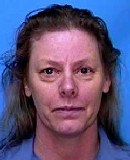
Aileen Wuornos
Serial killer Dorothea Puente
Serial killer · USA · 1982
Dorothea Puente was a convicted serial killer. In Sacramento, California, she r…
9 victims
Dorothea Puente
Serial killer · USA · 1982
Dorothea Puente was a convicted serial killer. In Sacramento, California, she r…
9 victims
 Debra Brown
Serial killer · USA · 1984
Debra Denise Brown was an African-American serial killer and the partner-in-cri…
8 victims
Debra Brown
Serial killer · USA · 1984
Debra Denise Brown was an African-American serial killer and the partner-in-cri…
8 victims
 Faye Copeland
Serial killer · USA · 1986
Faye Della Copeland was born in 1921 and died on December 30, 2003. She was des…
5 victims
Faye Copeland
Serial killer · USA · 1986
Faye Della Copeland was born in 1921 and died on December 30, 2003. She was des…
5 victims
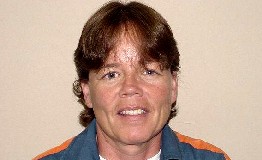 Gwendolyn Graham
Serial killer · USA · 1987
Gwendolyn Graham worked as a nurse’s aide at the Alpine Manor Nursing Home in W…
5 victims
Gwendolyn Graham
Serial killer · USA · 1987
Gwendolyn Graham worked as a nurse’s aide at the Alpine Manor Nursing Home in W…
5 victims
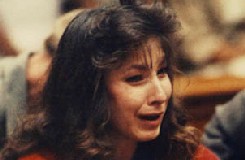 Cynthia Coffman
Serial killer · USA · 1986
Name: Cynthia Coffman · Race: White · Date of birth: 1962 · Age at crime: 24 ·…
4 victims
Cynthia Coffman
Serial killer · USA · 1986
Name: Cynthia Coffman · Race: White · Date of birth: 1962 · Age at crime: 24 ·…
4 victims
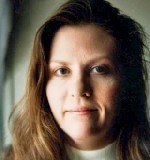 Kristen Gilbert
Serial killer · USA · 1995
Kristen Gilbert (born November 13, 1967 as Kristen Strickland in Fall River, Ma…
4 victims
Kristen Gilbert
Serial killer · USA · 1995
Kristen Gilbert (born November 13, 1967 as Kristen Strickland in Fall River, Ma…
4 victims
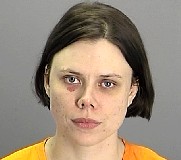 Tiffany Cole
Murderer · USA · 2005
Tiffany Cole (WF), born 12/3/81, was sentenced to death for her role in the dou…
2 victims
Tiffany Cole
Murderer · USA · 2005
Tiffany Cole (WF), born 12/3/81, was sentenced to death for her role in the dou…
2 victims
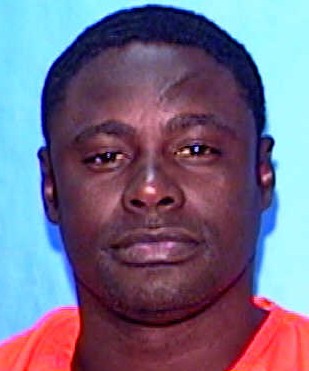 Michael Coleman
Murderer · 1998
Name: Michael Coleman Date of birth: 07/24/61 Jurisdiction: First Judicial Circ…
4 victims
Michael Coleman
Murderer · 1998
Name: Michael Coleman Date of birth: 07/24/61 Jurisdiction: First Judicial Circ…
4 victims
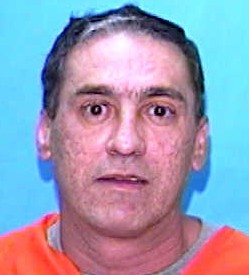 Guillermo Arbelaez
Murderer · USA · 1988
Guillermo Arbelaez was identified as the appellant in Florida Supreme Court Gui…
1 victim
Guillermo Arbelaez
Murderer · USA · 1988
Guillermo Arbelaez was identified as the appellant in Florida Supreme Court Gui…
1 victim
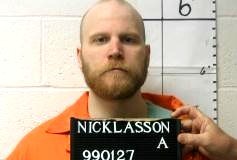 Allen Nicklasson
Murderer · USA · 1994
Allen Nicklasson · late August 1994 — Dennis Skillicorn, Allen Nicklasson, and…
3 victims
Allen Nicklasson
Murderer · USA · 1994
Allen Nicklasson · late August 1994 — Dennis Skillicorn, Allen Nicklasson, and…
3 victims
 Karl Hulten
Murderer · United Kingdom · 1944
Karl Hulten was born in Sweden in 1922. His family emigrated to the United Stat…
1 victim
Karl Hulten
Murderer · United Kingdom · 1944
Karl Hulten was born in Sweden in 1922. His family emigrated to the United Stat…
1 victim
- Gender
- female
- Country
- USA
- Location
- Florida, USA
- Date of birth
- February 29, 1956
- Age at first offence
- 33
- Characteristics
- rape, armed robbery, drug addict, alcohol, hitchhiking, homeless
- Victim profile
- Richard Mallory, 51 / Dick Humphreys, 56 / Troy Burress, 50 / David Spears, 43 / Walter Gino Antonio, 62 / Peter Siems, 65 / Charles Carskaddon, 40
- Method of murder
- Shooting ( .22-caliber pistol)
- Date(s) of murder
- 1989 - 1990
- Years active
- 1989–1990
- Date of arrest
- January 1, 1991
- Status
-
Executed
Executed by lethal injection in Florida on October 9, 2002
Case overview
Aileen Carol Wuornos was an American serial killer who killed seven men in Florida in 1989 and 1990. She was convicted and sentenced to death for six of the murders and was executed by lethal injection on October 9, 2002.
Wuornos was convicted of the murder of Richard Mallory after a jury trial in Volusia County and was sentenced to death. At trial, the State was allowed to introduce similar crimes evidence about her commission of several other murders.
While on death row, it was discovered that Mallory had previously served time for attempted rape. Wuornos pleaded no contest to the murders of the other five men and was sentenced to death in each case. For the murder trial, the Florida Supreme Court later affirmed the judgment and sentence.
She declined the traditional last meal and was given a cup of coffee. Her last words included a statement: “Yes, I would just like to say I'm sailing with the rock, and I'll be back, like Independence Day with Jesus. June 6, like the movie, big mother ship and all, I'll be back, I'll be back.” At 9:47 A.M. EDT, Aileen Wuornos died.
Background
Personal details
Wuornos was born as Aileen Carol Pittman in Rochester, Michigan, on February 29, 1956. She was later identified with the aliases SUSAN LYNN BLAHOVEC, CAMMIE MARSH GREENE, and LORI KRISTINE GRODY.
She was white and female. Her hair color was blonde or strawberry, and her eye color was brown. Her height was 5'04'' and her weight was 137.
Early life
Wuornos’ mother, Diane Wuornos, married her father, Leo Dale Pittman, on June 3, 1954, when Diane was 15 years old. Less than two years later, Diane filed for divorce. Wuornos had an older brother named Keith, born in February 1955.
Wuornos never met her father because he was in prison for the rape and attempted murder of a seven-year-old girl when she was born. Leo Pittman was considered to be a schizophrenic and was convicted of sex crimes against children. He was in and out of prison and hanged himself in prison in 1969.
In January 1960, when Wuornos was almost 4 years old, Diane abandoned her children, leaving them with their maternal grandparents, Lauri and Britta Wuornos. Keith and Aileen were legally adopted on March 18, 1960.
At age 11, Wuornos engaged in sexual activities in school in exchange for cigarettes, drugs, and food. She also engaged in sexual activities with her own brother. Wuornos claimed she was sexually assaulted and beaten as a child by her grandfather, an alcoholic, and accused that before beating her, he would force her to strip out of her clothes.
In 1970, at age 14, Wuornos became pregnant after being raped by a friend of her grandfather. She gave birth at a home for unwed mothers, and the child was placed for adoption.
A few months after her baby was born, Wuornos dropped out of school around the time her grandmother died of liver failure. She and her brother subsequently became wards of the court.
When she was 15, her grandfather threw her out of the house. Wuornos began supporting herself as a prostitute and living in the woods near her old home.
Childhood and psychiatric background described at trial
The Florida Supreme Court described evidence presented in the penalty phase about Wuornos’ background. Her parents were divorced when she was born. Her biological father hanged himself in prison while serving time for rape and kidnapping. Her mother abandoned her, and Wuornos was adopted by her grandparents. It was said her grandfather was an alcoholic and later committed suicide; her grandmother also drank heavily and died of a liver disorder.
Her brother died of cancer at age 21. During junior high, Wuornos began exhibiting hearing loss, vision problems, and trouble in school. Her IQ was established at 81, in the low dull-normal range. School officials urged counseling and tried to improve behavior by administering a mild tranquilizer.
At about age 14, Wuornos was raped by a family friend. She waited six months before revealing she was pregnant; her grandparents blamed her for the pregnancy. Her grandfather later forced her to give up the child for adoption.
Some evidence indicated that Wuornos’ life with her grandparents was physically and verbally abusive. After she left home and tried to return, her grandfather refused to take her back, and she went onto the streets and began prostitution and alcohol and drug abuse.
The State introduced rebuttal testimony from Wuornos’ biological uncle, Barry Wuornos, who said his family had a “normal lifestyle” and was a “straight and narrow family.” Barry acknowledged his father laid down rules and denied seeing his father beat Aileen, though he described discipline as involving spankings that may have become “tight” when Aileen was around 10 years of age. Barry agreed Wuornos’ biological father was abusive and “a criminal-type.”
Quotation preserved (prison/mental state statement)
Wuornos stated: “I've hated humans for a long time”.
The offence
Between December 1989 and September 1990, Wuornos’ victims were found murdered along highways of northern and central Florida. She confessed to the murder of all six men for which she was sentenced to death, and she was believed to be a suspect in a seventh killing in which a body was never found.
She claimed she was picked up by men when she was working as a highway prostitute, that the men beat or raped her, and that she shot them in self defense after they attempted to sexually assault her. She also robbed victims.
Victims and findings
Richard Mallory
Richard Mallory, age 51, was a Clearwater electronics shop owner. A deputy in Volusia County discovered an abandoned vehicle belonging to Mallory on December 1, 1989. His body was found December 13 several miles away in a wooded area. Mallory had been shot several times; two bullets to the left lung were found to have caused hemorrhaging and ultimately death. The medical examiner also determined that Mallory had been drinking at the time of his death, though it was not clear whether he was legally intoxicated.
David Spears
David Spears, age 43, was a Winter Garden construction worker. His body was found June 1, 1990 along Highway 19 in Citrus County. Except for a baseball cap, Spears was nude. He died of six bullet wounds to the torso.
Charles Carskaddon
Charles Carskaddon, age 40, was a part-time rodeo worker. His body was found June 6, 1990 in Pasco County. The medical examiner found nine small caliber bullets in his lower chest and upper abdomen.
Troy Burress
Troy Burress, age 50, was a sausage salesman from Ocala. He was reported missing July 31, 1990. On August 4, 1990 law officers found his body in a wooded area along State Road 19 in Marion County. The body was substantially decomposed, and evidence showed he had been shot twice.
Charles “Dick” Humphreys
Charles “Dick” Humphreys, age 56, was a retired Air Force major, former police chief, and Florida state child abuse investigator. His body was found in Marion County on September 12, 1990. The body was fully clothed, and he had been shot six times in the head and torso. His car was found in Suwannee County.
Walter Jeno Antonio
Walter Jeno Antonio, age 62, was found on November 19, 1990 near a remote logging road in Dixie County. His body was nearly nude and he had been shot four times in the back and head. Law officers found Antonio’s car five days later in Brevard County.
Peter Siems
Peter Siems was age 65. In June 1990, Siems left Jupiter, Florida heading for New Jersey. Law officers later found Siems’ car in Orange Springs on July 4, 1990. Witnesses identified Tyria Moore and Aileen Wuornos as the two persons seen leaving the car where it ultimately was found. A palm print on the interior door handle matched that of Wuornos. Siems’ body has never been found.
Investigation
Investigators used pawn shop items and fingerprints to connect Wuornos to the crimes. Items belonging to Mallory and Antonio were pawned near Daytona Beach. Alias names used were traced to Wuornos through thumbprints left on the pawn shop cards. Fingerprints were also recovered from victims’ cars.
A witness reported that the two women, Tyria Moore and Lee, had rented a trailer and that other individuals reported they worked at a motel south of Ocala. Police also traced Wuornos and Moore’s movements from late September to mid-December, including stays at the Fairview Motel in Harbor Oaks where Blahovec registered as Cammie Marsh Greene.
Fingerprint matching and pawn records connected the aliases to Wuornos, including thumbprints on receipts and comparisons to palm prints. Investigators also sent information to the National Crime Information Center, including responses from Michigan, Colorado, and Florida that identified aliases as Wuornos.
Arrest and confession
Arrest
Wuornos was arrested on an outstanding warrant at The Last Resort, a biker bar in Volusia County, on January 9, 1991. Police located Moore in Scranton, Pennsylvania the next day and she agreed to elicit a confession from Wuornos in exchange for prosecutorial immunity. Moore returned with police to Florida and was put up in a motel.
Under police guidance, Moore made telephone calls to Wuornos, pleading for help in clearing her name. Wuornos and her attorney then sold movie rights to her story within two weeks of her arrest.
Confession
On January 16, 1991, Wuornos confessed to the murders. She claimed the men had tried to rape her and that she killed them in self defense.
During the confession-related process, Wuornos made inconsistent statements about the killings over time. The Florida Supreme Court later described several variations in Wuornos’ explanations of the Mallory killing, including statements that she and Mallory engaged in an act of prostitution, that Mallory attempted to rape her, that she ran around to where Mallory was standing and shot him multiple times, that she concealed the body under a scrap of rug, and that she drove off in the victim’s car.
The Florida Supreme Court also described that Wuornos told Moore inconsistent stories, including one where she told Moore she found a dead body hidden under a scrap of rug.
The Florida Supreme Court described that an early confession included Wuornos’ account that she was “drunk royal,” that Mallory cleaned blood from his penis with rubbing alcohol and squirted alcohol onto her torn and bloody rectum and vagina, that Mallory told her “You're dead, bitch. You're dead,” and that she ultimately shot him multiple times after a struggle over possession of a gun.
It also described Wuornos’ account that she took some of Mallory’s property and pawned it, and that some property was found in a rented warehouse unit opened with a key taken from Wuornos’ possession.
Trial
Richard Mallory trial
Wuornos went to trial for the murder of Richard Mallory on January 14, 1992. Prior bad acts were introduced under Florida’s Williams Rule to show a pattern of illegal activity, and similar crimes evidence was presented about Humphreys, Siems, Antonio, Burress, Spears, and Carskaddon.
On January 27, 1992, Wuornos was convicted of Richard Mallory’s murder with help from Moore’s testimony.
During the trial, defense witnesses included psychiatrists who testified that Wuornos was mentally unstable and had been diagnosed with borderline personality disorder and antisocial personality disorder.
At sentencing, the defense introduced mental health evidence, while the State argued aggravating factors.
Jury and sentencing recommendation
The Florida Supreme Court described that the jury recommended death by a vote of 12 to 0, and the trial court found five aggravating circumstances and one mitigating factor before sentencing Wuornos to death on the murder charge and ten years for the armed robbery.
The Florida Supreme Court listed the aggravating circumstances:
- Wuornos previously had been convicted of a felony involving the use or threat or violence (a 1982 robbery conviction).
- The murder was committed during a robbery.
- Murder committed to avoid arrest.
- The murder was heinous, atrocious, or cruel.
- The murder was cold, calculated, and premeditated, without pretense of moral or legal justification.
The mitigating factor found by the trial court was that Wuornos suffered borderline personality disorder.
The Florida Supreme Court also stated that the trial court found the jury’s recommendation and the sentence were affirmed on appeal.
Quotations and courtroom language (verbatim)
During the sentencing-related events described in a narrative of trial, Wuornos shouted to the jury after conviction: “I'm innocent! I was raped! I hope you get raped! Scumbags of America!”
In the appellate description of the no-contest plea and statement about confessions, the Florida Supreme Court preserved: “I wanted to confess to you that Richard Mallory did violently rape me as I've told you; but these others did not. [They] only began to start to.”
In another narrative of the courtroom and sentencing, after the verdict, her outburst included: “Motherfucker.”
In a separate narrative of her statements regarding conviction and appeals, Wuornos stated in connection with competency and her desire to be executed: “I killed those men, robbed them as cold as ice. And I'd do it again, too. There's no chance on keeping me alive or anything, because I'd kill again. I have hate crawling through my system...I am so sick of hearing this 'she's crazy' stuff. I've been evaluated so many times. I'm competent, sane, and I'm trying to tell the truth. I'm one who seriously hates human life and would kill again.”
Armed robbery finding
At trial, the trial jury found Wuornos guilty of first-degree murder and armed robbery with a firearm. The Florida Supreme Court affirmed the judgment and sentence in the Mallory murder case.
Pleas and additional death sentences
No contest pleas
On March 31, 1992, Wuornos pleaded no contest to the murders of Dick Humphreys, Troy Burress, and David Spears, stating she wanted to “get right with God.”
On May 15, 1992, Wuornos was given three more death sentences.
In June 1992, Wuornos pleaded guilty to the murder of Charles Carskaddon, and in November 1992 she received her fifth death sentence.
In February 1993, Wuornos pleaded guilty to the murder of Walter Jeno Antonio and was sentenced to death again.
No charges were brought for the murder of Peter Siems because his body was never found.
Appeals
Wuornos appealed her conviction and death sentence. Her appeal to the U.S. Supreme Court was denied in 1996.
In 2001, she announced she would not issue any further appeals against her death sentence.
She petitioned the Florida Supreme Court for the right to fire her legal counsel and stop all appeals, saying: And I'd do it again, too.
The Florida Supreme Court later affirmed the trial court’s judgment and sentence.
Sentencing details (trial court aggravation and penalty-phase witnesses)
Three defense psychologists concluded Wuornos suffered borderline personality disorder at the time of her crime, resulting in extreme mental or emotional disturbance. The psychologists said her ability to conform her conduct to the requirements of the law was substantially impaired and that Wuornos exhibited evidence of brain damage.
One expert, Dr. Krop, testified that Wuornos lacked impulse control and had impaired cognition. Dr. Toomer testified that Wuornos believed she was in imminent danger at the time of the murder and that remorse she exhibited revealed she did not suffer antisocial personality disorder.
The State’s expert psychologist, Dr. Bernard, agreed Wuornos had borderline personality disorder but also found she suffered antisocial personality disorder. Dr. Bernard agreed she had an impaired capacity and mental disturbance at the time of the crime, but believed the impairment was not substantial and the disturbance was not extreme.
Dr. Bernard agreed there was evidence of nonstatutory mitigating evidence including Wuornos’ mental difficulties, alcoholism, disturbance, and genetic or environmental deficits.
In the Florida Supreme Court’s description of the penalty phase, evidence of alcoholism and difficulties as a child was discussed. The Court also addressed other claimed errors in discovery and Williams Rule evidence, concluding there was no reversible error and affirming the sentence.
Execution
Competency and death warrant process
Wuornos had a series of psychiatrists’ evaluations prior to execution. Governor Jeb Bush instructed three psychiatrists to give Wuornos a 15-minute interview. The test required the psychiatrist(s) to be convinced that the condemned person understood she would die and for which crimes she was being executed. All three judged her mentally fit to be executed.
Wuornos later accused prison matrons of abusing her, including tainting her food, spitting on it, serving potatoes cooked in dirt, and food arriving with urine. She also claimed overhearing conversations about “trying to get me so pushed over the brink by them I'd wind up committing suicide before the [execution]” and “wishing to rape me before execution,” as well as complaints including strip searches, being handcuffed so tightly her wrists bruised, door kicking, frequent window checks, low water pressure, mildew on her mattress, and “cat calling ... in distaste and a pure hatred towards me.” She threatened to boycott showers and food trays.
Her attorney stated: “Ms. Wuornos really just wants to have proper treatment, humane treatment until the day she's executed,” and “If the allegations don't have any truth to them, she's clearly delusional. She believes what she's written”.
Final meal and final words
Wuornos declined the traditional last meal. She was given a cup of coffee. In one account of her execution-day preparation, she had had KFC as her last meal and was given a $20 budget.
Her last words before the execution were: “Yes, I would just like to say I'm sailing with the rock, and I'll be back, like Independence Day with Jesus. June 6, like the movie. Big mother ship and all, I'll be back, I'll be back.”
Date and time of death
Wuornos was brought into the death chamber on October 9, 2002. At 9:47 A.M. EDT, Aileen Wuornos died.
Aftermath
After her execution, Wuornos’ body was cremated. Her ashes were taken by Dawn Botkins, a childhood friend, to Wuornos’ native Michigan and spread beneath a tree.
Wuornos requested that Natalie Merchant’s song “Carnival” be played at her funeral. Natalie Merchant commented on why her song was played, stating: “When director Nick Broomfield sent a working edit of the film, I was so disturbed by the subject matter that I couldn't even watch it. Aileen Wuornos led a tortured, torturing life that is beyond my worst nightmares. It wasn't until I was told that Aileen spent many hours listening to my album Tigerlily while on death row and requested "Carnival" be played at her funeral that I gave permission for the use of the song. It's very odd to think of the places my music can go once it leaves my hands. If it gave her some solace, I have to be grateful.”
Broomfield later met Dawn Botkins, who told him: “She’s sorry, Nick. She didn't give you the finger. She gave the media the finger, and then the attorneys the finger. And she knew if she said much more, it could make a difference on her execution tomorrow, so she just decided not to.”
Timeline
- February 29, 1956 — Aileen Wuornos was born as Aileen Carol Pittman in Rochester, Michigan.
- March 18, 1960 — Grandparents Lauri and Britta Wuornos legally adopted Wuornos and her brother Keith.
- June 3, 1954 — Diane Wuornos married Leo Dale Pittman.
- January 31, 1992 — Wuornos received the death sentence.
- January 9, 1991 — Wuornos was arrested at The Last Resort.
- January 16, 1991 — Wuornos confessed to the murders.
- January 13, 1992 — Wuornos went on trial for the Mallory murder.
- January 27, 1992 — Wuornos was convicted of the murder of Richard Mallory.
- March 31, 1992 — Wuornos pleaded no contest to the murders of Dick Humphreys, Troy Burress and David Spears.
- April (year not specified in the record) — A Florida Supreme Court hearing was described as allowing Wuornos to fire her lawyers and stop all appeals.
- May 9, 1996 — Florida Supreme Court decision in Wuornos v. State of Florida is dated.
- September 22, 1994 — Florida Supreme Court decision in Wuornos v. State of Florida is dated.
- 1996 — Wuornos’ appeal to the U.S. Supreme Court was denied.
- October 9, 2002 — Wuornos was executed by lethal injection in Florida.
Other details
Aliases and identification
Wuornos used the aliases SUSAN LYNN BLAHOVEC, CAMMIE MARSH GREENE, and LORI KRISTINE GRODY.
Prior convictions and related evidence
At sentencing in the Mallory case, the trial court found Wuornos had previously been convicted of a felony involving the use or threat or violence, describing a 1982 robbery conviction as an aggravating circumstance.
During the penalty phase, experts discussed borderline personality disorder and antisocial personality disorder, as well as mental difficulties, alcoholism, disturbance, and genetic or environmental deficits.
Appellate case references
The Florida Supreme Court decisions cited in the case materials included:
- Wuornos v. State of Florida, 19 Fla. Law W. S 455 (September 22, 1994) (Mallory).
- Wuornos v. State of Florida, 1996.FL.545 (May 9, 1996) (Antonio).
Note on Peter Siems
The record stated that no charges were brought for the murder of Peter Siems because his body was never found, while witnesses identified Moore and Wuornos leaving his car and a palm print matched Wuornos.
Final psychiatric and media interview descriptions
In a final interview shortly before her execution, Wuornos claimed her mind was being controlled by “sonic pressure” to make her appear crazy and described her impending death as being taken away by angels on a space ship. In the same interview she told Broomfield: “You sabotaged my ass, society, and the cops, and the system. A raped woman got executed, and was used for books and movies and shit.”
Status and case conclusion
Wuornos was executed by lethal injection in Florida on October 9, 2002.
Spotted an error, or have more information about this case?