
Paula Cooper
Homicide Christine Falling
Homicide · USA · 1980
Christine Falling (1980-1982) was a 17-year-old babysitter from Perry, Florida.…
5 victims
Christine Falling
Homicide · USA · 1980
Christine Falling (1980-1982) was a 17-year-old babysitter from Perry, Florida.…
5 victims
 Roxanne Severcool
Homicide · USA · 1980
Defendant: Roxanne Severcool (juvenile offender) · Co-defendant: Robert Fadden…
3 victims
Roxanne Severcool
Homicide · USA · 1980
Defendant: Roxanne Severcool (juvenile offender) · Co-defendant: Robert Fadden…
3 victims
 Brenda Spencer
Homicide · USA · 1979
Brenda Spencer was convicted after a school shooting at Grover Cleveland Elemen…
2 victims
Brenda Spencer
Homicide · USA · 1979
Brenda Spencer was convicted after a school shooting at Grover Cleveland Elemen…
2 victims
 Brenda Wiley
Homicide · USA · 1990
Brenda Wiley was convicted in 1992 of fatally stabbing her mother, Bonnie Wiley…
2 victims
Brenda Wiley
Homicide · USA · 1990
Brenda Wiley was convicted in 1992 of fatally stabbing her mother, Bonnie Wiley…
2 victims
 Vernon Lamont Smith
Murderer · USA · 1993
Vernon Lamont Smith n/k/a Abdullah Sharif Kaazim Mahdi was convicted in Lucas C…
1 victim
Vernon Lamont Smith
Murderer · USA · 1993
Vernon Lamont Smith n/k/a Abdullah Sharif Kaazim Mahdi was convicted in Lucas C…
1 victim
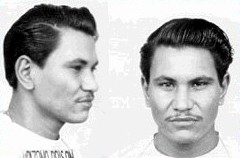 Angel Serna
Murderer · USA · 1947
Angel Serna was executed by asphyxiation-gas in Arizona on July 29, 1950. Angel…
1 victim
Angel Serna
Murderer · USA · 1947
Angel Serna was executed by asphyxiation-gas in Arizona on July 29, 1950. Angel…
1 victim
 Gerald Cornelius Eldridge
Murderer · USA · 1993
Gerald Cornelius Eldridge (defendant) · Cynthia Bogany (former girlfriend; vict…
2 victims
Gerald Cornelius Eldridge
Murderer · USA · 1993
Gerald Cornelius Eldridge (defendant) · Cynthia Bogany (former girlfriend; vict…
2 victims
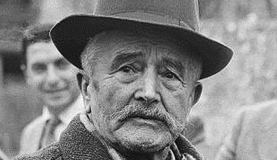 Gaston Dominici
Homicide · France · 1952
Gaston Dominici was convicted of the triple murder of three Britons in France i…
3 victims
Gaston Dominici
Homicide · France · 1952
Gaston Dominici was convicted of the triple murder of three Britons in France i…
3 victims
 Ronnie Keith Williams
Murderer · USA · 1984
Name: Ronnie Keith Williams · Sex: Male · Race: Black · Hair color: Black · Eye…
2 victims
Ronnie Keith Williams
Murderer · USA · 1984
Name: Ronnie Keith Williams · Sex: Male · Race: Black · Hair color: Black · Eye…
2 victims
- Gender
- female
- Country
- USA
- Location
- Gary, Lake County, Indiana, USA
- Date of birth
- August 25, 1969
- Age at first offence
- 16
- Characteristics
- juvenile (15), robbery, rape
- Victim profile
- Ruth Pelke, 78
- Method of murder
- Stabbing with knife (33 times)
- Date(s) of murder
- May 14, 1985
- Years active
- 1985
- Date of arrest
- —
- Status
-
Life imprisonment
Sentenced to death on July 11, 1986; execution vacated and sentence reduced to life imprisonment on appeal on July 3, 1989
Case identification
Paula Cooper was the appellant in Cooper v. State, 540 N.E.2d 1216 (1989), decided by the Supreme Court of Indiana on July 13, 1989.
Timeline
- May 14, 1985 — Paula Cooper, age 15, gathered with several girlfriends; a plan to obtain money led to the murder of Mrs. Ruth Pelke.
- July 8, 1985 — The prosecutor filed an amended information charging Cooper with three counts of murder under Ind. Code § 35-42-1-1.
- July 11, 1986 — Cooper pled guilty to count I and count II; the trial court held a sentencing hearing and sentenced her to death.
- September 1987 — Pope John Paul II made a personal appeal to Indiana Governor Robert Orr.
- July 3, 1989 — The Indiana Supreme Court heard arguments and reduced Cooper’s sentence to life in prison.
- July 13, 1989 — The Supreme Court of Indiana decided that Cooper may not be executed and remanded with instructions to enter a sentence of 60 years.
Background
Cooper was described by her lawyers as a victim of sexual abuse and had attended ten different schools by the time of the murder. She had a prior record as a runaway and for burglary. There was little question of her guilt in the case. She was considered to be the ringleader of the group of girls, aged 14 to 16, who were all given sentences of 25 to 60 years for their roles in the crime.
After authorities reported her arrest, Cooper attacked guards in the juvenile center and had to be moved to the County Jail. While there, she was reported to have bragged about her crime and said she would do it again.
Cooper was advised by her public defender to plead guilty. At sentencing, Lake County prosecutor James McNew portrayed Cooper as a social misfit, beyond any hope of rehabilitation, and asked for the death penalty.
The defense presented evidence that Cooper was a chronic runaway who had been physically abused and forced to watch the rape of her mother, and that her mother had attempted to kill her at one point.
Cooper was sent to Death Row at Indiana Women’s Prison in Indianapolis. Her case was taken up by attorney Monica Foster, who organized a campaign with strong public support, including in Europe. The campaign presented an appeal signed by two million people to the Indiana Supreme Court. A separate appeal to the United Nations received one million signatures. Her case was profiled on 60 Minutes and various European television programs.
Her case was also covered in her hometown of Gary, including a scandal in which it was found that several prison guards had sex with her in her cell, and pregnancy tests were performed that came up negative.
Judge James Kimbrough died and the appeals process was slowed as a replacement was chosen. In 1987, the Indiana legislature passed a bill raising the minimum age for a defendant in a death penalty case from 10 years old to 16. Although the change was a reaction to the Cooper case, the legislation made it clear the change did not affect Cooper’s death sentence.
In 1988, a Supreme Court decision, Thompson v. Oklahoma, barred the death penalty for defendants under the age of 16 at the time of the crime. The Indiana Supreme Court considered both developments and reduced Cooper’s sentence.
Cooper earned a GED and took college correspondence courses while in prison. As of 2007 she was projected to be released in 2014. The record also described that although she was sentenced to sixty years, Indiana removes a day from a prisoner’s sentence for each day served with good behavior.
Pelke’s grandson, Bill Pelke, initially favored the death penalty but joined the movement opposing it in 1987. He wrote about his forgiveness of Cooper in a 2003 book Journey of Hope.
The offence
On May 14, 1985, Paula Cooper, age 15, gathered with several of her girlfriends. The conversation turned to a plan to obtain money, and they devised a scheme they thought would induce a neighborhood woman to give them money.
Cooper’s accomplice April Beverly suggested they could get into 78-year-old Ruth Pelke’s house “to get money and jewelry and different things” by asking her when she held Bible classes. They went to the house and spoke to Mrs. Pelke but did not get inside. Beverly gave Cooper a knife “to scare the old lady with” and they tried again. This time they gained entrance by asking Mrs. Pelke to write down the information about her Bible classes.
While Mrs. Pelke was writing down the information, Paula Cooper grabbed her from behind and pushed her to the floor. Cooper hit her on the head with a vase. She took the knife, cut Pelke’s arms and legs, and stabbed her in the stomach and in the chest. The autopsy revealed Pelke was stabbed thirty-three times.
After the murder, Cooper helped the other girls search the house. They found the keys to Pelke’s car, which Cooper used to get away. Cooper also took ten dollars from the house.
Investigation and arrest
According to the account of events described in connection with the case, Cooper was arrested within two days of the killing and pleaded guilty to murder charges. Authorities reported that she attacked guards in the juvenile center after her arrest and had to be moved to the County Jail.
Plea and trial
Cooper pled guilty to count I, knowing or intentional murder, and count II, murder in the commission or attempt of a robbery. There was no plea agreement. During the hearing at which Cooper pled, she described her attack on Pelke in some detail, and she admitted that she had entered the house intending to commit robbery and that she had in fact taken ten dollars.
The trial court found that Cooper’s statements provided the factual basis to prove she had committed the crimes and entered a judgment of conviction on both counts.
The sentencing hearing was held on July 11, 1986, with the late Judge James Kimbrough considering mitigating and aggravating circumstances after expressing doubt about applying Indiana’s death penalty statute to a juvenile. He sentenced Cooper to death.
Sentencing
At sentencing, Lake County prosecutor James McNew portrayed Cooper as a social misfit and asked for the death penalty.
The defense presented evidence including that Cooper was a chronic runaway who had been physically abused and forced to watch the rape of her mother, and that her mother had attempted to kill her at one point.
Judge James Kimbrough imposed the death penalty.
Appeals
Cooper’s case became subject to international attention while it was pending.
A campaign organized by attorney Monica Foster presented an appeal signed by two million people to the Indiana Supreme Court. Pope John Paul II made a personal appeal to Indiana Governor Robert Orr in September 1987.
The Indiana legislature passed a bill raising the minimum age for a defendant in a death penalty case from 10 years old to 16 in 1987, and the change was stated to exclude Cooper. In 1988, **Thompson v.
The Indiana Supreme Court heard arguments and reduced the sentence to life in prison on July 3, 1989.
A New York Times editorial called the court’s decision “brave” and said that the death sentence for a 15-year-old was “medieval.”
A newspaper account described that after the Indiana Supreme Court’s unanimous decision, Indiana Attorney General Linley Pearson said he would not appeal the decision to the U.S. Supreme Court. The Indiana justices issued a 5-0 decision acknowledging the particularly brutal nature of the slaying and overturned the execution, citing the Indiana and U.S. Constitutions. The court ordered instead that Cooper receive a prison sentence of 60 years, and it was described that the decision extended a 1987 Indiana law that raised the minimum age for a death-penalty defendant to 16 years from 10, known popularly as “the Paula Cooper bill.”
The Indiana Supreme Court decision included the following key holdings:
- “The question is whether Paula Cooper may be executed for committing the grisly murder of Mrs. Ruth Pelke.”
- “We hold that she may not.”
- The court described “two separate and independent grounds for this decision.”
- “First, in light of the Indiana General Assembly’s policy decision that persons who commit crimes at age 15 or younger may not be executed, we conclude under article 7, section 4 of the Indiana Constitution that Cooper should not be executed.”
- “Second, the legal issue presented by Cooper is within the boundaries of Thompson v. Oklahoma.”
- “Mandate That part of the trial court’s judgment which orders execution is vacated.”
- “We remand with instructions to enter a sentence of 60 years, the maximum prison sentence for murder under Indiana law.”
The decision also stated that creation of the age standard meant: “Paula Cooper would be both the first and last person ever to be executed in Indiana for a crime committed at the age of 15. This makes her sentence unique and disproportionate to any other sentence for the same crime.”
The decision included a concurring opinion by Justice PIVARNIK. The concurring opinion stated: “I concur in the result reached by the majority in the disposition of this case.”
Outcome
The execution was vacated and Cooper’s sentence was reduced on appeal, with the Indiana Supreme Court remanding with instructions to enter a sentence of 60 years, the maximum prison sentence for murder under Indiana law.
Aftermath
Cooper studied for a college degree while in Indiana Women’s Prison in Indianapolis and received word of the court ruling while taking a correspondence-course test. Prison officials reported she “jumped up and down” with joy, and Prison Supt. Clarence Trigg was quoted as saying, “She jumped up and down” with joy.
The record also described international publicity around her case, including Pope John Paul II’s involvement, European campaign efforts, torchlight parades, and petitions with signatures presented to United Nations officials.
A narrative account by Bill Pelke described additional details about the murder and subsequent sentencing. It stated that Paula, Karen, April and Denise left the school grounds at lunch time on May 14th, 1985 and that they planned on ditching the rest of the day. It described that they went to April’s house, drank beer and wine, and smoked marijuana, then decided to go to the local arcade but had no money. It stated that April told the other girls to go to the old lady across the alley who taught Bible lessons, and that April would stay as a lookout since she would recognize her. It quoted the girls telling Ruth Pelke: “Mrs. Pelke, we’d like to take your Bible lessons.” It quoted Ruth Pelke responding: “Come on in.” It described that when Ruth Pelke turned her back, Denise grabbed a vase and hit Ruth Pelke over the head, and that Paula pulled a knife out of her purse and began to stab Ruth Pelke. It described Karen taking the knife after Denise refused.
The narrative described money and car theft: the girls “came up with a total of $10 and the keys to Nana’s old car,” then left Ruth Pelke’s body and drove back to the high school to see if friends wanted to go joyriding. It stated that Ruth Pelke’s body was found by the father the next day.
It further described sentencing outcomes for April Beverly, Denise, Karen Corder, and Paula Cooper, including that April Beverly was sentenced to 25 years, Denise to 35 years, and that Karen Corder was sentenced to 60 years rather than death. The narrative described that Karen Corder was sixteen at the time of the crime and pled guilty to twisting and turning the knife in Ruth Pelke’s body for 15-20 minutes, and that the judge elected not to sentence her to death due to a dominating personality, Paula Cooper. It described that Paula Cooper pled guilty to stabbing Nana and was deemed the ringleader.
The narrative described an exchange involving Bill Pelke’s father and the judge, including a statement attributed to Bill Pelke’s father: “I feel that the judge did what he had to do”. It also included quoted statements attributed to the old man who cried in the courtroom, including: “They’re going to kill my baby! They’re going to kill my baby!” It included the judge’s order: “Bailiff, escort that man from the courtroom. He’s disrupting the proceedings.”
The narrative described additional quoted statements and religious quotations, including Jesus statements attributed in the narrative:
- “If you want your father in heaven to forgive you, then you need to forgive others.”
- “seventy times seven.”
- “Father, forgive them for they know not what they’re doing.”
The narrative described a telephone call from a journalist with UPI in the fall of 1989 that said: “Mr. Pelke, on the automatic appeal before the Indiana Supreme Court, they have just taken Paula Cooper off of death row and commuted her sentence to 60 years in prison.” It included the record of Bill Pelke’s response beginning with: “Praise the Lord.”

Spotted an error, or have more information about this case?