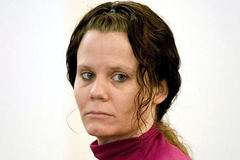
Julie Corey
Murderer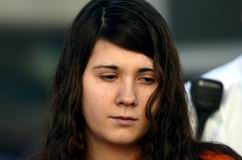 Miranda Barbour
Murderer · USA · 2013
Miranda Barbour, 19, defendant. · Elytte Barbour, 22, defendant and husband of…
100 victims
Miranda Barbour
Murderer · USA · 2013
Miranda Barbour, 19, defendant. · Elytte Barbour, 22, defendant and husband of…
100 victims
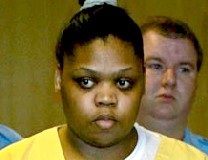 Tiffany Hall
Murderer · USA · 2006
Tiffany Hall was 24 when she was charged in September 2006. She later entered a…
5 victims
Tiffany Hall
Murderer · USA · 2006
Tiffany Hall was 24 when she was charged in September 2006. She later entered a…
5 victims
 Banita Jacks
Murderer · USA · 2007
Banita Jacks was a Washington, DC resident convicted of murdering her four daug…
4 victims
Banita Jacks
Murderer · USA · 2007
Banita Jacks was a Washington, DC resident convicted of murdering her four daug…
4 victims
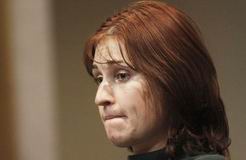 Holly Grigsby
Murderer · USA · 2011
Holly Grigsby was sentenced to life in prison without parole on July 15, 2014.…
4 victims
Holly Grigsby
Murderer · USA · 2011
Holly Grigsby was sentenced to life in prison without parole on July 15, 2014.…
4 victims
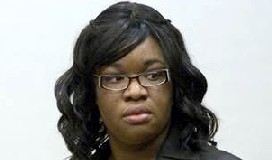 Jessica Tata
Murderer · USA · 2011
Jessica Tata was a Houston home day care owner who fled to Nigeria after a fire…
4 victims
Jessica Tata
Murderer · USA · 2011
Jessica Tata was a Houston home day care owner who fled to Nigeria after a fire…
4 victims
 Amanda Bennett
Murderer · USA · 2011
Amanda Bennett was an Indiana woman who shot her three children and set the fam…
3 victims
Amanda Bennett
Murderer · USA · 2011
Amanda Bennett was an Indiana woman who shot her three children and set the fam…
3 victims
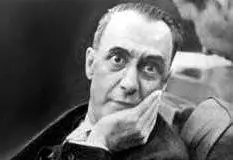 Pierre Jaccoud
Homicide ? · Switzerland · 1958
Pierre Jaccoud (born in 1905) was a Swiss lawyer and politician. He served as “…
1 victim
Pierre Jaccoud
Homicide ? · Switzerland · 1958
Pierre Jaccoud (born in 1905) was a Swiss lawyer and politician. He served as “…
1 victim
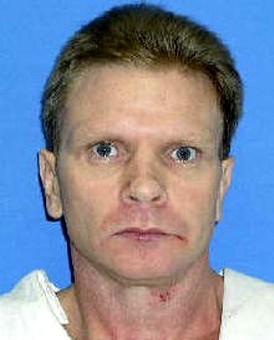 Bobby Wayne Woods
Murderer · USA · 1997
Defendant: Bobby Wayne Woods · Execution: Bobby Wayne Woods was executed by let…
1 victim
Bobby Wayne Woods
Murderer · USA · 1997
Defendant: Bobby Wayne Woods · Execution: Bobby Wayne Woods was executed by let…
1 victim
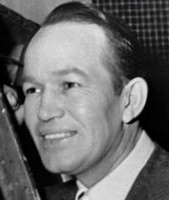 Donnell Cooley
Murderer · USA · 1961
Donnell Clyde “Spade” Cooley (December 17, 1910 – November 23, 1969) was an Ame…
1 victim
Donnell Cooley
Murderer · USA · 1961
Donnell Clyde “Spade” Cooley (December 17, 1910 – November 23, 1969) was an Ame…
1 victim
 Robert Lester Patton
Murderer · USA · 1981
Robert Lester Patton Robert Lester Patton previously had been adjudicated not g…
1 victim
Robert Lester Patton
Murderer · USA · 1981
Robert Lester Patton Robert Lester Patton previously had been adjudicated not g…
1 victim
 Robert Alan Knight
Murderer · USA · 1993
Robert Alan Knight (DOB: 06/26/68) was convicted in a nonjury trial in the Fift…
1 victim
Robert Alan Knight
Murderer · USA · 1993
Robert Alan Knight (DOB: 06/26/68) was convicted in a nonjury trial in the Fift…
1 victim
- Gender
- female
- Country
- USA
- Location
- Worcester, Worcester County, Massachusetts , USA
- Date of birth
- 1974
- Age at first offence
- 35
- Characteristics
- abduction, mutilation, kidnapping, abuse
- Victim profile
- Darlene Haynes, 23 (eight months pregnant)
- Method of murder
- Strangulation with an electrical cord
- Date(s) of murder
- July 23, 2009
- Years active
- 2009
- Date of arrest
- 6 days later
- Status
-
Life imprisonment
Sentenced to life in prison without parole on February 18, 2014
Case record: Julie Corey
Background
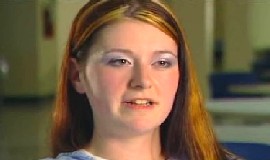
Julie Corey was 39 years old and of Worcester, Massachusetts. She had five children and had an operation to have her tubes tied, but testimony indicated the procedure was unsuccessful and she maintained the ability to have children. Prosecutors said she was convicted of killing her pregnant friend and cutting the baby from her womb.
The victim, Darlene Haynes, was 23 years old and eight months pregnant when she was killed. Haynes was a friend of Corey. Haynes’ father, Fred Haynes, was in court holding his daughter’s ashes after Corey’s sentencing.
Cindy Dion was the mother of Alex Dion, Corey’s then-boyfriend. Cindy Dion said family members held a cookout and planned a name for the child, and that the baby later entered state custody.
The offence
Corey was convicted of first-degree murder for killing Darlene Haynes in July 2009.
Prosecutors said Corey struck Haynes in the head repeatedly and strangled her with an electrical cord from a lamp. Prosecutors said Haynes’ abdomen was cut open, and her baby was taken. Prosecutors said the baby was passed off as Corey’s own.
Haynes was found dead in her apartment. A later account said she was found wrapped in a comforter and stuffed into her bedroom closet, and that her body was found four days after she was beaten and strangled. Prosecutors also said Haynes was found in her apartment closet with her unborn baby missing.
Prosecutors said Corey was motivated by the loss of her own baby, stillborn when she was approximately 30 weeks pregnant. Prosecutor Daniel Bennett said Corey needed a baby girl to maintain a ruse that she was still pregnant to keep her boyfriend from leaving and to stay eligible for state welfare checks.
Investigation
The defence argued that the police investigation was not complete and that police discarded Haynes’ boyfriend, Roberto “Tito” Rodriguez, too quickly as a suspect. The defence suggested other potential suspects could have been implicated, including Haynes’ ex-boyfriend.
The defence questioned Worcester Police Department detectives and a crime scene investigator about items at the crime scene and at the apartment where Rodriguez lived at the time of the killing, including cut-off hospital-style pants and booties found in the trash of the apartment Rodriguez was sharing with his mother. It was said the items were not fingerprinted or tested for DNA.
A theme of the defence case was that police shifted focus from Rodriguez to Corey after learning Corey left the state with a baby shortly before the body was found.
Prosecutors said evidence showed Corey was facing the loss of some state benefits unless she had proof she had had a baby. Evidence included documents found in the Ford Escort Corey and boyfriend Alex Dion drove to New Hampshire before Corey was arrested. A WIC card in Corey’s name was described as showing an expiration date just over a week after the murder, and a letter from the state urged Corey to attend an upcoming appointment and bring her newborn’s birth certificate or risk losing her benefits.
Lt. David Grady testified that Corey’s fingerprint was found on the neck of a bottle of watermelon-flavored Smirnoff Ice. The bottle was found on a dresser in Haynes’ bedroom, just feet from the closet where her body was found.
Haynes’ landlord, William Thompson, said he had to leave for fresh air before he could fully investigate the apartment because of the smell, and that an EMT also had to go outside after being overcome by fumes. It was said the police asked the Worcester Fire Department for industrial fans to clear out flies.
Erica Mercado testified to seeing a man come out of the apartment with a fish tank, dump the water out and leave. The man was believed to be Timothy Tripp, another resident of the apartment building, and he told Mercado he had been given permission to have the fish tank.
The defence claimed that before Haynes’ body was found, a man was seen standing on the outside back porch smoking a cigarette, and another man climbed into the apartment’s window.
Witness testimony also addressed audio messages on Rodriguez’s phone. It was said Haynes left 23 voice messages for Rodriguez the night she was killed, Rodriguez told police he had deleted 19 of the messages, and that it was questioned whether detectives asked to hear the remaining messages.
The defence said Rodriguez was seen at the time of the killing about a quarter-mile away, dirty and looking out of breath. The defence also said Rodriguez’s DNA was found on some first aid tape in the apartment.
The defence accused Alex Dion of conspiring with Rodriguez and knowing where the baby came from, and argued that calls on the night of the murder could have been coming from Rodriguez as part of a conspiracy because the phone was in his name. It was also said Dion denied the charge, including that he always believed the child was his.
Police showed evidence Corey had to provide documentation to maintain benefits, and prosecutors presented that phone calls associated with the story of delivery were made from Haynes’ phone as Corey pretended to be in the hospital giving birth.
A 2009 interview with William Daviau was played to the jury. Daviau was described as having rented a room from Haynes and Rodriguez shortly before the murder. Daviau was also described as an admitted heroin addict who died before the trial began. Daviau denied he had been back to the apartment after moving out a few weeks earlier and said:
"I didn't hurt that girl... the girl didn't deserve that, she didn't deserve that," Daviau said. "If I had any thought of who could have done that I would have told you."
A witness also claimed to have seen Daviau outside the apartment with Haynes and Corey smoking cigarettes just hours before the killing.
Judge Janet Kenton-Walker directed that certain testimony be stricken. A social worker had characterized Haynes as “frantic,” and the judge ordered that characterization stricken from the record.
Arrest
After Haynes’ body was found, Corey and her then-boyfriend were found with the baby two days later at a homeless shelter in Plymouth, New Hampshire. Corey was in jail on $2 million bail at that time.
Corey was described as being in jail on $2 million bail and charged with being a fugitive from justice. She was also facing an accusation that she kidnapped an infant who was cut out of her mother’s womb.
Trial
Corey was accused of killing Darlene Haynes in July 2009 to steal her unborn child.
Trial began in Worcester Superior Court with opening statements on Jan. 27. The case included about 10 days of testimony.
A Worcester Superior Court jury, split evenly between men and women, deliberated for a little over a full day before finding Corey guilty. Corey sobbed loudly and held her face in her hands after the verdict was read, and Fred Haynes wept quietly.
Corey was found guilty of first-degree murder. Prosecutors said the jury found Corey committed the murder herself, it was premeditated, done with unusual cruelty, and done while committing another felony, kidnapping the fetus.
Corey did not testify during the trial. Defence counsel Michael Wilcox said the decision to not take the stand was made by Corey with the consultation of her attorneys.
During the trial, the jury heard from two Department of Children and Families social workers. They testified that they had been involved with the victim’s family for months before the killing. Social worker Jessica Bader testified she made several visits to Haynes’ home between April and June 2009. On June 26, Haynes called her because she had just reported to police she had been assaulted by Rodriguez. Bader said Haynes was “frantic,” a characterization the judge ordered stricken from the record. Haynes told her Rodriguez had thrown her “threw a glass table, then ripped the phone off the wall to prevent her from calling the police.”
It was also said that Haynes had a restraining order against Rodriguez at the time of her death, and that testimony matched other witness statements about Haynes getting the restraining order after the incident that was still in effect at the time of the killing.
Rodriguez told police in a video interview shown to the jury he had not been back to the apartment since. Under cross examination, Bader said she met with Haynes a few weeks later and Haynes expressed remorse at reporting the assault, saying she wanted to take it all back and “felt awful about the situation she put herself in.”
A video and phone evidence were discussed, and the defence said calls could have been coming from Rodriguez’s phone because it was in his name. Prosecutors said Corey made calls from Haynes’ phone in the hours after the killing as she pretended to be in the hospital giving birth. Prosecutors said Corey called at 11:30 p.m. to say her water had broken, made 11 more calls that night detailing what was happening at the hospital, and later left early because of poor care.
Surveillance footage from a liquor store on Canterbury Street near the crime scene showed Darlene Haynes getting out of a Ford Escort, walking inside, and making a purchase. Prosecutors said the woman driving the car was Julie Corey, and they said Corey’s boyfriend Dion owned a Ford Escort at the time. Alex Dion testified it was very odd for Corey to be going anywhere with Haynes, and prosecutors said Corey and the victim may have been together hours before the murder.
One physical evidence point described by testimony was the Smirnoff Ice bottle. It was described as the only physical evidence placing Corey in the victim’s apartment, based on the account that included fingerprint testimony.
Defence attorneys questioned the completeness of the investigation through cross-examination, including whether police fingerprinted or tested multiple items such as a McDonald’s cup and cigarette butts.
Defence co-defense attorney Michael Wilcox said:
"We did raise some salient and important points," co-defense attorney Michael Wilcox said. "They obviously resolved them against Miss Corey."
Co-defense attorney Louis P. Aloise said:
"I've been doing this too long to read anything into jury questions," he said.
Aloise also said:
"And now she's facing the prospect, at 39 years old, of spending the rest of her natural life in prison, without any possibility of parole," Aloise said. "That -- no matter what you think of the person, of any person -- is a sobering fact."
District attorney Joseph Early praised prosecutors and said:
"probably the most horrific case we've seen."
Daniel Bennett said he was nervous until the verdict was read and said:
"My blood pressure pounds through my head from the moment I finish my closing and I'm done listening to the judge's instructions," Bennett said. "The entire time, I am worried."
Sentencing
On February 18, 2014, Corey was sentenced to life in prison without parole.
The sentence was described as mandatory. The victim’s father, Fred Haynes, sat in court holding his daughter’s ashes. He wiped away tears, too weak to stand and too distraught to speak.
Prosecutor Daniel Bennett referred to the urn and said:
"This is the reminder that he has every day of his daughter. It’s not replacement for having her, and speaking to her ... it can’t replace his daughter,"
The judge read a statement from Haynes’ 9-year-old daughter:
“Julie, it was mean to kill my mother. I think it was very bad that you did that,"
Appeals
Under state law, Corey’s conviction was described as automatically being appealed.
Outcome
Corey was convicted of first-degree murder for killing Darlene Haynes and sentenced to life in prison without parole on February 18, 2014.
Aftermath
Cindy Dion described devastation that she had been allowed to hold and love the baby when Haynes had never did. She said Corey’s behaviour during the pregnancy was “odd,” describing Corey telling family that she was four months’ pregnant in April and eight months’ pregnant by the shower a month later, and that Corey refused to let Alex Dion accompany her to doctors after a test indicated the baby might have developmental problems.
Cindy Dion said Corey told the family Haynes’ due date shifted and that Corey said she was going to have a cesarean section in late July. Cindy Dion said Corey called to say she was about to give birth the night before and later called asking her to visit the baby at her home, not a hospital.
Cindy Dion said the blood in the baby’s ear and neck was “odd,” and that she thought hospitals cleaned newborns much better than that.
Cindy Dion said Alex Dion’s grief on the ride home from New Hampshire was intense. Cindy Dion said:
"He cried so hard he couldn't catch his breath," she said. "I had to climb over the front seat and sit with him. And he hugged me like he was a little kid."
Cindy Dion quoted:
"It's killing me. I've got a hole in my heart," Dion said before breaking down and weeping.
A neighbour, Donna Scoville, said she drove the mother and son back from New Hampshire and that she turned to Alex Dion and said “I'm sorry.” Scoville said Alex Dion responded:
"I don't want you to be sorry for me. Be sorry for that baby's mother."
Corey remained in custody with the case proceeding through trial and sentencing, and the conviction was described as automatically subject to appeal.

Spotted an error, or have more information about this case?