
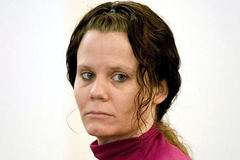
Natasha Cornett
Murderer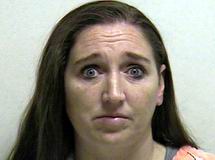 Megan Huntsman
Murderer · USA · 1996
Megan Huntsman was 40 at sentencing. She was a mother of three children who wer…
6 victims
Megan Huntsman
Murderer · USA · 1996
Megan Huntsman was 40 at sentencing. She was a mother of three children who wer…
6 victims
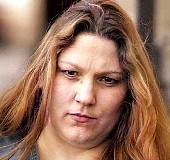 Angela Johnson
Murderer · USA · 1993
Angela Jane Johnson was convicted in federal court of aiding and abetting the m…
5 victims
Angela Johnson
Murderer · USA · 1993
Angela Jane Johnson was convicted in federal court of aiding and abetting the m…
5 victims
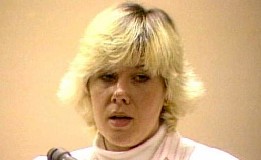 Catherine May Wood
Murderer · USA · 1987
Catherine May Wood was an American caregiver who worked at the Alpine Manor Nur…
5 victims
Catherine May Wood
Murderer · USA · 1987
Catherine May Wood was an American caregiver who worked at the Alpine Manor Nur…
5 victims
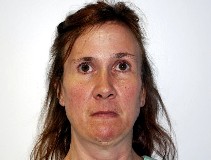 Michele Kalina
Murderer · USA · 1996
Michele Kalina pleaded guilty to murder for one of five infants she initially w…
5 victims
Michele Kalina
Murderer · USA · 1996
Michele Kalina pleaded guilty to murder for one of five infants she initially w…
5 victims
 Tiffany Hall
Murderer · USA · 2006
Tiffany Hall was 24 when she was charged in September 2006. She later entered a…
5 victims
Tiffany Hall
Murderer · USA · 2006
Tiffany Hall was 24 when she was charged in September 2006. She later entered a…
5 victims
 Banita Jacks
Murderer · USA · 2007
Banita Jacks was a Washington, DC resident convicted of murdering her four daug…
4 victims
Banita Jacks
Murderer · USA · 2007
Banita Jacks was a Washington, DC resident convicted of murdering her four daug…
4 victims
 Charles Anthony Boyd
Murderer · USA · 1986
Charles Anthony Boyd was a previously convicted felon who was convicted of capi…
3 victims
Charles Anthony Boyd
Murderer · USA · 1986
Charles Anthony Boyd was a previously convicted felon who was convicted of capi…
3 victims
 Alexander Crain
Homicide · USA · 2010
Alexander Crain was a 14-year-old boy and later described as a 15-year-old teen…
2 victims
Alexander Crain
Homicide · USA · 2010
Alexander Crain was a 14-year-old boy and later described as a 15-year-old teen…
2 victims
 Brooke Marie Rottiers
Murderer · USA · 2006
Brooke Marie Rottiers was 30 years old and lived in Corona in August 2006. She…
2 victims
Brooke Marie Rottiers
Murderer · USA · 2006
Brooke Marie Rottiers was 30 years old and lived in Corona in August 2006. She…
2 victims
 Vincent Sims
Murderer · USA · 1996
April 5, 1996 — Forrest Smith arrived home from work around 10:00 p.m. and foun…
1 victim
Vincent Sims
Murderer · USA · 1996
April 5, 1996 — Forrest Smith arrived home from work around 10:00 p.m. and foun…
1 victim
- Gender
- female
- Country
- USA
- Location
- Greene County, Tennessee, USA
- Date of birth
- January 26, 1979
- Age at first offence
- 18
- Characteristics
- carjacking, drugs, alcohol
- Victim profile
- Norwegian Vidar Lillelid (34), his American wife Delfina (28), and their daughter Tabitha (6)
- Method of murder
- Shooting
- Date(s) of murder
- April 6, 1997
- Years active
- 1997
- Date of arrest
- 2 days after
- Status
-
Life imprisonment
Pled guilty to all charges against her to avoid a possible death sentence; sentenced to life in prison without parole on March 25, 1998
Case record: Natasha Cornett
Background
Natasha Wallen Cornett was born on January 26, 1979 in rural eastern Kentucky. She became known as Natasha W. Cornett.
Her childhood was described as taking place in poverty in rural eastern Kentucky. Her mother, Madonna Wallen, was not married to Natasha’s biological father, Roger Burgess, a local police officer with whom Madonna was having an affair. Madonna raised Natasha alone as a single mother in a trailer located on the outskirts of Pikeville, Kentucky.
By junior high school, Cornett was described as being alienated from her fellow students due to her unconventional behavior. She suffered from anorexia and was diagnosed with bipolar disorder, which went largely untreated because of a lack of health insurance. During her freshman year of high school, Cornett dropped out.
Cornett married a long-time friend named Stephen Cornett on her 17th birthday. Cornett later told Women’s Entertainment Network interviewers in a 2009 documentary that when Stephen ended the marriage after only a matter of months she was “devastated”.
By the time of the murders, Cornett had embraced the Goth subculture, including black clothing and dark “doom-ridden music”. During this period she was described as abusing drugs and alcohol and practicing self-mutilation, activities she had been involved with since her early teen years. Young people with similar inclinations were described as being drawn to her, and she was described as becoming an informal leader of the group.
Cornett was also described as a self-described Satan worshipper.
The offence
On April 6, 1997, near the town of Greeneville in eastern Tennessee, the Lillelid family was carjacked and then shot. The victims were Vidar Lillelid (age 34), Delfina Lillelid (28), their daughter Tabitha (6), and their son Peter Lillelid (2). Three of the four were killed. Vidar and Delfina were found dead, and Tabitha died after being transported to the hospital. Peter was found lying in a ditch and was the only survivor. He had been shot once in the torso and once through the eye, leaving him blind in one eye and permanently disabled.
Court testimony described that on an interstate highway rest area in Tennessee, Cornett and five other youths encountered the Lillelid family after leaving Pikeville, Kentucky and heading toward New Orleans. By chance, they met the Lillelid family at the interstate highway rest area where they carjacked the family for their van. The youths drove the Lillelids to a remote side road where the mother, father and daughter were shot dead and the son was left wounded. Witnesses observed the youths in conversation with the Lillelid family at a rest area picnic spot. From there, they forced the family to drive them away from the rest area and to a more remote location. After the family had been shot and left for dead, the six abandoned their original vehicle and left in the Lillelid’s van.
Per court testimony, it was established that the youngest defendant, Jason Bryant, had fired shots. The judge’s opinion at sentencing was that another undetermined member of the group might also have fired shots.
Six young people were arrested two days after the killings. Cornett and her codefendants were taken into custody by US Customs and Immigration officials in Arizona while trying to cross into Mexico in the stolen van.
Investigation and custody
Two days after the shootings, Cornett and the five others were taken into custody by US Customs and Immigration officials in Arizona while trying to cross into Mexico in the stolen van. A car registered to Risner’s mother was found abandoned at the murder scene where the bullet-riddled bodies of the Lillelid family lay in a roadside ditch.
Arrest
All six young Kentuckians were arrested in Arizona while trying to cross the Mexican border in the van that they had stolen from the Lillelid family.
Trial
Cornett’s case proceeded through a plea bargain in Greene County Criminal Court. Cornett pled guilty to all charges against her to avoid a possible death sentence. She was convicted in March 1998 with five other youths in the Lillelid murders.
During the plea process and thereafter, court testimony strongly established that Cornett did not participate in the actual shooting of the four victims. During her own testimony, Cornett claimed that she tried, unsuccessfully, to prevent the deaths.
Cornett’s own account (post-plea interview)
In an interview on August 3, 2009, Cornett maintained that she tried to prevent the April 1997 shootings of three members of the Lillelid family near Baileyton.
Cornett said:
- “I didn’t know what was transpiring until it was too late. And when I did figure out what was happening, I tried my best to prevent it.”
- “It was when Joe (codefendant Joseph Lance Risner) said he wanted to converse with Vidar (Lillelid) about his religious beliefs,” she said. “That just brought up red flags, because Joe was not a religious man. I tried to convince him (Risner) that we should just leave and get on our way. Every step that he took, I was there trying to prevent it.”
- Cornett claimed during the interview that Risner initiated the kidnapping of the Lillelid family from the I-81 rest area by pulling a gun on the family.
- After the Lillelids were kidnapped and driven to an isolated location, Cornett said she tried to intercede with Risner and Jason Blake Bryant, the then-14-year-old she accused of firing the fatal shots:
- “I got in between Jason (Bryant) and the family to where the gun was pointed at me and tried to convince him to not do that,” she said.
- “I begged and I pleaded for what seemed like an eternity for him to stop. When I discovered that there was no stopping him, I begged for at least the children to be saved. He told me that if I didn’t move, he would shoot me. ”
- “I don’t think I would have moved anyway until he promised and swore to me that he would not harm the children. That's when I moved. I didn't think that I could do anything to prevent it if I was dead. ”
- “I thought I had more of an opportunity to convince him not to do anything if I got out of his way to where he could calm down.”
During the March 1998 sentencing hearing, Cornett and codefendants Risner and Karen R. Howell testified that Bryant fired the shots that killed Vidar, Delfina and Tabitha Lillelid and seriously wounded 2-year-old Peter Lillelid. Bryant testified that Risner and Edward Dean Mullins fired the shots and later tried to force him to take the blame as the six Kentuckians fled across the country in the Lillelid family’s van.
Sentencing
Cornett was sentenced to life in prison without parole on March 25, 1998. She received three consecutive life sentences, with no chance for parole.
During the sentence proceedings described, the six defendants had their sentences imposed for life with no chance for parole, and the judge applied the same aggravating circumstances for all. It was described as not exactly decided which of them had the main blame for the killings.
Cornett’s petition for overturning her guilty pleas
In the 2009 interview, Cornett discussed a petition to overturn her 1998 guilty pleas and the resulting three consecutive life sentences. Cornett and her court-appointed attorney, Susanna Thomas, agreed to a brief post-hearing interview at the Hamblen County Justice Center.
Cornett said:
- “Ideally, I would like to have a fair trial. Ideally, I would like to get out of prison before I'm too old to really care. To get out one day and have an opportunity to be a productive citizen.”
- “There are all kinds of things that I would do. Grow a garden. Visit forests. Live somewhere like out in the woods somewhere. But the first thing I would do would be to go visit my mom.”
- “I don't like her making the trip all the way that far,” Cornett said of her mother’s visits. “It makes me worry about her.”
- “I expected big women with shanks (home-made knives) and stuff like that,” she said. “You know, like the typical prison scene that you would see in a movie. But it's not like that.”
- “It's hard to have a good time when you're locked up,” she noted.
- “Not for the time being, but I was a teacher's aide for about a year.”
- “It's tough. Beyond tough; it's heart-breaking. There are a lot of people there who have to go through it on a daily basis.”
- “It's hard to put the word fair to anything that has to do with this whole situation. I don't think anything that has happened is fair to them (the victims), to us. I don't think the word (fair) can be put in context, or in the same paragraph, with this case.”
- “I'm assuming it has something to do with Eric Conn, the first lawyer that I had. Otherwise, I don't know why it was me that was picked out of everyone else. I know he did a lot to damage to me and my case.”
- “It's a chance I'm willing to take. I'm aware that it could be reinstated, but that's something I'm willing to deal with.”
Thomas said:
- “I think what she (Cornett) is hoping to accomplish by getting a new trial would be to really clear up what actually happened and what the individual levels of responsibility were,” Thomas said.
At the time of Cornett’s statements about the earlier lawyer Eric Conn, Thomas said:
- “He volunteered to represent her, then immediately began negotiating movie rights,” Thomas said.
- “...he basically used me as a crutch for a movie deal.”
Cornett said:
- “I was unaware of anything that was transpiring until after he had been taken off my case.”
- “They would keep all the newspapers away from me, and I couldn't watch the news (while still being held in Arizona).”
Additional attorney statements were described as including claims by Stacy Street and Robert E. Cupp that Conn caused harm by granting early media interviews and raising issues of alleged Satan worship by Cornett.
Charges to which Cornett pleaded guilty
Cornett pled guilty on February 20, 1998 along with her five codefendants to three counts of felony murder, one count of attempted murder, plus counts of aggravated kidnapping, especially aggravated kidnapping and theft.
Appeals
The Tennessee Court of Criminal Appeals denied appeals of the life-without-parole sentences for the six young Kentuckians who pleaded guilty in 1998 to the Lillelid murders. Sentences of three consecutive terms of life without parole were upheld for Jason Blake Bryant, Natasha Wallen Cornett, Karen Howell, Edward Dean Mullins and Joseph Lance Risner. The appeals court changed Crystal Sturgill’s sentence to three concurrent terms of life without parole, and it was described as having little practical effect because no one can serve more than one term of life without parole.
Cornett’s unsuccessful 2002 appeal included an omission-related citation concerning references at trial to rumors of occultism and Satanism, where no evidence was presented.
Outcome
Cornett ultimately remained convicted following her guilty pleas, and she continued to serve her life sentence without parole.
Aftermath
After Peter Lillelid’s medical condition stabilized at the end of April 1997, a custody battle began between his maternal grandmother Lydia Selaya of Miami, Florida, USA and his father’s sister Randi Heier of Sweden. A local Judge Fred McDonald awarded custody of Peter to Heier on July 1, 1997, citing Heier’s pledge to raise Peter in the faith and teachings of the Jehovah’s Witnesses. Peter was raised in Sweden by his aunt Randi Heier and her family.
As of 2007, Peter was described as about twelve years old and still having trouble walking due to his injuries.
In the 2009 interview, Cornett described her plan if released from prison as including visiting her mother first and then other activities such as growing a garden and visiting forests.
Cornett also discussed life in prison. She described transferring from the Tennessee Prison for Women in Nashville to the Mark Luttrell Correctional Center near Memphis about two months before the 2009 interview, and she said she saw codefendant Karen R. Howell “every once in a while”. She described reading and recreational time in her typical prison day and said she had been a teacher’s aide for about a year.
In a March 25, 1998 call described in the narrative, Madonna Wallen answered a collect call from Cornett from the Prison for Women in Nashville. Madonna said that Cornett was methodically turning a purple cigarette lighter in her left hand and that Cornett was not happy because a money order had not yet gotten there. Madonna said:
- “You just heard me talking to manic-depressive Natasha.”
In the narrative described, Cornett was born with a hole in her heart, and she went back to the hospital for surgery when she was 16 months old. It described Cornett’s earliest memory as being of being alone in a hospital room with the surgical scar itching. It also described self-mutilation by Cornett as beginning at ankles and later moving to her arms. It described slash marks running from her wrists past her elbows when she was arrested.
Other details
Other named individuals connected to the case
- Joseph Lance Risner (codefendant).
- Edward Dean Mullins (codefendant).
- Crystal R. Sturgill (codefendant).
- Jason Blake Bryant (codefendant).
- Karen R. Howell (codefendant).
- Stephen Cornett (husband).
- Susanna Thomas (court-appointed attorney for Cornett).
- Eric Conn (first lawyer mentioned by Cornett).
- Stacy Street and Robert E. Cupp (lawyers subsequently appointed to represent Cornett in Greene County).
- District Attorney General Berkeley Bell (questioning Cornett in a described courtroom setting).
- Judge James E. Beckner (hearing before Cornett’s petition to overturn guilty pleas).
- Judge Fred McDonald (custody case involving Peter Lillelid).
- US Customs and Immigration officials (described as taking Cornett and others into custody).
- Greene County Sheriff’s Office Sgt. Frank Waddell (described as dispatched to Payne Hollow Road).
- Greene County detective John Huffine (described as leading the investigation).
- Forensic psychologist Helen Smith (described as filming a documentary and studying the case).
- Detective Chief Inspector Alan Reid: not present in the provided text and not included as a person.
Prison-related incident involving Christa Pike and Patricia Jones (described)
On August 24, 2001, death row inmate Christa Pike with alleged assistance from Natasha Cornett attacked fellow prisoner Patricia Jones and nearly strangled her to death with a shoe string after Pike and Jones were placed in a holding cell with Cornett during a fire alarm. It was described that the Department of Corrections believed Cornett was involved, but investigators found insufficient evidence to charge her with helping Pike, who was subsequently found guilty of attempted murder.
References to occultism and Satanism
References were described as having been made by prosecutors at trial to rumors that the youths were involved with occultism and Satanism; it was stated that no evidence was presented. This omission was cited in Cornett’s unsuccessful 2002 appeal of her conviction. Cornett was also described as making statements early in the case, including claims that Satan would help her and that she urged other youths “to raise hell while they can” before the world ended; Cornett later said she made the statements at the advice of her attorney, who was removed from the case.
Courthouse custody and education-related details (described)
Cornett earned a GED and a certification in cosmetology. A 2007 article described Cornett’s mother, Madonna Wallen, stating that Cornett served as a mentor for fellow inmates as they worked to earn their GEDs.
Quotations about “fair trial” petition
Cornett sought to overturn her guilty pleas and sought a “fair trial” per her 2009 statements, and she and her attorney described a desire to have responsibility individualized.

Spotted an error, or have more information about this case?