Thomas York
Murderer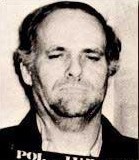 Ervil LeBaron
Murderer · USA · 1972
Ervil Morrell LeBaron (1925 to August 16, 1981) was the leader of a polygamous…
35 victims
Ervil LeBaron
Murderer · USA · 1972
Ervil Morrell LeBaron (1925 to August 16, 1981) was the leader of a polygamous…
35 victims
 Brian Kevin Rosenfeld
Murderer · USA · 1985
Brian Kevin Rosenfeld Brian Kevin Rosenfeld was sentenced to three concurrent l…
23 victims
Brian Kevin Rosenfeld
Murderer · USA · 1985
Brian Kevin Rosenfeld Brian Kevin Rosenfeld was sentenced to three concurrent l…
23 victims
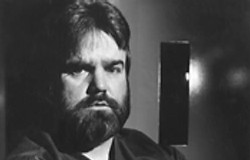 Marvin Gray
Murderer · USA · 1975
Marvin Gray was convicted killer who claimed responsibility for 23 slayings and…
23 victims
Marvin Gray
Murderer · USA · 1975
Marvin Gray was convicted killer who claimed responsibility for 23 slayings and…
23 victims
 Yahweh ben Yahweh
Murderer · USA · 1980
Yahweh ben Yahweh was born and legally named Hulon Mitchell Jr. (October 27, 19…
23 victims
Yahweh ben Yahweh
Murderer · USA · 1980
Yahweh ben Yahweh was born and legally named Hulon Mitchell Jr. (October 27, 19…
23 victims
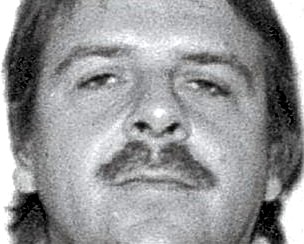 Ronald Lee Hoke
Murderer · USA · 1985
Ronald Lee Hoke Sr. was executed by lethal injection in Virginia on December 16…
1 victim
Ronald Lee Hoke
Murderer · USA · 1985
Ronald Lee Hoke Sr. was executed by lethal injection in Virginia on December 16…
1 victim
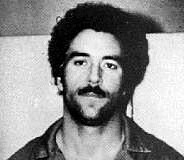 Randall Woodfield
Serial killer · USA · 1979
Randall Woodfield was an American serial killer dubbed The I-5 Killer or The I-…
18 victims
Randall Woodfield
Serial killer · USA · 1979
Randall Woodfield was an American serial killer dubbed The I-5 Killer or The I-…
18 victims
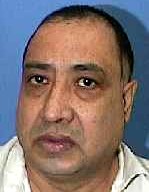 Ramiro Rubi Ibarra
Murderer · USA · 1987
Ramiro Rubi Ibarra was a Hispanic male. His hair color was black, and he weighe…
1 victim
Ramiro Rubi Ibarra
Murderer · USA · 1987
Ramiro Rubi Ibarra was a Hispanic male. His hair color was black, and he weighe…
1 victim
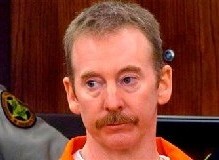 Eric Robert
Murderer · USA · 2011
Eric Robert Eric Robert was sentenced to death and later executed by lethal inj…
1 victim
Eric Robert
Murderer · USA · 2011
Eric Robert Eric Robert was sentenced to death and later executed by lethal inj…
1 victim
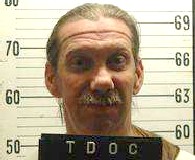 Harold Roy Hester
Murderer · USA · 1999
Harold Roy Hester was convicted in Tennessee of first degree murder, attempted…
1 victim
Harold Roy Hester
Murderer · USA · 1999
Harold Roy Hester was convicted in Tennessee of first degree murder, attempted…
1 victim
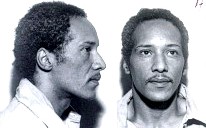 William Bracy
Murderer · USA · 1980
William Bracy was convicted, in a joint trial with Murray Hooper and in related…
5 victims
William Bracy
Murderer · USA · 1980
William Bracy was convicted, in a joint trial with Murray Hooper and in related…
5 victims
- Gender
- male
- Country
- USA
- Location
- Chicago, Illinois, USA
- Date of birth
- ???
- Characteristics
- parricide, to collect insurance money, abuse
- Victim profile
- His first wife / Gail Maher ( female business partner)
- Method of murder
- Shooting / Pipe bomb
- Date(s) of murder
- 1978 / 1981
- Years active
- 1978–1981
- Date of arrest
- —
- Status
-
Imprisoned
Sentenced to forty years in prison; conviction affirmed on appeal; 1989 federal conspiracy conviction on 2 mail fraud and related counts (obstruction of justice added in a superseding indictment) resolved in 1991 appellate decision
Case identification
Thomas York was the defendant-appellant in United States Court of Appeals, Seventh Circuit case number 933 F.2d 1343, United States of America, Plaintiff-Appellee, v. Thomas York, Defendant-Appellant.
Timeline
- Nov. 1, 1990 — The case was argued before the United States Court of Appeals, Seventh Circuit.
- Feb. 1987 — A jury convicted York on the counts charged in the first indictment; the district court sentenced him to thirty years in prison.
- 1988 — The appellate court reversed the first conviction and remanded for a new trial because hearsay evidence had been improperly admitted against York.
- May 1987 — York was in prison awaiting retrial.
- May 6, 1978 — York’s wife, Maureen Jurkiewicz, spoke by phone for about twenty minutes with Deanne Gentile before midnight, and their conversation later ended with an abrupt change in Jurkiewicz’s tone.
- May 1978 — Police found the body of York’s wife decomposing in a small creek about two weeks after she disappeared.
- May 6, 1978 — Jurkiewicz wrote a note to York stating she had endured injustices and telling him to “Just get out of my life completely.”
- June 3, 1991 — The court decided the appeal.
- June 1979 — York bought the bar (Just Friends Lounge) and leased it to Gail Maher.
- April 18, 1981 — Two explosions rocked the Just Friends Lounge during the night; the building was ripped apart and Gail Maher, who lived in an apartment above the bar, was buried in the charred remains.
- October 1980 — York contacted Allstate Insurance Company to obtain life insurance policies for himself and Maher.
- August 1980 — York was over $80,000 in debt.
- February 1981 — Allstate approved a second application and refused to issue a term policy with the double-indemnity provision.
- Summer of 1989 — York’s second trial took place.
- 1979 — York devised a means to prevent his electric meter from recording electricity use by drilling a small hole through the meter cover and inserting straw into a meter gear hole.
- May 1986 — A federal grand jury indicted York, charging him with using the mails in an attempt to defraud the insurance company by blowing up the Just Friends Lounge and killing Maher, and charging arson.
- April 18, 1981 — The Just Friends Lounge was normally open seven days a week, but it was shuttered on the Saturday night of the explosions.
- November 1988 — The government argued that Tommie’s availability as a witness was affected until November 1988.
- 1983 — Beaman had been acting as a prison informant for the FBI since 1983.
- 1989 — York filed this appeal alleging seven grounds for reversal.
Background
Thomas York never made a profit from his investment in the Just Friends Lounge.
York was the beneficiary of insurance proceeds connected to the lounge and to Gail Maher’s life. A $60,000 insurance policy existed on the bar, and a $50,000 policy existed on Maher’s life. York was the beneficiary of both policies.
Maher’s family contested York’s claim to insurance proceeds, and the federal government shared the suspicions. The federal government indicted York for attempting to defraud the insurance company by means of arson and murder.
York bought the bar in June 1979 and leased it to Gail Maher, who lived in an apartment above the bar. Maher ran the lounge. However, the lounge was in the red from the day it opened. Maher had to borrow over $30,000 from York to stay afloat. York took care of maintenance work himself. Maher never repaid any money borrowed from York. By April 18, 1981, she was behind on every debt the bar had incurred.
By August 1980, York had accumulated over $80,000 in debt and had had enough. He tried to list the business for sale, but the agency required Maher’s signature on the listing agreement and she refused. York did not know that Maher had neglected to exercise a five-year option on the lounge’s real estate lease, and that without the long-term lease the business had little resale value.
York contacted Allstate Insurance Company to obtain life insurance policies for himself and Maher in October 1980. York told the insurance agent he was calling on the advice of his lawyer and accountant, but neither had advised York to obtain insurance on his own or Maher’s life.
York requested a double-indemnity provision in his own policy. The insurance agent assumed York wanted Maher’s policy to be identical and included the double-indemnity provision in Maher’s application as well. Allstate declined to insure Maher until a minor medical condition had cleared up because Maher was overweight. When Allstate approved a second application in February 1981, it refused to issue a term policy with the double-indemnity provision. Allstate agreed to issue only a whole life policy with a significantly higher premium, and York paid it.
Around the same time, York made himself the co-beneficiary, along with Maher, of an existing policy on the bar’s assets. By this point, York and Maher were plotting to torch the bar to collect insurance proceeds. Maher told a friend, Carol Mroch, who worked as a waitress at the lounge, about the plan that would put Mroch out of a job, and Maher reassured Mroch that York and Maher would give Mroch $1,000 severance pay if the plan came to fruition.
Maher also confided in another friend, John Etscheid, who testified that Maher told him that she and York planned to blow up the lounge by means of a natural gas explosion and that they planned a dry run in April because of timing with a wedding reception scheduled there earlier in the summer.
York had collected insurance proceeds three years earlier after his first wife, Maureen Jurkiewicz, was murdered. York had been the beneficiary of Jurkiewicz’s life insurance policy. Police found Jurkiewicz’s body decomposing in a small creek about two weeks after she disappeared in May 1978. Jurkiewicz had disappeared one day after she wrote a note to York. The note read:
Tom, I'm past talking. Couldn't get in touch with the lawyer today, but will Monday if I have to sit on the phone one hour on hold. I don't care if the phones at work are ringing off the hook. I asked Laurie Gentile to drive Ann to the tutor Saturday after I was accused of trying to bribe you to take you own daughter to a tutor so she'll pass. Laurie will drive her. It's taken care. It's not your concern anymore. You have endured great injustices all these years. Now it's over. Don't wash any clothes. Don't cook any food. Don't go for groceries. Just get out of my life completely.
Jurkiewicz had been shot once through the left temple. York owned a gun, but the bullet that killed Jurkiewicz fragmented and could not be traced to a particular weapon. No other evidence was found when the body was recovered. York was apparently the last person to see his wife alive.
Deanne Gentile spoke with Jurkiewicz by phone for about twenty minutes just before midnight on the night of May 6, 1978. According to Gentile, Jurkiewicz’s tone changed abruptly near the end of the conversation. When Gentile called Jurkiewicz back twenty minutes later, York answered. Gentile asked for Jurkiewicz; York told her that her “goddamn cousin” had probably gone out to get a newspaper. Gentile knew that Jurkiewicz had purchased a paper earlier in the evening.
York told a series of inconsistent accounts about Jurkiewicz’s disappearance. York told police the next day that his wife must have left the house before 11:00 p.m. because the store closed at that time. York told Jurkiewicz’s employer that she was late to work because she had taken their children to church. York told his daughter that Jurkiewicz had been taken hostage at work by robbers who had taken her money and jewelry and then shot her.
York instructed his children not to talk to the police or family members about their mother’s disappearance. Shortly after Jurkiewicz’s body was found, York took his children to Disney World.
York was never charged with killing his wife.
The offence
During the night of April 18, 1981, two explosions rocked the Just Friends Lounge, ripping the building apart and burying York’s partner, Gail Maher, who lived in an apartment above the bar, in the charred remains.
The explosions were caused by homemade devices:
- One device was a pipe bomb made from a length of steel pipe about ten inches long, capped at both ends. It was filled with explosives and an initiating mechanism attached to a household timer was inserted through a small hole drilled in the side.
- The second device caused a natural gas explosion. The plug on the gas line leading into the basement had been removed, allowing gas to fill the room. A Kentucky Fried Chicken container filled with a flammable liquid was placed on a table and ignited by means of a household timer and an electrical transformer. When the liquid ignited, so did the gas.
The explosions and fire made it difficult to determine whether Maher had been killed by the blast; experts disagreed about whether she had been beaten to death first.
The federal government indicted York in May 1986 for using the mails in an attempt to defraud the insurance company by blowing up the Just Friends Lounge and killing Maher, and for arson.
Before York’s second trial, the government obtained a superseding indictment that added a charge of obstruction of justice, based on threats York made to his son before the first trial. The superseding indictment added that obstruction count to the charges contained in the original indictment.
Investigation and evidence
Investigators pursued suspicions of foul play about the insurance proceeds.
York purchased the bar and leased it to Maher, who lived in an apartment above the bar. The lounge was in financial difficulty, and Maher had debts to people including York. The record described a dispute over the real estate lease option, affecting the resale value of the business.
York arranged life insurance through Allstate for himself and Maher. Allstate had refused double-indemnity coverage for Maher until a minor medical condition cleared, and then declined to issue a term policy with double-indemnity in February 1981, agreeing only to a whole life policy with a higher premium, which York paid anyway.
York made himself co-beneficiary of an existing policy on the bar’s assets.
Maher’s planning and conversations were supported at trial by testimony from Carol Mroch and John Etscheid, both associates of Maher.
The record described that York had attempted to build and detonate devices. The record also described that York had tampered with the electric meter at his home.
At trial, the record described the causes and construction of the two devices used to destroy the lounge.
Electric meter tampering
Evidence was introduced that York had devised a means of preventing the electric meter at his home from recording electricity use at least as far back as 1979. York accomplished this by drilling a small hole through the cover of the meter and inserting a piece of straw through the hole and into a hole in one of the meter gears. A Commonwealth Edison representative described York’s technique as “a very unique way” of reducing his electric bill—“so simple yet so effective.”
The district judge admitted the evidence with an instruction directing the jury to consider it only for knowledge about electrical devices and tools.
Confessions and jailhouse testimony
While York was in prison awaiting retrial, another inmate, Carl Beaman, reported to the FBI that York had told him that he had killed a woman and blown up a bar to collect insurance money. Beaman testified that York also told him he had killed his first wife, shooting her in the back of the head. Beaman said he did not believe York until another inmate read to him a newspaper article about York’s case that confirmed what York had told him.
Beaman testified during York’s second trial. The appellate decision described that the district court and sentencing referenced Beaman’s testimony.
Threats and witness pressure
York’s son invoked his Fifth Amendment privilege against self-incrimination and refused to answer substantive questions about the events surrounding Maher’s death at a hearing before trial.
After the hearing, while the parties were still in the courtroom, York screamed at his son saying:
You're going to put me in jail. You're going to let these people put me in jail, goddamn it.
On the way home, York threatened his son, telling him that he would kill him if he did not testify that statements Tommie York had made earlier to government agents were false.
When they returned to court next, Tommie York told his probation officer what had happened and asked to be taken into protective custody.
During the trial, York tried to influence his daughter’s testimony. York told his daughter Ann that she would have to testify that he was home on the night of Maher’s death. Ann responded that she did not remember whether her father was home that night, angering York. York then tried again:
Ann, I'll have to ask you to say that you remember me home that night.
Ann replied:
But, Dad, I don't remember.
York responded:
Goddamn it, don't you fucking realize that we could lose this house, and I could go to jail?
Ann answered:
But, Dad, that's lying. Isn't that perjury?
York replied:
Don't sit there with that smile on your face. I hope your kids do to you what you've done to me.
Both of York’s children testified that York had around the house all the materials necessary to construct the bombs found in the ruins of the Just Friends Lounge.
Arrest
The record described York’s detention and prison status awaiting retrial following reversal of his first conviction. It also described that Beaman was serving sentences in prison and was transferred to Terre Haute from Talledega, Alabama. Specific arrest dates for York were not stated.
Trial
First trial
The record described that York was indicted in May 1986 with use of the mails in an attempt to defraud the insurance company by blowing up the Just Friends Lounge and killing Maher, and arson.
At a hearing before trial, York’s son invoked the Fifth Amendment.
After a jury convicted York in February 1987, the district court sentenced him to thirty years in prison.
First appeal and reversal
The appellate court reversed York’s conviction and remanded for a new trial because hearsay evidence had been improperly admitted against York. The cited authority was United States v. York, 852 F.2d 221 (7th Cir. 1988).
Second trial
York’s second trial took place during the summer of 1989.
Before trial, the government obtained a superseding indictment adding obstruction of justice based on threats York made to his son before the first trial.
The jury convicted York again on all counts.
The judge sentenced York to forty years in prison, and the obstruction charge accounted for the ten-year increase from York’s first sentence.
Sentencing
At York’s first sentencing after his February 1987 conviction, the district court sentenced him to thirty years in prison.
After the second trial in summer 1989, the district court sentenced York to forty years in prison, with the obstruction of justice charge accounting for the ten-year increase.
At sentencing, the appellate decision described that the district judge cited Beaman’s testimony as a basis for the conclusion that York had murdered Maureen Jurkiewicz.
In addition, the appellate decision addressed York’s argument that the ten-year sentence for the threats evidenced vindictiveness. The decision described that York’s sentence was within the sentence authorized by law.
Appeals
York appealed his second conviction alleging seven grounds for reversal:
- Evidence relating to other crimes, particularly his first wife’s murder, was improperly admitted.
- Admitting Carl Beaman’s testimony violated his Sixth Amendment right to counsel.
- Gail Maher’s statements to Carol Mroch and John Etscheid should have been excluded as hearsay and their admission violated the confrontation clause of the Sixth Amendment.
- The government was unlawfully punishing him for his successful appeal by adding the obstruction of justice count before the second trial.
- The government’s voir dire of a defense witness was improper.
- The entire jury venire was tainted and should have been dismissed.
- The district court’s jury instructions on mail fraud were erroneous.
Admission of evidence of the first-wife murder
The appellate decision discussed that the district court admitted evidence of the Jurkiewicz murder under Rule 404(b) and provided a basis for its admissibility for intent. The decision addressed York’s challenges to relevance and prejudice.
The appellate decision discussed “doctrine of chances” and explained how it supported an inference of design. It also discussed that evidence was relevant to show intent to defraud Allstate by killing Maher in the insurance-motivated scheme, connecting the Jurkiewicz murder evidence to the intent element for mail fraud.
The appellate decision also addressed York’s argument that the evidence was unfairly prejudicial under Rule 403, explaining why the district court’s balancing did not constitute an abuse of discretion. The decision described that the district court admitted only three facts about Jurkiewicz’s murder itself:
- that the body was found floating in a creek;
- that the body was completely nude except for a wristwatch that had stopped at 4:05; and
- that Maureen Jurkiewicz had been shot in the head.
The decision also described that the district court excluded other evidence on undue prejudice grounds, including evidence relating to the condition of the body when it was found and Tommie York’s opinion that his father killed his mother.
Admission of Beaman’s testimony under Sixth Amendment
York argued that Beaman elicited incriminatory statements while acting as a government agent, violating his Sixth Amendment right to counsel. The appellate decision discussed Massiah v. United States and later cases involving “jailhouse informants,” focusing on whether statements were “deliberately elicited.”
The decision concluded that Beaman was acting on behalf of the government while incarcerated at Terre Haute, but also held that the statements were not deliberately elicited, so the Sixth Amendment right to counsel was not violated.
The appellate decision quoted evidence of Beaman’s conversations with York. It included York’s statements as follows:
- “You must have been pretty mad at the bitch.”
- “Mad enough to put a bullet in the back of her head.”
- York told Beaman that he was going to collect insurance money on a building he had blown up and on a woman he had killed.
- When Beaman asked if York was going to “make any money from it,” York replied that he “wouldn't have done it if I didn't think it was worthwhile.”
- York explained that the bomb was designed to collapse the building on top of the woman to disguise that he had hit her in the head, but the bomb went off early—“in the woman's face.”
The appellate decision described that Beaman did not report the statements to Agent Stoll until after another inmate read a newspaper article about the reversal of York’s first conviction, and the appellate decision treated that timing as inconsistent with an effort to pump information.
Maher’s statements to Mroch and Etscheid (hearsay and confrontation)
York argued that Maher’s statements to Carol Mroch and John Etscheid should have been excluded as hearsay and that their admission violated the confrontation clause.
The district court overruled York’s hearsay objection based on admissibility under Fed. R. Evid. 804(b)(3), the penal interest exception. The appellate decision agreed.
The appellate decision summarized Mroch’s and Etscheid’s testimony:
- Mroch testified Maher told her that she and York discussed burning down the lounge and that if anything happened to the lounge, Mroch would be given severance pay.
- Etscheid testified Maher told him that she and York discussed blowing up the lounge to collect the insurance proceeds.
- Etscheid testified Maher told him that York knew a person who was going to show him how to blow up the lounge using a natural gas explosion, and that they were not going to blow up the lounge until July because a wedding reception was scheduled earlier in the summer.
The appellate decision addressed York’s argument that the portions inculpating York were inadmissible because they did not subject Maher to criminal liability, and it rejected that argument.
The appellate decision also addressed the confrontation clause and rejected York’s reliance on Bruton by explaining the interplay between hearsay admissibility and confrontation clause doctrine. It concluded that the statements admitted under Rule 804(b)(3) satisfied confrontation clause requirements.
Addition of obstruction of justice count (due process / prosecutorial vindictiveness)
The appellate decision addressed York’s claim under Blackledge v. Perry that the government could not bring more serious charges after a successful appeal. It discussed that York argued the government knew of the threats before the first trial.
The appellate decision described that the government’s explanation relied on Tommie York’s unavailability due to his earlier invocation of the Fifth Amendment. It concluded there was a lack of record basis for the claimed “vendetta” and treated it as prosecutorial restraint rather than vindictiveness.
Voir dire of Dr. Werner Spitz
York challenged as improper the voir dire of Dr. Werner Spitz, a forensic pathologist, focusing on alleged unprofessional conduct during his tenure as chief medical examiner for Wayne County, Michigan.
The appellate decision held the challenge had no merit. It reasoned that under Rule 702, the prosecution could challenge the adequacy of the expert’s qualifications, and that Rule 608(b) did not apply in the context of expert voir dire. It also concluded York’s bad-faith argument lacked foundation.
The appellate decision described the allegations raised in voir dire:
- that Dr. Spitz unlawfully permitted Detroit police department gunshot experiments on corpses;
- that Dr. Spitz unlawfully channeled proceeds from the sale of body parts from corpses to a private foundation rather than to the county as required by law.
Verdict and outcome
The appellate decision affirmed each of York’s convictions. The decision stated that the mail fraud jury instruction did not require a finding beyond reasonable doubt that York killed Maher in order to convict on the mail fraud counts, because the instructions referred to the fraudulent scheme described in the indictment and required findings that encompassed the murder scheme.
The appellate decision concluded: “We therefore affirm each of his convictions.”
Aftermath
The record described multiple earlier phases in York’s case, including a prior reversal and remand of York’s first conviction because hearsay evidence had been improperly admitted. After reversal, the second trial proceeded with a superseding indictment that added obstruction of justice.
The record also described that York threatened his son and tried to influence his daughter’s testimony at the time of the proceedings, which supported the obstruction of justice charge.
Other details
Witnesses and family members
York’s partner at the lounge was Gail Maher.
York’s first wife was Maureen Jurkiewicz.
York had children including Tommie York and Ann.
York’s relatives included Kim Bunting and Richard Schottenloher, Maher’s father.
Maher’s friend at the lounge was Carol Mroch, who worked as a waitress at the lounge.
Another friend of Maher was John Etscheid.
York’s first-wife-related relatives included Deanne Gentile and Laurie Gentile. York’s note referred to Laurie Gentile driving Ann to a tutor.
The appellate decision described that after the lounge explosion, York did not inquire about Maher’s whereabouts or condition when he arrived. He complained of a headache. He offered an excuse to Kim Bunting when she called to ask why the family had not received word or condolence from him. York attributed his absence to a family trip to Mexico arranged several months before.
When Bunting asked about police investigation and Maher’s condition, York began to quiz Bunting about the police investigation, including how badly Maher’s face burned, whether her right arm disintegrated, how close she was to the explosion, who identified the body, and whether Bunting knew about Maher’s debts to people associated with the Mafia.
The appellate decision described that Bunting wrote to Allstate on behalf of her niece Tammy contesting York’s claim to Maher’s insurance proceeds.
Device construction and timing
The appellate decision described that Maher spent the day of April 18 cleaning the lounge. The lounge was normally open seven days a week but was shuttered on that Saturday night. York was seen at the bar in the afternoon. York parked his station wagon in the lot and made several trips into the lounge carrying boxes.
Maher’s request resulted in her daughter Tammy spending the night at the home of Kim Bunting. Tammy took only one change of clothes and left a treasured pet bird at home.
Autopsies and medical evidence related to Maher
The record described that both sides presented detailed evidence as to the injuries sustained by Maher, including photographs and X-rays taken during two autopsies of Maher’s body. The defense theory was that Maher was killed by the explosion while committing arson; the prosecution argued York killed Maher first and then blew up the lounge.
Jury selection remark
At the outset of jury selection, one prospective juror volunteered he had read a newspaper article several years before about York’s case and that “the implication [of the article] was that the defendant was guilty.” The district judge polled venire members individually, and several who had heard the comment served on York’s jury.
During polling, the jurors indicated they would be impartial and able to serve despite the remark. The appellate decision discussed that York claimed constitutional error from refusal to dismiss the entire venire, and the decision rejected that claim.
Mail fraud instruction
The appellate decision described the pattern instruction used for mail fraud, including these propositions:
To sustain the charge of mail fraud, the government must prove the following propositions: First, that the defendant knowingly participated in the scheme to defraud as described in the indictment. Second, that for the purpose of carrying out the scheme or attempting to do so, the defendant caused the United States Mails to be used in the manner charged in the particular count; and Third, that the defendant did so knowingly and with the intent to defraud. If you find from your consideration of all the evidence that each of these propositions has been proved beyond a reasonable doubt, then you should find the defendant guilty. If, on the other hand, you find from your consideration of all the evidence that any one of these propositions has not been proved beyond a reasonable doubt, then you should find the defendant not guilty.
Thomas York's status within the appellate decision
The appellate opinion referenced an analysis of the admissibility of evidence and concluded that the district court did not abuse its discretion in admitting the challenged evidence and that none of the asserted grounds for reversal warranted reversal.
Spotted an error, or have more information about this case?