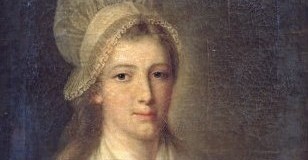
Charlotte Corday
Murderer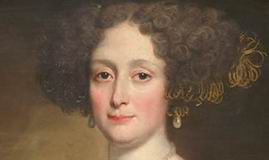 The Marquise de Brinvilliers
Murderer · France · 1664
Marie-Madeleine-Marguerite d'Aubray, Marquise de Brinvilliers (c. 1630–1676) wa…
54 victims
The Marquise de Brinvilliers
Murderer · France · 1664
Marie-Madeleine-Marguerite d'Aubray, Marquise de Brinvilliers (c. 1630–1676) wa…
54 victims
 Florence Rey
Murderer · France · 1994
Florence Rey was born August 25, 1975. She was 19 years old at the time of the…
4 victims
Florence Rey
Murderer · France · 1994
Florence Rey was born August 25, 1975. She was 19 years old at the time of the…
4 victims
 Simone Weber
Murderer · France · 1980
Simone Weber was 60 years old at trial. She was described as “round and dowdy”…
2 victims
Simone Weber
Murderer · France · 1980
Simone Weber was 60 years old at trial. She was described as “round and dowdy”…
2 victims
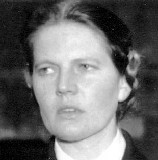 Denise Labbé
Murderer · France · 1954
Denise Labbé was convicted of the murder of her 2-year-old daughter, Catherine.…
1 victim
Denise Labbé
Murderer · France · 1954
Denise Labbé was convicted of the murder of her 2-year-old daughter, Catherine.…
1 victim
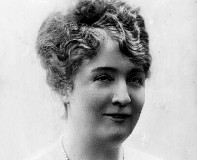 Henriette Caillaux
Murderer · France · 1914
Henriette Caillaux was the wife of France's minister of finance, Joseph Caillau…
1 victim
Henriette Caillaux
Murderer · France · 1914
Henriette Caillaux was the wife of France's minister of finance, Joseph Caillau…
1 victim
 Leone Bouvier
Murderer · France · 1953
Leone Bouvier murdered her lover because he was going away from her. At the tri…
1 victim
Leone Bouvier
Murderer · France · 1953
Leone Bouvier murdered her lover because he was going away from her. At the tri…
1 victim
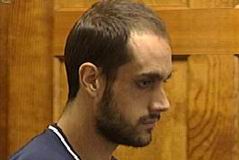 James Soares
Murderer · USA · 2008
James Soares Jr. was the son of James Soares Sr. and Marian Soares. In 2002, Ja…
2 victims
James Soares
Murderer · USA · 2008
James Soares Jr. was the son of James Soares Sr. and Marian Soares. In 2002, Ja…
2 victims
 Melanie McGuire
Murderer · USA · 2004
Defendant: Melanie McGuire (born Melanie Lyn Slate on October 8, 1972) Status:…
1 victim
Melanie McGuire
Murderer · USA · 2004
Defendant: Melanie McGuire (born Melanie Lyn Slate on October 8, 1972) Status:…
1 victim
 Baruch Goldstein
Mass murderer · Palestine · 1994
Baruch Kappel Goldstein (Hebrew: ברוך גולדשטיין ; December 9, 1956 – February…
29 victims
Baruch Goldstein
Mass murderer · Palestine · 1994
Baruch Kappel Goldstein (Hebrew: ברוך גולדשטיין ; December 9, 1956 – February…
29 victims
 Mark Arlo Sheppard
Murderer · USA · 1993
November 28, 1993 — Mark Arlo Sheppard and his companion Andre Graham shot and…
2 victims
Mark Arlo Sheppard
Murderer · USA · 1993
November 28, 1993 — Mark Arlo Sheppard and his companion Andre Graham shot and…
2 victims
 Michael Dewayne Johnson
Murderer · USA · 1995
Michael Dewayne Johnson was a death row inmate in Texas. Johnson had no prior c…
1 victim
Michael Dewayne Johnson
Murderer · USA · 1995
Michael Dewayne Johnson was a death row inmate in Texas. Johnson had no prior c…
1 victim
 Derrick Wayne Frazier
Murderer · USA · 1997
Derrick Wayne Frazier was executed in Texas by lethal injection on August 31, 2…
2 victims
Derrick Wayne Frazier
Murderer · USA · 1997
Derrick Wayne Frazier was executed in Texas by lethal injection on August 31, 2…
2 victims
- Gender
- female
- Country
- France
- Location
- Paris, France
- Date of birth
- July 27, 1768
- Age at first offence
- 25
- Characteristics
- revenge
- Victim profile
- Jean-Paul Marat, 50 (politician during the French Revolution)
- Method of murder
- Stabbing with knife
- Date(s) of murder
- July 13, 1793
- Years active
- 1793
- Date of arrest
- Same day
- Status
-
Executed
Executed under the guillotine on July 17, 1793
Background
Marie-Anne Charlotte Corday d'Armont (July 27, 1768 – July 17, 1793), known by history as Charlotte Corday, was a figure of the French Revolution. Corday was born in Saint-Saturnin-des-Ligneries, part of today's commune of Écorches in the Orne département, Normandy, France. She was a member of an aristocratic family and a descendant of the French dramatist Pierre Corneille on her mother's side. While Corday was still a young girl, her mother died, as did her older sister. Her father, unable to deal with the grief, sent Corday and her younger sister to the Caen Abbaye-aux-Dames. There, Corday had access to the abbey's library and first encountered the writings of Plutarch, Rousseau and Voltaire.
After 1791, Corday lived with her cousin, Madame Le Coustellier de Bretteville-Gouville in Caen. Corday and Bretteville became close companions, and Corday soon became the sole heir to her cousin's fortune.
The offence
In 1793, Corday was executed under the guillotine for the assassination of Jacobin leader Jean-Paul Marat. Marat was a member of the radical Jacobin faction which would become associated with the Reign of Terror. He was a journalist who exerted power through his newspaper, L'Ami du peuple.
Corday's decision to kill Marat was stimulated by her repugnance for the September Massacres, for which she held Marat responsible, and by her fear of an all-out civil war. She believed that Marat was the centerpoint for what was threatening the great virtues of the Republic, and that his death would end violence throughout the nation. She also believed that the execution of King Louis XVI was unnecessary and it grieved her. While Corday was not a Royalist, the account described her as finding virtue in all life.
Corday sympathized with the Girondins and was influenced by them. The Gironde represented a more moderate approach to the Revolution. Corday was skeptical about the direction the Revolution was taking and was opposed to the Montagnards' radical approach, described as terrorizing and executing those opposed to it. The opposition to this radical thinking, together with influence from the Gironde, led her to carry out her plan to murder one of the most radical of them all, Jean-Paul Marat.
Investigation and arrest
On 9 July 1793, Corday left her cousin, carrying a copy of Plutarch's Parallel Lives under her arm, and took a diligence for Paris, where she took a room at the Hôtel de Providence. In Paris, she bought a large kitchen knife with a six-inch blade at the Palais-Royal. She wrote her Adresse aux Français amis des lois et de la paix (“Speech to the French who are Friends of Law and Peace” or “Speech to the French people, friends of Law and Peace”), which explained the act she was about to commit.
She went to Marat before noon on 13 July, offering to inform him about a planned Girondist uprising in Caen. She was turned away. On a second attempt that evening, Marat admitted her into his presence. Marat conducted most of his affairs from a bathtub because of a debilitating skin condition. Marat copied down the names of the Girondists as Corday dictated them to him. Corday then pulled the knife from her scarf and plunged it into his chest, piercing his lung, aorta and left ventricle. Marat called out, “Aidez, ma chère amie !” (“Help me, my dear friend!”) and died. Corday did not attempt to escape and stood calmly by the window.
Marat's assistant Laurent Bas, together with Simone and her sister Catherine, rushed into the room. Faced with the spectacle of Marat submerged in a bath of blood, Bas picked up a chair and knocked Corday to the ground. As Corday attempted to get to her feet, he felled her again, holding her until members of the national guard and a surgeon arrived. Corday was taken to the Prison de l’Abbaye for interrogation and subsequent trial before the Revolutionary Council.
Trial
At trial, Corday testified that she had carried out the assassination alone. She said, “I killed one man to save 100,000.” The account described this as likely a reference to Maximilien Robespierre's words before the execution of King Louis XVI.
The account stated that the verdict and sentence were foregone conclusions, with death by the guillotine being the only possible penalty. Corday was guarded in the Conciergerie Prison, where a painter, Hauer, was working on a sketch of her. On 17 July 1793, the executioner Charles-Henri Sanson arrived to prepare and collect his victim. The narrative described Corday as seemingly cool and entirely composed, sitting on a chair in the middle of the cell.
In the preparation, Sanson cropped Corday's black hair. Corday picked up a lock or two of the hair, gave some of it to the artist, and asked that the rest be given to the gaoler, to be given to his wife who had befriended her. Corday removed her cap and sat still. The narrative described her as smiling and asking to keep her gloves on because her previous captors had bound her wrists so tightly that the cords had chafed her tender flesh. With kind reassurance, the executioner agreed. Corday asked, “To be sure, you ought to know how to do it,” and held out her bare hands for him to secure her.
Corday declined the offer to sit down in the tumbril, and Sanson agreed, pointing out that the jolting of the cart over rough cobbles was less trying when standing. The procession set off through crowded streets. The narrative quoted Sanson later as writing that during the two hours in her company, “The more I saw of her, the more I wished to see. It was not on account of her personal beauty, great as that was, but I thought that it was impossible that she could remain as calm and courageous as I saw her; yet what I had hitherto considered as beyond the strength of human nerve actually happened. During the two hours I spent in her company I could detect no sign of anger or indignation on her face. She did not speak; she looked not at those who insulted her, but at the citizens who were at the windows of their houses. The crowd was so dense that our cart advanced very slowly. As I heard her sigh, I said, ‘You find the way very long, I fear?’ She replied, ‘No matter; we are sure to reach the scaffold sooner or later.’”
On arrival at the scaffold steps, Fermin removed Corday's scarf, and she approached the guillotine and positioned herself in front of the bascule, the hinged plank. The executioner bound her to it, swung the board horizontal, and signalled for the rope to be pulled. The waiting basket received the head. A carpenter named François le Gros picked up the severed head and showed it to the crowd. Sanson stated that while he was used to the occurrence, “this time I could not help turning my head away. It was then, by the murmurs of the crowd, that I became aware that the rascal had also slapped the cheeks, the face turning red as if insulted. I struck the man and ordered him off the scaffold, the police taking him away. He was later arrested by the Tribunal and severely punished.”
Witnesses reported an expression of “unequivocal indignation” on Corday's face when her cheek was slapped. This slap was considered unacceptable, and Legros was imprisoned for three months because of his outburst. Jacobin leaders had Corday's body autopsied shortly after her death to verify her virginity. They believed there was a man in her life capable of sharing her bed and assassination plans. To their dismay, she was found to be virginal (described as virgo intacta). The narrative stated that this condition intensified the issue of women throughout France, including laundresses, housewives, and domestic servants, who were rising up against authority that had been controlled by men for so long.
The narrative also stated that her corpse was disposed of in a trench next to Louis XVI, and it was uncertain whether the head was interred with her or retained as a curiosity. It also reported that her skull reportedly passed into the possession of the Bonaparte family and their descendants throughout the twentieth century.
Sentencing and execution
Corday was executed under the guillotine. She was executed on July 17, 1793, four days after Marat was killed. After decapitation, one of the executioner's assistants, described as a man hired for the day named Legros, lifted her head from the basket and slapped it on the cheek. The narrative described witnesses reporting an expression of “unequivocal indignation” when the cheek was slapped.
The narrative stated that Corday's corpse was buried with others in the Madeleine Cemetery.
Aftermath
The assassination did not stop the Jacobins or the Terror. Marat became a martyr, and busts of Marat replaced crucifixes and religious statues that were no longer welcome under the new regime.
Cultural references included that Percy Bysshe Shelley wrote about Corday in his Posthumous Fragments of Margret Nicholson (1810). Alphonse de Lamartine devoted a book to her, Histoire des Girondins (1847), and gave her the nickname “ l'ange de l'assassinat ” (“the angel of assassination”). In Peter Weiss's Marat/Sade, the assassination of Marat is presented as a play to be performed by inmates of the asylum at Charenton. American dramatist Sarah Pogson Smith (1774–1870) memorialized Corday in her verse drama The Female Enthusiast: A Tragedy in Five Acts (1807). A minor character in P.G. Wodehouse's Jeeves series is named after Charlotte Corday.
The account also described controversy about the color of Corday's hair. It stated that her passport described her hair as chestnut brown, while Jean-Jacques Hauer's painting The Murder of Marat portrayed Corday with powdered blonde hair. It stated that after her execution and the popularity of Hauer's painting, stories spread about Corday hiring a local coiffeur to straighten and lighten her hair, but it also stated there was no historical evidence to support the story. It explained the discrepancy as attributed to stigma attached to powdered hair.
Other details
The narrative described Corday's full name as Marie-Anne Charlotte de Corday d’Aumont, but she was generally known as Charlotte.
The account also described that on 13 July, Corday wrote and sent a note requesting an interview; it described details of her appearance and her purchase of a sheath knife with an ebony handle for two francs at the Palais Royal. It stated she visited Marat’s house at 20 Rue des Cordeliéres and was turned away, then returned and posted a message to Marat stating she knew the names of those in Caen plotting against the Revolution and was prepared to reveal them.
The account described a letter to Corday's father and additional remarks in that letter. It included the verbatim letter text:
“ Ce 15 juillet 1793, an II de la République.
To the citizens of the Committee of General Safety. Since I have only a few moments left to live, might I hope, citizens, that you will allow me to have my portrait painted. I would like to leave this token of my memory to my friends. Indeed, just as one cherishes the image of good citizens, curiosity sometimes seeks out those of great criminals, which serves to perpetuate horror at their crimes. If you deign to attend to my request, I would ask you to send me tomorrow a painter of miniatures. I would also repeat my request to be allowed to sleep alone. Believe, I beg you, in my sincere gratitude. Marie Corday. ”
It also included a letter to her father with verbatim text:
“ To M. Corday d’Armont, Rue de Bègle at Argentan.
Forgive me, my dear papa, for disposing of my life without your permission. I have avenged many innocent victims. I have prevented many another disaster. The people will one day be disabused and rejoice at being delivered from such a tyrant. I tried to persuade you to let me go to England where I hoped to remain incognito; but I realised how impossible that was. I hope you will not torment yourself on that account. In any case, I think you will have defenders at Caen. I have taken as my counsel Gustave Doulcet de Pontécoulant. Such a crime allows of no defence. It is for form’s sake. Farewell, my dear papa, I beg you to forget me, or rather to rejoice at my fate, its cause is a fine one. I embrace my sister, whom I love with all my heart, and all my relations. Do not forget Corneille’s line: ‘Le crime fait la honte et non pas l’échaufaud.’ Judgement is to be passed on me tomorrow.”
The narrative included another verbatim note-like remark:
“ Citizen Doulcet Pontécoulant is a coward for refusing to defend me when it was such an easy matter. The lawyer who did so acquitted himself with all possible dignity and I shall remain grateful to him to the end. ”
The narrative also included a quote attributed to her lawyer:
“ calm, such composure, such serenity in the face of death in a way sublime, are abnormal; they can only come from an exaltation of spirit born of political fanaticism. That is what put the knife in her hand. ”
It included a further verbatim statement attributed to Corday:
“ Anything was justified for the security of the nation. I killed one man in order to save a thousand. I was a republican long before the Revolution and I have never lacked that resolution of people who can put aside personal interests and have no courage to sacrifice themselves for their country. ”


Spotted an error, or have more information about this case?