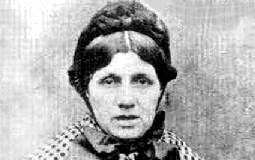
Mary Ann Cotton
Serial killer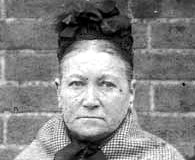 Amelia Dyer
Serial killer · United Kingdom · 1880
Amelia Dyer was convicted for the murder of Doris Marmon. She was known as a “b…
100 victims
Amelia Dyer
Serial killer · United Kingdom · 1880
Amelia Dyer was convicted for the murder of Doris Marmon. She was known as a “b…
100 victims
 Rosemary West
Serial killer · United Kingdom · 1971
Rosemary Pauline “Rose” West (née Letts) Rosemary Letts was born in Barnstaple,…
10 victims
Rosemary West
Serial killer · United Kingdom · 1971
Rosemary Pauline “Rose” West (née Letts) Rosemary Letts was born in Barnstaple,…
10 victims
 Myra Hindley
Serial killer · United Kingdom · 1963
Myra Hindley was an English serial killer who, in partnership with Ian Brady, c…
5 victims
Myra Hindley
Serial killer · United Kingdom · 1963
Myra Hindley was an English serial killer who, in partnership with Ian Brady, c…
5 victims
 Beverley Allitt
Serial killer · United Kingdom · 1991
Beverley Allitt was a nurse who suffered from the mental illness Munchausen’s S…
4 victims
Beverley Allitt
Serial killer · United Kingdom · 1991
Beverley Allitt was a nurse who suffered from the mental illness Munchausen’s S…
4 victims
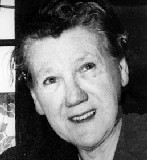 Mary Elizabeth Wilson
Serial killer · United Kingdom · 1955
Mary Elizabeth Wilson (c. 1893 - 1963), also known as the Merry widow of Windy…
4 victims
Mary Elizabeth Wilson
Serial killer · United Kingdom · 1955
Mary Elizabeth Wilson (c. 1893 - 1963), also known as the Merry widow of Windy…
4 victims
 Lisa Ann Coleman
Murderer · USA · 2004
Lisa Ann Coleman was a Black female born on 10/06/1975. She was 30 when her cas…
1 victim
Lisa Ann Coleman
Murderer · USA · 2004
Lisa Ann Coleman was a Black female born on 10/06/1975. She was 30 when her cas…
1 victim
 Christopher Dorch
Murderer · USA · 1989
Christopher Dorch Christopher Dorch was sentenced to life in prison without the…
1 victim
Christopher Dorch
Murderer · USA · 1989
Christopher Dorch Christopher Dorch was sentenced to life in prison without the…
1 victim
 Ronald Eric Salazar
Homicide · USA · 2005
Ronald Eric Salazar was 14 when police said he killed his 11-year-old sister in…
1 victim
Ronald Eric Salazar
Homicide · USA · 2005
Ronald Eric Salazar was 14 when police said he killed his 11-year-old sister in…
1 victim
 Olivia Riner
Justice miscarriage · USA · 1991
Olivia Riner was a Swiss au pair accused in the arson death of 3-month-old Kris…
0 victims
Olivia Riner
Justice miscarriage · USA · 1991
Olivia Riner was a Swiss au pair accused in the arson death of 3-month-old Kris…
0 victims
 Samuel Bustamante
Murderer · USA · 1998
Samuel Bustamante was convicted of capital murder and sentenced to death for th…
2 victims
Samuel Bustamante
Murderer · USA · 1998
Samuel Bustamante was convicted of capital murder and sentenced to death for th…
2 victims
 Jaishankar
Serial killer · India · 2006
Jaishankar was also known as M Shankar and M Sankar. He was also described as a…
21 victims
Jaishankar
Serial killer · India · 2006
Jaishankar was also known as M Shankar and M Sankar. He was also described as a…
21 victims
- Gender
- female
- Country
- United Kingdom
- Location
- North East England, England, United Kingdom
- Date of birth
- October 1, 1832
- Age at first offence
- 25
- Characteristics
- poisoner, attempt to collect insurance money
- Victim profile
- Eight of her own children, seven stepchildren, her mother, three husbands, a lover – and an inconvenient friend
- Method of murder
- Poisoning (arsenic)
- Date(s) of murder
- 1857 - 1872
- Years active
- 1857–1872
- Date of arrest
- 1873
- Status
-
Executed
Executed by hanging in Durham prison on March 24, 1873
Case record: Mary Ann Cotton
Status / legal outcome
Mary Ann Cotton was executed by hanging in Durham prison on March 24, 1873.
Background
Mary Ann Cotton (Mary Ann Robson; 1832–1873) was a British serial killer in the 19th century. She was convicted of murdering her stepson and was believed to have murdered up to twenty-one people, mainly by arsenic poisoning. She was described as employing poison, and she was suspected of murders of fourteen people, with an additional belief that in her older life twenty-one people close to her had died. Her motive was described as gain, because she would marry, kill, and collect insurance money, then repeat it again.
Mary Ann Robson was born in October 1832 in Low Moorsley in Tyne and Wear, Northern England. Her father was a miner who died when she was eight. Mary and her brother were raised by their mother, who was impoverished after the loss of her husband. Mary’s mother later remarried, and Mary was said to have loathed her stepfather. Conflict with her stepfather led her to flee the family home when she was 16.
Mary married William Mowbray in 1852, aged 20. She had five children, four of whom died in infancy. Mary frequently argued with her husband, who died suddenly in January 1865. After being widowed, Mary returned to Sunderland and married again; her new husband died in October 1865 from an unexplained illness.
In 1866, Mary’s mother died after a sudden illness.
Mary had a relationship with a widower, James Robinson, which resulted in marriage. Robinson had four children by his late wife, although two suddenly died soon after meeting Mary. Robinson became suspicious of Mary, especially when she kept pestering him to take out life insurance. In late 1869, after Mary had borne him a daughter, Mary walked out on Robinson, who was the only husband to survive a marriage to her.
Mary later married Frederick Cotton, whose surname she took and by which name she is usually known. The marriage was described as effectively null and void because Mary had not legally divorced her previous husband. Mary and Frederick had a son named Robert. Soon after, Frederick’s sister, two sons from his previous marriage and a number of friends died after sudden illnesses. Frederick himself died in December 1871, soon followed by the baby Mary had by him.
Mary quickly remarried, but her new husband quickly died after a short illness.
Other details: early life and work
Mary Ann Robson was born in October 1832 at Low Moorsley and was baptised at St Mary’s, West Rainton on 11 November. Her father Michael was a miner and was ardently religious and a fierce disciplinarian. Mary’s family moved to the County Durham village of Murton, where she went to a new school and found it difficult to make friends. Her father fell 150 feet (46 m) to his death down a mine shaft at Murton Colliery.
In 1843, Mary Ann’s widowed mother, Margaret (née Lonsdale), married George Stott, with whom Mary Ann did not get along. At the age of 16, Mary Ann moved out to become a nurse at Edward Potter’s home in the nearby village of South Hetton. After three years there, she returned to her mother’s home and trained as a dressmaker.
The offence (as charged and tried)
Mary Ann Cotton was arrested and charged with the murder of her stepson. In later narrative material, she was described as suspected of poisoning multiple people using arsenic, with the prosecution focusing on the murder of Charles Cotton.
In the Durham County Gaol case narrative, her trial centered on the death of Charles Edward Cotton, who was described as a stepson.
Background events leading to the charge
Mary Ann and Frederick moved into a home in County Durham in 1871. Frederick’s two stepsons and Mary’s 7-month-old baby were in the home. Two months later Frederick died of gastric fever. One of Mary’s lovers, Joseph Natrass, moved in. In the space of a month, Belle’s baby, Natrass, and Frederick’s son all died in the house. On 12 July 1872, the other son of Frederick died; the deaths caused suspicion and a neighbour went to the police.
A post mortem was carried out on the stepson and revealed him to be poisoned with arsenic. The bodies of the other dead were exhumed and showed arsenic was the cause of death.
Mary was arrested and charged with the murder of her stepson. She went to trial in March 1873.
Mary claimed the deaths were accidentally caused by arsenic contained in wallpaper.
In one portion of the narrative, Mary was suspected of the latest death after a parish official, Thomas Riley, asked her to help nurse a woman ill with smallpox. Mary complained that the last surviving Cotton boy, Charles Edward, was “in the way” of her plans of getting remarried and asked Riley if he could be committed to the workhouse. Riley, who served as West Auckland’s assistant coroner, said she would have to accompany him.
Mary was described as telling Riley: “I won’t be troubled long. He’ll go like all the rest of the Cottons.”
Five days later, Mary told Riley the boy had died. Riley went to the village police and convinced the doctor to delay writing a death certificate until the circumstances could be investigated.
Mary’s first action after Charles’s death was not to the doctor but to the insurance office, where she learned that money would not be paid until a death certificate had been issued. An inquest was held, and the jury returned a verdict of natural causes.
Mary claimed she had used arrowroot to relieve his illness and said Riley had made accusations because she had rejected his advances.
Investigation
Rumour turned to suspicion and forensic inquiry. The doctor who attended Charles had kept samples, and they tested positive for arsenic. He went to the police, who arrested Mary Ann and ordered the exhumation of Charles’s body. The bodies of other dead were exhumed and tested positive for arsenic as well.
One narrative described debate about further exhumations, but it proceeded with the single murder charge of young Charles Cotton. The trial was delayed until after the delivery of the daughter fathered by John Quick-Manning.
In another portion of the narrative, the doctor’s samples were taken to Leeds School of Medicine, and Dr Thomas Scattergood detected arsenic.
Arrest
Mary Ann Cotton was arrested and ordered exhumation of Charles’s body after arsenic was found in samples. The arrest occurred in 1873.
Trial
Mary Ann Cotton’s trial began on 5 March 1873. The delay was described as caused by a problem in selection of the public prosecutor, with Mr. Aspinwall supposed to get the job but the Attorney General, Sir John Duke Coleridge, chose his friend and protégé Charles Russell. Russell’s appointment over Aspinwall led to a question in the House of Commons, but it was accepted. Russell conducted the prosecution. The defense was handled by Mr. Thomas Campbell Foster.
The defense claimed Charles died from inhaling arsenic used as a dye in green wallpaper of the Cotton home. The jury retired for 90 minutes before finding Mary Ann guilty.
The jury returned a verdict of natural causes at an earlier inquest in connection with Charles’s death; Mary was later charged with his murder and tried in March 1873.
A Times correspondent reported on 20 March: “After conviction the wretched woman exhibited strong emotion but this gave place in a few hours to her habitual cold, reserved demeanour and while she harbours a strong conviction that the royal clemency will be extended towards her, she staunchly asserts her innocence of the crime that she has been convicted of.”
Mary’s trial ended in a guilty verdict. She was sentenced to death.
The court documents described in narrative included Mary’s maintenance of innocence and letters protesting her innocence.
Sentencing
Mary Ann Cotton was sentenced to death after being found guilty at trial.
Appeals
Several petitions were presented to the Home Secretary, but to no avail.
Outcome
Mary Ann Cotton was hanged at Durham County Gaol on 24 March 1873 by William Calcraft.
Her execution was described as botched. The drop below the trap door was too short, leaving Mary slowly choking to death as she dangled on the end of the noose. Another account described her as jerking and then being strangled after the trapdoor was released, with it taking at least three minutes for the strangling to complete. After removal from the scaffold, her body was taken back into the prison building where a cast of her head was made for members of the West Hartlepool Phrenological Society, and her hair was cut off close to her skull; later it was stated that each severed strand of hair was deposited in the coffin with her body.
Following her execution, a nursery rhyme was described as being sung after her hanging on March 24, 1873. Lyrics were provided verbatim: “Mary Ann Cotton, Dead and forgotten She lies in her bed, With her eyes wide open Sing, sing, oh, what can I sing, Mary Ann Cotton is tied up with string Where, where? Up in the air Sellin' black puddens a penny a pair.”
“Black puddens” referred to black pudding, a type of sausage made with pig’s blood.
Notes on death-related statements and quoted material (verbatim)
Mary told Thomas Riley: “I won’t be troubled long. Mary told Thomas Riley earlier: “He’ll go like all the rest of the Cottons.” Mary was described as saying in connection with Charles: “I could have married again but for the child. But there, he won’t live long, he’ll go the way of all the Cotton family.” A quoted portion of a letter from Mary to her estranged husband, James Robinson, included: “if you have one spark of kindness in you – get my life spared…you know yourself there has been…most dreadful lies told about me. I must tell you: you are the cause of all my trouble. If you had not (abandoned me). I was left to wander the streets with my baby in my arms…no place to lay my head.” Mary was described as replying to an adopting couple’s letter: “kiss my babe for me.” At the execution, Mary turned and said brightly: “Right – now I am ready!”
People named in the case record
- Mary Ann Cotton (defendant)
- Frederick Cotton (Mary’s husband; stepsons died in the home; Frederick died in December 1871 in narrative)
- Joseph Nattrass (Mary’s lover; moved in; later died)
- Charles Cotton / Charles Edward Cotton (stepson; death used for the murder charge; later described as having arsenic found in stomach/viscera)
- Thomas Riley (parish official and assistant coroner; involved around Charles’s death and investigation)
- John Quick-Manning (excise officer; associated with Mary; described as father of the daughter delivered during trial delay)
- William Calcraft (hangman who executed Mary Ann Cotton)
- William Mowbray (Mary’s husband)
- George Ward (Mary’s husband; engineer)
- James Robinson (Mary’s husband; shipwright)
- Charles Russell (public prosecutor at trial)
- Sir John Duke Coleridge (Attorney General who selected Charles Russell)
- Mr. Aspinwall (supposed prosecutor)
- Mr. Thomas Campbell Foster (defence counsel)
- Dr Thomas Scattergood (Leeds School of Medicine; detected arsenic in samples in one narrative)
- Dr Kilburn (local GP; in one narrative described as burying some remains in the garden)
- Jane Hedley (witness under oath in a described account)
- Margaret Cotton (Mary’s friend; introduced her to Frederick)
- Isabella (Mary’s daughter in the narrative)
- Belle’s baby (referred to in the home deaths narrative)
- Robert (Mary and Frederick’s son, in narrative)
- Margaret Edith Quick-Manning Cotton (Mary’s daughter born in Durham Gaol; name included in narrative)
Timeline
- 1871 — Mary Ann Cotton and Frederick moved into a home in County Durham with Frederick’s two stepsons and Mary’s 7-month-old baby.
- Two months after 1871 — Frederick died of gastric fever.
- 12 July 1872 — The other son of Frederick died; suspicion arose and a neighbour went to the police.
- March 1873 — Mary Ann Cotton went to trial; she claimed accidental death from arsenic in wallpaper.
- 5 March 1873 — Mary Ann Cotton’s trial began.
- 20 March 1873 — A Times correspondent reported: “After conviction the wretched woman exhibited strong emotion but this gave place in a few hours to her habitual cold, reserved demeanour and while she harbours a strong conviction that the royal clemency will be extended towards her, she staunchly asserts her innocence of the crime that she has been convicted of.”
- 10 January 1873 — Mary Ann Cotton delivered her last child in Durham Gaol; she named the child Margaret Edith Quick-Manning Cotton.
- 24 March 1873 — Mary Ann Cotton was hanged in Durham prison.
Aftermath
Mary Ann Cotton’s execution and case led to strong public attention. A wax model of her was described as being added to Mme Tussaud’s Chamber of Horrors.
The nursery rhyme “Mary Ann Cotton” was described as sung after her hanging.
Mary Ann Cotton was also described as remaining a subject of later discussion and children’s rhyme references.
Other details
In one narrative segment, Mary Ann Cotton was described as being associated with a children’s rhyme including: “Oh, what can I sing? Mary Ann Cotton is tied up with string.” Another version included: “Sing, sing! ‘Oh, what can I sing? Mary Ann Cotton is tied up with string.’ Where, where? ‘Up in the air – selling black puddings a penny a pair.’”
Mary Ann Cotton was described as being suspected of poisoning up to twenty-one people and as suspected of murdering children and husbands with arsenic.
In one account, her execution day apparel included a veil and gloves and a white cap. A hempen necklace was also described as part of her execution apparel.


Spotted an error, or have more information about this case?