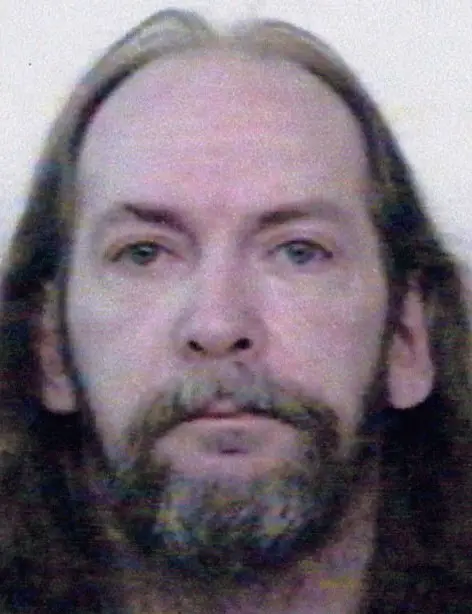
Donald Ray Wallace
Mass murderer Julio Gonzalez
Mass murderer · USA · 1990
Julio Gonzalez was sentenced to 174 twenty-five-year sentences (a total of 4,35…
87 victims
Julio Gonzalez
Mass murderer · USA · 1990
Julio Gonzalez was sentenced to 174 twenty-five-year sentences (a total of 4,35…
87 victims
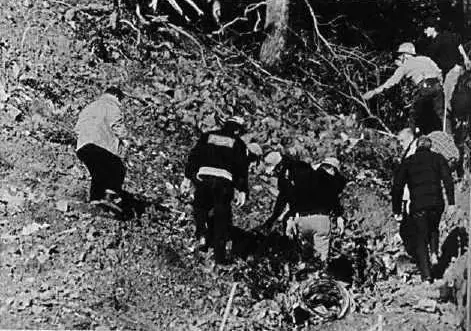 David Burke
Mass murderer · USA · 1987
David Augustus Burke (May 18, 1952–December 7, 1987) was an employee of USAir,…
43 victims
David Burke
Mass murderer · USA · 1987
David Augustus Burke (May 18, 1952–December 7, 1987) was an employee of USAir,…
43 victims
 James Huberty
Mass murderer · USA · 1984
James Oliver Huberty was a 41-year-old unemployed security guard. He was born i…
21 victims
James Huberty
Mass murderer · USA · 1984
James Oliver Huberty was a 41-year-old unemployed security guard. He was born i…
21 victims
 Ronald Gene Simmons
Mass murderer · USA · 1987
Ronald Gene Simmons was a retired United States Air Force sergeant. Over the Ch…
16 victims
Ronald Gene Simmons
Mass murderer · USA · 1987
Ronald Gene Simmons was a retired United States Air Force sergeant. Over the Ch…
16 victims
 Patrick Henry Sherrill
Mass murderer · USA · 1986
Patrick Henry Sherrill Patrick Henry Sherrill committed suicide by shooting him…
14 victims
Patrick Henry Sherrill
Mass murderer · USA · 1986
Patrick Henry Sherrill Patrick Henry Sherrill committed suicide by shooting him…
14 victims
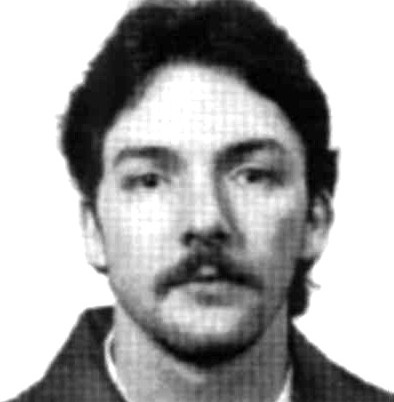 Benny Lee Saylor
Murderer · USA · 1992
Benny Lee Saylor was released from DOC in 1991 on Probation for 4 years followi…
1 victim
Benny Lee Saylor
Murderer · USA · 1992
Benny Lee Saylor was released from DOC in 1991 on Probation for 4 years followi…
1 victim
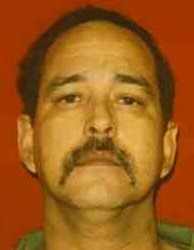 Jerry McWee
Murderer · USA · 1991
Jerry McWee was convicted of murder and armed robbery in the Circuit Court, Aik…
2 victims
Jerry McWee
Murderer · USA · 1991
Jerry McWee was convicted of murder and armed robbery in the Circuit Court, Aik…
2 victims
 Frederick Deeming
Mass murderer · United Kingdom/Australia · 1891
Frederick Bailey Deeming (30 July 1853 – 23 May 1892) was an English-born Austr…
6 victims
Frederick Deeming
Mass murderer · United Kingdom/Australia · 1891
Frederick Bailey Deeming (30 July 1853 – 23 May 1892) was an English-born Austr…
6 victims
 Windel Ray Workman
Murderer · USA · 1987
Windel Ray Workman was convicted and sentenced to death for the January 10, 198…
1 victim
Windel Ray Workman
Murderer · USA · 1987
Windel Ray Workman was convicted and sentenced to death for the January 10, 198…
1 victim
 Jamie Bruce McCoskey
Murderer · USA · 1991
Jamie Bruce McCoskey was sentenced to death on March 5, 1993 and was later exec…
1 victim
Jamie Bruce McCoskey
Murderer · USA · 1991
Jamie Bruce McCoskey was sentenced to death on March 5, 1993 and was later exec…
1 victim
- Gender
- male
- Country
- USA
- Location
- Vandenburgh County, Indiana, USA
- Date of birth
- September 3, 1957
- Age at first offence
- 23
- Characteristics
- burglary, drugs, rape?, robbery
- Victim profile
- Patrick Gilligan W/M/30; Teresa Gilligan W/F/30; Lisa Gilligan W/F/5; Gregory Gilligan W/M/4
- Method of murder
- Shooting (handgun)
- Date(s) of murder
- January 14, 1980
- Years active
- 1980
- Date of arrest
- —
- Status
-
Executed
Executed by lethal injection in Indiana on March 10, 2005
Case record: Donald Ray Wallace Jr.
Overview
Donald Ray Wallace Jr. was executed by lethal injection in Indiana on March 10, 2005.
Victims
Patrick Gilligan and Theresa Gilligan were murdered along with their two children: Lisa, 5, and Gregory, 4.
Timeline
- January 14, 1980 — Wallace entered the next-door home during a burglary at the Hendricks home; the Gilligans were found dead afterward in the Gilligans’ home.
- 1980 — Wallace was sentenced to death in October 1982.
- October 21, 1982 — Wallace was sentenced to death.
- December 6, 1985 — The Indiana Supreme Court affirmed Wallace’s conviction and death sentence in Wallace v. State, 486 N.E.2d 445 (Ind. December 6, 1985) and remanded the case.
- 1990 — The Indiana Supreme Court affirmed the denial of postconviction relief in Wallace v. State, 553 N.E.2d 456 (Ind. 1990).
- 1994 — The Indiana Supreme Court affirmed denial of a second petition for postconviction relief in Wallace v. State, 640 N.E.2d 374 (Ind. 1994).
- May 2000 — Wallace sent a letter to a retired Indiana University professor in which he wrote, “The family whose house I was burglarizing returned home through the only door opened.”
- March 10, 2005 — Wallace was executed by lethal injection in Indiana.
- March 10, 2005 — Wallace was pronounced dead at 1:23 a.m. EST at the Indiana State Prison in Michigan City.
- March 10, 2005 — A prayer service occurred at St. Theresa Catholic Church in Evansville for Wallace’s victims.
The offence
On the night of January 14, 1980, Wallace committed the murders of Patrick and Theresa Gilligan and their children Lisa and Gregory after burglarizing a neighboring home and being surprised when the Gilligans returned home.
In statements and letters, Wallace described a “frenzied blur” and wrote that he killed the couple and the two children after they interrupted his burglary attempt. He wrote about binding the victims and shooting them, and he also wrote about bludgeoning Patrick Gilligan with weights.
Police investigation described the broken window at the Gilligans’ back door, and that Trooper Thomas Snyder discovered four dead bodies in the family room: Patrick and Teresa Gilligan and the two children, ages four and five. Mrs. Gilligan had her hands tied behind her, and the two children were tied together.
Coroner David Wilson, M.D., testified that the cause of all four deaths, as listed on the inquests, was brain damage from gunshot wounds.
Wallace’s case was characterized at sentencing as involving murders knowingly committed while he was burglarizing the Gilligan home, and as involving multiple murders.
Investigation
Indiana State Trooper Thomas Snyder was called to the home of Ralph Hendricks, reported burglarized. Snyder went to the Gilligans’ house next to the Hendricks home to inquire whether the residents there might have seen or heard anything unusual.
Entry was gained in both the Hendricks and Gilligans homes by putting tape on the window and then breaking it in “in a manner that reduced the sound of breaking glass.”
Officer John Crosser recovered the remains of the jacket and other items found on the ground. State Police Specialist Oliver examined the glass and found pieces fit into a pattern matching the hole in Gilligans’ window.
Serologist William Kune examined evidence including blue jeans worn by Wallace the night of the crime. Kune found type AB human blood. Wallace’s blood type was O. Mrs. Gilligan and one of the children had blood type AB. Kune also found type B blood on a brown cotton glove identified as one of a set Wallace wore while burglarizing homes. Mr. Gilligan had type B blood.
Evidence included photographs taken by Wallace and Debbie Durham of many items taken from the Gilligan and Hendricks residences, including money and pistols connected with these burglaries.
Witnesses recalled Wallace driving a blue Plymouth automobile known to have been used in prior burglaries by Richard Milligan and Milligan’s girlfriend Debbie Durham; Richard Milligan was in jail on burglary charges that night. Donna Madison testified she saw Wallace driving the blue Plymouth and heard him ask for matches between 7:00 p.m. and 9:00 p.m., saw him burning the jacket he carried, and Sherry Grayson saw a fire at the same time.
Several witnesses testified Debbie Durham displayed pieces of jewelry later traced to the Gilligans.
Debbie Durham gave one of the rings to Officer O’Risky, and it was identified by Dorothy Sahm as belonging to Teresa. A jeweler that had sized the ring and kept pictures of it also identified it as belonging to Teresa.
Friends of Wallace, Mark Boyles and Anita Hoeche, testified Wallace called them on January 15 and said he was in trouble and needed a ride. In those statements he said he had gotten “too greedy” the night before, had broken into one house and “never should have gone to the next house because he got caught there,” and that after he got caught a man in the house gave him trouble and he had to tie up the entire family. He said the little girl was crying and screaming and he killed them as well. He also said the woman was screaming and he had to shut her up.
Wallace was arrested later that night while hiding in the attic of Hoeche’s house.
Arrest
Wallace was later that night arrested while hiding in the attic of Hoeche’s house.
Trial
Wallace was tried in the Vigo Circuit Court. The jury found him guilty by a jury of four counts of murder.
The death penalty was sought on grounds that the killings were knowingly done in commission of a burglary and that Wallace had killed more than one person.
The jury found Wallace guilty and recommended the death penalty in all four cases. The trial court agreed with the jury’s findings and sentenced Wallace to death.
Competency to stand trial
The Indiana Supreme Court described pretrial hearings on Wallace’s competency to stand trial.
Four hearings were held before the trial judge found Wallace competent to understand the proceedings and assist his counsel in his defense.
The appointed psychiatrists Dr. Larry Davis and Dr. John Kooiker initially reported that Wallace was incompetent to proceed due to acute paranoid schizophrenia, describing elaborate delusions, including beliefs that the CIA and Masons were attempting to place him before a firing squad, and suspicion of the psychiatrists, his attorney, and court personnel.
The trial judge found him incompetent in a May 1980 order based on an overwhelming evidence of incompetency given by the doctors.
Later, a superintendent certification under Ind.Code § 35-36-3-3 (Burns Repl.1985) was based on Dr. Matheu’s opinion that Wallace had attained competency, but the hearing scheduled pursuant to that certification was continued after further evaluation and treatment; with Thorazine treatment, Dr. Kooiker reported Wallace became oriented, and both psychiatrists considered him competent. A subsequent hearing found Wallace too heavily sedated; the court ordered medication adjustment and sent Wallace back for further treatment.
In the next and third hearing on January 16, 1981, the psychiatrists again opined Wallace was incompetent, and the court ordered him committed under Ind.Code § 16-14-9.1-10 (Burns Repl.1983).
Later, the State moved for another competency hearing asserting Wallace had been faking his psychosis. On June 16, 1982, over Wallace’s objection, the court held another competency hearing where the State introduced letters Wallace had written to Debbie during the period between his arrest and the first pretrial court appearance in which competency was put in issue.
The trial court ultimately concluded Wallace was faking his psychosis and that he was competent to stand trial.
Wallace later asked the trial court to order all of his medication be withdrawn; the trial court found that to be a medical matter and denied the motion.
Other issues raised on direct appeal
In Wallace v. State, 486 N.E.2d 445 (Ind. December 6, 1985), the Indiana Supreme Court addressed nine issues, including competency rulings, denial of change of venue, testimony by a witness allegedly incompetent, denial of mistrial motions linked to references to Wallace’s past criminal record, alleged search and seizure of items from an automobile, denial of requests for questions asked of police officer witnesses, alleged improper testimony of a rebuttal witness, error in the presentence report, and constitutional infirmity of Indiana’s Death Penalty Statute.
The Indiana Supreme Court held the trial court did not err and affirmed and remanded. It held that death penalty was not arbitrarily or capriciously applied and that evidence of uncharged offenses did not mandate a mistrial, among other holdings.
Sentencing
After trial, the jury recommended the death penalty in all four cases. The trial court found the State proved aggravating factors beyond a reasonable doubt.
At sentencing, the judge found that each murder was committed during the perpetration of a burglary and that Wallace had murdered more than once. The sentencing court also found that Wallace committed the murders while on parole from a prior felony unrelated to the Gilligan case.
The Indiana Supreme Court’s later description included a sentencing finding that the court found that there were absolutely no mitigating factors to be weighed against the aggravating ones.
In one quoted portion of the sentencing explanation in the case materials, the sentencing judge’s findings included the following statements:
- The aggravating circumstances alleged were: A. That the Defendant committed the murder of each victim by intentionally killing the victims while committing or attempting to commit Burglary. (I.C.35-50-2-9(b)(1). [The statutory references in the sentencing judge's findings are to the 1979 version of Indiana's Code, which was in effect at the time of his murders.] B. That the Defendant committed three other murders, regardless of whether or not the Defendant had been convicted of the other murders, in three instances in each count. (I.C.35-50-2-9(b)(8)).
- The Court finds that the State has proved beyond a reasonable doubt that two aggravating circumstances exist that warrant the imposition of the death penalty: A. That the Defendant, Donald Ray Wallace, Jr., murdered Patrick Gilligan, Theresa Gilligan, Lisa Gilligan and Gregory Gilligan while committing the crime of Burglary on the 14th day of January, 1980, in Vanderburgh County, State of Indiana. (I.C.35-50-2-9(b)(1)). B. That the Defendant, Donald Ray Wallace, Jr., murdered Patrick Gilligan, and then murdered Theresa Gilligan, Lisa Gilligan and Gregory Gilligan; that the Defendant, Donald Ray Wallace, Jr., murdered, in order, after the murder of Patrick Gilligan, Theresa Gilligan, Lisa Gilligan and Gregory Gilligan. (I.C.35-50-2-9(b)(8)).
- That the aggravating circumstances set forth in paragraph eight above outweigh any mitigating circumstances offered under I.C. 35-50-2-9(c)(7).
- The Court has considered the Jury's recommendation to impose the death penalty, and bases the sentence here given on the same standard as required of the Jury, that being that: A. The State has presented beyond a reasonable doubt that two of the aggravating circumstances exist with the murders of Patrick Gilligan, Theresa Gilligan, Lisa Gilligan and Gregory Gilligan within I.C. 35-50-2-9(b)(1) , and I.C. 35-50-2-9(b)(8) all as set forth in paragraph eight; and B. That any mitigating circumstances that exist within I.C. 35-50-2- 9(c)(7) are out-weighed by the aggravating circumstances;
- In addition to the requirements of I.C. 35-50-2-9, this Court further finds: A. That Donald Ray Wallace, Jr. has recently violated the conditions of parole [by killing the Gilligan family while on parole from a prior sentence] .... B. That Donald Ray Wallace, Jr. had a long history of serious criminal conduct [list with 26 entries follows].
Appeals
Wallace pursued direct appeal and collateral relief.
Direct appeal: 1985
In Wallace v. State, 486 N.E.2d 445 (Ind. December 6, 1985), the Indiana Supreme Court affirmed the conviction and death sentence and remanded for setting an execution date.
Postconviction relief: 1990
In Wallace v. State, 553 N.E.2d 456 (Ind. 1990), the Indiana Supreme Court affirmed the denial of postconviction relief.
Postconviction relief: 1994
In Wallace v. State, 640 N.E.2d 374 (Ind. 1994), the Indiana Supreme Court affirmed denial of a second petition for postconviction relief.
Federal habeas corpus
In Wallace v. Davis, 362 F.3d 914 (7th Cir. March 26, 2004), the Seventh Circuit affirmed the denial of a petition for federal writ of habeas corpus.
One described holding was that listing Wallace’s prior arrests and convictions in the sentencing judge’s written explanation was not error, and another holding was that alleged failure to present more mitigating evidence did not amount to ineffective assistance of counsel.
Wallace’s execution process continued after the U.S. Supreme Court declined to hear one of his final appeals.
Outcome
Wallace was executed by lethal injection in Indiana on March 10, 2005.
At the execution, the Department of Correction spokeswoman Javairya Ahmed said Wallace was pronounced dead at 1:23 a.m.
Prison officials also said Wallace declined the chance to meet with a spiritual adviser and selected nine people to witness his execution.
A statement read by Wallace’s attorney, Sarah Nagy, included:
“Killing Don by the state has only created more pain and helped continue the cycle of hate and violence.”
A prison spokesman Barry L. Nothstine said Wallace visited with two friends from 8:30 a.m. to about 4:30 p.m., after which Wallace was led to a room next to the execution chamber following a shower.
Wallace’s final public statement, as described in the materials, included:
“I hope everyone can find peace with this,”
and Wallace also said in a series of letters he sent:
“The dying part is easy. I am so tired of doing time.”
Aftermath
After the execution, the victims’ relatives held prayer services at St. Theresa Catholic Church in Evansville, including statements from Theresa Gilligan’s sister Diana Harrington and other family members.
Diana Harrington said at a prayer vigil that “It is now time to bind and soothe the wounds that have been present for so long,” and spoke about healing after “four people dying.”
Susan Stern said:
“Let us not forget to pray for Donald Wallace whose life has become entwined with ours,”
and also said:
“Let us pray that he'll find the forgiveness that only God offers.”
Other details
Wallace’s childhood and mental illness
The materials described Wallace’s childhood as troubled, including references to being in counseling, being in youth institutions, and later claims about mental health and competence. The U.S. Supreme Court proceedings and the Indiana Supreme Court discussions included competency to stand trial and whether Wallace was faking psychosis.
The Indiana Supreme Court’s direct appeal summary described the court’s holdings and that death penalty was affirmed.
Wallace’s letters, confessions, and statements
Wallace wrote to Diana Harrington describing the murders and included details about binding and shootings. In one referenced letter writing to Harrington, Wallace said:
“Just as that was completed, Patrick slipped his bonds and attacked,”
and he wrote: “I don’t know if he was extraordinarily brave, or if he didn’t trust that his family wouldn't be hurt, or both. In the struggle over the pistol, Patrick was shot in the head and fell to his hands and knees. Then everything else just went to hell. Everyone was shot within 10 seconds after Patrick ... drugs, panic, insanity ... it all happened too fast to understand.”
In another referenced letter to a retired Indiana University professor in May 2000, Wallace wrote:
“The family whose house I was burglarizing returned home through the only door opened,”
and:
“Threat, strike. I went on autopilot. It was almost like watching a horror film that some maniac had written ... I shot them all.”
In a televised confession described in the materials, Wallace said:
“What happened that night was a moment of utter madness,”
and also said: “It was panic, because my original intention was not to kill anyone, it was to get the situation under control, and Patrick attacked, which I can't blame him for. I would, too, if I were in his position. Once the shooting started, all hell broke loose.”
Agreement about autopsy and photographs/samples
The materials described that Wallace entered into an out-of-court agreement to avoid an autopsy. The agreement said that under its terms the Indiana Department of Correction was prohibited from asking for an autopsy if conditions were met. The agreement also gave permission for post-execution photographs and for taking blood, tissue and urine samples if needed to determine the cause of death was lethal injection.
Wallace sought to block an autopsy citing moral and spiritual beliefs and a court affidavit describing 13 reasons for objecting and quoting passages from the New Testament describing the body as God’s temple.
The agreement also described a sworn statement that Nagy would be required to sign after Wallace’s death:
“Mr. Wallace was alive minutes before his execution and, at the end of my visit with him on the day preceding his execution, he had not been abused or mistreated by any current legal standard.”
Final hours plan
A prison spokesman described the plan for Wallace’s final hours, including:
- 8 a.m. Wednesday — approved visitors were allowed to see him.
- 4:30 p.m. — visiting ended; Wallace was taken to the cell area; he took a shower; spiritual advisers entered and a phone was available.
- 10 p.m. — spiritual advisers left.
- Midnight — the first execution team entered and retrieved Wallace on a gurney; an intravenous team administered three sequential chemicals, with sodium pentothal, pancuronium bromide, and potassium chloride described, and an inquiry made directly to determine whether there was a stay of execution before proceeding.
Spotted an error, or have more information about this case?