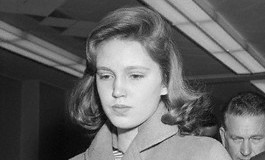
Cheryl Crane
Homicide Constance Fisher
Homicide · USA · 1954
Constance Fisher · 3 August 1954 — Constance Fisher drowned her three children…
6 victims
Constance Fisher
Homicide · USA · 1954
Constance Fisher · 3 August 1954 — Constance Fisher drowned her three children…
6 victims
 Maggie Young
Homicide · USA · 1965
Maggie Young was a despondent, mentally ill mother who had been treated for a m…
5 victims
Maggie Young
Homicide · USA · 1965
Maggie Young was a despondent, mentally ill mother who had been treated for a m…
5 victims
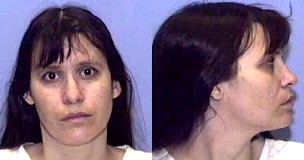 Andrea Yates
Homicide · USA · 2001
Andrea Pia Yates (born Andrea Pia Kennedy on July 2, 1964) was a former Houston…
5 victims
Andrea Yates
Homicide · USA · 2001
Andrea Pia Yates (born Andrea Pia Kennedy on July 2, 1964) was a former Houston…
5 victims
 Christine Falling
Homicide · USA · 1980
Christine Falling (1980-1982) was a 17-year-old babysitter from Perry, Florida.…
5 victims
Christine Falling
Homicide · USA · 1980
Christine Falling (1980-1982) was a 17-year-old babysitter from Perry, Florida.…
5 victims
 Darrell Brooks
Mass Murderer · USA · 2002
Darrell Brooks was charged and convicted in federal court for an arson that res…
7 victims
Darrell Brooks
Mass Murderer · USA · 2002
Darrell Brooks was charged and convicted in federal court for an arson that res…
7 victims
 Michael George Hart
Murderer · United Kingdom · 1975
Michael George Hart was involved in a robbery at a Barclays Bank branch on Uppe…
1 victim
Michael George Hart
Murderer · United Kingdom · 1975
Michael George Hart was involved in a robbery at a Barclays Bank branch on Uppe…
1 victim
 Bruce Douglas Pace
Murderer · USA · 1988
Defendant: Bruce Douglas Pace · Date of birth: 12/12/59 · Case number (trial co…
1 victim
Bruce Douglas Pace
Murderer · USA · 1988
Defendant: Bruce Douglas Pace · Date of birth: 12/12/59 · Case number (trial co…
1 victim
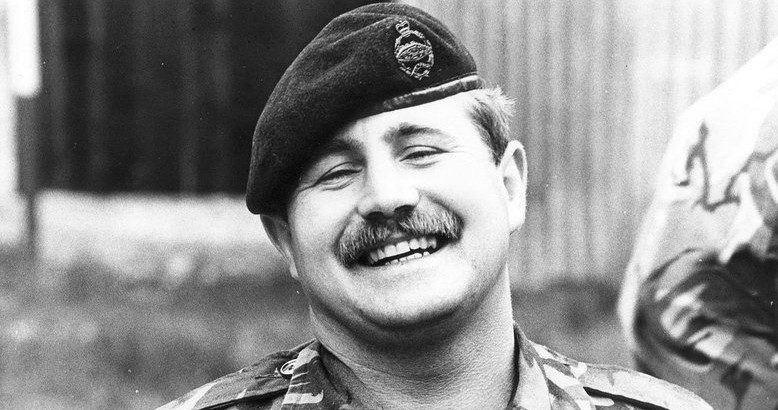 John Walker Turnbull
Murderer · United Kingdom · 1999
John Walker Turnbull (May 18, 1958 – September 27, 1999) was a Lance Corporal i…
2 victims
John Walker Turnbull
Murderer · United Kingdom · 1999
John Walker Turnbull (May 18, 1958 – September 27, 1999) was a Lance Corporal i…
2 victims
 Paul Merhige
Mass murderer · USA · 2009
Paul Merhige was held without bail and remained in prison awaiting trial. · 200…
4 victims
Paul Merhige
Mass murderer · USA · 2009
Paul Merhige was held without bail and remained in prison awaiting trial. · 200…
4 victims
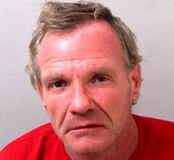 Anthony Ayres
Murderer · United Kingdom · 1993
Anthony Ayres was a 49-year-old man when he was sentenced for the murder of Kel…
2 victims
Anthony Ayres
Murderer · United Kingdom · 1993
Anthony Ayres was a 49-year-old man when he was sentenced for the murder of Kel…
2 victims
- Gender
- female
- Country
- USA
- Location
- Beverly Hills, California , USA
- Date of birth
- July 25, 1943
- Age at first offence
- 15
- Characteristics
- juvenile (14), mentally ill
- Victim profile
- John "Johnny" Stompanato, 32 (her mother's boyfriend)
- Method of murder
- Stabbing with knife
- Date(s) of murder
- April 4, 1958
- Years active
- 1958
- Date of arrest
- Same day (surrenders)
- Status
-
Released
Killing was ruled a justifiable homicide; Crane was made a ward of the State of California and sent to an all girls boarding school, from which she escaped in 1960, was recaptured, and then released in 1961
Overview
Cheryl Christina Crane (born July 25, 1943) was the only child of actress Lana Turner, from her marriage to actor-restaurateur Stephen Crane, her second husband. On April 4, 1958, at age 14, Cheryl Crane stabbed her mother's boyfriend Johnny Stompanato to death. The killing was ruled a justifiable homicide; Crane was deemed to have been protecting her mother.
The offence
On April 4, 1958, Stompanato was stabbed to death at Turner's Beverly Hills, California home. Crane described that she stabbed Stompanato defending her mother. The People.com account stated that when Lana's lover of the moment, Johnny Stompanato, threatened to kill Lana during an argument, Cheryl grabbed a kitchen knife and waited outside her mother's bedroom door; when the door opened, Stompanato came forward as Cheryl rushed in, and the blade punctured his abdomen, kidney and aorta. The same account stated that even though the death was ruled a justifiable homicide, it launched Cheryl on a ruinous slide from defiant behavior to reform school and a mental institution.
Victim
John Stompanato (October 10, 1925 - April 4, 1958), also known as “Handsome Harry”, “Johnny Stomp”, “John Steele”, and “Oscar”, became a bodyguard/enforcer for gangster Mickey Cohen. In 1958, after a tumultuous relationship with actress Lana Turner, he was stabbed and killed by Turner's daughter, Cheryl Crane.
Early years
The People.com account said that John Stompanato, Jr. was born into an Italian-American family in Woodstock, Illinois, the youngest of four children. It said his father John Sr. owned a barber shop, his mother Carmela died shortly after his birth, and his father remarried to a woman named Verena Freitag.
Wartime service
The People.com account stated that in 1940, after Stompanato's freshman year at Woodstock High School, his father sent him to Kemper Military School for boys in Boonville, Missouri, from which he graduated at age 17. It stated that in 1943, Stompanato joined the U.S. Marines, saw action in the South Pacific theater in Peleliu and Okinawa, and then landed in China with the Marines in 1945.
Family
The People.com account referred to Stompanato's son, John Stompanato III, born in Woodstock by his sole legal marriage.
Los Angeles and business
The People.com account stated that in Los Angeles, Stompanato owned and managed “The Myrtlewood Gift Shop” in Westwood, California. It stated he sold pieces of crude pottery and wood carvings as fine art, with a part-time clerk serving the few shoppers.
Relationship with Lana Turner; jealousy and a gun incident
The People.com account stated that Stompanato dated Lana Turner and wore a heavy gold-link bracelet inscribed “Lanita”. It said that Crane described him in her autobiography, Detour: A Hollywood Story (1988), including:
"... B-picture good looks... thick set ... powerfully built and soft spoken ... and talked in short sentences to cover a poor grasp of grammar and spoke in a deep baritone voice. With friends, he seldom smiled or laughed out loud, but seemed always coiled, holding himself in ... had watchful hooded eyes that took in more than he wanted anyone to notice .... His wardrobe on a daily basis consisted of roomy, draped slacks, a silver buckled skinny leather belt and lizard shoes".
The People.com account further stated that on one occasion, the jealous Stompanato stormed onto a movie set in the UK and pointed a gun at actor Sean Connery, her co-star in Another Time, Another Place, only to have Connery take the gun and force him from the movie set. It stated Stompanato was deported for this offense because unlicensed handguns were illegal in the United Kingdom.
Death and aftermath allegations and settlement
The People.com account stated that after Stompanato’s death, Crane claimed he had been attacking her mother and that she had stabbed him defending her mother, and that the courts agreed, ruling the death justifiable homicide. It stated that after the ruling, Stompanato’s family sued Turner for $7 million and that the case was eventually settled out of court for unknown terms.
Burial
The People.com account stated that Stompanato was interred at Oakland Cemetery in Woodstock, McHenry County, Illinois, and described his burial location between his mother Carmela (1890–1925) to the north and his father John (1890–1952) and step mother Verena (1901–1967) to the south, with his brother Carmine (1912–1961) buried across a small road to the west of Johnny.
Investigation
Initial response and media coverage
The case narrative described that Lana arranged to call a lawyer and have him contact the police after Stompanato’s death. It stated that Geisler was on the scene before the cops and that the Beverly Hills Police descended on Turner's home with press also arriving. It stated that crime scene photos of Johnny Stompanato lying dead in Lana Turner’s bedroom were on the front page of hundreds of newspapers.
Prosecutorial approach and juvenile detention
It stated that formal statements were taken after Lana and her daughter had time to strategize with Geisler, and that Cheryl was kept overnight at the Beverly Hills police station in a cell. It said that the Los Angeles County District Attorney William B. McKesson held a press conference two days after the homicide and made it clear the case would receive no special treatment because Lana Turner was involved. It said Cheryl was taken to county Juvenile Hall until the matter was concluded and that she was not being held as a suspect but as a material witness and adjudicated juvenile. It stated that McKesson recommended Cheryl not be released on bail and that the judge agreed and ordered Cheryl detained.
Coroner’s inquest
The narrative stated that the judge ordered a coroner's inquest to determine whether a crime had indeed been committed, including a description that a coroner’s inquest verdict is not binding and that law enforcement officials may still charge, or not charge. It stated that a week after the homicide the coroner convened the inquest and that Geisler managed to get Cheryl excused from testifying because of the trauma she had already been through.
Arrest / custody / supervision
Cheryl Crane was made a ward of the State of California and sent to an all girls boarding school after the ruling. She escaped in 1960, was recaptured, and was released in 1961. The People.com account also stated that following the stabbing Cheryl spent three weeks in Juvenile Hall before being made a ward of the court and was released in her grandmother's custody as she requested. It further stated that after 11 months in reform school she returned home to her grandmother only to run away twice, and after the second incident she was sent to the Institute of Living in Hartford, Conn. The narrative stated that Crane attempted suicide by smashing her fists through a window after being told by her mother that the court had extended her wardship by a year, and that she was sedated for weeks afterward. It stated that in April 1962, eight months after her 18th birthday, Crane was finally released.
Trial / inquest
Probate judge hearing and planned trial
The narrative stated that Easter came and went and on Monday morning Cheryl was brought before a probate judge for a predetention hearing. It stated that Geisler told the judge that he could prove Stompanato's death was justifiable homicide and asked that Cheryl be released to her grandmother's custody. It included a quotation from Beverly Hills Police Chief William Anderson: “Let's go to trial,” and stated that he said, “I am satisfied that Stompanato was killed with a knife and we have the party who did it.” The narrative stated that the judge ordered Cheryl detained and ordered a coroner’s inquest.
Coroner’s inquest testimony and deliberation
The narrative stated that the inquest was broadcast live by CBS and ABC and went out over radio. It said that the Hall of Records in downtown Beverly Hills had the largest courtroom reserved for the inquest with 160 seats, 120 reserved for the press.
The narrative stated that Mickey Cohen was the first person called to testify and that he caused a stir by refusing “to identify the body on the grounds I may be accused of this murder.” It stated he spent all of two minutes on the stand and left the building shortly thereafter.
The narrative described autopsy details, stating that the coroner introduced the autopsy report and that it showed Johnny Stompanato had been stabbed once in the abdomen; the knife had sliced a kidney, struck a vertebra and twisted upward, puncturing his aorta. It also stated that the medical examiner announced Johnny probably wouldn't have lived another 10 years because of his bad liver.
It stated that then it was time for Lana, who dressed in a gray silk suit, white gloves and hat, and that she answered questions from the coroner, his deputy and Geisler while a 10-man, two-woman jury watched. It stated that she broke down twice on the stand while explaining why she stayed with a man who beat her. It stated that under Geisler's questioning she recounted a moment-by-moment recap of the argument that led to the stabbing.
Unidentified interruption
The narrative stated that as the inquest concluded, a mysterious man jumped up from the gallery and shouted that he needed to testify, and that as he was escorted from the room he shouted:
“Lies! All lies! This mother and daughter were both in love with Stompanato! Johnny was a gentleman!” It stated that whether the man was a nutcase, a publicity hound or a Cohen plant was never determined.
Inquest verdict
The narrative stated that the jurors retreated to deliberate and took less than a half-hour to decide that John Stompanato's death was justifiable homicide. It stated that acting out of fear for her life and for her mother's life, Cheryl Crane was justified in using deadly force to stop Johnny, they ruled. It stated that the decision was not unanimous, nor did it have to be.
The narrative stated that the inquest verdict was not binding on the prosecutor, but the next day McKesson decided not to pursue charges. It said that McKesson initiated court proceedings to determine Lana’s fitness as a parent.
Sentencing
No sentencing outcome for Cheryl Crane was stated in the provided material beyond wardship and placement in institutions. It did state that in 1962 Mickey Cohen was sentenced to 10 years in federal prison for income tax violations, was released in 1972, began a campaign for prison reform, and died in 1976 of natural causes.
Appeals / outcome
The killing was ruled a justifiable homicide by jurors at the coroner’s inquest. The narrative stated that McKesson decided not to pursue charges. It also stated that there was initiation of court proceedings to determine Lana’s fitness as a parent.
Outcome
Cheryl Crane was made a ward of the State of California and sent to an all girls boarding school after Stompanato’s death. She escaped in 1960, was recaptured, and then released in 1961. The narrative also stated that years later, in 1969, Crane was detained by the Los Angeles Police Department when three half-grown marijuana plants were discovered in the back seat of her car.
Aftermath
Family relationships and public disclosure
The narrative stated that the years later Cheryl publicly revealed her lesbianism to her mother, who accepted the news well. It stated Turner said she regarded Cheryl's partner, Jocelyn “Josh” LeRoy, “as a second daughter”.
Crane’s later health
The narrative stated that Crane was diagnosed with breast cancer in 1998, underwent a mastectomy and was treated with radiation and chemotherapy, and that she had since been in remission.
Work, residence, and partner
The narrative stated that Crane currently lived in the Palm Springs, California area, where she worked as a real-estate agent with Jocelyn “Josh” LeRoy, her partner of 37 years. It stated that her first work of fiction, a mystery novel titled The Bad Always Die Twice, was published in 2011.
Biography discussion of the stabbing and alleged abuse
The narrative stated that years later Crane publicly revealed her lesbianism and that she had first discussed the Stompanato killing publicly for the first time in her autobiography Detour: a Hollywood Tragedy - My Life With Lana Turner, My Mother (1988), admitting to the stabbing. It stated that she further alleged she was subject to a series of sexual assaults at the hands of her stepfather and her mother’s fourth husband, actor Lex Barker.
Quoted comment about defense
The People.com account included a quotation attributed to Crane’s longtime lover Joyce “Josh” LeRoy:
“I think it was a very brave and noble thing to go to your mother's defense” It also included Crane’s quotation about how no one had previously described it as anything other than monstrous: “No one had ever said that what I had done could have been anything but monstrous,” Crane wrote. “My life changed.” It further included a quotation from Crane about her preference for women: “It's something you're born with, like blue or brown eyes.” It included a quotation about her relationship: “Maybe I've been blessed, but I've never had any bad reaction to that,” she says. “Listen, I have had so much said about me that this was a minor, I mean minor, point in my life.” The People.com account also quoted Turner as saying about LeRoy: “as a second daughter”.
Quotations from the People.com narrative about the events
The People.com narrative included:
“I was aware of my preference for women even in childhood: "It's something you're born with, like blue or brown eyes."” It also included Crane’s account of hiding the knife moment and the after-stabbing feeling: “I don't remember grabbing the knife from the kitchen when she heard the fatal argument.” and: “it was like I came out of a dream and everything came apart.” It included Crane’s description of the shift after the ordeal: “Though the death was ruled a justifiable homicide, the ordeal launched Cheryl on a ruinous slide from defiant behavior to reform school and a mental institution.” It included Crane’s statement about taking to nightclubs and wanting things immediately: “I wanted everything and I wanted it now,” she says. It included her statement about her suicide attempt and subsequent awakening: “That woke me up,” she says. “That was the end of the detour.” It included her statement about being held back from her identity: “I rebelled against the whole fishbowl life that we were living...” and: “You know, every move was fodder for somebody. You know, and I resented it. I just wanted to be Jane Doe.” It included Lana Turner’s quotation about shame: “Underlying everything was my shame,” she wrote. “I was so ashamed. I didn't want anybody to know my predicament, how foolish I'd been, how I'd taken him at face value and been completely duped.” It included Lana Turner’s quotation about hearing argument details and her daughter calling for police: “[There were] awful fights, screaming and yelling and smashing glasses and just, you know, things I wasn't used to hearing,” Cheryl told Larry King. “And she finally sat me down and told me the whole story about having had him thrown out of England when she was filming there because he beat her so badly...” “How he had threatened her life, my grandmother's life...” “And my reaction was, 'Well, mother, call the police.' ” It included Cheryl Crane’s quotation about hoping to get them apart: “I was, you know, hoping to get them apart,” Cheryl said later. and the quotation: “Cheryl, get away from that door!” Lana yelled. “I'm not going to tell you again!” It included Cheryl Crane’s recollection of her mother’s directive: “She said, 'Go back to your room. John is leaving.' ” and her recollection of the threats: “And, of course, he didn't leave. And then I started hearing the threats that he was making that he was going to cut her face, that he was going to kill my grandmother. 'And I'll get your daughter, too.'” It included Cheryl Crane’s account in a quote about the moment: It included Lana Turner’s quote about her fear of remaining with her abuser: “Underlying everything was my shame,” she wrote. It included Mickey Cohen’s quote at the inquest: “It's the first time in my life I've ever seen a dead man convicted of his own murder.” “So far as that jury's concerned, Johnny just walked too close to that knife.” It included Mickey Cohen’s quote to the press about feeling there were unanswered questions: “I thought she liked him very much. We were happy Cheryl and Johnny and me. We used to go horseback riding together.” and: “I don't like the whole thing.” “There's lots of unanswered questions ... I'm going to find some of those answers no matter what happens.” It included Lana Turner’s quotation about what she believed about lies and being trapped: “I believed the lies a man told me, and by the time I learned they were lies it was too late,” she wrote years later. “I was trapped, helpless because of my fear for my own life, for Cheryl's and my mother's.” It included Crane’s quote about the unreliability of fame and her upbringing in the public eye: “For years Crane, 44, refused to comment on the grisly past that nearly destroyed her.” and: “But now, in her best-selling autobiography, Detour, she is speaking out.”
Smoking, assault allegations, and institutional history
The People.com account included an allegation that between the ages of 10½ and 13, Cheryl was repeatedly raped by her stepfather, movie Tarzan Lex Barker. It also stated that Crane was finally moved to tell her story in 1985 when she read My Mother's Keeper by B.D. Hyman, Bette Davis' daughter, and that Hyman had dredged up a persistent rumor that Stompanato and Cheryl were lovers. It stated that Crane had come to believe the past should be confronted, not buried, encouraged by her longtime lover Jocelyn “Josh” LeRoy, and included the quote from LeRoy cited above.
Other details
Sexual orientation disclosure and acceptance
The narrative stated that Crane had publicly revealed her lesbianism to her mother, and that Turner accepted the news well.
Narrative about Mickey Cohen and legal troubles
The narrative stated that in 1962, Mickey Cohen was sentenced to 10 years in federal prison for income tax violations, released in 1972, and began a campaign for prison reform. It stated that in 1974, Mickey made headlines again when he said he had had contact with people holding Patty Hearst for ransom, and that he died in 1976 of natural causes.
Workplace and writing
The narrative stated that Crane worked as a real-estate agent and that her first work of fiction, The Bad Always Die Twice, was published in 2011. It also stated that she helped produce a Lana Turner retrospective on cable television.
Related legal case
The narrative stated that Stompanato's family brought a wrongful death lawsuit against Lana Turner and Stephan Crane, and that the case was settled out of court.
Names and aliases mentioned for Stompanato
The narrative listed John Stompanato’s aliases: “Handsome Harry”, “Johnny Stomp”, “John Steele”, and “Oscar”.
Spotted an error, or have more information about this case?