Mariann Colby
Homicide Maggie Young
Homicide · USA · 1965
Maggie Young was a despondent, mentally ill mother who had been treated for a m…
5 victims
Maggie Young
Homicide · USA · 1965
Maggie Young was a despondent, mentally ill mother who had been treated for a m…
5 victims
 Cheryl Crane
Homicide · USA · 1958
Cheryl Christina Crane (born July 25, 1943) was the only child of actress Lana…
1 victim
Cheryl Crane
Homicide · USA · 1958
Cheryl Christina Crane (born July 25, 1943) was the only child of actress Lana…
1 victim
 Constance Fisher
Homicide · USA · 1954
Constance Fisher · 3 August 1954 — Constance Fisher drowned her three children…
6 victims
Constance Fisher
Homicide · USA · 1954
Constance Fisher · 3 August 1954 — Constance Fisher drowned her three children…
6 victims
 Andrea Yates
Homicide · USA · 2001
Andrea Pia Yates (born Andrea Pia Kennedy on July 2, 1964) was a former Houston…
5 victims
Andrea Yates
Homicide · USA · 2001
Andrea Pia Yates (born Andrea Pia Kennedy on July 2, 1964) was a former Houston…
5 victims
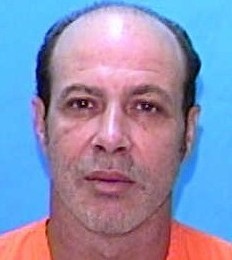 Grover Reed
Murderer · USA · 1986
Grover Reed (also referred to as "Bear") was tried in the Fourth Judicial Circu…
1 victim
Grover Reed
Murderer · USA · 1986
Grover Reed (also referred to as "Bear") was tried in the Fourth Judicial Circu…
1 victim
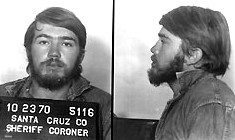 John Linley Frazier
Mass murderer · USA · 1970
John Linley Frazier was from Soquel and was later arrested in connection with t…
5 victims
John Linley Frazier
Mass murderer · USA · 1970
John Linley Frazier was from Soquel and was later arrested in connection with t…
5 victims
 Robert Farquharson
Murderer · Australia · 2005
Robert Donald William Farquharson (born 1969) was an Australian father convicte…
3 victims
Robert Farquharson
Murderer · Australia · 2005
Robert Donald William Farquharson (born 1969) was an Australian father convicte…
3 victims
 Joseph Albert Guay
Mass murderer · In the Air - Canada · 1949
Joseph Albert Guay (born 1917) was a resident of Quebec City who was responsibl…
23 victims
Joseph Albert Guay
Mass murderer · In the Air - Canada · 1949
Joseph Albert Guay (born 1917) was a resident of Quebec City who was responsibl…
23 victims
 Amy Bishop
Murderer · USA · 1986
Amy Bishop — biology professor and perpetrator · James Anderson — Bishop’s husb…
4 victims
Amy Bishop
Murderer · USA · 1986
Amy Bishop — biology professor and perpetrator · James Anderson — Bishop’s husb…
4 victims
 Roderick Abeyta
Murderer · USA · 1989
Roderick Abeyta was executed in Nevada on October 5, 1998 for the murder of his…
1 victim
Roderick Abeyta
Murderer · USA · 1989
Roderick Abeyta was executed in Nevada on October 5, 1998 for the murder of his…
1 victim
- Gender
- female
- Country
- USA
- Location
- Shaker Heights, Ohio, USA
- Date of birth
- 1925
- Age at first offence
- 40
- Characteristics
- child killer, mentally ill
- Victim profile
- John Cremer Young Jr., 8 (neighbor's son)
- Method of murder
- Shooting ( .32 caliber pistol)
- Date(s) of murder
- August 24, 1965
- Years active
- 1965
- Date of arrest
- September 2, 1965
- Status
-
Released
Found not guilty by reason of insanity on March 25, 1966; committed to the Lima State Hospital for the Criminally Insane; released in 1972
Case identification
Mariann Colby
Background
Mariann Colby was a Shaker Heights homemaker who had fallen in love with another man. In 1952, Colby, who was 27, formed a compulsive and unrequited attachment to an unmarried man named John Young. She called him many times on the telephone and was known to stalk him when he was on a date. She persuaded herself delusionally that the man returned her affection and she could not be shaken in this conviction even after he bluntly rejected her advances at a dinner party.
Colby’s husband, Robert Colby, was asked to intervene by John Young and asked Colby to end the pursuit. Colby promised to comply with that request, and all seemed to be well.
Soon afterward, the Colbys moved to a house down the street from the now-married John Young. The sons of the two couples became playmates. Over time, the Youngs did not want their son to spend so much time with little Dane Colby, and tension grew as Colby wanted to remain friends. Colby resented the Youngs’ son time arrangements and also resented not being included in a prior event.
In April 1963, Colby bought a sixty-year-old .32 caliber pistol and a box of fifty cartridges from a gun dealer in Medina, Ohio, providing a false name, "Mrs. Nancy Russell." In 1958, John and Nancy Young moved into a house on Warrington Road two doors away from the Colbys.
The offence
On Tuesday, August 24, 1965, at 8:30 a.m., Colby attempted to reach Nancy Young by telephone. Nancy Young was laid up in bed with a foot injury so John Young took the call. Colby told him that a child's jacket had been left at her house and that she thought it was Cremer's; her description matched Cremer’s favorite jacket, which Cremer had picked out of a Sears Roebuck catalogue. John Young sent Cremer over to the Colbys shortly afterward.
When Cremer did not return immediately, John Young and Nancy Young assumed their son had stayed to play with his friend Dane Colby. After several hours passed without Cremer reappearing, the Youngs became concerned and called Colby. Colby told them that Cremer had left her house some time before.
Colby shot the boy in the head and hid the gun in three pounds of ground beef in her freezer. She concealed the gun in three pounds of ground beef that she stored in the bottom of a basement deep freeze. After the murder, she wrapped the boy’s body in a coat (later burnt) and placed a plastic cover in the station wagon, and she drove to the wooded area in Gates Mills where she carried the body for two hundred yards before depositing it in a secluded spot.
A camp label on Cremer’s sneakers identified the victim as "Cremer the Lion" when a college student walking his dogs in the suburb of Gates Mills, ten miles farther east, came upon the body of a boy lying in the woods.
Investigation
In early September, when suspicion focused on Colby, she gave the police and others conflicting versions of what had happened to Cremer Young. At first she claimed that her son Dane had accidentally shot Cremer when the two boys were at play.
Tests of the obsolete weapon proved that Dane would not have had the strength to pull the trigger, which required about sixteen pounds of pressure. When confronted with this evidence, Colby admitted that it was she who had fired the gun but maintained that the killing was accidental. She said that when Cremer was playing alone on her basement landing she gathered some clothing and at the same time picked up the gun (which she had unaccountably placed under the laundry) causing the pistol to fire. She was unable to explain away the powder burns indicating that the gun was fired two inches from the back of Cremer’s head.
At trial, the prosecutor sought to show premeditation and an attempt to conceal guilt and lead the police investigation along false trails. The prosecutor showed that Colby had first loaded the revolver and then called the Young home about the jacket Cremer had left. A neighbor testified to seeing the Colbys’ blue station wagon backing out of their driveway around 8:30 a.m., and Colby had shot the boy at close range.
The court noted that Colby selected a hiding place for the murder weapon.
Trial
The case went to trial before three judges empanelled after a jury was waived by Colby.
Prosecutor George J. Moscarino was unable to cite a rational motive for the killing but sought to overcome the preferred defense of insanity by forging a chain of evidence establishing that a clever criminal mind was at work. Moscarino sought to persuade the judges that the shooting was premeditated and that Colby had cunningly attempted to conceal her guilt and lead the police investigation along false trails.
Colby’s attorney, Gerald S. Gold, relied on testimony from a clinical psychologist and two psychiatrists to confirm Colby’s legal insanity under Ohio’s version of the M'Naghten Rules. Gold had served as Cleveland’s public defender until entering the case.
Dr. Lily Brunschwig, a clinical psychologist at Cleveland’s University Hospitals, diagnosed Colby as a paranoid schizophrenic. Brunschwig described Colby’s sadistic interpretation of a Rorschach ink blot normally viewed as representing circus clowns or dogs:
"I see two Scottie dogs; the foot and leg of one and the other are injured and bleeding. . . . Their noses are tied together with a rag, like some person did this deliberately to hurt them."
Dr. Arthur L. Rosenbaum, a psychiatrist at University Hospitals, opined that Colby could not distinguish between right and wrong at the time of the shooting. He concluded that her homicidal tendencies were of long standing and that when she purchased the gun, she did so with the intention of killing the unmarried man who had rejected her advances.
The state's final expert, psychiatrist Charles A. deLeon, pictured Colby as aggressive, brutal and remorseless and suffering from a severe psychosis manifesting itself in confused thinking divorced from reality. Even the state's expert witnesses provided substantial support for a finding of legal insanity. Dr. David Sprague, of the psychiatric department at Lakewood Hospital, portrayed Colby as a "borderline" person who swung between normal and psychotic behavior. He could not rule out the possibility that "disturbed thinking played a part in her [homicidal] act."
In a tense and heavily guarded courtroom that had been cleared and searched following a telephoned threat that there would be a shooting in the event of a not-guilty verdict, presiding judge Donald F. Lybarger announced the court’s decision: not guilty by reason of insanity. In the per curiam decision, the three judges attacked the right-and-wrong insanity test of the M'Naghten Rules for restricting judicial consideration to the effects of mental illness on cognitive or intellectual faculties.
During closing arguments, Colby’s counsel argued that:
"lost her battle not only in the court but against psychic disintegration."
He continued:
"No matter what the court does, Mrs. Colby will be in institutions for a long, long time."
Sentencing
On March 25, 1966, Colby, who had been tried for murder in the first degree, was found not guilty by reason of insanity and committed to the Lima State Hospital pursuant to R.C. section 2945.39.
Appeals
Habeas corpus and release
In July 1971, Colby filed an original action in habeas corpus in the Common Pleas Court of Allen County. Following hearing, by journal entry filed November 4, 1971, the Common Pleas Court found that she was sane and unlawfully restrained of her liberty and ordered her released forthwith from the Lima State Hospital, which was then done.
On November 9, 1971, the respondent Superintendent of the Lima State Hospital filed his notice of appeal to this court. On November 15, 1971, the superintendent filed his motion in the trial court to stay execution of the order of release pending the appeal. The record did not reveal that a ruling was ever made on that motion.
On November 15, 1971, the respondent also filed a motion in this court to stay execution of the Common Pleas Court order of release. On November 16, 1971, this court overruled that motion, finding that the respondent failed to comply with Appellate Rule 7 and that because the order of the Common Pleas Court had been fully executed by the release of Mariann Colby it was beyond the power of this court to stay execution thereof.
Mootness and dismissal
The court suggested possible mootness of the appeal and the parties briefed the issue. The court explained that, in the eyes of the law, Colby was not a convicted criminal but was found not guilty by reason of insanity, and that her status in the Lima State Hospital was that of a patient committed for treatment until restored to sanity, essentially the same as that of any patient committed to a civil mental institution. The court also emphasized that habeas corpus is a civil action testing the legality of restraint, and that the writ loses efficacy if finality may be indefinitely postponed.
The court reasoned that because Colby had long since departed the geographical jurisdiction of both the Common Pleas Court and this court, and because a judgment reversing the release could not be enforced to restore her to the respondent’s custody, the issues had become moot by reason of actual release. The court therefore concluded that where a patient committed to the Lima State Hospital under R.C. section 2945.39 is found sane and ordered released in habeas corpus and is released without a stay of execution timely applied for and ordered, and an appeal is taken by the Superintendent, the issues that would otherwise be presented have become moot and the appeal should be dismissed.
The appeal was dismissed. YOUNGER, P. J., and COLE, J., concur.
Outcome
Colby was found not guilty by reason of insanity on March 25, 1966. She was committed to the Lima State Hospital for the Criminally Insane. After confinement for about four years, she was released. Since then she had vanished into obscurity for which everyone was grateful.
In the later habeas corpus proceedings, the Common Pleas Court found she was sane and unlawfully restrained of her liberty and ordered her released forthwith, and the Lima State Hospital superintendent’s appeal was dismissed.
Other details
Colby had been known to stalk John Young when he was on a date and to call him many times by telephone. Colby was convinced that John Young "hated" her, and she had sensed she had been rejected once again by a man down the street.
On a number of occasions, Colby slapped the Young children, adding to tensions between the two families.
Nancy Young described Dane Colby in these terms:
"[Dane] was always the aggressor, the boss. He talked a little more in a childish manner than the other boys. His walk was pigeon-toed, with quick steps in an effeminate manner."
Colby’s counsel predicted that:


Spotted an error, or have more information about this case?