Rachel Capra Craig
Homicide Kelly Ellard
Homicide · Canada · 1997
Kelly Ellard was a juvenile in the relevant period. She was born August 9, 1982…
1 victim
Kelly Ellard
Homicide · Canada · 1997
Kelly Ellard was a juvenile in the relevant period. She was born August 9, 1982…
1 victim
 Mary Beth Harshbarger
Homicide · Canada · 2006
Mary Beth Harshbarger (born February 19, 1965) was an American woman who rose t…
1 victim
Mary Beth Harshbarger
Homicide · Canada · 2006
Mary Beth Harshbarger (born February 19, 1965) was an American woman who rose t…
1 victim
 Melissa Todorovic
Homicide · Canada · 2008
Melissa Todorovic was convicted of first-degree murder for orchestrating the st…
1 victim
Melissa Todorovic
Homicide · Canada · 2008
Melissa Todorovic was convicted of first-degree murder for orchestrating the st…
1 victim
 Grace Marks
Homicide · Canada · 1843
Grace Marks (c. 1828 – after c. 1873) was a Canadian maid who was convicted in…
2 victims
Grace Marks
Homicide · Canada · 1843
Grace Marks (c. 1828 – after c. 1873) was a Canadian maid who was convicted in…
2 victims
 Gregory Despres
Homicide · Canada · 2005
July 1982 — Gregory Allan Despres was born in Minto, New Brunswick, Canada. · A…
2 victims
Gregory Despres
Homicide · Canada · 2005
July 1982 — Gregory Allan Despres was born in Minto, New Brunswick, Canada. · A…
2 victims
 Anton Probst
Mass murderer · USA · 1866
Anton Probst was born in Germany in 1843 and came to the United States in 1863,…
8 victims
Anton Probst
Mass murderer · USA · 1866
Anton Probst was born in Germany in 1843 and came to the United States in 1863,…
8 victims
 Charles Victor Thompson
Murderer · USA · 1998
Charles Victor Thompson was an American criminal. Thompson was born 13 June 197…
2 victims
Charles Victor Thompson
Murderer · USA · 1998
Charles Victor Thompson was an American criminal. Thompson was born 13 June 197…
2 victims
 Michael Shane Roberts
Murderer · USA · 1994
Michael Shane Roberts was sentenced to death for the murder of his neighbor and…
1 victim
Michael Shane Roberts
Murderer · USA · 1994
Michael Shane Roberts was sentenced to death for the murder of his neighbor and…
1 victim
 Robert Streetman
Murderer · USA · 1982
Robert Streetman was executed by lethal injection in Texas on January 7, 1988.…
1 victim
Robert Streetman
Murderer · USA · 1982
Robert Streetman was executed by lethal injection in Texas on January 7, 1988.…
1 victim
 George Bernard Harris
Murderer · USA · 1989
George Bernard Harris was the defendant in the case. Harris hit a lucky streak…
1 victim
George Bernard Harris
Murderer · USA · 1989
George Bernard Harris was the defendant in the case. Harris hit a lucky streak…
1 victim
 Claude Bloodgood
Murderer · USA · 1969
Claude Frizzel Bloodgood (born Klaus Frizzel Bluttgutt III; July 14, 1937 – Aug…
1 victim
Claude Bloodgood
Murderer · USA · 1969
Claude Frizzel Bloodgood (born Klaus Frizzel Bluttgutt III; July 14, 1937 – Aug…
1 victim
- Gender
- female
- Country
- Canada
- Location
- Pointe-Claire, Quebec, Canada
- Date of birth
- 1954
- Age at first offence
- 47
- Characteristics
- parricide, poisoner
- Victim profile
- Chelsea Craig, 14 ( her disabled daughter)
- Method of murder
- Poisoning ("poison cocktail" of drugs)
- Date(s) of murder
- March 19, 2001
- Years active
- 2001
- Date of arrest
- Same day (suicide attempt)
- Status
-
Died in custody
Found not criminally responsible because of a mental disorder on February 20, 2002; committed suicide after leaving Psychiatric Institution in July 2002
Background
Rachel Capra Craig was a Canadian woman accused of the murder of her fourteen-year-old daughter, Chelsea Craig. Chelsea had Rett syndrome, which rendered her unable to speak, breathe normally, feed herself or use the toilet, and left her with the mind of an infant. Chelsea’s Rett syndrome included trouble walking and she still wore diapers; she had severe food allergies, could not be in the sunlight for more than a few minutes, and often had diarrhea. At a later stage, Chelsea experienced seizures and unusual breathing patterns that interfered with body movement.
Chelsea attended school and had a special program for children who suffered from Rett Syndrome. Darlene Berringer said Chelsea was a “joy” despite her disabilities and described Chelsea as “a delightful child, who wanted to learn and develop and grow and was open to all kinds of new things.” Berringer also said: “Our eyes light up when we think of her.” Berringer added that Giant Steps staff were amazed by how quickly Chelsea progressed, and that Chelsea was “more atypical -- she was intellectually handicapped and had a seizure disorder.” Berringer said: “It’s hard to have a child with a problem, but there are such pleasures in the child too.” She added: “She wanted to be nurtured and she gave back. For us, she was a joy to have.”
On the day of the events leading to the charge, Rachel was a stay-at-home mother who had enlisted a community health nurse to help care for Chelsea. Neighbour Ron McCune called it a “sad, sad case.” Neighbour Chad Barnes, 21, said that Chelsea had seizures and that the ambulance had been there “two or three times last summer.”
The offence
Rachel Capra Craig was accused of killing Chelsea Craig by giving her a lethal dose of prescription drugs described as a “poison cocktail” and then giving herself an overdose. Police alleged that Rachel brewed a “poison cocktail” of drugs in Chelsea’s bedroom, administered the lethal mixture to Chelsea, and then drank the cocktail herself. After poisoning herself, she staggered down the stairs and collapsed at the bottom. Chelsea died in the family’s home.
A suicide note in Chelsea’s bedroom was signed by Rachel Capra Craig and indicated she wanted to donate her savings and insurance money to charities. Psychiatrists concluded she wanted to kill herself, but decided to kill her daughter as well when she realized Chelsea would be left in her father’s care.
Rachel Capra Craig told psychiatrists she killed Chelsea to protect her from being sexually abused by her father, and she believed Chelsea’s father was sexually abusing the girl. Experts determined that the accusations of sexual abuse were false. An autopsy found no evidence of sexual abuse.
Investigation
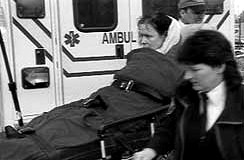
Police found Chelsea dead in the family’s home in Pointe Claire, Quebec, and began treating Rachel after the overdose. Paramedics rushed to the home after Rachel called 911 following her attempt to commit suicide again during an outing. Paramedics discovered the dead girl and began treating her mother.
Police detectives questioned Rachel’s husband, Jim Craig, who had arrived home from work and found Rachel barely conscious and unable to explain what had happened. Jim Craig ran to a neighbour’s house and called 911. After interviewing Jim Craig, 57, detectives concluded that his wife had been suffering from bouts of deep depression.
Homicide detectives said they had yet to determine a final motive behind the killing and stated only that Chelsea’s mother had been under intense pressure. Police also said Chelsea’s mother was not yet fit to be questioned at one point. Forensic investigators searched the home for evidence, and detectives combed Chelsea’s upstairs bedroom.
Arrest
Rachel Capra Craig was charged with first-degree murder in the death of Chelsea Craig. She was in hospital under police guard while recovering from the overdose. She was described as handcuffed in the prisoner's dock during court.
Trial
Rachel Capra Craig, 47, was in Quebec Superior Court on Wednesday charged with first-degree murder in the death of Chelsea, and no plea was entered in an earlier hearing. A judge ordered psychiatric tests to determine whether she was fit to stand trial, and she remained in jail awaiting psychiatric tests.
At a later hearing, psychiatrists testified about Rachel’s mental state at the time of the killing, and psychiatrists concluded she was suffering from a paranoid delusional disorder.
Justice Fraser Martin ruled she “is not criminally responsible for the death of her daughter by reason of mental disorder.” Dr. Renee Fugure testified that Capra Craig wanted to protect her child from the girl’s father, whom she believed was sexually abusing her. Dr. Renee Fugure told the court: “Even the most psychologically healthy among us would have difficulty with this.”
During sentencing-related discussion, Dr. Renee Fugure stated: “This is not a Latimer case. This is not a mercy killing,” and further: “This is not a Latimer case. This is not a mercy killing.”
The defence contended that Rachel could not be held criminally responsible. Her lawyer Marc David said his client gave her daughter the drugs.
Sentencing
Rachel Capra Craig was found not criminally responsible because of a mental disorder on February 20, 2002. After hearing testimony from psychiatrists about Rachel’s mental state at the time of the killing, the judge ruled accordingly.
Appeals
No appeal information was provided.
Outcome
Rachel Capra Craig was found not criminally responsible for the death of her daughter by reason of mental disorder. She committed suicide after leaving Psychiatric Institution in July 2002.
During a prior weekend outing from the psychiatric facility, Rachel called 911 after she tried committing suicide again. Even though hospital officials knew of her attempt, she was allowed a second unsupervised outing on the weekend of June 22. Her body was found at the address she had given to hospital staff.
James Craig said: “I don't know what might have gone wrong.” He also said: “I knew how desperately unhappy she was being confined to an institution. I hoped that being given her liberty would make her happier and therefore she'd be less in danger.” He added: “I just wish they'd be given more opportunity for a reasonable life while they're in these locked wards or institutions and that they be given more aggressive care when they seem to need it.”
Aftermath
Chelsea’s death and the criminal charge against Rachel devastated the family and the neighbourhood described as quiet and ordinary in Montreal’s West Island. Friends and family planned a funeral for Chelsea at Eglise de la resurrection in Pointe-Claire, Que. Grieving students and teachers placed Chelsea’s photograph in the lobby at her high school.
Rachel Capra Craig had repeatedly attempted suicide, and it was the third time she was known to have tried committing suicide. Montreal mother on death watch Rachel Capra Craig ordered to undergo psychiatric exam was referenced in March 2001 court proceedings.
Timeline
- March 19, 2001 — Rachel gave her daughter, Chelsea, a deadly mixture of drugs and then drank some of the mixture herself.
- March 21, 2001 — Chelsea’s last walk around the neighbourhood ended with police alleging a “poison cocktail” was brewed, Chelsea was administered the mixture, and Rachel drank it herself; Rachel was charged with first-degree murder and was recovering from the overdose in hospital under police guard.
- March 22, 2001 — Rachel Capra Craig appeared in court with no plea entered while awaiting psychiatric tests to see if she was fit to stand trial.
- February 20, 2002 — Justice Fraser Martin ruled Rachel Capra Craig was not criminally responsible for the death of her daughter by reason of mental disorder.
- June 22 — Rachel was allowed a second unsupervised outing from the psychiatric facility.
- July 2002 — Rachel committed suicide after leaving Psychiatric Institution.
Other details
Rachel Capra Craig’s husband was James Craig, who was described as a Radio-Canada International announcer. Rachel’s age was reported as 46 during March 2001 proceedings and as 47 at the February 20, 2002 hearing. Jim Craig was described as 57 in one account and Robin Craig’s comments described his brother doing the best he could right now.
Robin Craig said: “He's doing the best he can right now.” Neighbour Ron McCune called it a “sad, sad case.” Neighbour Chad Barnes said: “She used to have seizures and the ambulance had been there two or three times last summer,” and also said: “She used to have seizures and the ambulance had been there two or three times last summer.”
Chelsea Craig had a pet bulldog named Penny. At one point, a community health nurse assisted with care for Chelsea.
Justice Fraser Martin was identified by name in connection with the ruling on February 20, 2002. Dr. Renee Fugure and Dr. Renee Fugere were both named in connection with testimony and remarks.


Spotted an error, or have more information about this case?