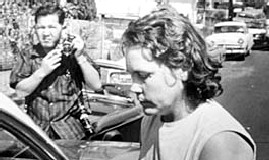
Maggie Young
Homicide Cheryl Crane
Homicide · USA · 1958
Cheryl Christina Crane (born July 25, 1943) was the only child of actress Lana…
1 victim
Cheryl Crane
Homicide · USA · 1958
Cheryl Christina Crane (born July 25, 1943) was the only child of actress Lana…
1 victim
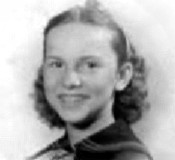 Constance Fisher
Homicide · USA · 1954
Constance Fisher · 3 August 1954 — Constance Fisher drowned her three children…
6 victims
Constance Fisher
Homicide · USA · 1954
Constance Fisher · 3 August 1954 — Constance Fisher drowned her three children…
6 victims
 Andrea Yates
Homicide · USA · 2001
Andrea Pia Yates (born Andrea Pia Kennedy on July 2, 1964) was a former Houston…
5 victims
Andrea Yates
Homicide · USA · 2001
Andrea Pia Yates (born Andrea Pia Kennedy on July 2, 1964) was a former Houston…
5 victims
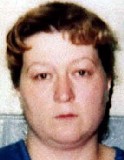 Gina Spann
Murderer · USA · 1997
Gina Spann pleaded guilty and was sentenced to life in prison without parole on…
1 victim
Gina Spann
Murderer · USA · 1997
Gina Spann pleaded guilty and was sentenced to life in prison without parole on…
1 victim
 Bennie Lawson
Murderer · USA · 1994
Bennie Lawson was a “street thug” who was described as having been concerned ab…
3 victims
Bennie Lawson
Murderer · USA · 1994
Bennie Lawson was a “street thug” who was described as having been concerned ab…
3 victims
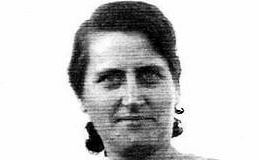 Lila Gladys Young
Murderer · Canada · 1928
Lila Gladys Young was also named Lila Gladys Lila Coolen. Lila Gladys Young was…
100 victims
Lila Gladys Young
Murderer · Canada · 1928
Lila Gladys Young was also named Lila Gladys Lila Coolen. Lila Gladys Young was…
100 victims
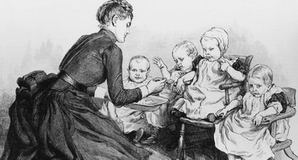 Jessie King
Murderer · United Kingdom · 1887
Jessie King was executed in Edinburgh on March 11, 1889, and she was described…
2 victims
Jessie King
Murderer · United Kingdom · 1887
Jessie King was executed in Edinburgh on March 11, 1889, and she was described…
2 victims
 Calvin Eugene King
Murderer · USA · 1994
Calvin Eugene King · Feb. 25, 1994 — Calvin King and Leonard Johnson, Danyell W…
1 victim
Calvin Eugene King
Murderer · USA · 1994
Calvin Eugene King · Feb. 25, 1994 — Calvin King and Leonard Johnson, Danyell W…
1 victim
 William Clifford Bryson
Murderer · USA · 1988
William Clifford Bryson was convicted in Oklahoma of first-degree murder for th…
1 victim
William Clifford Bryson
Murderer · USA · 1988
William Clifford Bryson was convicted in Oklahoma of first-degree murder for th…
1 victim
- Gender
- female
- Country
- USA
- Location
- Aiea, Hawaii, USA
- Date of birth
- 1927
- Age at first offence
- 38
- Characteristics
- parricide, mentally ill
- Victim profile
- Her four daughters, Jessica, 8 months; Jeanette, 2; Judith, 3; and Janice, 5, and her son James Frank, Jr., 8
- Method of murder
- Drowning in the bathtub
- Date(s) of murder
- November 22, 1965
- Years active
- 1965
- Date of arrest
- Same day
- Status
-
Died in custody
Found unfit to stand trial in 1966; committed to a State Hospital in Kaneohe; escaped to a chicken shed on the hospital grounds on July 25, 1966, and hanged herself
Background
Maggie Young was a despondent, mentally ill mother who had been treated for a mental breakdown earlier in 1965. She was described as 38 years old at the time of the killings. Her husband, James Young, was an Air Force captain, and he had been away on a flying mission at the time.
The offence
On Nov. 22, 1965, Maggie Young drowned her four daughters, one by one, in the bathtub of her Hawaii home. The victims were:
- Jessica, 8 months
- Jeanette, 2
- Judith, 3
- Janice, 5
After the drowning of the daughters, Young pulled her 8-year-old son from school at about 9:30 a.m. and drowned him as well. The victim was:
- James Frank, Jr., 8
Young immediately confessed, and her confession included admitting to killing all five children.
After the killings, police found the children's bodies still nude and wet, arranged on twin beds in the same room: the daughters on one bed and the son alone on another.
Young told police she was despondent over a perceived inability to care for her children.
Investigation
When police arrived at the home, they found the children's bodies—still nude and wet—arranged on twin beds in the same room, with the daughters on one bed and the son alone on another.
Arrest
Young was charged only with the drowning of her son, even though she had admitted to killing all five.
Trial
Psychiatrists appointed to determine Young’s sanity found that she had been acting under "a diseased and deranged condition" and was not fit to stand trial. Young was found unfit to stand trial in 1966.
Sentencing
No prison sentence was imposed because Young was found unfit to stand trial and was committed for treatment.
Appeals
No appeal information was included.
Outcome
Young was committed to a State Hospital in Kaneohe.
On July 25, 1966, roughly six months after she was committed, Young escaped while on a pass to walk the grounds alone. She was later found after she had hanged herself from the rafters of a chicken slaughtering shed in the hospital’s farm area.
Then-hospital administrator Audrey Mertz said at the time that Young had just started responding to her treatment and was beginning to grasp the enormity of what she had done.
Aftermath
James Young, Maggie Young’s husband, urged compassion and said he felt compelled to help Andrea Yates, who was charged in Houston after telling police she drowned her five children.
James Young wrote in an e-mail:
"Since I am the father of those Aiea children, I feel compelled to do what I can to help this woman who is a victim of postpartum depression and the terrible feeling of inadequacy she must have felt -- the same feelings my late wife must have felt. Behavior signs we all recognized in hindsight," wrote Young, now 72.
He also wrote:
"Medical science needs to recognize this condition earlier and help the mother before it develops into paranoid schizophrenia, as it did in the case of Maggie," he wrote.
James Young wrote about whether Andrea Yates needed prison:
"This ill woman does not need to be sentenced to prison; certainly not charged with first-degree murder," he wrote. "My wife was charged with first-degree murder. But Hawaii justice recognized her illness and gave her the medical help she needed. Unfortunately she did not survive the cure."
After Maggie Young’s suicide, James Young moved to the mainland. He later remarried but had no more children.
James Young also described Maggie Young’s symptoms and course of mental illness in the context of postpartum depression. He wrote:
"When Maggie was in the hospital, I prayed a lot. Mostly I prayed that she would come home to us. When she did come home, and in a few weeks drowned the children, I blamed the Almighty. Then I realized that my prayers were answered. I should have prayed for her recovery," he wrote. "Then I blamed myself."
He wrote about her gradual change:
"Young recalled that his wife displayed symptoms of depression that gradually developed into a psychotic state. She was unhappy and felt inadequate. She was constantly tired, sleeping during the day and going to bed in her clothing. "Her behavior slowly changed until nothing I nor the children did was right," he wrote."
He wrote about the period before the killings:
"Eventually, Maggie Young began having delusions and hallucinations. She disappeared for three hours one night, then came home saying she had been to church where God told her that her husband was Jesus and his grandmother had been the Blessed Mother."
He wrote about an incident when she used a broom:
"A few days later, she took a broom to Young when he tried to open the door and leave for work. "She said, 'They are out there. They have come to kill me.'"
James Young described efforts to obtain commitment and subsequent deterioration:
"Young took the day off from work and tried to have his wife committed to the hospital, only to learn she would have to enter voluntarily. Persuading her to do so required the help of their priest and doctor, but she agreed. "She was in the hospital at least a month to six weeks when the psychiatrist told me there was nothing more he could do for her. Any improvement would have to come in the home." Soon after, their children were dead."
James Young reported what his wife believed during her treatment and after the killings:
"In her mind she had removed the children from a cruel world and had sent them to a far better place to be with God. "I think that the proof that she truly believed this is demonstrated in the fact that as her treatment slowly returned her to reality, she began to realize that what she had done was terribly wrong and eventually she could no longer live with the terrible truth."
He also described his ongoing grief:
"The grief-stricken Young never stopped mourning the loss of his family, but eventually managed to rebuild his life."
"There is no such thing as closure, he said. "I still cry and had my share of tears following his tragedy," Young wrote. "After all these years the tears come less frequently but I have days and nights. After I remarried my wife was understanding and comforting."
"Holidays are still difficult, Young said, especially Thanksgiving. On that day in 1965, he arrived in San Antonio with the bodies of his children, who were buried the following Sunday at Fort Sam Houston National Cemetery. "Christmas is also very difficult. Memories come flowing back. Christmas is for the children. Without them, Christmas is not the same," wrote Young, now 72."
James Young discussed anger about child humiliation and wrote:
"I told him that for years, I would experience anger every time I saw someone humiliating a child in public, especially in restaurants. I wanted to tell the abusing parent that they should enjoy their children," Young wrote. "Their time together may be shorter than they think."
He wrote about his prayers and blame in relation to the tragedy:
Other details
Police arrived at the home after the son left for school at about 8 a.m., and the drowning of the son occurred after it was about 9:30 a.m.
The killings were described as one of the worst multiple slayings in state history and the largest by a member of the same family.
A father whose children were drowned by their mother in Aiea 35 years earlier hoped the case could provide insight into Andrea Yates’s situation.
A court order prohibited Russell Yates from commenting publicly on anything related to Andrea Yates’s case, including any similarities between his experience and Maggie Young’s.
Andrea Yates was quoted in a later discussion involving James Young, and she had been charged with capital murder after telling police she drowned her five children.
Andrea Yates was described as in jail under 24-hour suicide watch, with her next scheduled court appearance noted as July 24.
The narrative included that James Young and Russell Yates spoke by telephone, and James Young discussed postpartum depression and treatment needs.
Russell Yates was described as a NASA computer engineer, and his account included that his wife had been taking the anti-psychotic drug Haldol to treat postpartum depression after the birth of her last two children.
Andrew Kennedy was described as saying Andrea Yates had been hospitalized at least four times after a suicide attempt several months earlier, and that she also had attempted suicide after the birth of her fourth child.
Young maintained that Andrea Yates needed medical treatment rather than prison, writing:
"I don't mean to say that all parents who kill their kids are innocent by reason of insanity. But those suffering from SERIOUS (postpartum depression) do not need to be in jail. They need to be given treatment," he wrote. "Hopefully, the treatment will come before the tragedy."
Young wrote:
"A tragedy resulting from this illness must not occur again," Young wrote. "There must be better awareness of the seriousness of this illness."
Young told Russell Yates to keep faith, not to be ashamed to cry, and to be prepared to cope with pain for the rest of his life:
"Young said he told Yates to keep his faith, not to be ashamed to cry and to be prepared to cope with the pain for the rest of his life."
Young wrote:
"I still cry and had my share of tears following his tragedy," Young wrote. "After all these years the tears come less frequently but I have days and nights."

Spotted an error, or have more information about this case?