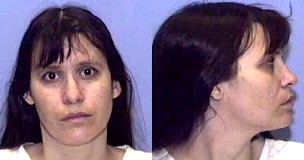
Andrea Yates
Homicide Coleen Thompson
Homicide · USA · 2002
Coleen Thompson was a former intensive care nurse at Shady Grove Adventist Hosp…
5 victims
Coleen Thompson
Homicide · USA · 2002
Coleen Thompson was a former intensive care nurse at Shady Grove Adventist Hosp…
5 victims
 Christine Paolilla
Homicide · USA · 2003
Christine Marie Paolilla was an American woman born on Long Island, New York on…
4 victims
Christine Paolilla
Homicide · USA · 2003
Christine Marie Paolilla was an American woman born on Long Island, New York on…
4 victims
 Melissa Marvin
Homicide · USA · 1999
Melissa Lynn Marvin was a 29-year-old waitress and amateur surfer at the time o…
4 victims
Melissa Marvin
Homicide · USA · 1999
Melissa Lynn Marvin was a 29-year-old waitress and amateur surfer at the time o…
4 victims
 Erin Caffey
Homicide · USA · 2008
Erin Caffey (juvenile daughter of Terry Caffey and Penny Caffey; charged in con…
3 victims
Erin Caffey
Homicide · USA · 2008
Erin Caffey (juvenile daughter of Terry Caffey and Penny Caffey; charged in con…
3 victims
 Lashaun Harris
Homicide · USA · 2005
Oct. 19, 2005 — A jury trial later concerned the drownings of three young sons…
3 victims
Lashaun Harris
Homicide · USA · 2005
Oct. 19, 2005 — A jury trial later concerned the drownings of three young sons…
3 victims
 Leatrice Brewer
Homicide · USA · 2008
Leatrice Brewer killed her three children, Jewell Ward, Michael Demesyeux, and…
3 victims
Leatrice Brewer
Homicide · USA · 2008
Leatrice Brewer killed her three children, Jewell Ward, Michael Demesyeux, and…
3 victims
 Frances Kidder
Murderer · United Kingdom · 1867
Frances Kidder (c. 1843 – 2 April 1868) was executed by hanging in front of Mai…
1 victim
Frances Kidder
Murderer · United Kingdom · 1867
Frances Kidder (c. 1843 – 2 April 1868) was executed by hanging in front of Mai…
1 victim
 Christopher Solomon
Homicide · USA · 1997
Christopher Julian Solomon (TDCJ Number 999311) was born on 01/30/1980. He was…
1 victim
Christopher Solomon
Homicide · USA · 1997
Christopher Julian Solomon (TDCJ Number 999311) was born on 01/30/1980. He was…
1 victim
 David Lee McNish
Murderer · USA · 1983
Defendant: David Lee McNish · Victim: Gladys E. Smith (also referred to as Mrs.…
1 victim
David Lee McNish
Murderer · USA · 1983
Defendant: David Lee McNish · Victim: Gladys E. Smith (also referred to as Mrs.…
1 victim
 Monique Robinson
Murderer · USA · 2011
Monique Robinson was a Phoenixville teenager and former Phoenixville Area High…
1 victim
Monique Robinson
Murderer · USA · 2011
Monique Robinson was a Phoenixville teenager and former Phoenixville Area High…
1 victim
 Jennifer Berman
Murderer · USA · 2014
Jennifer Berman was the mother of two teenagers, Alexander Berman and Jacquelin…
2 victims
Jennifer Berman
Murderer · USA · 2014
Jennifer Berman was the mother of two teenagers, Alexander Berman and Jacquelin…
2 victims
- Gender
- female
- Country
- USA
- Location
- Houston, Texas, USA
- Date of birth
- July 2, 1964
- Age at first offence
- 37
- Characteristics
- parricide, infanticide, child abuse, history of mental illness
- Victim profile
- Her five children, Noah, 7, John, 5, Paul, 3, Luke 2, and Mary, 6 months
- Method of murder
- Drowning in the bathtub
- Date(s) of murder
- June 20, 2001
- Years active
- 2001
- Date of arrest
- Same day
- Status
-
Acquitted / overturned
Found not guilty by reason of insanity on July 26, 2006; committed to a high-security mental health facility; sentence reversed on January 6, 2005
Case details
Andrea Pia Yates (born Andrea Pia Kennedy on July 2, 1964) was a former Houston, Texas resident. She killed her five children on June 20, 2001 by drowning them in the bathtub in her house.
Yates had been suffering for some time with very severe postpartum depression and postpartum psychosis. Her case placed the M'Naghten Rules with the Irresistible Impulse Test, a legal test for sanity, under close public scrutiny in the United States.
Her 2002 conviction of capital murder and sentence to life in prison with the possibility of parole after 40 years was overturned on appeal.
Timeline
- April 17, 1993 — Andrea Pia Yates and Russell “Rusty” Yates married.
- February 1994 — Noah Yates was born.
- December 1995 — John Yates was born.
- September 1997 — Paul Yates was born.
- February 1999 — A fourth child, Luke, was born.
- June 18, 1999 — Yates suffered severe depression and tried to commit suicide by taking an overdose of an antidepressant prescribed for her father.
- June 20, 2001 (9:48 a.m.) — Yates called 9-1-1 and told the operator, Sylvia Morris, that she needed the police; she called the Houston Police Department for a police officer; she told Russell Yates at his work that he needed to come home and that “the kids were hurt” and responded “All of them” when asked which ones.
- June 20, 2001 — Police discovered four dead children soaking wet and covered with a sheet lying on Yates’s bed, and Noah still in the bathtub floating face down.
- March 2002 — A jury rejected the insanity defense and found her guilty; she was sentenced to life imprisonment with eligibility for parole in 40 years.
- January 6, 2005 — The Texas Court of Appeals reversed the convictions because Dr. Park Dietz admitted he had given materially false testimony.
- January 9, 2006 — Yates entered pleas of not guilty by reason of insanity again.
- February 1, 2006 — She was granted release on bail on the condition that she be admitted to a mental health treatment facility.
- July 26, 2006 — After three days of deliberations, a Texas jury found Yates not guilty by reason of insanity as defined by the state of Texas.
- July 26, 2006 (thereafter) — Yates was committed to the North Texas State Hospital - Vernon Campus.
- January 2007 — Yates was moved to a low security state mental hospital in Kerrville, Texas.
- March 28, 2012 — An ABCNews.com report described her being approved by a certain church to attend Sunday services, and stated her attorney expected doctors at Kerrville State Hospital to file a letter within 10 days recommending a two-hour pass to attend church on Sundays as the first step toward a permanent release.
People
- Andrea Pia Yates — Defendant; mother of the five children killed by drowning; confessed to drowning her children.
- Russell “Rusty” Yates — Andrea Yates’s husband.
- Noah Yates — One of Yates’s children; a victim; still in the bathtub floating face down when police arrived.
- John Yates — One of Yates’s children; a victim.
- Paul Yates — One of Yates’s children; a victim.
- Luke Yates — One of Yates’s children; a victim.
- Mary Yates — One of Yates’s children; a victim.
- Dora Yates — Russell Yates’s mother.
- Jutta Karin Kennedy (also referenced as Jutta Karin Koehler; and as Jutta Karin Kennedy) — Andrea Yates’s mother.
- Andrew Emmett Kennedy — Andrea Yates’s father.
- Brian Kennedy — Andrea Yates’s brother.
- Sylvia Morris — 9-1-1 operator.
- Dr. Park Dietz — Forensic psychiatrist; State’s sole mental-health expert; testified about knowing right from wrong; later acknowledged his testimony was in error regarding a “Law & Order” episode.
- Suzanne O’Malley — Author who covered the trial and later investigated the story in great detail.
- Charles Montaldo — Author of “Profile of Andrea Yates” referenced in the material.
- Dr. Eileen Starbranch — Andrea Yates’s first psychiatrist; testified about urging against more children; warned about risk of future psychotic depression.
- Dr. James Thompson — Psychologist at Spring Shadows Glen; testified that Yates told him she had had visions and heard voices since the birth of her first child.
- Dr. Mohammed Saeed — Physician who treated Yates at Devereux Hospital; recommended someone stay with her at all times and that she not be left alone with her children.
- Dr. Melissa Ferguson — Psychiatrist who testified regarding a statement Yates made that “in the context that the children would perish in the fires of hell, [their drowning] was the right thing to do.”
- Dr. Michael Welner — Psychiatrist to whom Yates explained she waited for Rusty to leave before filling the bathtub.
- Dr. Lucy Puryear — Defense expert witness.
- Dr. Moira Dolan — Executive director of the Medical Accountability Network.
- Dr. Phil Resnick — Director of forensic psychiatry at UH Case Medical Center.
- Dr. Stephen Montgomery — Forensic psychiatrist at Vanderbilt University Medical Center.
- George Parnham — Yates’s attorney.
- Sam Nuchia — Justice; authored the Court of Appeals opinion.
- Chief Justice Radack — Panel member.
- Justices Taft and Nuchia — Panel members.
- Chief Justice Radack and Justices Taft and Nuchia — Panel members (as listed with Sam Nuchia writing).
- Michael Peter Woroniecki — Traveling preacher; a minister whose religious views were alleged to have influenced Yates and Russell Yates.
- Russell Yates — Referenced as “Rusty” throughout (as a distinct named person in the record).
The offence
On June 20, 2001, Russell Yates left for work, leaving Andrea Yates alone to watch the children against Dr. Mohammed Saeed’s instructions to supervise her around the clock.
The material described Yates drowning all five children in the family house by drowning them in the bathtub.
In one described sequence, she started with the youngest boys, drowned them in the bathtub, then laid them in her bed; she drowned Mary and left her floating in the tub; Noah came in and asked what was wrong with Mary, then ran, but she soon caught up and drowned him; she then left him floating in the tub and laid Mary in her brothers’ arms; she called the police afterward.
Yates called 9-1-1 and reported that she needed a police officer to come to her home.
Police findings
Within minutes of Yates’s 9-1-1 call, several police officers arrived. They discovered four dead children soaking wet and covered with a sheet lying on Yates’s bed. The fifth child, Noah, was still in the bathtub, floating face down.
Telephone call to police (verbatim)
- 911 Dispatcher: “What’s your name?”
- Andrea Yates: “Andrea Yates.”
- 911 Dispatcher: “What’s the problem?”
- Andrea Yates: “Um, I just need him to come.”
- 911 Dispatcher: “Is your husband there?”
- Andrea Yates: “No.”
- 911 Dispatcher: “Well, what’s the problem?”
- Andrea Yates: “I need him to come.”
- 911 Dispatcher: “I need to know why we’re coming, ma’am. Is he there standing next to you?”
- Andrea Yates: “No.”
- 911 Dispatcher: “She?”
- Andrea Yates: “Pardon me?”
- 911 Dispatcher: “Are you having a disturbance? Are you ill or what?”
- Andrea Yates: “Um, yes, I’m ill.”
- 911 Dispatcher: “Do you need an ambulance?”
- Andrea Yates: “No, I need a police officer. Yeah, send an ambulance.”
- Andrea Yates: “Um?”
- 911 Dispatcher: “Hello?”
- Andrea Yates: “I just need a police officer.”
Investigation and pre-trial events
Yates confessed to drowning her children.
She told Dr. Michael Welner that she waited for Rusty to leave for work that morning before filling the bathtub because she knew he would have prevented her from harming the children.
After the killings, police found the family dog locked up; Russell Yates advised Welner that it had normally been allowed to run free, leading the psychiatrist to conclude that she locked it in a cage to prevent it from interfering with her killing the children one by one.
Charges and trial court posture (as stated in the appeals opinion)
Yates was charged by two indictments with capital murder for the drowning deaths of three of her five children.
- In cause number 880205, Yates was charged with intentionally and knowingly causing the deaths of Noah Yates and John Yates; the cited statutory provision was Tex. Pen. Code Ann. § 19.03(a)(7)(A).
- In cause number 883590, Yates was charged with intentionally and knowingly causing the death of Mary Yates; the cited statutory provision was Tex. Pen. Code Ann. § 19.03(a)(8).
Rejecting her insanity defense, the jury found her guilty and, having answered the special issue regarding appellant’s continuing threat to society “No,” assessed punishment at life in prison.
Trial
Yates’s controversial trial included extensive testimony regarding her mental illness.
Ten psychiatrists and two psychologists testified regarding Yates’s mental illness. Four psychiatrists and one psychologist had treated her either in a medical facility or as a private patient before June 20, 2001. Five psychiatrists and one psychologist saw her on or soon after June 20 for assessment and/or treatment.
Competing insanity views at trial
Four of the psychiatrists and one of the psychologists testified that on June 20, 2001, Yates did not know right from wrong, was incapable of knowing what she did was wrong, or believed her acts were right.
The fifth psychiatrist in that group, Dr. Melissa Ferguson, testified that she had not made a determination regarding appellant’s ability to know whether her actions were wrong, but she testified that Yates made a statement that, in the context that the children would perish in the fires of hell, “their drowning was the right thing to do.”
The tenth psychiatrist, Dr. Park Dietz, interviewed Yates and was the State’s sole mental-health expert. He testified that although she was psychotic on June 20, he believed she knew that what she did was wrong. His reasoning included that her thoughts were coming from Satan, that if she believed she was saving the children she would have shared her plan with others rather than hide it, that if she really believed Satan was going to harm the children she would have called the police or a pastor or would have sent the children away, and that she covered the bodies out of guilt or shame.
“Law & Order” testimony and cross-examination (verbatim excerpts)
The record included discussion of Dr. Dietz’s consulting work with the television program “Law & Order,” and an episode described as relevant to postpartum depression and child drowning.
Dr. Park Dietz testimony (verbatim):
- Q: “Now, you are, are you not, a consultant on the television program known as ‘Law & Order’?”
- A: “Two of them.”
- Q: “Okay. Did either one of those deal with postpartum depression or women’s mental health?”
- A: “As a matter of fact, there was a show of a woman with postpartum depression who drowned her children in the bathtub and was found insane and it was aired shortly before the crime occurred.”
Later, Dr. Lucy Puryear testified under cross-examination (verbatim):
- Q: “You know she watched ‘Law & Order’ a lot; right?”
- A: “I didn’t know. No.”
- Q: “Did you know that in the weeks before June 20th, there was a ‘Law & Order’ episode where a woman killed her children by drowning them in a bathtub, was defended on the basis of whether she was sane or insane under the law, and the diagnosis was postpartum depression and in the program the person was found insane, not guilty by reason of insanity? Did you know that?”
- A: “No.”
- Q: “If you had known that and had known that Andrea Yates was subject to these delusions, not that she was the subject of a delusion of reference, but that she regularly watched ‘Law & Order’ and may have seen that episode, would you have changed the way you went about interviewing her, would you have interviewed whether she got the idea somehow she could do this and not suffer hell or prison?”
- A: “I certainly wouldn’t have asked her that question. No.”
- Q: “Would you have - - you didn’t have to ask her that question, but you could have explored that?”
- A: “If I had known she watched that show, I would have ask[ed] her about it, yes.”
In closing arguments, appellant’s attorney referred to Dr. Dietz’s testimony (verbatim):
- “Or maybe even we heard some evidence that she saw some show on TV and knew she could drown her children and get away with it.”
The prosecutor referenced Dietz’s testimony in closing argument (verbatim):
- “She gets very depressed and goes into Devereux. And at times she says these thoughts came to her during that month. These thoughts came to her, and she watches ‘Law & Order’ regularly, she sees this program. There is a way out. She tells that to Dr. Dietz. A way out.”
Stipulation after revelation of false testimony (verbatim)
After the guilty verdict, appellant’s counsel discovered that Dr. Dietz had given false testimony. The producer of “Law & Order” spoke to counsel by telephone and said he could not recall such an episode. An attorney representing the producer, after talking to Dr. Dietz and researching the shows, verified that there was no show with a plot as outlined by Dr. Dietz. Dr. Dietz acknowledged he had made an error in his testimony.
The parties entered into the following written stipulation:
- “Dr. Park Dietz testified on cross-examination that ‘As a matter of fact, there was a show of a woman with postpartum depression who drowned her children in the bathtub and was found insane and it was aired shortly before this crime occurred.’”
- “Dr. Park Dietz would testify that he was in error and that no episode of ‘Law & Order’ and/or ‘Law & Order: Criminal Intent’ as described above was ever produced for the ‘Law & Order’ television series.”
The trial court read an instruction to the jury in connection with the stipulation (verbatim):
“Ladies and gentlemen, during the course of this trial there have been occasions when written stipulations have been introduced for your consideration. . . . While those witnesses that give information which is contained in this stipulation do not physically appear here in court to testify, you must consider the matters which they have indicated in the written stipulation as if they actually appeared in court and give it whatever weight you wish to give to it. So the witness does not have to actually appear in court, but the matters contained in the stipulation are offered into evidence as if they had appeared.”
Verdict
The jury returned verdicts on both charges that at least 10 jurors had a reasonable doubt that appellant would commit criminal acts of violence that would constitute a continuing threat to society.
Sentencing
The jury found her guilty and assessed punishment at life in prison. The material also described that the trial court sentenced her to life imprisonment in the Texas Department of Criminal Justice with eligibility for parole in 40 years.
Appeals
January 6, 2005 reversal
On January 6, 2005, a Texas Court of Appeals reversed the convictions because California psychiatrist and prosecution witness Dr. Park Dietz admitted he had given materially false testimony during the trial.
The appellate court described that Dr. Dietz’s testimony concerned an alleged “Law & Order” episode featuring a woman who drowned her children and was acquitted of murder by reason of insanity. Author Suzanne O’Malley reported that no such episode existed, and the appellate court held that the jury may have been influenced by the false testimony, requiring a new trial.
Key appellate reasoning described in the opinion
The opinion stated that Dr. Dietz’s testimony about the “Law & Order” episode was untrue and that there was no “Law & Order” television show with such a plot. The State was bound by its stipulation.
The opinion described that the State used Dr. Dietz’s testimony twice: first to cross-examine Dr. Puryear and second to connect the facts in its final argument by juxtaposing appellant’s depression, her dark thoughts, watching “Law & Order,” and seeing “a way out.” The opinion concluded that this was material and that there was a reasonable likelihood the false testimony could have affected the judgment of the jury.
The opinion sustained appellant’s second issue and reversed the trial court’s judgment and remanded the cause for further proceedings.
Outcome
After the reversal, on January 9, 2006, Yates entered pleas of not guilty by reason of insanity again. On February 1, 2006, she was granted release on bail conditioned on admission to a mental health treatment facility.
On July 26, 2006, after three days of deliberations, a Texas jury found that Yates was not guilty by reason of insanity as defined by the state of Texas. She was thereafter committed to the North Texas State Hospital - Vernon Campus, a high-security mental health facility in Vernon, Texas.
In January 2007, Yates was moved to a low security state mental hospital in Kerrville, Texas.
Aftermath
The material described that while at the North Texas State Hospital - Vernon Campus, Yates received medical treatment and was a roommate of Dena Schlosser, another woman who committed filicide by killing her infant daughter.
A 2012 report stated that Yates might be allowed to leave the state psychiatric hospital to attend church. Yates’s attorney, George Parnham, told ABCNews.com that she had been approved by a certain church to attend Sunday services and that he anticipated a recommendation from her doctors. He stated he expected doctors at Kerrville State Hospital to file a letter to the state district court within 10 days recommending that Yates be granted a two-hour pass to attend church on Sundays.
Other details
Family and early life
Yates was the youngest of five children to Jutta Karin Koehler, a German immigrant, and Andrew Emmett Kennedy, whose parents were born in Ireland. She was raised in a Catholic household.
Yates graduated from Milby High School in Houston, Texas, in 1982. She was the class valedictorian, captain of the swim team, and an officer in the National Honor Society.
Yates completed a two-year pre-nursing program at the University of Houston and graduated from the University of Texas School of Nursing.
From 1986 until 1994, she worked as a registered nurse at the University of Texas M.D. Anderson Cancer Center.
Marriage and childbearing details mentioned
In summer 1989, she met Russell “Rusty” Yates at the Sunscape Apartments in Houston, two months her junior. They moved in together and were married on April 17, 1993. The couple announced they “would seek to have as many babies as nature allowed.”
They bought a four-bedroom house in the town of Friendswood. In February 1994, their first child, Noah, was born. Rusty accepted a job offer in Florida, and the family relocated to a small trailer in Seminole. The material stated that by the birth of their third son, Paul, they settled back to Houston and purchased a GMC motor home. Following the birth of their fourth son, Luke, Andrea became depressed.
The material also described that they had five children: four boys and one girl. It listed children’s birth dates as: Feb. 26, 1994 — Noah Yates; Dec. 12, 1995 — John Yates; Sept. 13, 1997 — Paul Yates; Feb. 15, 1999 — Luke Yates; and Nov. 30, 2000 — Mary Yates.
The material further described that Rusty accepted work in Florida in 1996 and the family moved into a 38-foot travel trailer in Seminole, FL, and that while in Florida Andrea got pregnant but miscarried. In 1997 they returned to Houston. It described that Rusty decided to purchase a 350-square-foot, renovated bus which became their permanent home, and that living conditions were cramped.
Mental health history and treatment details mentioned
The material described postpartum psychosis and very severe postpartum depression.
On June 16, 1999, Rusty found Andrea shaking and chewing her fingers. The next day she attempted to commit suicide by overdosing on pills and was admitted to the hospital and prescribed antidepressants.
Soon after her release, she begged her husband to let her die as she held a knife up to her neck. She was hospitalized again and given medications including Haldol, an anti-psychotic drug. Her condition improved, and she was prescribed it upon release.
In July 1999, she experienced a nervous breakdown that culminated in two suicide attempts and two psychiatric hospitalizations that summer, and she was diagnosed with postpartum psychosis.
A psychiatrist, Dr. Eileen Starbranch, testified that she urged the couple not to have more children, as it would “guarantee future psychotic depression.”
The material also stated that Andrea stopped taking Haldol in March 2000, and gave birth to daughter Mary on November 30, 2000.
It stated that after the death of her father on March 12, 2001, she stopped taking medication, mutilated herself, read the Bible feverishly, and stopped feeding her youngest child, Mary. It described that Yates required immediate hospitalization.
It stated that on April 1, 2001 she came under the care of Dr. Mohammed Saeed, was treated and released, and continued under his care until June 20, 2001.
It described that on May 3, 2001 she drew a bath in the middle of the day, and that she later confessed to police she had planned to drown the children that day but had decided against doing it then; she was hospitalized the next day after a scheduled doctor visit. It stated that her psychiatrist determined she was probably suicidal and had filled the tub to drown herself.
Statements attributed in the material
The material quoted Yates as telling her jail psychiatrist:
“It was the seventh deadly sin. My children weren’t righteous. They stumbled because I was evil. The way I was raising them, they could never be saved. They were doomed to perish in the fires of hell.”
Medication and warning-label details mentioned
The material described that “homicidal ideation” was added to the warning label of the antidepressant drug Effexor as a rare adverse event in 2005. It stated that Yates was taking 450 mg, twice the recommended maximum dose, for a month before killing her children.
It stated that a defense expert witness, Dr. Lucy Puryear, countered the contention regarding antidepressants, stating that the dosages prescribed by Dr. Saeed were not uncommon and had nothing at all to do with Yates’s reemergent psychosis, and that her psychosis returned as a result of the Haldol being discontinued by her doctor two weeks earlier.
Alleged religious influences and disputes mentioned
The material referenced that media outlets alleged Michael Peter Woroniecki, a traveling preacher, bore some responsibility for the deaths due to his “fire and brimstone” message and teachings found in his newsletter “The Perilous Times” that they received on occasion and which was entered into evidence at trial.
The material stated that both Rusty and Michael Woroniecki rejected those accusations. It described Rusty as saying his family’s relationship with the Woronieckis was not that close and that Woroniecki did not cause her delusions. It described Woroniecki as maintaining that his correspondence with them aimed to help them strengthen their marriage and find the love he said his own family found in Jesus.
It also stated that both men agreed the alleged connection was “nothing more than media created fiction”.
The material also described that adherence to principles of the Quiverfull lifestyle was posited as a factor contributing to mental and emotional stress.
Late references to popular culture and adaptation details mentioned
The material stated that the ABC-TV show Desperate Housewives was partly inspired by the Yates drownings, according to creator Marc Cherry.
It stated that the Law & Order: Criminal Intent episode “Magnificat” was based on the Yates case.
It stated that the 2008 film Baby Blues (also known as Cradle may Fall in U.K.) was based on the killings, although the story was largely changed from the true events.
It stated that on the song “World Gone Crazy,” rapper Aaron Yates (AKA “Tech N9ne”) references his last name being the same and references lyrics: “Sick mothers drowning they babies” & “Why I got the same last name as Andrea?”
It stated that a band Trivium song titled “Entrance of the Conflagration” deals with the drownings and is mostly based on Andrea Yates’s testimony.
It stated that the TV documentary series American Justice had an episode about the case.
It stated that in 2009, the Andrea Yates incident and its aftermath was adapted into the play Thicker Than Water by playwright Douglas M. Parker.
It stated that the TV show Deadly Women did a segment on Andrea Yates.

Spotted an error, or have more information about this case?