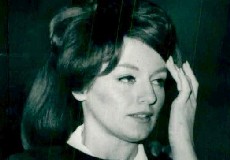
Alicia Crimmins
Murderer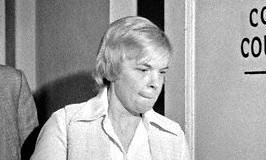 Marybeth Tinning
Murderer · USA · 1972
Marybeth Tinning (née Roe, born on September 11, 1942) was an American prisoner…
9 victims
Marybeth Tinning
Murderer · USA · 1972
Marybeth Tinning (née Roe, born on September 11, 1942) was an American prisoner…
9 victims
 Debbie Fornuto
Murderer · USA · 1972
Deborah Fornuto was the mother of six children whose deaths were initially rule…
7 victims
Debbie Fornuto
Murderer · USA · 1972
Deborah Fornuto was the mother of six children whose deaths were initially rule…
7 victims
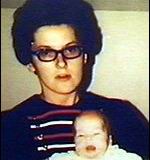 Waneta Ethel Hoyt
Murderer · USA · 1965
Waneta Ethel (Nixon) Hoyt was born in Richford, New York, and died in prison on…
5 victims
Waneta Ethel Hoyt
Murderer · USA · 1965
Waneta Ethel (Nixon) Hoyt was born in Richford, New York, and died in prison on…
5 victims
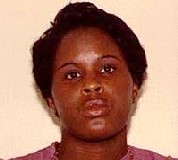 Debra Sue Tuggle
Murderer · USA · 1974
Debra Sue Tuggle was an African American woman born in Arkansas. She had a hist…
4 victims
Debra Sue Tuggle
Murderer · USA · 1974
Debra Sue Tuggle was an African American woman born in Arkansas. She had a hist…
4 victims
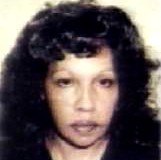 Josephine Gray
Murderer · USA · 1974
Josephine Virginia Gray, also known as Josephine Stribbling and Josephine Mills…
3 victims
Josephine Gray
Murderer · USA · 1974
Josephine Virginia Gray, also known as Josephine Stribbling and Josephine Mills…
3 victims
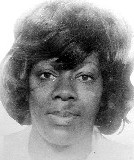 Marie Dean Arrington
Murderer · USA · 1964
Marie Dean Arrington (born August 8, 1933) was an American criminal. She was al…
2 victims
Marie Dean Arrington
Murderer · USA · 1964
Marie Dean Arrington (born August 8, 1933) was an American criminal. She was al…
2 victims
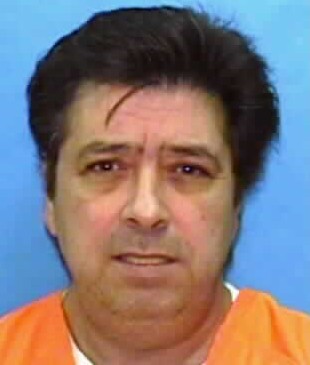 Dominick Occhicone
Murderer · USA · 1986
Dominick Occhicone (DOB: 08/29/45) was sentenced in the Sixth Judicial Circuit,…
2 victims
Dominick Occhicone
Murderer · USA · 1986
Dominick Occhicone (DOB: 08/29/45) was sentenced in the Sixth Judicial Circuit,…
2 victims
 Eric Holmes
Murderer · USA · 1989
Eric D. Holmes was 21 years old at the time of the murders. He had no prior cri…
2 victims
Eric Holmes
Murderer · USA · 1989
Eric D. Holmes was 21 years old at the time of the murders. He had no prior cri…
2 victims
 Emanuel Patterson
Mass murderer · USA · 2003
Emanuel Burl Patterson was 23 at the time of the shootings. Police said Patters…
4 victims
Emanuel Patterson
Mass murderer · USA · 2003
Emanuel Burl Patterson was 23 at the time of the shootings. Police said Patters…
4 victims
 Kent Jermaine Jackson
Murderer · USA · 2000
Kent Jermaine Jackson was a male Black defendant. He was a Newport News inmate…
1 victim
Kent Jermaine Jackson
Murderer · USA · 2000
Kent Jermaine Jackson was a male Black defendant. He was a Newport News inmate…
1 victim
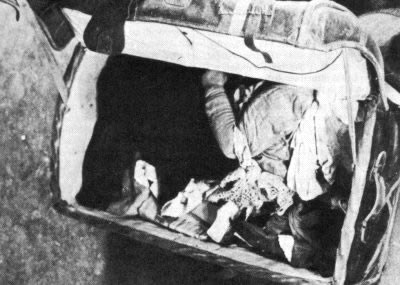 George Russell
Murderer · United Kingdom · 1948
George Russell was described as 45 years old at the time his prints were traced…
1 victim
George Russell
Murderer · United Kingdom · 1948
George Russell was described as 45 years old at the time his prints were traced…
1 victim
- Gender
- female
- Country
- USA
- Location
- New York City, New York, USA
- Date of birth
- 1939
- Age at first offence
- 26
- Characteristics
- parricide
- Victim profile
- Her children, Eddie Crimmins, Jr., 5, and Alice Marie "Missy" Crimmins , 4
- Method of murder
- Strangulation
- Date(s) of murder
- July 14, 1965
- Years active
- 1965
- Date of arrest
- September 11, 1967
- Status
-
Conviction for murder of her son was reversed and dismissed; manslaughter conviction in the death of her daughter was confirmed; parole in November 1977
Case details
Name: Alicia Crimmins
Status and outcome
On her first trial in 1968 was charged only with the death of the daughter and was convicted of manslaughter. On appeal this conviction was reversed and a new trial was ordered. On her second trial in 1971 was convicted of murder of her son and manslaughter of her daughter. The Appellate Division then reversed the conviction of murder of the son, and confirmed the manslaughter conviction in May 1975. Released on parole in November 1977.
People involved
Defendant
- Alicia Crimmins (mother of the victims)
Victims
- Eddie Crimmins, Jr. (age 5)
- Alice Marie “Missy” Crimmins (age 4)
Other named individuals
- Edmund Crimmins (husband of Alicia Crimmins)
- Anthony (Tony) Grace (husband/boyfriend; described as a fifty-two-year-old highway contractor)
- Joe Rorech (husband/boyfriend)
- James Mosley (Assistant District Attorney)
- Nat Hentel (Queens District Attorney)
- “Tough Tommy” Mackell (Democratic successor)
- Thomas Demakos (experienced chief of the District Attorney’s trial bureau in the second trial)
- Anthony Lombardino (prosecutor’s assistant in the first trial)
- Herbert Lyon (principal defence attorney in the first appeal and second trial)
- Harold Harrison (defence led by him in the first trial)
- Marty Baron (defence lawyer referenced in connection with an excluded affidavit)
- George Balbach (judge assigned to the second trial)
- Peter Farrell (judge at the first trial)
- Dr. Milton Helpern (Chief Medical Examiner who participated in autopsy)
- Dr. Richard Grimes (Queens medical examiner referenced in the Court of Appeals discussion)
- Dr. Louis Berg (whose affidavit was excluded; effect described)
- Jerry Piering (first detective to arrive)
- George Martin (partner of Jerry Piering)
- Detective Gerard H. Piering (named again in later narrative sections)
- Detective Phil Brady (interviewed Joe Rorech)
- Detective John Kelly (testified in the second trial)
- Sophie Earomirski (witness; identified after being anonymous)
- Jerry “Piering” again referenced with court-room details and reports
- Theresa Costello (aged fourteen; former babysitter)
- Evelyn Linder Atkins (former maid)
- Anthony King (mentioned in connection with Marvin Weinstein’s visit dispute)
- Marvin Weinstein (surprise defence witness)
- Vincent Nicolosi (prosecutor referenced in second trial)
- Marvin Weinstein’s wife (testified/appeared as referenced)
- Tina DeVita (surprise witness)
- Carl Andrade (waiter referenced)
- Marabel Morgan and Gloria Steinem (mentioned in quoted discussion about feminism)
- Edmund Crimmins again referenced in later testimony context
- Albert Borowitz and Denise Noe and Kenneth Gross and other authors/reporters (referenced in narrative sections)
- Justice Fuchsberg (dissenting opinion in 1975 Court of Appeals discussion)
- F. Sutherland Macklem (electronics scientist referenced as providing an affidavit)
- Joseph Sullivan (referenced as a potential witness not called)
- Vincent Collabella (jailed gangster mentioned)
- John Burke (Alice Crimmins’s brother)
- Alice Burke (mother of Alicia Crimmins)
- William M. Erlbaum (partner of Herbert Lyon)
- Sam Ehrlich (juror referenced)
Timeline
- July 14, 1965 — Alicia Crimmins reported her children missing from their bedroom; later Missy’s body was found on 162nd Street; later Eddie’s body was found on an embankment overlooking the Van Wyck Expressway.
- May 9, 1968 — First trial began.
- May 27, 1968 — Jury returned a verdict of guilty of manslaughter in Missy’s death.
- December 1969 — Appellate Division ordered a new trial because three jurors had secretly visited the scene of Sophie Earomirski’s identification.
- April 1970 — Court of Appeals ruled unauthorized juror visits were inherently prejudicial.
- March 15, 1971 — Second trial began.
- April 23, 1971 — Jury deliberations began after lunch.
- April 24, 1971 — Jury returned verdict guilty of murder in Eddie Jr.’s death and manslaughter in Missy’s death.
- May 13, 1971 — Remanded to Bedford Hills prison.
- May 1973 — Appellate Division ruled in her favor, throwing out the murder conviction and ordering a new trial on manslaughter.
- February 1975 — Court of Appeals announced final decision sustaining dismissal of the murder charge and reversing the new-trial grant on manslaughter, returning it for reconsideration.
- May 1975 — Appellate Division confirmed the manslaughter conviction.
- December 22, 1975 — Court of Appeals affirmed rejection of newly discovered evidence initiative by the defence.
- January 1976 — Became eligible for a work-release program and was permitted to leave prison on week days to work as a secretary.
- July 1977 — Married Anthony Grace, proprietor of the luxury cruiser referenced in later narrative sections.
- September 1977 — Granted parole after thirty months in prison and nine months in work-release.
- November 1977 — Released on parole.
- November 1977 — A new petition for retrial was denied.
- February 25, 1975 — Court of Appeals decision described in “CrimeLibrary.com Court of Appeals of New York 36 NY2d 230.”
Background
Alicia Crimmins lived with her husband Edmund and their children Eddie Crimmins, Jr. (age 5) and Alice Marie “Missy” Crimmins (age 4) in a redbrick apartment complex described as Regal Gardens in the Kew Gardens Hills section of Queens, New York City. Edmund worked nights as an airplane mechanic and the couple were described as separated with a custody fight pending.
The case involved police investigation after the children vanished from their bedroom on the morning of July 14, 1965.
The offence
On July 14, 1965, Missy’s body was found in an open lot on 162nd Street with evidence described as a pyjama top knotted into two ligatures around her bruised neck. An autopsy participated in by Dr. Milton Helpern found no evidence of sexual assault, and hemorrhages in mucous membranes in the throat and vocal cords confirmed asphyxiation.
Eddie’s body was found later, and it was described as too decomposed to show a cause of death.
The procedural history included:
- First trial: she was charged with the death of her daughter and was convicted of manslaughter.
- Second trial: convicted of murder of her son and manslaughter of her daughter.
- Appellate proceedings: reversal and dismissal of the murder conviction for her son; manslaughter conviction for her daughter was confirmed in May 1975.
Investigation
Initial police response and observations
- Police were called after Edmund protested that he knew nothing about the children’s whereabouts.
- Jerry Piering was the first detective to arrive and made an unfavorable impression when looking at Alicia Crimmins.
- Patrol cars were parked around the grassy mall adjoining Alicia Crimmins’s apartment at 150-22 72nd Drive.
Physical and circumstantial leads referenced
- Liquor bottles were found in garbage cans; Alicia Crimmins later attributed them to housekeeping rather than over-indulgence.
- A “little black book” was described as dropped outside with men listed outnumbering women four to one.
- A pastel-colored overnight bag under her bed contained greetings and dinner programs documenting her relationship with Anthony (Tony) Grace, described as a fifty-two-year-old highway contractor.
- Detective George Martin and other officers investigated premises, including photographing.
Eyewitness and body discovery leads
- Jay Silverman, described as a nine-year-old boy, found Missy’s body in an open lot on 162nd Street.
- Missy’s pyjama top was described as knotted and tied about her neck.
- A false alarm was raised in Cunningham Park when an apparent body turned out to be a discarded doll.
- Vernon Warnecke and his son found Eddie on Monday morning, July 19, on an embankment overlooking the Van Wyck Expressway; his body was described as eaten away by rats and insects and in an advanced state of decay; the site was about a mile from Alicia Crimmins’s apartment and close to the New York World’s Fair grounds.
Forensic details referenced
- Autopsy: no evidence of sexual assault; asphyxiation supported by hemorrhages in mucous membranes in the throat and vocal cords.
- Stomach contents: contents were sent to an expert, with a macaroni-like substance referenced; it was described that the discovery rang a bell with Detective Piering regarding manicotti.
- The narrative also includes disputed timing and contradictions about food served and the medical examiner’s conclusions, including later discussion of testimony by Dr. Richard Grimes and Dr. Milton Helpern.
Electronic surveillance and truth-test references
- Police administered sodium pentothal “truth tests” to Joe Rorech: on December 6, 1965, administered the first of two sodium pentothal “truth tests”.
- Police used electronic surveillance including microphones and telephone wire-tapping described as monitored from a neighboring hospital pharmacy after Alicia Crimmins moved into a new three-room apartment.
- The narrative includes mention that recorded conversations did not produce incriminating statements but were described as capturing sexual encounters.
Grand jury and identifying witness
A third grand jury convened by James Mosley on September 1, 1967 presented a “mystery witness” identified as Sophie Earomirski.
Earomirski had written to Nat Hentel on November 30, 1966 describing an incident she claimed to have witnessed on the early morning of July 14, 1965, including:
- A man and woman walking toward 72nd Road.
- A woman holding what appeared to be a bundle of blankets shining white under her left arm and leading a little boy with her right hand.
- A conversation described in the letter: the man shouted at her to hurry up; she told him “to be quiet or someone will see us.”
- The man heaving the “white bundle” into the back seat of a nondescript automobile.
- She then picking up the little baby and sitting with him on the back seat.
- The letter’s closing statements included fear of signing her name and a postscript about seeing “just the man getting into a late model white car.”
Earomirski’s testimony before the third grand jury was described as decisive, leading to indictment charging Alice Crimmins with murder of Missy.
Arrest
- September 11, 1967 — Alicia Crimmins was arrested and charged with first-degree murder of her daughter (Missy).
- She was not charged in her son’s death because it could not be medically proven he had been murdered.
Trial
First trial (1968)
- May 9–27, 1968 — Trial began and ended with a guilty verdict of manslaughter in Missy’s death.
- The prosecution case included questioning Dr. Milton Helpern regarding timing based on Missy’s stomach contents.
- Joe Rorech testified in a manner described as including a quote of Alicia Crimmins about wishing the children dead, and later testimony described as including an alleged confession narrative.
- The defence was led by Harold Harrison, and the narrative also names Martin Baron as a defence lawyer involved in excluding an affidavit of Dr. Louis Berg (about head injury and “permanent brain damage”).
- Earomirski testified about seeing the woman carrying a bundle and a man and little boy; she was identified as “The Woman in the Window” in later narrative.
- Alicia Crimmins took the witness stand and testified; she denied murder and denied Rorech’s account of her confession.
- The jury returned a verdict of guilty of manslaughter in the first degree on May 27, 1968.
Sentencing in connection with the first trial:
- Judge sentenced her to be confined in the New York State prison for women at Westfield State Farms, Bedford Hills, New York, for a term of not less than five nor more than twenty years.
- The narrative also reports that after conviction she protested her innocence and told Judge Farrell: “You don't care who killed my children, you want to close your books. You don't give a damn who killed my kids.”
Quotes attributed in the narrative include:
- Alicia Crimmins’s statement at sentencing: “You don't care who killed my children, you want to close your books.
- During the first trial’s upset: the narrative describes Alicia Crimmins banging her fists on the defense table crying “Joseph! How could you do this? This is not true! Joseph . . . you, of all people! Oh, my God!”
- Earomirski testimony includes the accusation and the courtroom exchange where Alicia Crimmins shouted: “You liar! You liar! You liar! You liar!”
Additionally, long quotations from trial narration are embedded in the narrative, including:
- Dr. Richard Grimes: “I saw the body of a girl who appeared to be about five years of age . . . She was clad in a cotton undershirt, a pair of yellow panties—“
- Dr. Grimes: “No!”
- Dr. Grimes: “Around the little girl’s face there was a cloth tie,” and “The loose ends of the tie appeared to be the arm of some type of garment. The tie was over the mouth of the child, the knot encircling the neck, and the tie was rather loose. . . . “
- Sophie Earomirski: “He took the bundle and he swung the bundle under his arm . . . and he walked very quickly to the car,”
- Sophie Earomirski: “. . . he took this bundle and threw it in the back seat of the car. She ran over to him and she said, ‘My God, don’t do that to her.’ And then he looked at her and said, ‘Now you’re sorry?’ and . . . she said, ‘Please don’t say that.’”
- Earomirski’s identification: “That’s the woman.”
- Judge instruction: “This is not the Hippodrome.”
Second trial (1971)
- March 15–April 23/24, 1971 — Second trial proceeded with jury deliberations beginning after lunch on April 23 and ending with verdict by 5:45 p.m. the following day (described as ending the next day at 5:45 p.m.).
- She was charged with murder of her son Eddie and manslaughter of her daughter Missy.
- Prosecutors included Thomas Demakos and named Vincent Nicolosi.
- Defence included Herbert Lyon (principal in the second trial) and referenced partner Lyon asked about restraining sexual-history cross-examination.
Evidence and witnesses referenced include:
- Defence strategy included placing stress on grief and loss and keeping Alicia Crimmins off the witness stand.
- Joe Rorech testified again with a revised account described as including agreement and “consented” to murder of her son.
- Sophie Earomirski again identified Alicia Crimmins.
- Tina DeVita testified in a surprise witness capacity; her testimony described seeing “a man carrying a bundle, a woman, a dog, and a boy”.
- Marvin Weinstein testified as a defence surprise witness, describing passing below Earomirski’s window area while visiting a friend named Anthony King, and included that he carried his daughter “like a sack” and had a dog.
- Vincent Collabella was called by Lyon as a witness described as a jailed gangster who chuckled and disowned knowledge of the crime.
- Detective John Kelly testified regarding alleged discussions about possible immunity and deals.
- The jury found Alicia Crimmins guilty of:
- murder in the first degree in the death of her son (Eddie Jr.),
- manslaughter in the first degree in the strangling of her daughter (Missy).
After conviction:
- On May 13, 1971, she was remanded to Bedford Hills prison.
Sentencing
The record contains sentencing details for the first conviction:
- She was sentenced to not less than five nor more than twenty years at New York State prison for women at Westfield State Farms, Bedford Hills, New York.
The narrative indicates imprisonment after second trial as well:
- She was sent back to prison in connection with continuing sentence from five to twenty years after manslaughter conviction was confirmed in May 1975.
Appeals
Juror misconduct and ordering new trial
- In December 1969, the Appellate Division ordered a new trial because three jurors secretly visited the scene of Sophie Earomirski’s identification.
- One juror visited alone at about two in the morning.
- Court reasoned the visitors became secret, untested witnesses not subject to cross-examination.
- The Court of Appeals agreed in April 1970, ruling unauthorized visits were inherently prejudicial; and stated that evidence of guilt was not so overwhelming that the error could not have influenced the verdict, noting only two witnesses directly implicated Alice (Sophie Earomirski and Joe Rorech) and that Rorech’s testimony was seriously challenged.
Post-second trial appellate history (1973–1975)
In May 1973, Appellate Division:
- threw out the murder conviction on the grounds that the State had not proved beyond reasonable doubt that Eddie’s death resulted from a criminal act;
- ordered a new trial on the manslaughter conviction for Missy due to errors and improprieties including the prosecutor’s comment about her lack of courage to admit the killing of Missy.
In February 1975, Court of Appeals:
- sustained dismissal of the murder charge;
- reversed the grant of a new trial in the manslaughter conviction and returned the issue to the Appellate Division for reconsideration, with the Court conceding the constitutional error of the prosecutor’s comment on refusal to testify but stating it was harmless in view of the weighty evidence.
In May 1975, Appellate Division confirmed the manslaughter conviction and she was sent back to prison to continue serving from five to twenty years.
Newly discovered evidence initiative rejected (1975)
- A defence motion involved an affidavit from electronics scientist F. Sutherland Macklem.
- The affidavit claimed he picked up two small children, a boy and a girl, hitchhiking in Queens County around shortly after one o’clock on the morning of July 14, 1965, and let them out at the corner of 162nd Street and 71st Avenue.
- The affiant did not learn the children’s names and stated the boy could have identified the companion as “Missy” instead of “my sister,” as he had first thought.
- The Court of Appeals affirmed rejection on December 22, 1975, considering the seven-year delay and commenting scathingly that the affidavit “offers an imaginative alternative hypothetical explanation [of the crime], worthy of concoction by an A. Conan Doyle.”
Legal decision excerpt (Court of Appeals)
The case includes a Court of Appeals decision:
- Court of Appeals of New York 36 NY2d 230
- The People of the State of New York, Appellant, v Alice Crimmins, Respondent
- Argued January 8, 1975; Decided February 25, 1975
- Opinion by Jones, J. with discussion of harmless error doctrine as applied to errors in the second trial.
Verbatim quotations from the opinion included:
- “We conclude that these errors fall into separate categories calling for different legal results.”
- “By contrast, the corrective action directed by the Appellate Division in consequence of its reversal of the murder conviction, i.e., the dismissal of the murder count, is subject to an appeal to and review by our court (CPL 450.90, subd. 2, par. [b]).”
- “Accordingly the Appellate Division's dismissal of the murder count with respect to the death of the son must be affirmed.”
- “We conclude that the reversal of the manslaughter conviction should be overturned.”
- “The order of the Appellate Division with respect to the manslaughter conviction should accordingly be reversed, and the case remitted to the Appellate Division for determination of the facts in conformity with CPL 470.40 (subd. 2, par. [b]).”
- Concurring/dissenting passages include: “I would affirm the order of the Appellate Division.”
- A reference in the dissent to the right to fair trial includes: “quite without regard to any evaluation as to whether the errors contributed to the defendant's conviction.”
- The dissent also included: “the conviction must be reversed.”
Outcome
Final procedural outcomes described:
- Murder conviction for Eddie Jr. was reversed and dismissed.
- Manslaughter conviction for Missy was confirmed in May 1975.
- She was released on parole in November 1977 after time in prison and nine months in a work-release program.
Other details
Events and claims on the night before disappearance
Alicia Crimmins described events after returning home with the children, including:
- attempting retaliation and dealing with a punctured screen,
- disposing of wine and liquor bottles,
- watching The Defenders on TV,
- reaching Anthony Grace,
- receiving a call from Joe Rorech,
- going to bed and taking Eddie to the bathroom at midnight without waking Missy.
Relationship and custody conflict details (as described)
The narrative includes details about:
- the custody petition filed by Edmund Crimmins alleging Alicia Crimmins indulged openly in sex after separation,
- surveillance and spying by Edmund Crimmins including bugging her telephone and installing a microphone,
- mention of a former maid, Evelyn Linder Atkins, and her claim of a $600 owed amount and hint that if paid she would not testify,
- a trip to the Bahamas described as a boat trip with Tony Grace and friends where women were locked in a washroom and carried off to sea (described in narrative sections),
- a discussion about jealousy and love affairs and the custody case.
Employment and aliases referenced
The narrative mentions:
- Alicia Crimmins moved into a new three-room apartment to avoid public attention.
- She later lived with “an Atlanta man” where she was working as a secretary, and the police advised his wife and helped her destroy Alicia’s clothing.
- She had work-release secretary employment referenced in January 1976.
Parole and subsequent personal events
- In July 1977, she married Anthony Grace, described in the narrative as proprietor of the luxury cruiser.
- In September 1977, she was granted parole after thirty months in prison and nine months in work-release, and in November 1977 she was released on parole.
- A new petition for retrial was denied in November 1977.
Evidence preservation and contested details referenced
The record includes disputes about:
- Detective Piering’s dust observations and whether evidence was photographed and recorded,
- claims that screenshots and manicotti vs veal evidence differed across statements,
- contradictions about gas station timing between Alicia and attendants,
- the contested dust film and whether a lamp impression remained undisturbed.
Manner of courtroom events and reactions
The narrative includes multiple courtroom outbursts and judge instructions, including:
- “Joseph! How could you do this? This is not true! Joseph . . . you, of all people! Oh, my God!”
- “I didn't!”
- “You liar! You liar! You liar! You liar!”
- “This is not the Hippodrome.”
- Judge order and recess described during trial testimony.
Motive discussion in the record narrative
The narrative states the prosecution never attributed a plausible motive to Alicia Crimmins and describes that motive remained “wrapped in mystery” in the later analysis portions, but the record preserves only that these points were argued in the narrative sections and does not introduce additional motive facts beyond those recited.

Spotted an error, or have more information about this case?