Masakatsu Nishikawa
Spree killer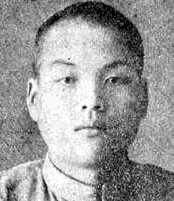 Mutsuo Toy
Spree killer · Japan · 1938
Mutsuo Toi (都井 睦雄; Toi Mutsuo) was a Japanese spree killer. Mutsuo Toi was born…
30 victims
Mutsuo Toy
Spree killer · Japan · 1938
Mutsuo Toi (都井 睦雄; Toi Mutsuo) was a Japanese spree killer. Mutsuo Toi was born…
30 victims
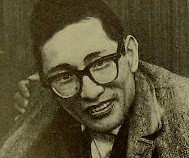 Akira Nishiguchi
Spree killer · Japan · 1963
Akira Nishiguchi (西口 彰, Nishiguchi Akira) was a Japanese serial killer and frau…
5 victims
Akira Nishiguchi
Spree killer · Japan · 1963
Akira Nishiguchi (西口 彰, Nishiguchi Akira) was a Japanese serial killer and frau…
5 victims
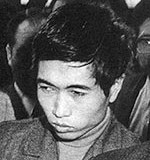 Norio Nagayama
Spree killer · Japan
Norio Nagayama (永山 則夫, Nagayama Norio, June 27, 1949 - August 1, 1997) was a Ja…
4 victims
Norio Nagayama
Spree killer · Japan
Norio Nagayama (永山 則夫, Nagayama Norio, June 27, 1949 - August 1, 1997) was a Ja…
4 victims
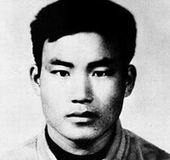 Woo Bun-Kon
Spree killer · South Korea · 1982
Woo Bun-Kon, also known as Woo “Power” Bum-Kon (February 24, 1955–April 27, 198…
57 victims
Woo Bun-Kon
Spree killer · South Korea · 1982
Woo Bun-Kon, also known as Woo “Power” Bum-Kon (February 24, 1955–April 27, 198…
57 victims
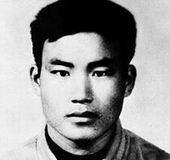 Woo Bun-Kon
Spree killer · South Korea · 1982
Woo Bun-Kon carried out a spree killing in Sang-Namdo, South Korea, and killed…
57 victims
Woo Bun-Kon
Spree killer · South Korea · 1982
Woo Bun-Kon carried out a spree killing in Sang-Namdo, South Korea, and killed…
57 victims
 Martin Bryant
Spree killer · Australia · 1996
Martin Bryant was born May 7, 1967, and was the elder of two children of Mauric…
35 victims
Martin Bryant
Spree killer · Australia · 1996
Martin Bryant was born May 7, 1967, and was the elder of two children of Mauric…
35 victims
 John Mills
Murderer · USA · 1982
John Mills Jr. was a Florida prison inmate. In 1982, a jury convicted him of fi…
1 victim
John Mills
Murderer · USA · 1982
John Mills Jr. was a Florida prison inmate. In 1982, a jury convicted him of fi…
1 victim
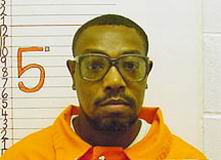 Herbert Smulls
Murderer · USA · 1991
Defendant: Herbert Smulls Accomplice: Norman Brown Victims: · Stephen Honickman…
1 victim
Herbert Smulls
Murderer · USA · 1991
Defendant: Herbert Smulls Accomplice: Norman Brown Victims: · Stephen Honickman…
1 victim
 Nikolai Dzhumagaliev
Serial killer · URSS · 1979
Nikolai Dzhumagaliev (Russian: Николай Джумагалиев; born 1952) was a serial kil…
9 victims
Nikolai Dzhumagaliev
Serial killer · URSS · 1979
Nikolai Dzhumagaliev (Russian: Николай Джумагалиев; born 1952) was a serial kil…
9 victims
 Raman Raghav
Serial killer · India · 1966
Raman Raghav Sentence reduced to life imprisonment on 4 August 1987; died at Sa…
41 victims
Raman Raghav
Serial killer · India · 1966
Raman Raghav Sentence reduced to life imprisonment on 4 August 1987; died at Sa…
41 victims
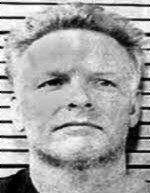 James Hicks
Serial killer · USA · 1977
James Hicks pled guilty to two counts of murder. He was sentenced to 10 years i…
3 victims
James Hicks
Serial killer · USA · 1977
James Hicks pled guilty to two counts of murder. He was sentenced to 10 years i…
3 victims
- Gender
- male
- Country
- Japan
- Location
- Osaka, Japan
- Date of birth
- 1956
- Age at first offence
- 35
- Characteristics
- robbery, alcohol, disputes
- Victim profile
- Middle-aged women (hostess bar operators)
- Method of murder
- Strangulation - St abbing with knife
- Date(s) of murder
- December 13-28, 1991
- Years active
- 1991
- Date of arrest
- —
- Status
-
Sentenced to death
Sentenced to death on September 12, 1995
Overview
Masakatsu Nishikawa was sentenced to death on September 12, 1995. The Supreme Court upheld the death sentence imposed by a lower court for crimes committed in western Japan in 1991 involving murder and robbery of female bar managers.
Timeline
- 1991 (between Dec 13 and Dec 28) — Nishikawa murdered four female bar managers in western Japan by strangling or stabbing them at the bars they managed.
- 1991 — Nishikawa was convicted of murder and robbery.
- January 1992 — Nishikawa tried to strangle a woman in Osaka, an offense described as robbery resulting in attempted murder, leaving her within an inch of her life.
- June 20, 2001 — The Osaka High Court upheld Nishikawa’s conviction for robbery and murder or injury of five middle-aged women and upheld the death sentence, dismissing a lower-court ruling ordering that he be sent to the gallows.
- 20 June 2001 — Presiding Judge Motoyasu Kawakami rejected arguments that Nishikawa was not responsible for some of the killings and cited DNA test results as showing responsibility.
The offence
Nishikawa murdered four female bar managers in western Japan between Dec 13 and Dec 28 in 1991. The murders occurred at the bars the women managed and were described as being carried out by strangling or stabbing. He also committed an additional robbery offense in January 1992 that was described as robbery resulting in attempted murder when he tried to strangle a woman in Osaka, leaving her within an inch of her life.
The crimes were characterized as involving premeditated intent to murder defenseless women.
Victims
Nishikawa’s victims were hostess bar operators. The record described:
- Two victims who were 55 years old: one from Matsue and one from Kyoto
- One victim who was 51 years old from the ancient capital
- One victim who was 45 years old from Himeji
- A further offense involved robbery resulting in attempted murder against a woman in Osaka during January 1992; she was left “within an inch of her life.”
The Osaka High Court’s ruling referenced murder or injury of five middle-aged women in the early ’90s.
Investigation and evidence
Defense arguments challenged Nishikawa’s responsibility for the first three murders. The Osaka High Court stated that DNA tests showed Nishikawa had been responsible for the three killings he denied.
Arrest
Nishikawa was convicted of robbery and murder. The record did not describe an arrest in the provided text.
Trial
Nishikawa pleaded guilty but claimed he should not be criminally liable for some of the murders. He stated that he had drunk a large quantity of alcohol, which made him feeble-minded. He also maintained he was not guilty of the three other murders.
Defense lawyers argued that Nishikawa was innocent of the first three murders. They admitted the Himeji killing but argued that his nervous condition and drunkenness at the time meant he could not be held responsible.
Presiding Judge Motoyasu Kawakami dismissed Nishikawa’s claims of innocence, ruling that DNA tests showed he had been responsible for the three killings. Kawakami also rejected claims of a reduced mental state.
“Your crimes were cruel and callous, all based on a premeditated intent to murder defenseless women,” Presiding Judge Motoyasu Kawakami said as he upheld the death sentence.
“No grounds exist to suggest reasonable doubt that Nishikawa knew what he was doing,” Kawakami ruled.
“Even considering that a deprived childhood had an adverse affect on the shaping of his character, I can so no other option but to carry out the death sentence,” Kawakami said.
Sentencing
A lower court death sentence was upheld by the Supreme Court, making the death sentence final for Nishikawa. The Supreme Court upheld the death sentence given by the lower court.
The record also describes the Osaka High Court ruling on June 20, 2001 that upheld conviction and the death sentence, dismissing a lower-court ruling that ordered Nishikawa be sent to the gallows.
Appeals and outcome
The Supreme Court upheld the death sentence imposed by the lower court. The record characterized the Supreme Court decision as making the death sentence final.
The Osaka High Court dismissed a lower-court ruling that had ordered Nishikawa to be sent to the gallows and upheld Nishikawa’s death sentence.
Other details
- Nishikawa was 49 at the time described for the Supreme Court decision.
- Nishikawa was described as a Tottori native who later uses the surname Kaneda.
- The Osaka High Court referred to him as 45 years old at the time of its June 20, 2001 ruling.
- The record described a childhood “filled with strife” and stated that no grounds existed to prevent his execution for his crimes.
Spotted an error, or have more information about this case?