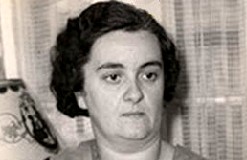
Mary Frances Creighton
Murderer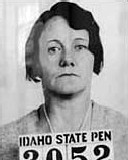 Lydia Trueblood
Murderer · USA · 1915
Lydia Trueblood was born in 1915. She was convicted in Idaho in 1921 and died o…
6 victims
Lydia Trueblood
Murderer · USA · 1915
Lydia Trueblood was born in 1915. She was convicted in Idaho in 1921 and died o…
6 victims
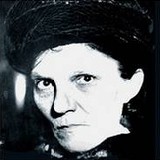 Martha Wise
Murderer · USA · 1924
Martha Wise (born 1885; died June 28, 1971), also known as “the Borgia of Ameri…
3 victims
Martha Wise
Murderer · USA · 1924
Martha Wise (born 1885; died June 28, 1971), also known as “the Borgia of Ameri…
3 victims
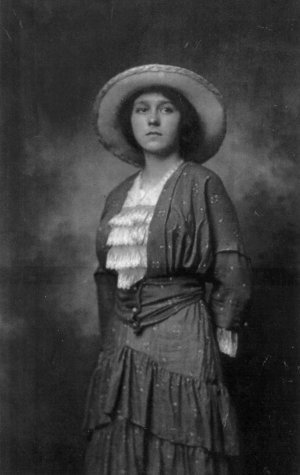 Inez Palmer
Murderer · USA · 1926
Inez Palmer — defendant; lived at the Stout farmhouse and pleaded guilty to a f…
2 victims
Inez Palmer
Murderer · USA · 1926
Inez Palmer — defendant; lived at the Stout farmhouse and pleaded guilty to a f…
2 victims
 Winnie Ruth Judd
Murderer · USA · 1931
Winnie Ruth Judd (January 29, 1905 – October 23, 1998) was a Phoenix, Arizona m…
2 victims
Winnie Ruth Judd
Murderer · USA · 1931
Winnie Ruth Judd (January 29, 1905 – October 23, 1998) was a Phoenix, Arizona m…
2 victims
 Alice Wynekoop
Murderer · USA · 1933
Name: Alice Wynekoop Alice Wynekoop was sentenced to 25 years in prison on Marc…
1 victim
Alice Wynekoop
Murderer · USA · 1933
Name: Alice Wynekoop Alice Wynekoop was sentenced to 25 years in prison on Marc…
1 victim
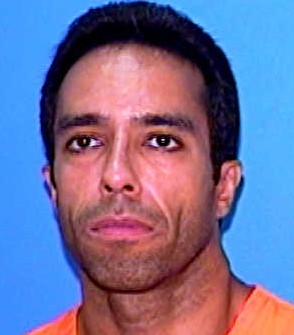 Daniel Lugo
Murderer · USA · 1995
Daniel Lugo DC# M16321 DOB: 04/06/63 Eleventh Judicial Circuit, Dade County, Ca…
2 victims
Daniel Lugo
Murderer · USA · 1995
Daniel Lugo DC# M16321 DOB: 04/06/63 Eleventh Judicial Circuit, Dade County, Ca…
2 victims
 Abbas Baqir Abbas
Mass murderer · Sudan · 2000
Abbas Baqir Abbas was identified as a member of the militant Al-Takfir wa al-Hi…
23 victims
Abbas Baqir Abbas
Mass murderer · Sudan · 2000
Abbas Baqir Abbas was identified as a member of the militant Al-Takfir wa al-Hi…
23 victims
 Rachael Mullenix
Homicide · USA · 2006
Defendant: Rachael Scarlett Mullenix (also referred to as Rachael Mullenix), 16…
1 victim
Rachael Mullenix
Homicide · USA · 2006
Defendant: Rachael Scarlett Mullenix (also referred to as Rachael Mullenix), 16…
1 victim
 Juan Rodriguez Chavez
Murderer · USA · 1985
Juan Rodriguez Chavez was convicted in Dallas County, Texas, of capital murder…
12 victims
Juan Rodriguez Chavez
Murderer · USA · 1985
Juan Rodriguez Chavez was convicted in Dallas County, Texas, of capital murder…
12 victims
- Gender
- female
- Country
- USA
- Location
- New Jersey/New York, USA
- Date of birth
- July 29, 1899
- Age at first offence
- 24
- Characteristics
- poisoner
- Victim profile
- Ray Avery, 18 (her brother) / Anna Creighton (her mother-in-law) / Ada Applegate, 34 (her lover's wife)
- Method of murder
- Poisoning (arsenic)
- Date(s) of murder
- 1923 / 1935
- Years active
- 1923–1935
- Date of arrest
- October 9, 1935
- Status
-
Executed
Executed by electrocution at Sing Sing prison in New York on July 16, 1936
Case record: Mary Frances Creighton
Background
Mary Frances Creighton (c. 1898 - July 16, 1936) was a housewife and was executed in Sing Sing Prison’s electric chair, Old Sparky, for the poisoning of Appelgate’s wife, Ada, in Baldwin, New York on September 27, 1935.
Creighton was also known as Mary Frances Avery Creighton, and the media nicknamed her “Borgia.”
Creighton married John Creighton. They had one child together, a daughter named Ruth. Creighton and her husband John had also been arrested for the death of her brother, Raymond Avery, who was poisoned by a lethal dose of Arsenic. Creighton was named as a beneficiary in his insurance policy and also inherited his trust fund. Their parents died when she was a teenager.
Creighton was acquitted after a trial in Newark, New Jersey, within days of the verdict, for the death of her brother, Raymond Avery. After that acquittal, she was arrested for the death of her father-in-law. After a trial, she again was found not guilty. After that verdict, they relocated to Long Island, New York.
In the height of the Great Depression, the Appelgates moved in with the Creightons to save money. In Baldwin, New York, Creighton and her husband Everett Appelgate and Ada Appelgate became acquainted. Everett was 36 years old, and Ada was 34 years old.
Creighton’s daughter Ruth was 14, and the Appelgate’s daughter Agnes was 12 at the time described in the case summary.
There were allegations that Everett Appelgate began sexually molesting Ruth, forcing her to sleep with him and his wife. The case summary also states that Creighton joined into the arrangement and that Agnes was being molested as well.
The offence
Ada Appelgate complained of feeling ill. She went to the hospital, where nothing was found wrong and she was sent home. Several days later Ada died. Her death was listed as due to unknown causes, with speculation that she died of pneumonia.
The investigation into Ada’s death began after Nassau County’s District Attorney’s office got word of Creighton’s past relatives that died mysteriously. An autopsy of Ada Appelgate showed she died from a massive dose of arsenic.
The case states that Creighton and Everett Applegate were arrested and a trial began. It also states that Creighton admitted to the crime, trying to put the blame on Everett Appelgate, who forced her to do it. The case summary further states that Creighton went to the store and bought the rat poison.
Creighton and Everett Applegate were charged with first degree murder with a mandatory death sentence. They were convicted and sentenced to death. The case notes that appeals were filed, but all failed.
Investigation and trial
The toxicologist Dr. Alexander O. Gettler testified that he found traces of arsenic in Ada Appelgate’s body and believed the corpse contained 11 grains of the substance. It was generally agreed that 3 grains could be considered a lethal dose.
Dr. Richard H. Hoffman, a prominent New York psychiatrist, testified that Creighton was legally sane at the time of the event.
The case summary states that Creighton took the stand in her own defense and gave testimony that she had nothing to do with Ada’s death at first, and then later admitted taking a glass of milk that contained arsenic to Ada.
A direct quotation attributed to Creighton during testimony appears: “Yes, I did. Appelgate told me,” she answered. Knowing this, you took it to her to drink? “Yes” she replied. You stood by and watched this woman, who was your best friend, die? “Yes,” Mary Frances said.
The case summary also states that Everett Applegate took the stand, admitted a sexual relationship with Creighton’s 14-year-old daughter, but denied other details, including a trip to a drug store where he and Creighton bought rat poison.
A jury found Creighton and Everett Appelgate guilty of 1st Degree Murder. A sentence of death was mandatory.
Sentencing and appeals
At sentencing, Everett Appelgate asked to make a statement. The case includes this quotation: “I knew nothing and had nothing to do with the administration of arsenic poisoning, and in addition to that I have never at any time had misconduct of any character with Mrs. Creighton” Over the next few months, appeals were filed on her behalf, but all failed. A date of July 16 was set for the executions.
Execution
On July 16, 1936, in the evening hours, Warden Lawes permitted their respective families to say goodbye to Mary and Everett Appelgate. Appelgate’s father and step-mother came to visit, and Appelgate had a brief meeting with his son. The case includes a quotation attributed to the older Appelgate: “I said ‘Goodbye, Ev’ and he said ‘Goodbye, Pop’. That was all,”
John Creighton visited Creighton and was allowed to embrace her and kiss her for the last time. As he left, he threatened to shoot any reporter who asked him a question.
The case summary includes details of Creighton’s condition and appearance. It states that she was wheeled into the execution chamber at Sing Sing Prison in a wheel chair. It also states she was wearing pink pajama’s and a black kimono, with the back of her head shaved where the electrodes were to be attached. It states that she had told doctors she was paralyzed from the waist down and could not walk, that she seemed almost in a coma-like state, and that the commission reported she suffered from hysteria as a result of her impending death.
The case includes this quotation of the medical commission’s results: “We find no evidence of organic disease of the central nervous system or the body as a whole. Mrs Creighton is well developed, well nourished and muscular. If she has lost weight, it is not apparent. Her disturbances in motor power, in sensation and in speech are in part hysterical. They are grossly exaggerated by conscious malingering. Her mind appears to be clear and she fully appreciates her present position. She is suffering from a type of disability which would improve rapidly if she were encouraged, and get worse if she were discouraged. Her condition is the reaction to the situation in which she finds herself.”
The case states that Creighton converted to the Catholic religion and was baptized by the Prison Chaplain, Father McCaffrey. It includes this quotation, attributed to Creighton, when she was asked if she wanted to say anything to the public: “I have done many wrong things but I know God will forgive me. I was a good wife and mother and whatever I did I did for him and the children. I hope they will have a better life than I did!”
The executioner was Robert G. Elliott. It states that he was shocked to find Creighton in a state of total collapse. Creighton was placed in a wheelchair and lifted into the electric chair. The case summary states that she died without even knowing after the executioner threw the switch.
A warder on duty suffered severe burns while releasing Creighton from the chair.
After Creighton’s death, Appelgate entered the chamber. The case includes this quotation attributed to Everett Appelgate: “Before God, gentlemen, I’m absolutely innocent of this crime and I hope the good God will have mercy on the soul of Martin W. Littleton”
Outcome
Creighton and Everett Appelgate were executed by electrocution in Sing Sing Prison. The case summary provides the execution as occurring on July 16, 1936.
Other details
The case summary states that Creighton had passed out prior to the execution and was executed in an unconscious state.
The case summary includes additional narrative detail about earlier acquittals and later prosecution. It states that Mary Frances Creighton was accused of murder twice before the Ada Appelgate poisoning case: once in relation to her brother Raymond Avery and again in relation to her father-in-law. In both prior cases described, she was found not guilty.
The case summary includes details about a letter described as being produced in connection with Everett Appelgate’s lawyer and the judge refusing to allow presentation of Creighton’s past trials to the jury.
The case summary also includes the claim that police seized the body four days later as they said they had good reason to believe something other than nature had played a role in ending Ada’s life.
The case summary includes multiple statements about arsenic and the use of “Rough on Rats” as a rodent poison described as made of arsenic.


Spotted an error, or have more information about this case?