Marie Dean Arrington
Murderer Marybeth Tinning
Murderer · USA · 1972
Marybeth Tinning (née Roe, born on September 11, 1942) was an American prisoner…
9 victims
Marybeth Tinning
Murderer · USA · 1972
Marybeth Tinning (née Roe, born on September 11, 1942) was an American prisoner…
9 victims
 Debbie Fornuto
Murderer · USA · 1972
Deborah Fornuto was the mother of six children whose deaths were initially rule…
7 victims
Debbie Fornuto
Murderer · USA · 1972
Deborah Fornuto was the mother of six children whose deaths were initially rule…
7 victims
 Waneta Ethel Hoyt
Murderer · USA · 1965
Waneta Ethel (Nixon) Hoyt was born in Richford, New York, and died in prison on…
5 victims
Waneta Ethel Hoyt
Murderer · USA · 1965
Waneta Ethel (Nixon) Hoyt was born in Richford, New York, and died in prison on…
5 victims
 Debra Sue Tuggle
Murderer · USA · 1974
Debra Sue Tuggle was an African American woman born in Arkansas. She had a hist…
4 victims
Debra Sue Tuggle
Murderer · USA · 1974
Debra Sue Tuggle was an African American woman born in Arkansas. She had a hist…
4 victims
 Josephine Gray
Murderer · USA · 1974
Josephine Virginia Gray, also known as Josephine Stribbling and Josephine Mills…
3 victims
Josephine Gray
Murderer · USA · 1974
Josephine Virginia Gray, also known as Josephine Stribbling and Josephine Mills…
3 victims
 Alicia Crimmins
Murderer · USA · 1965
Name: Alicia Crimmins On her first trial in 1968 was charged only with the deat…
2 victims
Alicia Crimmins
Murderer · USA · 1965
Name: Alicia Crimmins On her first trial in 1968 was charged only with the deat…
2 victims
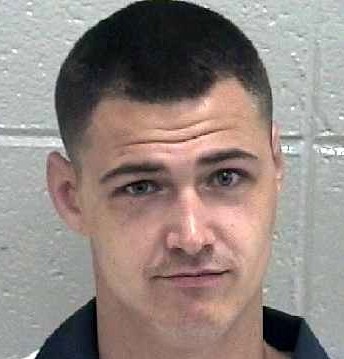 James Allyson Lee
Murderer · USA · 1994
James Allyson Lee was 22 years old at the time he was sentenced to death on Jun…
1 victim
James Allyson Lee
Murderer · USA · 1994
James Allyson Lee was 22 years old at the time he was sentenced to death on Jun…
1 victim
 Edward Rulloff
Murderer · USA · 1845
Edward Rulloff was executed by hanging on May 18, 1871. His execution followed…
3 victims
Edward Rulloff
Murderer · USA · 1845
Edward Rulloff was executed by hanging on May 18, 1871. His execution followed…
3 victims
 Byron de la Beckwith
Murderer · USA · 1963
Byron De La Beckwith (November 9, 1920 – January 21, 2001) was an American whit…
1 victim
Byron de la Beckwith
Murderer · USA · 1963
Byron De La Beckwith (November 9, 1920 – January 21, 2001) was an American whit…
1 victim
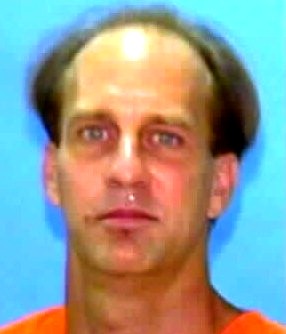 Jason Dirk Walton
Murderer · USA · 1982
Name: Jason Dirk Walton Date of birth: 10/09/58 Court: Sixth Judicial Circuit,…
3 victims
Jason Dirk Walton
Murderer · USA · 1982
Name: Jason Dirk Walton Date of birth: 10/09/58 Court: Sixth Judicial Circuit,…
3 victims
 Manuel Marcus Sepulveda
Murderer · USA · 2001
Manuel Marcus Sepulveda Manuel Sepulveda lived with Daniel Heleva and Robyn Ott…
2 victims
Manuel Marcus Sepulveda
Murderer · USA · 2001
Manuel Marcus Sepulveda Manuel Sepulveda lived with Daniel Heleva and Robyn Ott…
2 victims
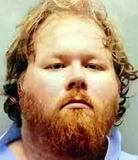 Ronald Lee Haskell
Mass murderer · USA · 2014
Ronald Lee Haskell was charged with six counts of capital murder in relation to…
6 victims
Ronald Lee Haskell
Mass murderer · USA · 2014
Ronald Lee Haskell was charged with six counts of capital murder in relation to…
6 victims
- Gender
- female
- Country
- USA
- Location
- Volusia County/Lake County, Florida, USA
- Date of birth
- August 8, 1933
- Age at first offence
- 31
- Characteristics
- parricide, revenge
- Victim profile
- Her husband / Vivian June Ritter, 37 (the secretary of the Lake County public defender)
- Method of murder
- Shooting
- Date(s) of murder
- 1964 / April 22, 1968
- Years active
- 1964–1968
- Date of arrest
- —
- Status
-
Life imprisonment
Sentence commuted to life in prison on August 28, 1972
Case record: Marie Dean Arrington
Background
Marie Dean Arrington (born August 8, 1933) was an American criminal. She was also listed as Maria Dean Arrington (DC# 149933 BF, born 8/16/33).
She became one of the first women to be placed on the FBI Ten Most Wanted Fugitives.
The offence
Marie Dean Arrington was convicted of first degree murder in the slaying of Vivian June Ritter, who served as secretary to the Public Defender in Leesburg, Lake County, Florida.
The deceased drove her 1965 white Chevrolet to work at the Public Defender's office on April 22, 1968. On April 27, 1968, the badly decomposed body of the deceased was discovered several miles away from Leesburg. Witnesses directly or indirectly linked Arrington with the crime.
A taxi driver said he dropped off Arrington a half-block from the Public Defender's office on the morning of April 22. Shortly thereafter, an insurance agent who knew the deceased personally testified that, as he was passing the office in his car, he saw the deceased and Arrington enter into the Ritter car by themselves. Around noontime the Ritter car passed through an orange grove on a narrow, sand road. The car resembled one which workers in the grove were expecting. Their supervisor walked over to the road to meet it; as the car came closer, the supervisor observed it closely and realized that it was not the one which the workers were expecting. The car passed at moderate speed not more than three feet from the supervisor, and the supervisor testified that she saw the deceased and Arrington alone in the car. Within an hour the grove workers heard shots.
Other witnesses testified that they saw Arrington driving alone later in the day in a white Chevrolet. Arrington’s mother testified that she picked up Arrington several miles from Leesburg and that Arrington left a white Chevrolet when she entered her mother’s car. Arrington’s landlady testified that she once gave Arrington a .22 caliber revolver which Arrington never returned to her. Ballistic tests established that the deceased had been killed with a .22 caliber revolver.
The prosecution theorized in closing argument that Arrington was dissatisfied with the convictions of two of her children who had been unsuccessfully defended by the deceased’s employer, and that this dissatisfaction led to the abduction of the deceased and her eventual murder by Arrington acting alone.
Investigation
Police officials testified that, after Arrington voluntarily presented herself to the police, she led them to an envelope secreted under a bath tub in the house where she was staying. The envelope contained personal effects of the deceased and an unsigned letter addressed to the Public Defender.
Police officials testified that the letter stated in effect that Mrs. Ritter would be murdered unless three unspecified persons were released from custody. Police officials also testified that Arrington told them that she had been given this letter by certain other persons, whom she could not identify, for her delivery to the Public Defender, and that she thought the police would want to know about it.
Police officials testified that Arrington admitted being at the Public Defender's office on April 22, but claimed she was forced by unidentified persons who were already there to get into the Ritter car along with the deceased. Police officials further testified that Arrington said she was eventually released unharmed and that the letter was subsequently delivered to her.
In the narrative describing the murder, the victim’s bullet-riddled body was also described as being crushed when it was run over by an auto several times.
Arrest / detention
Arrington escaped from prison in 1969 while awaiting execution.
After she was captured two years later, she was sentenced in 1972 to ten additional years for escape.
She was captured in New Orleans in 1971, and she was later described as being captured two years after her escape, on March 14, 1972 in Marion County, after being captured in New Orleans.
Trial
At trial the jury returned a guilty verdict and mercy was not recommended.
The Supreme Court of Florida later described the appeal as follows: Arrington directly appealed a first degree murder conviction without recommendation of mercy for the slaying of Vivian June Ritter, secretary to the Public Defender in Leesburg, Lake County, Florida.
The Supreme Court of Florida opinion stated:
“Appellant directly appeals a first degree murder conviction without recommendation of mercy for the slaying of Vivian June Ritter, secretary to the Public Defender in Leesburg, Lake County, Florida.
Article V, Section 4(2), Florida Constitution, F.S.A. Briefly stated, the facts are these.”
The opinion set out the events beginning with April 22, 1968 and described testimony from multiple witnesses, ballistic evidence, and police testimony regarding the envelope and letter.
Arrington’s appeal included points involving her offer to stipulate as to the identity of the corpse thought to be that of the deceased and the cause of death. The court addressed the legal approach to stipulations, including discussion of evidence and the discretion of the trial court.
The opinion also included discussion endorsing an excerpt from People v. Speck:
“Counsel for the defendant says that he was willing to stipulate to the identity of the girls and to the fact that they had met their deaths by criminal means. However, the defendant pleaded not guilty and the State had the right to prove every element of the crime charged and was not obligated to rely on the defendant's stipulation. (People v. Botulinski, 392 Ill. 212 , 64 N.E.2d 486.)
As stated in People v. Scheck, 356 Ill. 56 , 62, 190 N.E. 108 , 111, 91 A.L.R. 1472: 'It has never been held that the state is barred from proving a fact because the defendant offers to admit it, but, on the contrary, the rule is that when a trial is upon a plea of not guilty, the state is permitted to go ahead and introduce its full proof of the crime charged in the indictment.'”
The Supreme Court of Florida continued:
“We endorse this language as the position of this court. This is not to say that there can be no check on the prosecution's procession of evidence. The submission of evidence remains subject to the safeguard of objections raised on traditional grounds.”
The opinion concluded:
“Having considered the assignments of error and having examined the entire record as required by Fla.Stat. ? 924.32(2), F.S.A., we are satisfied that appellant was justly convicted and the judgment is affirmed.”
The opinion identified the justices who concurred and noted a dissent with opinion by MANN, District Court Judge.
MANN, District Court Judge, dissented with opinion. The dissent began:
“There is no "legitimate moral force" to inadmissible evidence that the victim of murder had three children.”
The dissent quoted an entire section from Wigmore and discussed objections, the identity evidence, and testimony about children. The dissent included this quotation:
“ ? 2591. Same: (2) Prohibitive of Evidence by the Party benefiting. A fact that is judicially admitted needs no evidence from the party benefiting by the admission.
But his evidence, if he chooses to offer it, may even be excluded; first, because it is now as immaterial to the issues as though the pleadings had marked it out of the controversy (ante, ? 2); next, because it may be superfluous and merely cumber the trial (ante, ?? 1863, 1904); and furthermore, because the added dramatic force which might sometimes be gained from the examination of a witness to the fact (a force, indeed, which the admission is often designed especially to obviate) is not a thing which the party can be said to be always entitled to.
"Nevertheless, a colorless admission by the opponent may sometimes have the effect of depriving the party of the legitimate moral force of his evidence; furthermore, a judicial admission may be cleverly made with grudging limitations or evasions or insinuations (especially in criminal cases), so as to be technically but not practically a waiver of proof. Hence, there should be no absolute rule on the subject; and the trial Court's discretion should determine whether a particular admission is so plenary as to render the first party's evidence wholly needless under the circumstances."
The dissent also described the prosecutor’s statements and questioning of the physician and included the physician’s reply:
“Did you deliver any children for her?”
“I delivered three babies,” replied the physician.
The dissent concluded with:
“I would hold that a prosecutor cannot reject an adequate and unqualified stipulation solely for the purpose of allowing the introduction of testimony otherwise prejudicial and inadmissible.”
Sentencing
Arrington’s status included multiple sentences and later commutation.
She was sentenced to 20 years in prison on May 22, 1968 for manslaughter in the death of her husband.
On December 6, 1968, in Hernando County, she was sentenced to death for first degree murder in the killing of Vivian June Ritter, the secretary of the Lake County public defender.
After escaping, she was sentenced to 10 additional years for escape, on March 14, 1972 in Marion County.
Her death sentence was commuted to life in prison on August 28, 1972. The commutation was described as occurring when the U.S. Supreme Court struck down capital punishment laws as unconstitutional.
The narrative also described her escape from Florida C.I. as occurring by cutting through a heavy window screen.
She remained in prison in Florida afterward. She was later described as being in prison at Lowell Correctional Institution, and also described as being in prison today at Broward C.I.
Appeals / higher court
The Supreme Court of Florida issued a per curiam decision affirming Arrington’s conviction. The decision was dated April 1, 1970 and styled:
“MARIE DEAN ARRINGTON, APPELLANT, v. STATE OF FLORIDA, APPELLEE. Per Curiam.”
The decision addressed the appeal points concerning stipulations, discussed admissibility and the discretion to allow evidence, and affirmed the judgment.
Her death sentence was commuted to life in prison on August 28, 1972 when the U.S. Supreme Court determined capital punishment laws unconstitutional.
Outcome
The Supreme Court of Florida affirmed Arrington’s first degree murder conviction.
Her death sentence for first degree murder was commuted to life in prison.
Timeline
- April 22, 1968 — The deceased drove her 1965 white Chevrolet to work at the Public Defender's office.
- April 27, 1968 — The badly decomposed body of the deceased was discovered several miles away from Leesburg.
- May 22, 1968 — Arrington was sentenced to 20 years in prison for manslaughter in the death of her husband.
- December 6, 1968 — Arrington was sentenced to death in Hernando County for first degree murder in the killing of Vivian June Ritter.
- April 1, 1970 — The Supreme Court of Florida per curiam decision affirmed the first degree murder conviction.
- March 1, 1969 — Arrington escaped from Florida Correctional Institution in Lowell by cutting through a heavy window screen (described in the narrative as escaping in her pajamas).
- 3/14/72 — Arrington was captured two years later and was sentenced in Marion County to ten more years for escaping.
- August 28, 1972 — Arrington’s death sentence was commuted to life in prison when the U.S.
Other details
Arrington was described as becoming the second woman ever to be named to the FBI’s Ten Most Wanted list.
The narrative included a description of her prison escape: she escaped in 1969 while awaiting execution by cutting through a window screen and fleeing in her pajamas.
The narrative stated that “The 2nd female to make the FBI's Top Ten list, Arrington was apprehended in New Orleans in 1971.”
The narrative further described her motive as involving seeking revenge against the public defender who unsuccessfully represented her two children on felony charges.
An additional motive description stated: “PC/CE MO: Shot husband; killed female victim kidnapped to extort sons release from prison.”
A disposition description included: “20 years for manslaughter, 1965; condemned, 1969; sentence commuted to life, 1972.”
The case materials also referenced a Lake County public defender office in Leesburg, Lake County, Florida.

Spotted an error, or have more information about this case?