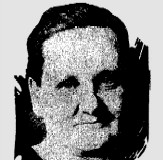
Anna Cunningham
Serial killer Bertha Gifford
Serial killer · USA · 1909
Bertha Gifford (1872- August 20, 1951) was a farmwife in rural Catawissa, Misso…
17 victims
Bertha Gifford
Serial killer · USA · 1909
Bertha Gifford (1872- August 20, 1951) was a farmwife in rural Catawissa, Misso…
17 victims
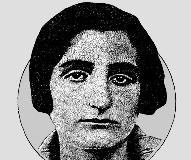 Della Sorenson
Serial killer · USA · 1918
Della Sorenson was a Nebraska woman who killed relatives by poisoning. She was…
8 victims
Della Sorenson
Serial killer · USA · 1918
Della Sorenson was a Nebraska woman who killed relatives by poisoning. She was…
8 victims
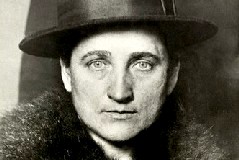 Tillie Klimek
Serial killer · USA · 1914
Ottilie “Tillie” Klimek, also known as Ottilie “Tillie” Klimek (or Tillie Gbure…
6 victims
Tillie Klimek
Serial killer · USA · 1914
Ottilie “Tillie” Klimek, also known as Ottilie “Tillie” Klimek (or Tillie Gbure…
6 victims
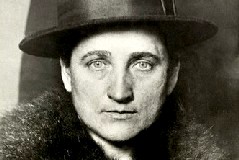 Tillie Klimek
Serial killer · USA · 1914
Ottilie “Tillie” Klimek (also known as Tillie Gburek) was a Polish American ser…
6 victims
Tillie Klimek
Serial killer · USA · 1914
Ottilie “Tillie” Klimek (also known as Tillie Gburek) was a Polish American ser…
6 victims
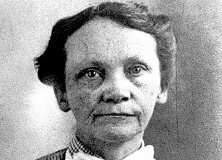 Amy Archer-Gilligan
Serial killer · USA · 1908
Amy Archer-Gilligan (1868–1962) was a serial killer in Windsor and Connecticut…
5 victims
Amy Archer-Gilligan
Serial killer · USA · 1908
Amy Archer-Gilligan (1868–1962) was a serial killer in Windsor and Connecticut…
5 victims
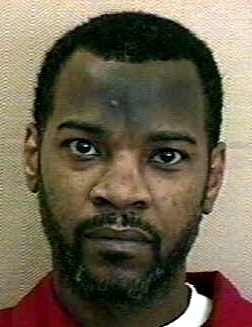 Perrie Dyon Simpson
Murderer · USA · 1984
Perrie Dyon Simpson Perrie Dyon Simpson was executed by lethal injection in Nor…
1 victim
Perrie Dyon Simpson
Murderer · USA · 1984
Perrie Dyon Simpson Perrie Dyon Simpson was executed by lethal injection in Nor…
1 victim
 Sergey Gordeyev
Homicide · Russia · 2014
Sergey Gordeyev (also spelled as Sergei Gordeev; Russian: Сергей Гордеев) was a…
2 victims
Sergey Gordeyev
Homicide · Russia · 2014
Sergey Gordeyev (also spelled as Sergei Gordeev; Russian: Сергей Гордеев) was a…
2 victims
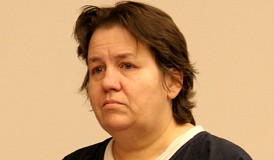 Shirley Winters
Murderer · USA · 1980
Shirley Winters was born February 27, 1958. She was an upstate New York residen…
2 victims
Shirley Winters
Murderer · USA · 1980
Shirley Winters was born February 27, 1958. She was an upstate New York residen…
2 victims
 Stephen Lawrence Anderson
Mass homicide · New Zealand · 1997
1995 — Stephen Lawrence Anderson was diagnosed with schizophrenic. · 8 February…
6 victims
Stephen Lawrence Anderson
Mass homicide · New Zealand · 1997
1995 — Stephen Lawrence Anderson was diagnosed with schizophrenic. · 8 February…
6 victims
 Rachael Mullenix
Homicide · USA · 2006
Defendant: Rachael Scarlett Mullenix (also referred to as Rachael Mullenix), 16…
1 victim
Rachael Mullenix
Homicide · USA · 2006
Defendant: Rachael Scarlett Mullenix (also referred to as Rachael Mullenix), 16…
1 victim
 Alfred Lewis Fennie
Murderer · USA · 1991
Alfred Lewis Fennie was also known by the alias “Ezell Foster.” Fennie was indi…
1 victim
Alfred Lewis Fennie
Murderer · USA · 1991
Alfred Lewis Fennie was also known by the alias “Ezell Foster.” Fennie was indi…
1 victim
- Gender
- female
- Country
- USA
- Location
- Lake County, Indiana, USA
- Date of birth
- 1873
- Age at first offence
- 45
- Characteristics
- poisoner, to collect insurance money, parricide
- Victim profile
- Her husband David Cunningham and her children Isabelle, 28; Harry, 23; Charles, 18; and Walter, 13
- Method of murder
- Poisoning (arsenic)
- Date(s) of murder
- 1918 - 1922
- Years active
- 1918–1922
- Date of arrest
- April 11, 1925
- Status
-
Life imprisonment
Sentenced to life in prison without parole on one count in 1925
Case record: Anna Cunningham
Background
Mrs. Anna Cunningham was a Chicago widow. She lived on a farm at Bachley Corners, Ind., with her family. In 1919, David Cunningham, the father and husband, died at Bachley’s Corners after intense stomach pains, a sudden attack, and several days of illness that indicated poison. His death occurred in circumstances described as similar to later deaths in the family. His insurance was $1,000.
After the father died, the family moved to Gary. Anna Cunningham attended church regularly at Bachley’s Corners. Neighbors respected her but said she was “a little queer.” She was described as eccentric and having peculiar ideas about children and other things.
After the father died, Mrs. Cunningham sold the farm of 37 acres for $4,000 to Mrs. Katherine Betts, who owned an adjoining farm. Harry Cunningham urged the family go to Gary.
The offence
Anna Cunningham admitted poisoning and killing her husband and children over intervals of a year. Authorities investigated the death of her husband and four children. Her admissions included poisoning her husband and four children, with one additional poisoned child described as possibly living.
In 1919, the father died after symptoms described as intense stomach pains, a sudden attack, and a few days’ illness, indicating poison.
Isabelle Cunningham died after a year following the family’s move to Gary. Isabelle was 28 in the April 10, 1925 account and was insured for $1,000 just five weeks later at the age of 18 in the April 10, 1925 account. A year after they left Bachley’s Corners, Isabelle died.
Harry Cunningham died of a sudden illness. Harry was 23 in the April 10, 1925 account and was described as dying in 1921, less than a year after he had been insured for $2,500. In another account, Harry was described as 23 at the time of investigation and as one of the sons.
Charles Cunningham suffered the same fate. Charles was insured for $850 in the case summary. In the April 10, 1925 account, Charles was described as the second brother to die and died a year before Isabelle’s death; the account also states that Mrs. Cunningham had paid but one premium, and that all policies named the mother as beneficiary. In the July 26, 1925 account, Charles was 18 and later 19 in the October 12, 1925 account.
Walter Cunningham died. In the April 10, 1925 account, Walter was 13 and insured for $180. In the July 26, 1925 account, Walter was described as ten years old; in the October 12, 1925 account, Walter was 13. In the April 10, 1925 account, Walter was described as the younger brother.
The last to be attacked was David Jr. He was rushed from a Gary hospital in Chicago where he was “fighting to save his life.” In the April 10, 1925 account, David Jr. is described as the 20-year-old son. Insurance carried in his name totaled $1,000. In the July 26, 1925 account, David Cunningham Jr. was described as 24 and later the same account says “David Jr.” was only partially recovered. In the October 12, 1925 account, David Jr. is described as having survived and the mother entered prison to begin a life sentence for murder.
Authorities found large quantities of poison in the Cunningham home. Mrs. Cunningham said she bought it to spray plants. When questioned further, she collapsed.
Mae Cunningham was described as the only surviving girl in the family. In the April 10, 1925 account, Mae Cunningham was 17 and said she was the only surviving girl in the family. In the July 26, 1925 account, Mae Cunningham was 19. Mae Cunningham said her mother had been ailing and hysterical at times after they moved to Gary, including chasing them “around with the butcher knife,” described as when she “got fits.” Mae said: “Usually she’d collapse after having worked herself up into a frenzy.” Mae also said her mother “had a bible, which she used to take into her room. She would lock the door and read it for hours at a time.”
Anna Cunningham was described as attempting to strangle herself and was recovering in a hospital from that attempt. Authorities described her attempt to strangle herself and that she had “admitted the poisoning of three children” at the time described in the April 10, 1925 account.
In her confession, later repudiated in court proceedings, Anna Cunningham said she had fatally poisoned Isabelle, Charles, and Walter, and that she also admitted poisoning David Jr. In one account, she said she fed the poison to her children on bread and butter sandwiches. In another account, she purportedly said she poisoned three children and also tried to kill herself so they all could “join in Heaven.” The confession was later characterized as having been obtained while she was in a delicate condition in the July 26, 1925 account.
In the October 12, 1925 account, the defense contended the mother was unbalanced mentally at the time the disputed confession was made. When arrested, she said she killed the children because she loved them and wanted them to join the father “in heaven,” and she also declared she too had taken poison in hopes of joining him.
Investigation
Suspicion first rested on Mrs. Cunningham due to the deaths of five family members over six years. David Cunningham, Jr. became ill suddenly in Gary and was removed to a Chicago hospital for treatment last April. Oscar Wolff, coroner of Cook-co (Chicago), investigated based on information given by George Arnold, 25, described as a cousin of David Cunningham, who said the Cunninghams had lived principally on insurance paid on lives of the five deceased members.
The bodies of Walter and Harry were examined, and the vital organs were examined. Mrs. Cunningham was arrested in Gary April 11 after examination of the organs of the bodies of Walter and Harry. Physicians found traces of poison in Walter’s organs, but none in those of the other young man.
The bodies were exhumed and their organs tested. After the tests, Mrs. Cunningham was arrested and her confession followed.
Arrest
Mrs. Cunningham was arrested in Gary April 11.
Trial
Mrs. Cunningham was charged with first degree murder in connection with the fatal poisoning of her ten-year-old son Walter. A jury found her guilty of first degree murder. The jury deliberated more than 24 hours.
Before Judge Martin Smith could formally pass sentence, defense counsel petitioned the judge to withhold sentence until the defense could file a motion for a new trial. The request was granted. After the jury’s verdict, Mrs. Cunningham sobbed bitterly when the judge read the verdict, but did not collapse.
The case involved multiple charges relating to the alleged killings. She was indicted on three first degree charges on June 2 by the Lake-county criminal court grand jury. Mrs. Cunningham went on trial on July 16 for the alleged killing of her youngest child, David Cunningham Jr., and Mae, 19, were described as the only survivors of the family.
The defense contended the mother was unbalanced mentally at the time the disputed confession was made. In one account, the confession was obtained in Chicago after her arrest and repudiated during the trial. In another account, it said the confession was later repudiated as having been obtained when she was in a delicate condition.
Sentencing
Mrs. Cunningham was sentenced to life in prison without parole on one count in 1925.
In the account describing confinement, a jury in Lake-county criminal court meted out confinement in prison for the rest of her natural life as the sentence. In the account describing the prison entry, Judge Martin Smith denied a motion for a new trial, and she would enter the state penitentiary at Indianapolis to begin a life sentence for murder. She entered the penitentiary the day after the denial of the motion for a new trial.
Appeals
The account describing the prison entry states she lacked funds to perfect an appeal to the Indiana supreme court.
Outcome
Mrs. Cunningham was convicted of first degree murder in connection with the fatal poisoning of her son Walter. She was sentenced to life in prison without parole on one count in 1925.
Other details
The deaths in the family were described with the following dates in the July 26, 1925 account: the father and husband died on July 2, 1918; Isabelle died on December 31, 1919; Harry died on October 18, 1921; Charles died on September 21, 1921; and Walter died on September 15, 1922. David, last to become ill, was described as partially paralyzed but gradually recovering.
Insurance carried in names mentioned included $1,000 for David Cunningham, father and husband; $1,000 for Isabelle; $2,500 for Harry; $850 for Charles; $180 for Walter; $1,000 for David Jr. in the April 10, 1925 account. All policies named the mother as beneficiary.
Large quantities of poison were found in the Cunningham home. Mrs. She collapsed when questioned further and fell ill into a state of coma on April 15 after signing a confession on April 15, from which she was revived only after hours of effort.
She was described as being pronounced a victim of epileptic psychosis.
Quotations preserved:
- Mae Cunningham said: “She used to chase us around with the butcher knife,” and added: “That was when she got fits. Usually she’d collapse after having worked herself up into a frenzy.”
- Mae Cunningham also said: “She had a bible, which she used to take into her room.
- In the April 10, 1925 account, authorities and others were described using the quoted phrase: “little queer.”
- In the July 26, 1925 account, she said she tried to kill herself so they all could “join in Heaven.”
- In the October 13, 1925 account, she declared she killed the children because she loved them and wanted them to join the father “in heaven.”
Spotted an error, or have more information about this case?