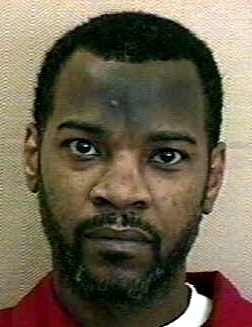
Perrie Dyon Simpson
Murderer Brian Kevin Rosenfeld
Murderer · USA · 1985
Brian Kevin Rosenfeld Brian Kevin Rosenfeld was sentenced to three concurrent l…
23 victims
Brian Kevin Rosenfeld
Murderer · USA · 1985
Brian Kevin Rosenfeld Brian Kevin Rosenfeld was sentenced to three concurrent l…
23 victims
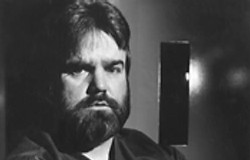 Marvin Gray
Murderer · USA · 1975
Marvin Gray was convicted killer who claimed responsibility for 23 slayings and…
23 victims
Marvin Gray
Murderer · USA · 1975
Marvin Gray was convicted killer who claimed responsibility for 23 slayings and…
23 victims
 Yahweh ben Yahweh
Murderer · USA · 1980
Yahweh ben Yahweh was born and legally named Hulon Mitchell Jr. (October 27, 19…
23 victims
Yahweh ben Yahweh
Murderer · USA · 1980
Yahweh ben Yahweh was born and legally named Hulon Mitchell Jr. (October 27, 19…
23 victims
 Russell Ellwood
Murderer · USA · 1991
Russell Ellwood was a former taxi driver. Authorities suspected him of killing…
20 victims
Russell Ellwood
Murderer · USA · 1991
Russell Ellwood was a former taxi driver. Authorities suspected him of killing…
20 victims
 Anthony & Damian Clemente
Murderers · USA · 1995
November 6, 1995 — Anthony and Damian went to the 99 Restaurant; Anthony used a…
4 victims
Anthony & Damian Clemente
Murderers · USA · 1995
November 6, 1995 — Anthony and Damian went to the 99 Restaurant; Anthony used a…
4 victims
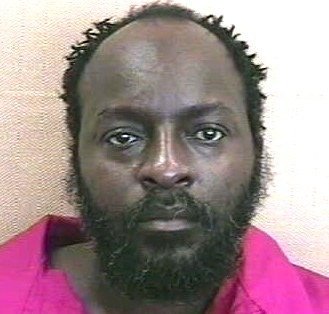 Sammy Crystal Perkins
Murderer · USA · 1992
Sammy Crystal Perkins was a Black male born on 10/01/1953. He was sentenced to…
1 victim
Sammy Crystal Perkins
Murderer · USA · 1992
Sammy Crystal Perkins was a Black male born on 10/01/1953. He was sentenced to…
1 victim
 John Glenn Moody
Murderer · USA · 1988
Name: John Glenn Moody · Sentence status: Executed by lethal injection in Texas…
1 victim
John Glenn Moody
Murderer · USA · 1988
Name: John Glenn Moody · Sentence status: Executed by lethal injection in Texas…
1 victim
 Anthony Nathaniel Bonham
Murderer · USA · 1981
Anthony Nathaniel Bonham (also shown as Antonio Nathanial Bonham) was executed…
1 victim
Anthony Nathaniel Bonham
Murderer · USA · 1981
Anthony Nathaniel Bonham (also shown as Antonio Nathanial Bonham) was executed…
1 victim
 Carl Chichester
Murderer · USA · 1991
Carl Chichester · Carl Hamilton Chichester — defendant; was convicted of capita…
1 victim
Carl Chichester
Murderer · USA · 1991
Carl Chichester · Carl Hamilton Chichester — defendant; was convicted of capita…
1 victim
- Gender
- male
- Country
- USA
- Location
- Rockingham County, North Carolina, USA
- Date of birth
- October 30, 1962
- Age at first offence
- 22
- Characteristics
- robbery, murder for hire, domestic violence, abuse, drug addict, fugitive, torture, kidnapping, rape
- Victim profile
- Jean Darter, 92 (retired Baptist preacher)
- Method of murder
- Strangulation
- Date(s) of murder
- August 27, 1984
- Years active
- 1984
- Date of arrest
- September 21, 1984
- Status
-
Executed
Executed by lethal injection in North Carolina on January 20, 2006
Case name
Perrie Dyon Simpson
Status
Perrie Dyon Simpson was executed by lethal injection in North Carolina on January 20, 2006.
Timeline
- 12/01/2005 — Simpson’s execution date was set for Jan 20, 2006.
- 01/19/2006 — Witnesses were named for Simpson’s execution scheduled for 2 a.m. on January 20 at Central Prison.
- 01/20/2006 — Simpson was executed early in the morning at Central Prison.
- 12/20/1993 — Perrie Simpson was sentenced to death in Rockingham County Superior Court for the murder of Rev. Jean Ernest Darter.
- Aug. 27, 1984 — Rev. Jean Darter was murdered.
- Sep. 21, 1984 — Simpson was arrested on a warrant for simple assault in Greensboro and questioned regarding the Darter murder.
- 10 days old — Simpson entered the foster care system at 10 days old.
- 1984 — Simpson was executed for the 1984 beating death of a retired Rockingham County minister.
Background
Perrie Dyon Simpson was executed for the 1984 beating death of retired Rockingham County minister Jean Ernest Darter, 92, of Reidsville. Simpson was 21 at the time of the killing and was executed at age 43.
Simpson spent his life in the state’s foster care system and prison system. He was assigned to foster care 10 days after his birth, and he later spent half of his life in the foster care system and the other half in the prison system. Simpson’s three attorneys said his unstable and emotionally deprived childhood resulted from social service agencies failing him from the time he entered foster care at 10 days old until he left at 18. Both of his parents went to prison for child abuse. His attorneys argued the killing was a culmination of his years of child abuse and neglect and a brain disorder. A social worker, Joan Landreth, testified for Simpson, and she said Guilford County Department of Social Services was granted custody of him at 10 days old, that she was responsible for placement when he was nine years old, and that by age 18 he had been placed with a number of foster-care families. Landreth testified Simpson experienced problems with recurring skin rashes and slurred speech.
The offence
Rev. Jean Ernest Darter lived in Reidsville and was a retired Baptist preacher. He was found dead in his home after a killing that involved strangulation, beating, and cutting.
Doris Darter Faircloth tried to telephone her father the night of his murder but was unable to reach him. When she and her husband drove to Darter’s house, they noticed the only light turned on was in the bathroom. They unlocked the back door and went to the bathroom to see if Darter had fallen and hurt himself. Darter was not in the bathroom. Faircloth went to her father’s bedroom and saw him lying across the bed. She said: “I knew that he was dead because he was so still.”
Faircloth’s husband turned the bedroom light on, and she said what they saw was: “so horrible that I seemed not to be able to see it all collectively. I saw it in bits and pieces.”
Faircloth saw a strap around her father’s neck that was tied to the bedpost, and she said: “and it was tied to the bedpost and then I looked at his eyes and by that time I said 'somebody did this to him.'”
Investigators found no signs of forced entry and found that telephone cords had been cut. Mobile Crime Laboratory officers with the State Bureau of Investigation identified, collected, and preserved evidence at the murder scene. They found that although Darter kept the inside of the house neat and clean, in one bedroom the sheets and covers were wadded up, dresser drawers were pulled out, and the contents were dumped onto the floor. A bundle of knives lay in the kitchen sink, and both the freezer and refrigerator doors were cracked open, with food beginning to thaw. In a storage area off the kitchen, investigators found a carton of glass Tab bottles, and one bottle was missing. In the bathroom, they found a pack of razor blades in the sink. Investigators also found a writing pad with names “Lisa Marie Johnson” and “Curtis Anthony Parker” written on it.
In another bedroom, Darter lay on the bed with his feet on the floor. Two belts were wrapped around Darter’s neck. The outer belt was the largest and thickest and tied to the bedpost; the inner belt was broken. Darter’s face was bloated and bloody, and he had glass in his left eye. A design composed of many small circles and dots was imprinted on his left cheek. Both of his arms were cut open from his elbows to his wrists. Blood was on the bed, ran down the side of the bed, and formed a puddle on the floor; blood was also on the walls and window blinds. On the bed were the contents of two dresser drawers, shattered glass, Darter’s broken glasses, his false teeth, a razor blade, and the neck of a glass Tab bottle. Directly under Darter’s elbow was a photo album entitled, “My Grandchildren.”
Prosecutors pointed out gruesome aspects of the murder: Darter was found with his neck tied to the bedpost by a belt; a broken glass Tab bottle was nearby; he had been beaten so severely with it that there was glass in his eye; blood pooled by the bed; and he had been deeply cut from elbow to wrist on both arms with his own razor blades.
The Supreme Court description of the facts included: Darter was tied to a bedpost at the foot of his bed by a belt wrapped around his neck; both arms were slashed open; his head was bloated and his face was covered with blood; his left cheek bore an imprint matching the bottom of a broken Tab bottle on the bed; blood and glass fragments were in his eyes; and a bloody razor blade lay near his right hand. The Supreme Court also said items were missing from the home.
Simpson and his girlfriend/co-defendant Stephanie Eury killed Darter by strangling him with two belts and cutting his arms, and they beat him with a glass soft-drink bottle. Simpson also used a double-edged razor blade to cut both arms. Simpson and Eury took items from the house during the robbery, including a radio, three boxes of tissue, a flashlight, and a laundry basket. They also gathered a bag of food, a porcelain lamp, a radio, and boxes of Kleenex in a plastic laundry basket. The last thing they did before leaving was to turn off all the lights except the bathroom light.
Investigation
Detectives responded after Faircloth and her husband called police because the telephone cords had been cut. They observed no forced entry and that cords on the telephones in the hall and in the bedroom had been cut.
Mobile Crime Laboratory officers conducted a walk-through to determine Darter’s housekeeping habits and to help identify anything out of place. They found wadded sheets and covers, pulled-out dresser drawers with contents dumped onto the floor, knives in the kitchen sink, cracked freezer and refrigerator doors, a missing glass Tab bottle, a pack of razor blades, and the writing pad with names “Lisa Marie Johnson” and “Curtis Anthony Parker.”
Investigators learned that a long-distance telephone call had been made from Darter’s residence to a telephone in Greensboro on August 26, 1984. They determined the telephone number belonged to a woman named Ruby, and Ruby Locklear replied that the only person who ever called from Reidsville was a man named Perrie Dyon Simpson and that he called her when he wanted to reach his father.
Detectives also testified that eight latent fingerprints found in the Darter house matched Simpson. Fingerprints were found on a hall telephone, in the bedroom, and in the kitchen, and some matched Simpson while others matched Stephanie Eury.
The police learned there was an outstanding warrant for Simpson in Greensboro for simple assault, and that he was arrested and brought into custody on September 21, 1984.
Arrest
Simpson was arrested on September 21, 1984 on a warrant in Greensboro for simple assault. Officers went to the Eury residence, where Peggy Eury admitted them and where they found Simpson. The defendant was taken to the Reidsville Police Department at approximately 9:30 p.m. The warrant was read to him and he was advised of his constitutional rights. He signed a written waiver stating he read and understood his rights, wished to talk without an attorney, and that no promises or threats had been made.
The Supreme Court’s description also stated that the officers briefly questioned him about the unrelated assault and that the officers temporarily ended questioning after he agreed to take a polygraph test. It described that he denied knowledge of the Darter murder initially, then said that the polygraph would show he was lying and that he needed to tell the officers something.
Interrogation and confession
Simpson was advised of his Miranda rights and agreed to talk about the Darter murder. He signed a written statement saying he read about the Darter murder but knew nothing about it. In an extended questioning period, Simpson made a sixteen-page written statement confessing his involvement in the murder. He also gave an inculpatory oral statement in the nature of a confession and later provided a written statement.
During the questioning, Simpson called Ruby Locklear in Greensboro to see if she had seen his father. After Simpson got off the telephone, he heard Stephanie tell Darter that her name was “Lisa” and Simpson’s name was “Curtis Anthony,” and Simpson watched Darter write these names on a pad of paper.
Simpson told police that before he and Stephanie left the house, Darter gave them some sponge cake and peaches to take with them, and that Darter was “real friendly to us and was very helpful.”
Simpson described the first visit: he and Stephanie went for a walk to look for money; Stephanie went to the front door, told Darter she was hungry, and he brought her a diet soft drink while he gave Simpson a glass of milk. Simpson said Stephanie asked if they could come inside, and the three went into the front living room. Simpson said Stephanie told Darter they were traveling to Florida and had gotten stuck in Reidsville, and Darter suggested they contact Salvation Army or police. Stephanie asked for money and Darter gave her four dollars, explaining that was all the cash he had.
Simpson described the second visit and killing: he and Stephanie talked about going back to Darter’s house to get money. Once it was dark, Simpson said they walked to the house looking around to make sure no one saw them, rang the doorbell, and forced their way inside when Darter answered. Simpson said Darter ran to the telephone, but Simpson “pulled the preacher's hands off the telephone.” Simpson told Stephanie to cut the telephone cords. Simpson told police that he was struggling with Darter holding onto his arms to control him and force him back into his bedroom so he would tell him where some money was. Simpson held Darter down with his hands around his neck and told him he wanted money “or else,” but Darter told him he did not have any money and that if he was killed, he was going to heaven. Simpson said: “this frustrated me and I grabbed him tighter around the throat.”
Simpson said he reached across the bed and got a belt and “looped it around his neck and tightened the belt.” While holding the belt, he rummaged through two dresser drawers Stephanie dumped onto the bed. He said that when the first belt broke, he got another thicker belt, “and looped this leather belt around the preacher's neck and tightened up on this leather belt.” Simpson said: “Then I called Stephanie to bring me something in the bedroom to kill this preacher with.” He said he went in the kitchen and looked for some device to beat the old preacher and finish him off. Simpson said he picked up a full pop bottle, then decided to get an empty bottle, returned to the bedroom, pulled tight on the belt, and hit the old preacher hard three times with the bottle and on the third blow the soft drink bottle broke.
Simpson said he then decided to tie the end of the belt to the bedpost and went into the bathroom to get a double-edged razor blade. He said: “I held this double-edged razor blade between my right index finger and right thumb and then I sliced the preacher's arms from the biceps all of the way down the under side of the forearms to the wrist. I cut both of the preacher's arms.” He said Stephanie gathered a bag of food, a porcelain lamp, a radio, and boxes of Kleenex and packed them in a plastic laundry basket, and that the last thing they did before leaving the preacher's house was to turn off all the lights except the bathroom light.
Trial
Guilty pleas and sentencing proceeding
Simpson pled guilty to one count of first degree murder, one count of robbery with a dangerous weapon, and one count of conspiracy to commit murder. After guilty pleas were entered, a jury was empaneled for purposes of determining punishment for first degree murder.
After hearing evidence in the sentencing proceeding, the jury recommended death. On 12 March 1985, judgments and commitments were entered sentencing Simpson to death for first degree murder, imprisonment for forty years for robbery with a dangerous weapon, and imprisonment for three years for conspiracy to commit murder.
Simpson appealed.
Evidence in the capital sentencing proceeding
In the capital sentencing proceedings, the State presented evidence that Darter was murdered in his Reidsville home. His daughter Doris testified about discovering his condition and the strap tied to the bedpost, and about calling police because telephone cords were cut. Investigators described evidence found in the house as set out above.
Sentencing
Simpson received a death sentence after the jury recommended death.
The Supreme Court described the death sentence as resulting from jury recommendations and subsequent remands for resentencing due to errors identified in earlier appeals. The third capital sentencing appeal included a passage where the Supreme Court stated the murder involved schemes and torture of an old and defenseless man who had welcomed Simpson into his home and given him food and aid.
The Supreme Court also stated: “schemed and plotted his attack upon an old and defenseless man who had welcomed defendant into his home and given him food and aid. Defendant lurked outside the house waiting for night to fall before he forced his way inside and mercilessly terrorized and tortured a man who only the day before had tried to help him. Just as the defendant in (a similar case) this defendant's ability to appreciate the criminality of his conduct was not found to be impaired. In light of the fact that the victim befriended the defendant only the day before his murder, and the utterly brutal manner in which defendant murdered this elderly man, we find this murder to be even more callous than the murder in (the other case).”
At the third capital sentencing proceeding, the trial court submitted two aggravating circumstances to the jury: that the murder was committed while defendant was engaged in the commission of a robbery, and that the murder was especially heinous, atrocious, or cruel. The jury found both aggravating circumstances existed.
The jury found beyond a reasonable doubt that mitigating circumstances were insufficient to outweigh the aggravating circumstances and found aggravating circumstances sufficiently substantial to call for the imposition of the death penalty.
Appeals
Direct appeal after first death sentence
In State v. Simpson, 320 N.C. 313, 357 S.E.2d 332 (N.C. 1987) (Direct Appeal), Simpson pled guilty to first-degree murder, robbery with a dangerous weapon, and conspiracy to commit murder. The Supreme Court held that the magistrate's denial of bail on an unrelated charge did not require suppression of Simpson’s subsequent voluntary confession. The Court also held police officer comments about a polygraph did not amount to threat or coercion invalidating the confession. The Court found prejudicial error because the trial court refused to allow more than one counsel to participate in final argument to the jury at conclusion of the sentencing phase, and remanded for a new sentencing proceeding and resentencing according to law as prescribed in capital cases.
In the same decision, the Supreme Court also described evidence and procedure surrounding confession admissibility, including that Simpson was advised of rights multiple times, provided food and drink, and offered an opportunity to attempt to communicate with his father.
Vacating death sentence on unanimity instruction
In State v. Simpson, 341 N.C. 316, 462 S.E.2d 191 (N.C. 1995) (Direct Appeal After Second Resentencing), after affirmance of convictions, vacation of the death sentence, and remand for resentencing, a superior court imposed death again. The Supreme Court held that an erroneous instruction that the jury had to find mitigating circumstances unanimously was not harmless error, in light of substantial evidence supporting at least two mitigating circumstances; it held the jury poll was not sufficiently specific to render harmless the error, and it addressed jurors’ knowledge of a prior death recommendation.
The Supreme Court stated that its review revealed the trial court instructed the jury contrary to McKoy v. North Carolina. It explained that the trial court instructed the jury to write “yes” after a mitigating circumstance if the jury found unanimously it existed and to write “no” otherwise. The State conceded it could not argue harmlessness because there was evidence from which jurors could have found one or more rejected mitigating circumstances. The Supreme Court concluded it could not determine beyond a reasonable doubt that the unanimity instruction did not preclude consideration of mitigation and held the death sentence vacated with remand for a new capital sentencing proceeding.
Subsequent review
In State v. Simpson, 341 N.C. 316, 462 S.E.2d 191 (N.C. 1995) (Direct Appeal After Second Resentencing), after issues on prospective jurors’ ability to serve and the effect of prior knowledge, the death sentence was vacated and remanded for new capital sentencing proceeding.
Third sentencing appeal
In State v. Simpson, 320 N.C. 313, 357 S.E.2d 332 (N.C. 1987) and later State v. Simpson decisions, the death sentence was ultimately affirmed after the third capital sentencing proceeding.
In the third sentencing review described in the material, the Supreme Court held no error and determined the death sentence was not disproportionate. It also considered issues including prospective jurors, jury instructions, mitigation testimony, and cross-examination of experts. The Supreme Court held no error and determined the sentence of death was not excessive or disproportionate.
Outcome
Aftermath
Execution arrangements and witnesses
Witnesses were named for Simpson’s execution scheduled for 2 a.m. Named official witnesses were Curtis Faircloth (victim’s family member), Chris Zisi (victim’s family member), Phyllis Faircloth (victim’s family member), Robert Jordan (victim’s family member), Lt. Dwight Lucas (Reidsville Police Dept. (retired)), and Walter House (Special Agent, State Bureau of Investigation). Named media witnesses were Estes Thompson (Associated Press, Raleigh) and Glen Baity (Reidsville Review). Simpson’s execution was watched by an uncle and aunt, along with two defense lawyers. Grandchildren of the victim and two police officers also watched.
Final statement and remorse
Before execution, Simpson apologized to the victim’s family and his own relatives. In his last statement, Simpson said: “I want to say I am sorry for what I did,” “I'm sorry for the victim and the families.” “I'm sorry for my family.” “I'm sorry for everybody.”
At the end, Simpson also addressed his co-defendant, Stephanie Eury, and said: “I want to say to Stephanie, I'm sorry for what happened to you. I wish you'd get out and make a life for yourself. May God bless everyone,” according to accounts of his last remarks.
Family statement from Darter’s relatives
Darter’s family issued a written family statement conveyed through grandson Curtis Faircloth. The statement said: “Our grandfather Jean Earnest Darter was a kind, gentle man who lived his life in service to others.” “We, the family, live with the memory of terror Perrie Simpson inflicted upon Rev. Darter, but we are not interested in sympathy or being portrayed as victims.” “Life goes on and we do our best to make the most of it. Our grandfather would want it that way.” “In attending the execution, we are honoring the wishes and memory of our parents and the life of our grandfather.” “We respect the legal decision determined with extreme care by three sets of jurors in three separate trials.” “We are thankful for the dedication of the officers, investigators, attorneys, and other legal professionals that worked long hours to properly determine Perrie Simpson's guilt and appropriate sentence.” “We believe the death penalty saves lives.” “Clemson and Emory Universities determined 18 lives are saved as a result of each execution.” “Other studies indicate that each death sentence and subsequent execution deters up to 25 murders annually.” “We hope coverage of Perrie Simpson's death sentence and execution will cause others to think about the consequences of taking a life, respect the law, and increase the value people place on the life of others.” “Sincerely, Curtis Faircloth, Grandson The Family of Jean Earnest Darter”
Protest activity and arrests
Late Thursday evening, 14 protesters tried to stop the execution and were arrested in the crosswalk next to the Central Prison driveway. Most protesters remained standing with candles demonstrating opposition to the death penalty. Officials reported that police made 16 arrests and that the offenders would be charged with trespassing. A Durham resident, Sheila McCarthy, said: “It's not necessary to protect society,” and added: “It just makes us all more violent.”
Last meal and medical transport
For his last meal, Simpson requested a McRib sandwich from McDonald’s, a double cheeseburger from Wendy’s, macaroni and cheese, cheesecake, and a Pepsi. The Department of Corrections reported Simpson’s last day was spent visiting with family members and friends. After the execution, Simpson’s body was transported to the chief medical examiner’s office in Chapel Hill shortly after the execution. Details of burial were not available at press time.
Defense and legal team statement
Polly Sizemore spoke on behalf of Simpson’s legal team and issued a statement after the execution. She said: “As it did for the first 18 years of his life, the state failed him again tonight,”
Simpson’s attorney Robert Elliot said on Thursday night: “Nobody has ever said Perrie should get out. We're saying life without parole is a viable option,” and he said his client was “at peace” and moved by the support of his friends and loved ones.
Other details
Execution timing
Simpson entered the preparation room about 1:15 a.m., was strapped to a gurney, and covered up to his shoulders with a blue sheet. Simpson was moved into the execution chamber at 1:50 a.m. He was pronounced dead at 2:17 a.m.
Conditions described during the execution
Accounts described Simpson’s posture and actions before the curtain was drawn, and that he did not say anything as he was restrained before his lethal injections.
Related co-defendant
Stephanie Eury was Simpson’s teenage girlfriend at the time of the killing and co-defendant. Eury was convicted of murder and received a life prison sentence. One account stated she was serving life at Southern Correctional Institute in Troy; another stated she is serving a life prison sentence. In one account, Eury was 37 at the time of reporting after the execution. The material also stated she had been convicted of murder and was sentenced to life imprisonment.
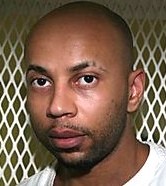
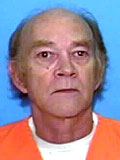
Spotted an error, or have more information about this case?