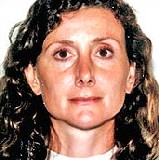
Susan Cummings
Homicide Andrea Yates
Homicide · USA · 2001
Andrea Pia Yates (born Andrea Pia Kennedy on July 2, 1964) was a former Houston…
5 victims
Andrea Yates
Homicide · USA · 2001
Andrea Pia Yates (born Andrea Pia Kennedy on July 2, 1964) was a former Houston…
5 victims
 Coleen Thompson
Homicide · USA · 2002
Coleen Thompson was a former intensive care nurse at Shady Grove Adventist Hosp…
5 victims
Coleen Thompson
Homicide · USA · 2002
Coleen Thompson was a former intensive care nurse at Shady Grove Adventist Hosp…
5 victims
 Christine Paolilla
Homicide · USA · 2003
Christine Marie Paolilla was an American woman born on Long Island, New York on…
4 victims
Christine Paolilla
Homicide · USA · 2003
Christine Marie Paolilla was an American woman born on Long Island, New York on…
4 victims
 Melissa Marvin
Homicide · USA · 1999
Melissa Lynn Marvin was a 29-year-old waitress and amateur surfer at the time o…
4 victims
Melissa Marvin
Homicide · USA · 1999
Melissa Lynn Marvin was a 29-year-old waitress and amateur surfer at the time o…
4 victims
 Lashaun Harris
Homicide · USA · 2005
Oct. 19, 2005 — A jury trial later concerned the drownings of three young sons…
3 victims
Lashaun Harris
Homicide · USA · 2005
Oct. 19, 2005 — A jury trial later concerned the drownings of three young sons…
3 victims
 Ann Miller Kontz
Murderer · USA · 2000
Ann Miller Kontz was the widow of Eric Miller and the defendant in the arsenic…
1 victim
Ann Miller Kontz
Murderer · USA · 2000
Ann Miller Kontz was the widow of Eric Miller and the defendant in the arsenic…
1 victim
 William Glenn Rogers
Murderer · USA · 1996
William Glenn Rogers was sentenced to death for the kidnapping, rape, and murde…
1 victim
William Glenn Rogers
Murderer · USA · 1996
William Glenn Rogers was sentenced to death for the kidnapping, rape, and murde…
1 victim
 Tiffany Cole
Murderer · USA · 2005
Tiffany Cole (WF), born 12/3/81, was sentenced to death for her role in the dou…
2 victims
Tiffany Cole
Murderer · USA · 2005
Tiffany Cole (WF), born 12/3/81, was sentenced to death for her role in the dou…
2 victims
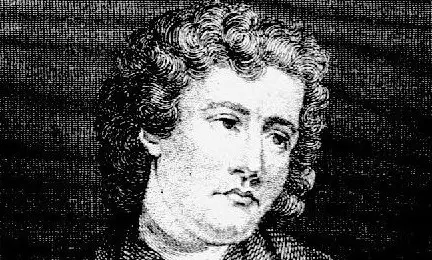 Eugene Aram
Murderer · United Kingdom · 1744
Eugene Aram (1704 - August 6, 1759) was an English philologist who also became…
1 victim
Eugene Aram
Murderer · United Kingdom · 1744
Eugene Aram (1704 - August 6, 1759) was an English philologist who also became…
1 victim
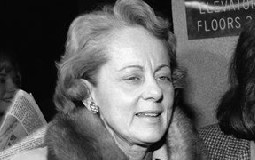 Jean Harris
Murderer · USA · 1980
Jean S. Harris was born Jean Struven in 1923 in Cleveland, USA. Her mother, Mil…
1 victim
Jean Harris
Murderer · USA · 1980
Jean S. Harris was born Jean Struven in 1923 in Cleveland, USA. Her mother, Mil…
1 victim
 Stephen Elliot Powers
Murderer · USA · 1998
Stephen Elliot Powers was convicted of capital murder and was sentenced to deat…
1 victim
Stephen Elliot Powers
Murderer · USA · 1998
Stephen Elliot Powers was convicted of capital murder and was sentenced to deat…
1 victim
- Gender
- female
- Country
- USA
- Location
- Warrenton, Fauquier County, Virginia, USA
- Date of birth
- August 19, 1959
- Age at first offence
- 38
- Characteristics
- —
- Victim profile
- Argentine polo player Roberto Villegas, 38 (her boyfriend)
- Method of murder
- Shooting
- Date(s) of murder
- September 7, 1997
- Years active
- 1997
- Date of arrest
- Same day (surrenders)
- Status
-
Released
Sentenced to 60 days in jail on May 13, 1998 and ordered to pay $2,500; released after serving 51 days.
Background
Susan Cummings (born c. 1959) was an American heiress. She was convicted of killing her boyfriend, Argentine polo player Roberto Villegas.
Cummings inherited her fortune from her father, Samuel Cummings, who had been a CIA agent turned arms dealer. She lived a lavish lifestyle, owning a horse farm and being a well known Virginia socialite.
Cummings and her fraternal twin sister, Diana, were the only children of billionaire arms dealer Samuel Cummings (1927–1998). After the family moved to the United States, Samuel Cummings bought his daughters a lavish estate in Warrenton, Virginia named Ashland Farms. The firm of Versaci Neumann Partners designed their manor house on later property, and it won recognition in the 2006 Washingtonian Residential Design awards.
After the family moved, Cummings and her twin sister later lived at LeBaron Farm in Culpeper County, Virginia, and sold the Ashland Farm estate.
The offence
On September 7, 1997, in the kitchen of her 350-acre estate outside Warrenton, Susan Cummings shot her boyfriend, Roberto Villegas. Her account was that she shot him in self-defense after he threatened her with a knife and slashed her left arm.
Cummings placed a call to the 911 emergency service number and claimed that she had shot her boyfriend in self defense. She told the dispatcher and police that Villegas had turned abusive toward her and threatened to kill her with a knife.
Villegas was found with a knife crossing his arm. Cummings presented some minor cuts, which police suspected were self-inflicted. She told police she felt in fear of her life and that she fired after hearing his chair scrape behind her. She also described backing up toward the kitchen door as she fired the four shots and stated she did not know whether Villegas had already gotten out of his chair.
Prosecutors contended that she altered the scene to make it look like self-defense. Assistant Commonwealth's Attorney Kevin E. Casey said forensic evidence indicated Villegas was seated at the kitchen table when he was shot, and that a knife found beside Villegas's body had almost no blood on it, making it unlikely that he was holding it when he was shot. Prosecutors also contended that cuts on Cummings's arm appeared to be self-inflicted.
During trial testimony, Cummings stated that Villegas had held her by the throat and methodically “slashed” her left arm with a knife. She testified that Villegas was angry because she had told him their relationship was over. She also testified that Villegas said he would never let her go, that he wanted children and to get married, and that if she did not agree he would kill her. She testified that Villegas released her and allowed her to walk over to the sink, but she said: “I felt in fear of my life. I thought, 'This is it. This man is going to kill me.'”
Cummings testified under cross-examination that she was backing up toward the kitchen door as she fired and that she needed to “get this man out of my life.” She also stated she grabbed for the gun because “I would feel safer if I had a pistol. . . . I need to get this man out of my life.”
Investigation
Police suspected that Cummings's minor cuts were self-inflicted. Crime scene evidence was discussed at trial, including testimony that blood spatters on the wall and on the victim's pants showed Villegas was seated when he was killed.
Sgt. Robert C. Zinn, a Prince William County police specialist on crime scene evidence, testified that the knife found under Villegas's body had almost no blood on it, stating: “We have all of this wet blood and none of it on the knife. That wouldn't happen,” and that blood spatters on the wall and on the victim's pants indicated Villegas was seated when he was killed.
Prosecutors also argued that Cummings had earlier involvement with police to set up her defense, describing it as laying groundwork. Assistant Commonwealth's Attorney Kevin Casey said Cummings only went to deputies before the shooting to set up her defense strategy.
A statement that Cummings filed with Fauquier deputies two weeks before the shooting was described during court proceedings. The statement included:
- “overpowering, short-fused and 'the crazy type.' ”
- “refuses to let go”
- “I will put a bullet in your head and hang you upside down to let the blood pour on your bed.” Cummings wrote that in the last month he had shown signs of aggression, and she described him directly as threatening to kill her.
Prosecutors said Cummings did not get a restraining order or put “no trespassing” signs up at her farm, despite deputies advising her to do so.
Arrest
Cummings was arrested and charged with first-degree murder and use of a firearm in the commission of a felony. She was released on $75,000 bond.
Trial
Cummings's trial ensued and included extensive testimony regarding abuse she said she suffered and prosecutors' claims of premeditation and forensic inconsistency.
A Fauquier County jury convicted Cummings of voluntary manslaughter, and the charge of first-degree murder was reduced to voluntary manslaughter.
Prosecution position
Prosecutors argued that Cummings was guilty of premeditated murder because forensic evidence showed Villegas was sitting at the kitchen table when he was shot. Prosecutors also argued that the knife found beside Villegas's body was suspiciously free of blood and that cuts on Cummings's arm appeared to be self-inflicted.
Casey told the jury during closing arguments:
“That's the best version she could possibly come up with and . . . at best Roberto looked like maybe he was getting out of his chair,”
In closing arguments, prosecutors and their witnesses argued that Cummings's version did not provide strong evidence that she felt in jeopardy. Casey also said:
“We have a holster that was made for the murder weapon in her bedroom. At some point, Ms. Cummings retrieved the murder weapon,” and: “There is no evidence to support [her] claim that he tried to kill her. . . . During all four shots, Mr. Villegas was seated in the chair.”
During cross-examination and argument, prosecutors questioned Cummings's motive and alleged that she scheduled another meeting with deputies for Sept. 8, the day after Villegas was killed.
Defense position
Cummings's attorney Blair Howard argued that Cummings was acting in self-defense as Villegas came at her with a knife, stating that she acted out of rational fear that her life was in danger. During opening and argument, Howard said:
“how deeply I appreciate the jury's consideration.”
In describing self-defense in her home, Howard said:
“In Virginia, if you are violently attacked in your own home and your life is in danger, you do not need to retreat.”
Howard argued there was no motive other than Villegas crossing the line into violence. Howard told the jury during closing arguments:
“There was no reason for her to shoot this man other than that he had crossed the line” into violence,
During sentencing phase remarks, Howard argued that Cummings was a quiet, nonviolent person who had been pushed beyond her limits by Villegas's abuse and said:
“All of us have a breaking point,” “We all make mistakes. That doesn't mean she's a bad person. That doesn't mean she belongs in the state penitentiary.”
Howard also made comments about the “lowest sentence” and acceptance of the verdict and sentence.
Witness testimony and evidentiary disputes
Witnesses testified that Villegas had punched, hit, and publicly berated Cummings in the months before the shooting. Cummings testified that Villegas held her by the throat while “slashed” her left arm with a knife. She said he had put a horse’s leading rope around her neck and pulled while saying:
- “I'll put you out of your misery. I'll kill you. I'll never leave you.”
Cummings testified she felt safe only after retrieving a gun and that she shot him when she heard the chair scrape behind her. Prosecutors disputed this, arguing that Villegas was seated and that forensic evidence contradicted her claim that he had been coming at her with the knife at the moment of shooting.
A juror who asked not to be identified said the jury tried to view everything during deliberations and described the evidence review:
“We tried to view everything” and: “We went over all of the evidence over and over.”
The juror described the jury as giving equal weight to forensic evidence pointing to Cummings's guilt and to two days of emotional testimony about Villegas's alleged mistreatment.
Cummings testified she was calm and steady as she described the abuse she said she had suffered at her lover's hand, including claims he made fun of her disabled left hand.
Sentencing
On May 13, 1998, the jury recommended a 60-day sentence after convicting Cummings of voluntary manslaughter. Cummings accepted the recommendation.
Cummings was sentenced to 60 days in jail and ordered to pay $2,500. She was released after serving 51 days.
A sentence-related description included that Judge Carleton Penn ordered that Cummings serve her time in Fauquier, with commentary that officials said the conditions and privileges in jail were up to the sheriff.
Appeals
Cummings decided not to appeal.
Outcome
Cummings's conviction for voluntary manslaughter led to 60 days in jail and a $2,500 fine, and she was released after serving 51 days.
Aftermath
Cummings and her defense team accepted the outcome without another hearing after deciding not to appeal.
Reporting around her incarceration described she was permitted certain jail privileges, including entertaining multiple visitors for hours each day, and she had been placed in a room with a telephone. Sheriff Joseph Higgs transferred five prisoners to jails in neighboring communities out of concern for Cummings's safety.
Sheriff Joseph Higgs was described as clearing other prisoners from her cellblock so she could serve her sentence in private. Maj. David Flohr stated: “All I can say is that I work for Sheriff Higgs and follow his orders,”
Board chairman David C. Mangum said he understood the decision to isolate Cummings but said: “That's not right,” and:
“She should be treated like other prisoners.”
Nancy Grant said:
“That's just not fair. It's because she's an heiress. I think if it was anyone else, we definitely would not get preferential treatment.”
Cummings's attorney Blair Howard said:
“Let me tell you, anything that they're allowing down there, that's the decision of the jail,” Howard said.
Cummings's punishment was also described in relation to the Fauquier jail population and other inmates, including inmates serving longer sentences for lesser crimes.
Cummings's father, Samuel Cummings, died on April 29 in Monaco, and Cummings was to begin serving her sentence on Saturday after a memorial service for him.
Villegas was transported for burial in Argentina. The article described that his body was loaded onto American Airlines Flight 1567 at Dulles International Airport and shipped back to his mother and sister in Argentina, and that he was to be buried the next day after the funeral.
Other details
Cummings pleaded self-defense.
In describing her 911 call and immediate actions, she told the dispatcher: “I need to report a shot man, and he's dead.”
When police arrived, Cummings had called her sister Diana with instructions including:
- “Don't go in the kitchen . . . Roberto is dead,”
- “The cops are coming right away, Diana. . . . Sit down . . . sit down.”
Cummings shot Villegas four times.
Cummings's relationship history included that witnesses testified to abuse she said Villegas inflicted. In testimony and statements, she described verbal and physical abuse, including being punched and having a noose put around her neck.
Cummings sold the 340-acre Ashland Farm estate on the edge of Warrenton in Fauquier County, Virginia for $4.9 million in 2004. After the sale, she and her twin sister Diana moved to the 450-acre LeBaron Farm in Culpeper County, Virginia.
In 2004, writer Lisa Pulitzer wrote a book on the case called A Woman Scorned. A biography program included an interview with a young Tareq Salahi, described as a friend of Roberto Villegas. The case was also featured in an episode of “Behind Mansion Walls” on the ID channel (Investigation Discovery).
Spotted an error, or have more information about this case?