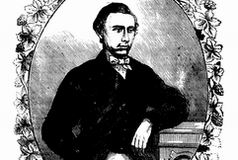
Frederick Baker
Murderer Charles Peace
Murderer · United Kingdom · 1876
Charles Peace was executed by hanging in Leeds on February 25, 1879. Charles Pe…
2 victims
Charles Peace
Murderer · United Kingdom · 1876
Charles Peace was executed by hanging in Leeds on February 25, 1879. Charles Pe…
2 victims
 Edward Pritchard
Murderer · United Kingdom · 1865
Edward Pritchard was a Scottish doctor who was convicted of poisoning his wife…
2 victims
Edward Pritchard
Murderer · United Kingdom · 1865
Edward Pritchard was a Scottish doctor who was convicted of poisoning his wife…
2 victims
 Henry Wainwright
Murderer · United Kingdom · 1874
Henry Wainwright was executed by hanging outside Newgate on 21st December 1875.…
1 victim
Henry Wainwright
Murderer · United Kingdom · 1874
Henry Wainwright was executed by hanging outside Newgate on 21st December 1875.…
1 victim
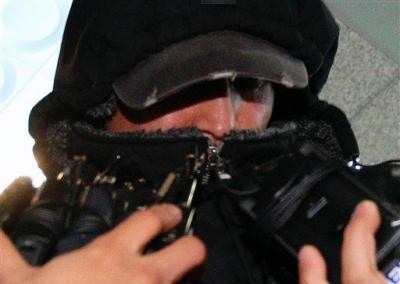 Kang Ho-sun
Serial killer · South Korea · 2006
Kang Ho-sun was a Korean serial killer who was sentenced to death on April 22,…
10 victims
Kang Ho-sun
Serial killer · South Korea · 2006
Kang Ho-sun was a Korean serial killer who was sentenced to death on April 22,…
10 victims
 Lulonda Flett
Mass murderer · Canada · 2011
Lulonda Flett (accused; sentenced to five life sentences) · Evelyn Laforte (mot…
5 victims
Lulonda Flett
Mass murderer · Canada · 2011
Lulonda Flett (accused; sentenced to five life sentences) · Evelyn Laforte (mot…
5 victims
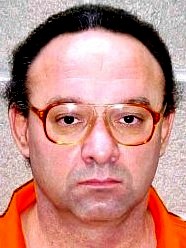 Joseph Wood
Murderer · USA · 1989
Joseph Wood was an Arizona state prisoner who was sentenced to death on July 2,…
2 victims
Joseph Wood
Murderer · USA · 1989
Joseph Wood was an Arizona state prisoner who was sentenced to death on July 2,…
2 victims
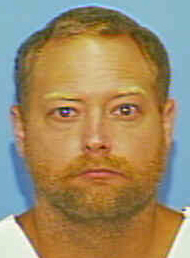 David M. Brewer
Murderer · USA · 1985
David M. Brewer was convicted and sentenced to death for aggravated murder. Joe…
1 victim
David M. Brewer
Murderer · USA · 1985
David M. Brewer was convicted and sentenced to death for aggravated murder. Joe…
1 victim
 Yu Hagino
Murderer · Japan · 2005
Yu Hagino (萩野 裕, Hagino Yū, born 1982) was a teacher at a cram school in Uji, K…
1 victim
Yu Hagino
Murderer · Japan · 2005
Yu Hagino (萩野 裕, Hagino Yū, born 1982) was a teacher at a cram school in Uji, K…
1 victim
- Gender
- male
- Country
- United Kingdom
- Location
- Alton, Hampshire, England, United Kingdom
- Date of birth
- 1843
- Age at first offence
- 24
- Characteristics
- mutilation, dismemberment
- Victim profile
- Fanny Adams, 7
- Method of murder
- Beating with a rock
- Date(s) of murder
- August 24, 1867
- Years active
- 1867
- Date of arrest
- Same day
- Status
-
Executed
Executed by hanging outside Winchester Gaol on December 24, 1867
Case record: Frederick Baker
Background
Frederick Baker was a solicitor’s clerk in Alton, Hampshire, England.
The offence
On Saturday 24 August 1867, seven-year-old Fanny Adams and her young sister Lizzie left their home in Alton to play with their friend Minnie Warner. Their group walked to Flood Meadow, near the River Wey. When they arrived, they were met by Baker, a local solicitor’s clerk. He offered halfpennies to take them with him to The Hollow, a quiet country road.
Fanny’s sister Lizzie and the child Minnie Warner both received halfpennies and were told to go home. Baker picked up Fanny and carried her into a hop field. Fanny failed to return home, and a search party found her.
Fanny’s remains were severely mutilated. Her head, with its eyes gouged out, had been stuck on a pole, and other portions of her body were found nearby. The remains were described as battered to death, with her severed head lying on two poles, deeply slashed from mouth to ear and across the left temple. Her right ear had been cut off, and both eyes were missing. Nearby were described a leg and a thigh. A wider search revealed her dismembered torso, including a description that the contents of the chest and pelvis had been torn out and scattered, with internal organs further slashed or mutilated. Other parts of her body were recovered only after extensive searches over several days, including her eyes being found in the River Wey.
Investigation
After Fanny failed to return, neighbours formed a search party and found her body in the hop field, described as horribly butchered.
A local painter, William Walker, found a large stone in the hop field with blood, long hair and a small piece of flesh adhering to it. Dr Louis Leslie, the Alton divisional police surgeon, carried out a post-mortem and concluded that death had been caused by a crushing blow to Fanny’s head.
Baker’s diary entry for the day of the killing was later found and described as a damning entry: “24th August, Saturday - Killed a young girl. It was fine and hot”.
During the investigation, Baker’s explanation for his bloodstained clothing was that it was his habit to step into water when out walking, but he could not explain how his clothing had become bloodstained.
Arrest
That evening, Police Superintendent William Cheyney arrested Baker where he worked at the offices of solicitor William Clement in the High Street.
Baker gave “I know nothing about it,” said 29-year-old Frederick Baker in the first of many protestations of innocence, before Cheyney escorted him through an angry crowd to Alton Police Station.
The wristbands of Baker’s shirt and trousers were spotted with blood, and his boots, socks and trouser bottoms were wet. Two small knives, one of them stained with blood, were found when he was searched. Witnesses confirmed that Baker had left the solicitors office shortly after 1pm, returning at 3.25pm, and that he again went out until 5.30pm.
Baker’s fellow clerk, Maurice Biddle, was described as saying that Baker had seemed disturbed and had said, “it will be very awkward for me if the child is murdered”. Later, they went over to the Swan for a drink where Baker was described as saying he might leave town on the following Monday. When Biddle said he might have difficulty in finding a new job, Baker replied, “I could go as a butcher”.
Trial
A Tuesday inquest was held before Deputy County Coroner Robert Harfield at the Duke’s Head Inn. Baker replied when asked if he wished to say anything: “No Sir - only that I am innocent”. The jury returned a verdict of “wilful murder against Frederick Baker for killing and slaying Fanny Adams”.
Baker was remanded to Winchester Prison to await the formal committal hearing, which was held at Alton Town Hall on Thursday 29 August before local magistrates. He was committed for trial at the next County Assizes, and the police had difficulty protecting him from the violence of the mob when he was removed from the Town Hall.
At Winchester Assizes, Baker’s trial opened on 5 December. Little Minnie Warner was carried into court to testify. The defence strongly challenged Minnie Warner’s identification of Baker and also claimed it was impossible for Baker’s small knives to have dismembered Fanny so thoroughly.
The defence centred on Baker’s mental state, described as a hereditary insanity tale. The defence described Baker’s father as having shown “an inclination to assault even to kill, his children”; it also described a cousin as having been in asylums four times; it described Baker’s sister as having died of brain fever; and it described Baker as having attempted suicide after an abortive love affair.
Mr. Justice Mellor invited the jury to consider the prisoner irresponsible due to insanity. After retiring for only 15 minutes, the jury returned a guilty verdict.
Sentencing
Frederick Baker was hanged at 8am on Christmas Eve, 24 December 1867, in front of Winchester’s County Prison.
Outcome
Following the execution, it became known that Baker had written to the parents of the murdered child, expressing deep sorrow for the crime he had committed “in an unguarded hour and not with malice aforethought”.
Baker’s letter added that he was “enraged at her crying, but it was done without any pain or struggle”.
After the execution, it was noted that Baker’s execution was the last to take place at Winchester.
Aftermath
After the execution, it was said that Fanny’s headstone, erected by Public subscription in 1874 and later renovated, still stood in the town cemetery on the Old Odiham Road. The headstone reading was given as: “Sacred to the memory of Fanny Adams aged 8 years and 4 months who was cruelly murdered August 24th, 1867. Fear not them which kill the body, but rather fear Him which is able to kill both body and soul in hell. Matthew 10 v 28.”
Fanny was described as having been buried in Alton cemetery.
A phrase associated with the murder, “sweet Fanny Adams,” was explained as originating from the 1867 murder of Fanny Adams by Baker.
In 1869, new rations of tinned mutton were introduced for British seamen. Sailors declared the tins must surely be “Sweet Fanny Adams”. It was described that the term became accepted throughout the armed services as a euphemism for “sweet nothing” and passed into common usage. It was also described that tins of steak and kidney pudding were known as “baby’s head” and that mess tins were colloquially known as “fannys”.
The expression was also described as becoming slang for mutton or stew and then for anything worthless, leading to current usage of “Sweet Fanny Adams” for “nothing at all” (often shortened to “Sweet F. A.”), or as a euphemism for “fuck all”.
Other details
Fanny’s mother was Harriet Adams. After learning of her daughter’s death, Harriet Adams ran to tell her husband, bricklayer George Adams, who was playing cricket on the Butts, South of the Town, and she collapsed from grief and exhaustion. George Adams was described as reacting by returning home for his shotgun and setting out for the hopfields, but neighbours disarmed him.
Neighbour Mrs Gardiner was described as meeting Baker coming from the direction of The Hollow and asking: “What have you done with the child?” Baker replied: “Nothing”.
Mrs Gardiner asked further questions, and Baker replied: “Yes, he had given them money, but only to buy sweets which I often do to children”.
Baker told the women he was a clerk of a local solicitor William Clement, and they allowed him to leave.
Baker was described as 29 years old at the time of arrest.
Baker’s trial and execution were described as drawing a crowd of 5000, with a large proportion consisting of women.
Baker was described as writing before his death to seek the parents’ forgiveness.

Spotted an error, or have more information about this case?