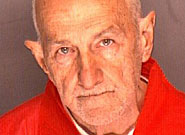
Roger Kibbe
Serial killer Donald Henry Gaskins
Serial killer · USA · 1969
Donald Henry Gaskins, also known as Donald “Pee Wee” Gaskins, was a serial kill…
200 victims
Donald Henry Gaskins
Serial killer · USA · 1969
Donald Henry Gaskins, also known as Donald “Pee Wee” Gaskins, was a serial kill…
200 victims
 Carl Eugene Watts
Serial killer · USA · 1974
Carl Eugene Watts (born November 7, 1953; died September 21, 2007), also known…
100 victims
Carl Eugene Watts
Serial killer · USA · 1974
Carl Eugene Watts (born November 7, 1953; died September 21, 2007), also known…
100 victims
 Rodney Alcala
Serial killer · USA · 1977
Rodney James Alcala (born August 23, 1943) was also known as Rodrigo Jacques Al…
100 victims
Rodney Alcala
Serial killer · USA · 1977
Rodney James Alcala (born August 23, 1943) was also known as Rodrigo Jacques Al…
100 victims
 Donald Harvey
Serial killer · USA · 1970
Donald Harvey was known as an American serial killer and a self-professed “Ange…
87 victims
Donald Harvey
Serial killer · USA · 1970
Donald Harvey was known as an American serial killer and a self-professed “Ange…
87 victims
 Donald Leroy Evans
Serial killer · USA · 1975
Donald Leroy Evans (born July 5, 1957) was an American serial killer who murder…
60 victims
Donald Leroy Evans
Serial killer · USA · 1975
Donald Leroy Evans (born July 5, 1957) was an American serial killer who murder…
60 victims
 Michael Swango
Serial killer · USA · 1981
Michael Swango (Joseph Michael Swango) was a physician and American serial kill…
60 victims
Michael Swango
Serial killer · USA · 1981
Michael Swango (Joseph Michael Swango) was a physician and American serial kill…
60 victims
 Patrick Okot
Mass murderer · Uganda · 2013
March 5, 2013 — Gunmen attacked Mbuya barracks to steal arms. · February 4, 201…
10 victims
Patrick Okot
Mass murderer · Uganda · 2013
March 5, 2013 — Gunmen attacked Mbuya barracks to steal arms. · February 4, 201…
10 victims
 Hans Van Zon
Serial killer · Netherlands · 1964
Hans van Zon was born in Utrecht, Holland, in April 1942. He was described as a…
5 victims
Hans Van Zon
Serial killer · Netherlands · 1964
Hans van Zon was born in Utrecht, Holland, in April 1942. He was described as a…
5 victims
 Willie Ervin Fisher
Murderer · USA · 1992
Willie Ervin Fisher was convicted of the capital murder of Angela Johnson and r…
1 victim
Willie Ervin Fisher
Murderer · USA · 1992
Willie Ervin Fisher was convicted of the capital murder of Angela Johnson and r…
1 victim
 Vasiliy Kulik
Serial killer · Russia · 1984
Vasiliy Kulik was a Russian serial killer. He was responsible for the murders o…
13 victims
Vasiliy Kulik
Serial killer · Russia · 1984
Vasiliy Kulik was a Russian serial killer. He was responsible for the murders o…
13 victims
 Robert Frederick Carr
Serial killer · USA · 1972
July 6, 2007 — Robert Frederick Carr died in prison after being admitted to a N…
4 victims
Robert Frederick Carr
Serial killer · USA · 1972
July 6, 2007 — Robert Frederick Carr died in prison after being admitted to a N…
4 victims
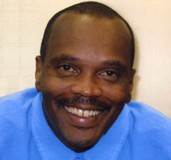 Jarvis Jay Masters
Murderer · USA · 1985
Jarvis Jay Masters (born 1962) was an African American man from Long Beach, CA.…
1 victim
Jarvis Jay Masters
Murderer · USA · 1985
Jarvis Jay Masters (born 1962) was an African American man from Long Beach, CA.…
1 victim
- Gender
- male
- Country
- USA
- Location
- California, USA
- Date of birth
- 1941
- Age at first offence
- 36
- Characteristics
- rape, kidnappings, serial rapist
- Victim profile
- Lou Ellen Burleigh, 21 / Lora Heedrick, 20 / Barbara Ann Scott, 29 / Stephanie Brown, 19 / Charmaine Sabrah, 26 / Katherine Kelly Quinones, 25 / Darcie Frackenpohl, 17
- Method of murder
- Strangulation
- Date(s) of murder
- 1977 / 1986 - 1987
- Years active
- 1977–1987
- Date of arrest
- —
- Status
-
Life imprisonment
Sentenced to six consecutive life sentences on November 4, 2009
Case record: Roger Kibbe
Background
Roger Reece Kibbe was a middle-aged husband with a lengthy record that included two stints in prison for non-violent crimes. He was nicknamed the “I-5 Strangler.” He was reported to have been a sky diver and was also described as a furniture maker. He was held without bail for a court appearance in San Joaquin County.
Kibbe was portrayed on television crime shows and was the subject of a 1999 book titled “Trace Evidence: The Search for the I-5 Strangler” by Bruce Henderson.
The offence
Kibbe committed murders in California in a period that included 1977 and 1986. The nickname “I-5 Strangler” related to committing some of his crimes along Interstate 5.
Kibbe abducted and raped young women and strangled them with their own clothing. Investigators alleged that he stalked freeways south of Sacramento late at night looking for young women with car trouble. After offering to help, they were abducted, driven to remote locations, and strangled with their own clothing. Bodies were reported to have been found dumped in rural areas, including Highway 12 west of Interstate 5, including the case in which Stephanie Brown’s body was discovered.
Kibbe was suspected in four slayings in the earlier stage of the case, though evidence was slim until microscopic evidence linked him to killings.
Kibbe also confessed to raping his victims in five of the cases. He was also described as having confessed to “one other rape, but no murders.”
Victims named in connection with the indicted murders
The indictment accused Kibbe of killing the following victims:
- Lou Ellen Burleigh, Sept. 11, 1977, of Walnut Creek (age 21 at the time of death as stated).
- Lora Heedrick of Modesto, April 21, 1986 (age 20 at the time as stated).
- Barbara Ann Scott, July 3, 1986.
- Stephanie Brown of Sacramento, July 15, 1986 (age 19 at the time as stated).
- Charmaine Sabrah of Sacramento, Aug. 17, 1986 (age 26 at the time as stated).
- Katherine Kelly Quinones, Nov. 5, 1986 (age 25 at the time as stated).
Kibbe was also serving a prison term for the 1987 murder of 17-year-old Darcie Frackenpohl, whose body was found in El Dorado County. Darcie Frackenpohl was described as a 17-year-old runaway from Seattle and as a West Sacramento prostitute. Her body was found in 1987 near Echo Summit.
Investigation and evidence
Microscopic evidence linked Kibbe to a killing after two pieces of microscopic evidence linked him to one of the killings.
Fibers and other microscopic evidence developed by a state Department of Justice criminalist Faye Springer were described as linking Kibbe to the deaths of Heedrick and the two Sacramento women, Brown and Sabrah.
Multiple jurisdictions were involved in the crimes. California law about county jurisdiction had made it difficult to press other charges at the time, and the cases were later reopened after laws changed.
An investigator said the following about missing cases:
- Detective Vito Bertocchini said: “There's two missing girls from Modesto who disappeared from the same location where he said he picked that girl up,” and “And I have a strong feeling that he did not release that girl.”
Investigator Mike Frey, an investigator with the Napa County district attorney’s office, worked on the cases, along with law enforcement officers from San Joaquin, Amador and Contra Costa counties.
A deputy district attorney said the following about whether Kibbe committed other murders:
- Deputy district attorney Kevin Mayo said: “We don't know if he committed the other murders. If he says he did, then it'll be a good opportunity to solve some old crimes.”
A deputy district attorney Robert Himelblau addressed why the case was being prosecuted in San Joaquin County, describing it as a matter of grand jury testimony:
- Deputy District Attorney Robert Himelblau said: “that was a matter of grand jury testimony, which is still under seal.”
During the Frackenpohl trial, a judge allowed the prosecution to present an extraordinary amount of forensic evidence linking Kibbe to the strangulation slayings of other young women.
Arrest and court proceedings
A gag order was issued in the case on March 11, 2008. San Joaquin County Superior Court judge Bernard J. Garber issued the gag order prepared as soon as he learned the case would land on his bench.
During an appearance, interim Public Defender Pete Fox asked Garber for more time than usual, stating the case had an extremely voluminous nature. Kibbe spoke briefly and barely audibly, saying that he wanted an attorney appointed to represent him.
A grand jury indicted Kibbe on six counts of rape and murder for deaths ranging from 1977 to 1986. The grand jury convened in the last week of January and issued the indictment Feb. 25. Approximately 80 witnesses testified before the grand jury.
The indictment and media accounts described the victims and allegations as involving murder with special circumstances. Kibbe faced six counts of murder with special circumstances including rape, kidnapping, and multiple murders that made him eligible for the death penalty.
Kibbe pleaded guilty as part of a deal to avoid the death penalty.
Trial and plea
Kibbe previously was tried and convicted on one count of first-degree murder involving the 1987 death of Darcie Frackenpohl, whose body was found in El Dorado County. He was sentenced to prison for 25 years. That earlier sentence was described as 25 years to life in San Quentin State Prison. At a later point, it was stated that Kibbe received a nickname for committing some of his crimes along Interstate 5, and that his earlier indictment made him eligible for the death penalty.
In 2009, Kibbe pleaded guilty to six Northern California killings in an effort to avoid the death penalty. He was sentenced on November 4, 2009, after pleading guilty.
Kibbe was reported to be not eligible for parole, and to face six consecutive life sentences. One report also stated that the sentence was without the possibility of parole and that the sentence hinged on whether Kibbe cooperated by providing key details about the slayings.
Kibbe heard from families of victims in court on Thursday at the time of sentencing. Some family members called him a “monster” and “inhuman.”
Sentencing
On November 4, 2009, Roger Reece Kibbe was sentenced to six consecutive life sentences after pleading guilty to six Northern California killings as an effort to avoid the death penalty.
One report stated the sentence was six consecutive life sentences and that Kibbe was not eligible for parole. Another report stated his status as not eligible for parole.
Kibbe had already been serving 25 years to life in San Quentin State Prison for the 1987 murder of Darcie Frackenpohl. The 2009 reports described that his earlier indictment in connection with six slayings from 1977 to 1986 made him eligible for the death penalty.
Appeals
No appeals were described.
Outcome
Kibbe avoided the death penalty through a plea agreement. He was sentenced to six consecutive life terms on November 4, 2009.
Family statements and attorney-related statements included the following quotations.
Jo Allyn Brown, the mother of victim Stephanie Brown, said:
- “Today, we're done with Roger Kibbe. So that's the best we could get,”
- “He's not coming out.”
Carmen Anselmi, the mother of victim Charmaine Sabrah, said she forgives Kibbe:
- “If God can forgive, why can't I?”
- “I still have that hurt.”
- “I felt like I was sending her to her death, but it was too late,”
- “after she saw her daughter accept a ride from Kibbe 24 years ago.”
Regarding Sabrah, it was said her car had broken down along I-5 and she became one of his victims.
Kibbe never looked at the families of his victims, but offered a statement through his attorney:
- Jan Karowski said: “He's wracked with humiliating fear of why he did it,”
Aftermath
It was described that prosecutors and investigators from four Northern California counties closed the book on six murders after confessions, including two murders in Napa County.
The two women who died in Napa County were described as:
- Lou Ellen Burleigh of Walnut Creek, 21 at the time of her death in 1977.
- Katherine Quinones of Sacramento, who was 25 when she died in 1986.
It was reported that the enormity of Kibbe’s crimes meant jailers should throw away the key after returning Kibbe, 70, to his prison cell.
It was also stated that multiple years had been involved in closing the cases, including 20 years to close most of these cases and 32 years to evoke a confession in the case of Burleigh, whose remains were described as apparently still being where Kibbe left them near Lake Berryessa.
A district attorney belief was reported:
- District attorney Robert Drossel believed Kibbe could have been responsible for up to 38 murders.
A deputy district attorney also stated that prosecutors and investigators had closed the book on six murders, with families involved following Kibbe’s plea.
A prosecutor and investigators’ coordination was described as involving work across San Joaquin, Sacramento, Napa, Contra Costa, and Amador counties, with the San Joaquin County District Attorney’s Office prosecuting all the murders as one case while working with district attorneys in other counties.
Timeline
- 1977 — Lou Ellen Burleigh was killed; her death was described as having occurred in 1977 and her body was described as being found in connection with the confessions.
- 1986 — Lora Heedrick, Barbara Ann Scott, Stephanie Brown, Charmaine Sabrah, and Katherine Kelly Quinones were all described as being killed in 1986 (each with stated dates).
- 1987 — Darcie Frackenpohl was murdered; her body was found in El Dorado County.
- March 1991 — Kibbe was convicted in the case of Darcie Frackenpohl’s murder and sentenced to 25 years to life.
- March 8, 2008 — A grand jury indicted Roger Reece Kibbe, 68, for the murders of Lou Ellen Burleigh and five women whose bodies were described as being dumped near Interstate 5 in 1986.
- March 11, 2008 — Judge Bernard J. Garber issued a gag order in the case.
- Sept. 29, 2009 — Kibbe was reported to have pleaded guilty to six Northern California killings as part of a deal to avoid the death penalty.
- Oct. 10, 2009 — An article described confessions and the closure of six murders, including two in Napa County.
- November 4, 2009 — Kibbe was sentenced to six consecutive life sentences.
Other details
Kibbe was described as being 70 at the time of the sentencing reports and as being 68 or 68 in other reports before that.
The grand jury indicted Kibbe on six counts of rape and murder.
Special circumstances in the murder counts included rape, kidnapping, and multiple murders.
The earlier 1991 conviction involved Darcie Frackenpohl, and investigators presented evidence at that trial linking Kibbe to the strangulation slayings of other young women. Fibers from nylon rope used by skydivers were described as being among the microscopic evidence linking Kibbe to three of the other slayings.
Witnesses alleged Kibbe had a murder kit including handcuffs and scissors.
It was stated that authorities said it was difficult to press other charges earlier due to multi-jurisdiction complications and complications in state law, and later California law changed to let one county prosecute crimes from several jurisdictions.
Spotted an error, or have more information about this case?