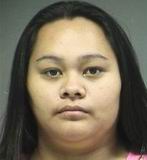
Jessica Dutro
Murderer Miranda Barbour
Murderer · USA · 2013
Miranda Barbour, 19, defendant. · Elytte Barbour, 22, defendant and husband of…
100 victims
Miranda Barbour
Murderer · USA · 2013
Miranda Barbour, 19, defendant. · Elytte Barbour, 22, defendant and husband of…
100 victims
 Tiffany Hall
Murderer · USA · 2006
Tiffany Hall was 24 when she was charged in September 2006. She later entered a…
5 victims
Tiffany Hall
Murderer · USA · 2006
Tiffany Hall was 24 when she was charged in September 2006. She later entered a…
5 victims
 Banita Jacks
Murderer · USA · 2007
Banita Jacks was a Washington, DC resident convicted of murdering her four daug…
4 victims
Banita Jacks
Murderer · USA · 2007
Banita Jacks was a Washington, DC resident convicted of murdering her four daug…
4 victims
 Holly Grigsby
Murderer · USA · 2011
Holly Grigsby was sentenced to life in prison without parole on July 15, 2014.…
4 victims
Holly Grigsby
Murderer · USA · 2011
Holly Grigsby was sentenced to life in prison without parole on July 15, 2014.…
4 victims
 Jessica Tata
Murderer · USA · 2011
Jessica Tata was a Houston home day care owner who fled to Nigeria after a fire…
4 victims
Jessica Tata
Murderer · USA · 2011
Jessica Tata was a Houston home day care owner who fled to Nigeria after a fire…
4 victims
 Amanda Bennett
Murderer · USA · 2011
Amanda Bennett was an Indiana woman who shot her three children and set the fam…
3 victims
Amanda Bennett
Murderer · USA · 2011
Amanda Bennett was an Indiana woman who shot her three children and set the fam…
3 victims
 Manuel Valle
Murderer · USA · 1978
Manuel Valle was sentenced to death for the 1978 murder of Officer Louis Pena o…
1 victim
Manuel Valle
Murderer · USA · 1978
Manuel Valle was sentenced to death for the 1978 murder of Officer Louis Pena o…
1 victim
 Eleanor Jarman
Murderer · USA · 1933
Eleanor Jarman was born in 1904. She was the youngest of eight children born to…
1 victim
Eleanor Jarman
Murderer · USA · 1933
Eleanor Jarman was born in 1904. She was the youngest of eight children born to…
1 victim
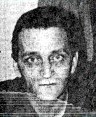 Donald Eugene Harding
Serial killer · USA · 1979
Donald Eugene Harding was convicted of the January 25, 1980 murders of Robert W…
7 victims
Donald Eugene Harding
Serial killer · USA · 1979
Donald Eugene Harding was convicted of the January 25, 1980 murders of Robert W…
7 victims
 Gianluca Casseri
Murderer · Italy · 2011
Gianluca Casseri committed suicide by shooting himself the same day after an ar…
2 victims
Gianluca Casseri
Murderer · Italy · 2011
Gianluca Casseri committed suicide by shooting himself the same day after an ar…
2 victims
- Gender
- female
- Country
- USA
- Location
- Tigard, Washington County, Oregon, USA
- Date of birth
- 1988
- Age at first offence
- 24
- Characteristics
- parricide, child abuse, drug addict, motive unclear
- Victim profile
- Her son Zachary Dutro-Boggess, 4
- Method of murder
- Beating
- Date(s) of murder
- August 14, 2012
- Years active
- 2012
- Date of arrest
- 2 days after
- Status
-
Life imprisonment
Sentenced to life in prison on April 18, 2014; eligible for parole in 25 years
Case record: Jessica Dutro
Background
Jessica Dutro was the mother of Zachary Dutro-Boggess, a 4-year-old boy who died after being beaten while living in a homeless shelter in Tigard, Oregon. Her boyfriend, Brian Canady, was also involved in the abuse that led to Zachary’s death.
Dutro and Canady had one son together.
Dutro was 25 during the trial. Canady was 24 during the trial.
Dutro had a prior assault conviction in Hawaii, and she had taken court-ordered parenting classes there.
Dutro’s parents and sisters wrote a statement that a prosecutor read during the sentencing hearing.
The offence
Zachary Dutro-Boggess died after sustaining a pattern of abuse and blunt-force trauma to his abdomen while Dutro and Canady lived with their children at a Tigard homeless shelter.
Investigators said Dutro and Canady beat the child to death in August 2012 at a Tigard homeless shelter. Prosecutors argued that Dutro killed her son in part because she believed he was gay.
Prosecutors said the pair subjected Zachary and his siblings to a pattern of abuse. Prosecutors also said they watched as Zachary’s health deteriorated and called for help only when he was beyond saving.
In the hospital, Zachary’s injuries included intestinal tears caused by abusive trauma to his abdomen. Doctors took Zachary off life support two days after he was taken to a Portland hospital.
Dutro’s daughter testified and described an abuse pattern. The 7-year-old girl said that “Jessica and Brian, they kept hitting him and punching him,” and that when he “didn’t listen to them so they kicked him and punched him and stuff and they kept doing it and doing it.”
The girl also said the couple “kept hitting and hitting him because he wasn’t listening,” that he “got sick after that,” and that “Eventually, he stopped breathing.” She said “But they didn’t tell anybody.”
She described that on the morning of August 14, 2012, Dutro and Canady called for help when Zachary was unresponsive.
The abuse included forcing the child to be in the shower because he had wet the bed, according to testimony attributed to Dutro.
Prosecutor’s motive theory: perceived homosexuality
Prosecutors said Dutro believed Zachary was gay and that this was her motive for subjecting him to deadly beatings.
A Facebook message attributed to Dutro told Canady: “He walks and talks like it. Ugh.” In the same messages, Dutro said Canady would have to “work on” Zachary and that Zachary was “facing the wall” because he had made her mad. A prosecutor said the message established Dutro’s motive for inflicting a pattern of abuse.
Investigation
Doctors diagnosed Zachary with injuries that included blunt-force trauma to the abdomen, with tears in his bowel that led to leaking contents of his intestines into his body for at least two days, resulting in shock and infection. Prosecutors said the delay in medical treatment contributed to his death.
Dr. Danny Leonhardt testified about the extent of Zachary’s abdominal trauma and also examined Zachary’s siblings. Leonhardt concluded that all of the children were abused except for Dutro and Canady’s infant son.
Leonhardt testified about the type of force needed for such injuries and compared them to high-velocity car crashes or bike accidents.
Leonhardt testified:
“We didn’t see him until he essentially was dead,” the doctor said. “We didn’t get a chance to fix him.”
Leonhardt also testified:
“We didn’t get a chance to fix him.”
Leonhardt’s testimony included a description of Zachary’s wound and bruising patterns. The physician testified about observing Zachary’s younger brother with bruises on the face and about diagnosing broken ribs in the 3-year-old brother with evidence of multiple stages of healing.
Leonhardt testified that when Leonhardt informed Dutro of his diagnosis, she became “very angry, very upset,” and she was mad at the doctors for not telling her and Canady sooner about the details of Zachary’s injuries.
Leonhardt testified about Dutro’s reported words:
“had they been made aware, they would have been able to talk to each other and get their story straight.”
Leonhardt testified that the content of his intestines leaking out into his body for at least two days resulted in a deadly infection.
Arrest
No arrest information was stated in the provided material.
Trial
A Washington County jury convicted Dutro earlier in the month of murder and second-degree assault. The jury also convicted her of murder by abuse.
Dutro faced seven counts in the death of her 4-year-old son. The counts included one count of felony murder, five counts of murder by abuse, and one count of second-degree assault.
Jurors heard closing arguments. In the closing stage, jurors deliberated for more than three hours on Wednesday and took a little more than an hour to find her guilty.
Prosecutor quotes
Senior Deputy District Attorney Megan Johnson made statements during the trial, including:
On evidence photos of Zachary’s and his siblings’ injuries:
“You saw the pictures of those children's little bodies that day. If all you had was picture after picture after picture of their little bodies, would you really need anything more? I suspect not.”
On Dutro’s parenting:
“What happens if you're not a good listener in Jessica Dutro's home? You get beat.”
On what Dutro’s young daughter thought would happen if she told on her mom:
“She would be beaten for her transgressions because that's what Jessica Dutro does in the face of perceived insolence and disobedience.”
On the girl’s statement to a hospital nurse when Zachary was dying:
“She looked up at the nurse and said, 'At least I have other brothers.' That is evidence that she knew her brother was going to die.”
On Dutro’s statements of denial:
“Jessica Dutro's lies are narcissistic and offensive. And it gives you a glimpse into who could do something like this. Her concern throughout is for herself and her own skin and not her dying son.”
On Dutro not seeking medical care for Zachary:
“Zachary literally dies so that she wouldn't have to self-report. They beat him to death, and she allowed him to die in that room, in her presence, so that she wouldn't have to admit to having hurt him.”
During trial, the prosecutor also argued that the Facebook message established Dutro’s motive for inflicting on Zachary a pattern of torture and abuse.
Defense arguments and quotes
Defense attorney Chris Colburn argued that there was no evidence that Dutro fatally assaulted her son, and he argued that Canady’s statements were not reliable due to changes and unreliability. Colburn said the evidence pointed to Canady.
Colburn said:
“It is clear beyond a shadow of a doubt that Brian Canady did it.”
Colburn argued about the girl’s testimony:
“Don't confuse bravery and courage and charm and sympathy with reliability. Because we have to decide if her story is reliable, not just in broad strokes.”
Colburn argued about Dutro’s demeanor:
“It's poppycock, it's not legitimate. ... What at that point is Ms. Dutro supposed to do? Is she supposed to hang on his every second with the hope that his eyelids flutter?”
Colburn argued about Dutro’s knowledge:
“All the evidence that you've heard in the last eight days has suggested, if not proven to you, that she was not aware of and did not disregard a substantial risk that Zachary was that ill.”
Colburn argued about the Facebook slur context:
“Keep in mind the context of that statement and how it was received. The immediate response is LOL -- laughing out loud -- indicating that the recipient at least thought it was a joke. Is it a funny joke? No. Is it a joke anyone else would make? No. Is it proof she had unrealistic expectations of her children? Absolutely not. Is it motive for beating her child to death? That is patently ridiculous.”
On who killed Zachary, Colburn argued:
“It is evident beyond a reasonable doubt who delivered the blows to Zachary Dutro-Boggess. It is also evident that the state has failed to prove beyond a reasonable doubt that it was Jessica Dutro who delivered those blows. It is clear beyond a shadow of a doubt that Brian Canady did it.”
The trial also included testimony about messages attributed to Dutro, and the defense argued that the messages did not prove motive in the way prosecutors claimed.
Sentencing
On April 18, 2014, in Washington County Circuit Court, Dutro was sentenced to life in prison. Under the stated law, she would be eligible for parole in 25 years.
Measure 11 was mentioned as mandating the sentence.
Judge Don Letourneau kept his comments brief and made the following statements to Dutro:
“Parents are supposed to protect their kids,” Letourneau told Dutro. “And you were the most dangerous thing in your kids’ lives.”
He also told Dutro:
“And then you made an 8-year-old come here and testify in front of jury when you had no triable case,” he said. “That is low.”
The judge also told Dutro she failed to learn from her prior assault conviction in Hawaii and the court-ordered parenting classes she had taken there.
Before Canady was sentenced, Dutro was escorted out of the courtroom in tears.
Canady’s sentencing and plea
Brian Canady pleaded guilty to first-degree manslaughter and second-degree assault earlier in the month. Canady’s plea agreement included dropping more serious charges, including murder by abuse and second-degree assault counts.
The material stated that Canady was sentenced Friday to 12.5 years in prison.
Judge Don Letourneau told Canady he was a “close second” to Dutro in dangerousness to the children:
“That’s a very slim distinction,” the judge said.
Appeals
No appeal information was stated in the provided material.
Outcome
Dutro was found guilty of murder, murder by abuse, and second-degree assault, and she was sentenced to life in prison on April 18, 2014 with parole eligibility in 25 years.
Canady pleaded guilty and was sentenced to 12.5 years in prison.
Aftermath
The material stated that Dutro and Canady would never again have contact with Zachary’s three siblings, including his 8-year-old sister who witnessed the beating and testified in the case.
A prosecutor read statements written by Dutro’s parents and sisters during the sentencing hearing. The relatives wrote:
“These four beautiful children lived every day in fear. Fear of wondering if they would be beat or not,” the relatives wrote.
The relatives described neglect after Zachary died and his siblings began living with their grandparents, and they said the children were behind in physical, social and educational development. They also described improvements for the children over time:
“rarely ever stops talking” and “plays joyfully with his many friends.”
The relatives wrote:
“His short life will always be cherished, never forgotten,” they wrote.
Dutro sent a Facebook message to Canady that Zachary “walks and talks like it. Ugh.” and that Canady would have to “work on” Zachary. The material said the immediate response included “LOL” as described in defense argument, but the message itself as quoted included only “He walks and talks like it. Ugh.” and “work on” language.
Dr. Leonhardt testified that the torn intestines contents leaked into Zachary’s body for at least two days, and that the resulting shock and infection killed him.
The material also stated that the children’s counsel included discussion that Zachary’s contents of intestinal injuries were like those in car crash victims, and that Leonhardt said otherwise it took forceful, violent kicking or stomping to cause such injuries.
Timeline
- Aug. 14, 2012 — Dutro and Canady called 911 to report Zachary was unconscious after collapsing at a Tigard family homeless shelter; Zachary was rushed to a Portland hospital and doctors diagnosed blunt-force trauma to the abdomen causing bowel tears.
- Aug. 16, 2012 — Zachary was taken off life support.
- March 2014 — Canady pleaded guilty to first-degree manslaughter and second-degree assault in connection with Zachary’s death.
- April 2, 2014 — Deliberations began in Dutro’s Washington County murder trial, which included a question about whether she subjected Zachary to a pattern of abuse ending in a deadly beating and whether she failed to summon medical help.
- April 3, 2014 — Jurors listened to closing arguments in Dutro’s trial and found her guilty after deliberations.
- April 18, 2014 — Dutro was sentenced to life in prison; she was eligible for parole in 25 years; Canady was sentenced to 12.5 years in prison.
Other details
Dutro’s behavior was described in court statements and testimony as including denial and concerns attributed to her statements.
The material reported that both defendants declined to speak at the hearing when entering and sitting in court, and that both were in jail scrubs and handcuffs.
The material reported that prosecutors put up a poster-sized picture of the surviving siblings in the courtroom, and that Canady stared at the image when he entered.
The material included testimony or descriptions that Dutro placed Zachary in the shower because he had wet himself, and that his body was limp and his eyes rolled.
The material included that the 3-year-old brother had five broken ribs in various stages of healing, and that the 7-year-old sister had extensive bruising on her back, chest, buttocks and hip.
Leonhardt testified about bruises over Zachary’s body suggesting prolonged repeated abuse, including that a child abuse specialist could not recall another case where a child had the injury described as “Old, dead tissue from a deep cut hung off of Zachary’s lip.” Leonhardt testified:
“That thing would have bled a lot,” he said. “You just let this flap of lip hang there?”
Leonhardt testified that most children with such a wound would have been brought in for emergency care.
Spotted an error, or have more information about this case?