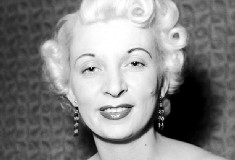
Ruth Ellis
Murderer Freda Rumbold
Murderer · United Kingdom · 1956
Freda Phyllis Rumbold was married to timber contractor husband Alfred Frank Rum…
1 victim
Freda Rumbold
Murderer · United Kingdom · 1956
Freda Phyllis Rumbold was married to timber contractor husband Alfred Frank Rum…
1 victim
 Louisa Merrifield
Murderer · United Kingdom · 1953
Louisa May Merrifield was a housekeeper and companion who was executed for murd…
1 victim
Louisa Merrifield
Murderer · United Kingdom · 1953
Louisa May Merrifield was a housekeeper and companion who was executed for murd…
1 victim
 Margaret Allen
Murderer · United Kingdom · 1948
Margaret Allen was a cross-dressing lesbian who preferred to be called "Bill" a…
1 victim
Margaret Allen
Murderer · United Kingdom · 1948
Margaret Allen was a cross-dressing lesbian who preferred to be called "Bill" a…
1 victim
 Margaret Waters
Murderer · United Kingdom · 1866
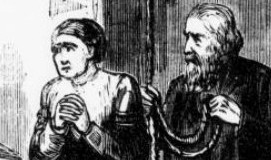
Margaret Waters was an English murderess who was hanged by executioner William…
19 victims
Margaret Waters
Murderer · United Kingdom · 1866
Margaret Waters was an English murderess who was hanged by executioner William…
19 victims
 Catherine Wilson
Murderer · United Kingdom · 1854
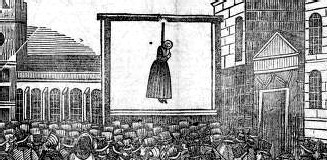
Catherine Wilson was a British nurse who poisoned victims after befriending the…
7 victims
Catherine Wilson
Murderer · United Kingdom · 1854
Catherine Wilson was a British nurse who poisoned victims after befriending the…
7 victims
 Grant Charboneau
Murderer · USA · 1992
Grant Steven Charboneau was a Portlander who lived with his mother but hung aro…
3 victims
Grant Charboneau
Murderer · USA · 1992
Grant Steven Charboneau was a Portlander who lived with his mother but hung aro…
3 victims
 Steven Shelton
Murderer · USA · 1992
Name: Steven Shelton · Date of birth: 07/11/1965 · Race: White · Gender: Male S…
1 victim
Steven Shelton
Murderer · USA · 1992
Name: Steven Shelton · Date of birth: 07/11/1965 · Race: White · Gender: Male S…
1 victim
 Jose de la Cruz
Murderer · USA · 1987
Jose De La Cruz was convicted for the 1988 murder of Domingo Rosas. De La Cruz…
1 victim
Jose de la Cruz
Murderer · USA · 1987
Jose De La Cruz was convicted for the 1988 murder of Domingo Rosas. De La Cruz…
1 victim
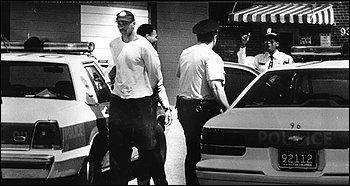 James Edward Swann
Serial killer · USA · 1993
James Edward Swann, Jr., also known as “The Shotgun Stalker,” was an American s…
4 victims
James Edward Swann
Serial killer · USA · 1993
James Edward Swann, Jr., also known as “The Shotgun Stalker,” was an American s…
4 victims
 Ricardo Gonzalez
Murderer · USA · 1992
Ricardo Gonzalez was indicted in the Eleventh Judicial Circuit, Dade County. On…
1 victim
Ricardo Gonzalez
Murderer · USA · 1992
Ricardo Gonzalez was indicted in the Eleventh Judicial Circuit, Dade County. On…
1 victim
- Gender
- female
- Country
- United Kingdom
- Location
- London, England, United Kingdom
- Date of birth
- October 9, 1926
- Age at first offence
- 29
- Characteristics
- jealousy, domestic violence, alcohol, abuse
- Victim profile
- David Blakely, 26 (her lover)
- Method of murder
- Shooting ( .38 calibre Smith & Wesson Victory model revolver)
- Date(s) of murder
- April 10, 1955
- Years active
- 1955
- Date of arrest
- Same day (surrenders)
- Status
-
Executed
Executed by hanging at Holloway Prison on 13 July 1955
Background
Ruth Ellis (9 October 1926 – 13 July 1955), née Neilson, was the last woman to be executed in the United Kingdom. She was born in the Welsh seaside town of Rhyl, the third of six children. During her childhood her family moved to Basingstoke. Her mother, Elisaberta (Bertha) Cothals, was a Belgian refugee; her father, Arthur Hornby, was a cellist from Manchester who spent much of his time playing on Atlantic cruise liners. Arthur changed his surname to Neilson after the birth of Ruth’s elder sister Muriel. Ellis attended Fairfields Senior Girls’ School in Basingstoke, leaving when she was 14 to work as a waitress. Shortly afterwards, in 1941 at the height of the Blitz, the Neilsons moved to London.
In 1944, 17-year-old Ruth became pregnant by a married Canadian soldier and gave birth to a son, Clare Andrea Neilson, known as “Andy”. The father sent money for about a year, then stopped. The child eventually went to live with Ellis’s mother.
Ellis became a nightclub hostess through nude modelling work, which paid significantly more than the various factory and clerical jobs she had held since leaving school. Morris Conley, the manager of the Court Club in Duke Street, where she worked, blackmailed his hostess employees into sleeping with him.
Early in 1950, Ellis became pregnant by one of her regular customers, having taken up prostitution. She had this pregnancy terminated (illegally) in the third month and returned to work as soon as she could.
On 8 November 1950, Ellis married 41-year-old George Ellis, a divorced dentist with two sons, at the register office in Tonbridge, Kent. He had been a customer at the Court Club. He was a violent alcoholic, jealous and possessive, and the marriage deteriorated rapidly because he was convinced she was having an affair. Ruth left him several times but always returned.
In 1951, while four months pregnant, Ellis appeared, uncredited, as a beauty queen in the Rank film Lady Godiva Rides Again. The film starred Dennis Price and Dana Wynter, and Ellis became close friends with the production’s star Diana Dors. She subsequently gave birth to daughter Georgina, but George refused to acknowledge paternity and they separated shortly afterwards. Ruth and her daughter moved in with her parents and she went back to hostessing to make ends meet.
The offence
In 1953, Ellis became the manager of a nightclub. During this time she was lavished with expensive gifts by admirers, and had a number of celebrity friends.
Ellis met David Blakely, three years her junior, through racing driver Mike Hawthorn. Blakely was a well-mannered former public school boy, but also a hard-drinking racer. Within weeks he moved into her flat above the club, despite being engaged to another woman, Mary Dawson. Ellis became pregnant for the fourth time but aborted the child, feeling she could not reciprocate the level of commitment shown by Blakely towards their relationship. She then began seeing Desmond Cussens.
Desmond Cussens was born in 1921 in Surrey. He had been an RAF pilot, flying Lancaster bombers during World War Two, leaving the RAF in 1946, when he took up accountancy. He was appointed a director of the family business Cussens & Co., a wholesale and retail tobacconists with outlets in London and South Wales. When Ellis was sacked as manager of the Carroll Club, she moved in with Cussens at 20 Goodward Court, Devonshire Street, north of Oxford Street, and became his mistress. The relationship with Blakely continued.
Blakely offered to marry Ellis, to which she consented, but she lost another child in January 1955, after a miscarriage induced by a punch to the stomach in an argument with Blakely.
On Easter Sunday, 10 April 1955, Ellis took a taxi from Cussens’s home to a second floor flat at 29 Tanza Road, Hampstead, the home of Anthony and Carole Findlater and where she suspected Blakely might be. As she arrived, Blakely’s car drove off, so she paid off the taxi and walked the quarter mile to The Magdala, a four-storey public house in South Hill Park, Hampstead, where she found David’s car parked outside. At around 9:30 pm David Blakely and his friend Clive Gunnell emerged. Blakely passed Ellis waiting on the pavement when she stepped out of Henshaws Doorway, a newsagent next to The Magdala. He ignored her when she said “Hello, David,” then shouted “David!” As Blakely searched for the keys to his car, Ellis took a .38 calibre Smith & Wesson Victory model revolver from her handbag and fired five shots at Blakely. The first shot missed and he started to run, pursued by Ellis round the car, where she fired a second, which caused him to collapse onto the pavement. She then stood over him and fired three more bullets into him.
One bullet was fired less than half an inch from Blakely’s back and left powder burns on his skin. Ellis was seen to stand mesmerized over the body and witnesses reported hearing several distinct clicks as she tried to fire the revolver’s sixth and final shot, before finally firing into the ground. This bullet ricocheted off the road and injured Gladys Kensington Yule, 53, in the base of her thumb, as she walked to the Magdala.
Ellis, in a state of shock, asked Gunnell, “Will you call the police, Clive?” She was arrested immediately by an off-duty policeman, Alan Thompson (PC 389), who took the still-smoking gun from her, put it in his coat pocket, and heard her say, “I am guilty, I'm a little confused”.
Blakely’s body was taken to hospital with multiple bullet wounds to the intestines, liver, lung, aorta and windpipe.
Investigation
No solicitor was present during Ellis’s interrogation or during the taking of her statement at Hampstead police station, although three police officers were present that night at 11.30 pm: Detective Inspector Gill, Detective Inspector Crawford and Detective Chief Inspector Davies.
Ellis was still without legal representation when she made her first appearance at the magistrates’ court on 11 April 1955 and held on remand. She was twice examined by principal Medical Officer, M. R. Penry Williams, who failed to find evidence of mental illness and she undertook an electroencephalography examination on 3 May that failed to find any abnormality. While on remand in Holloway, she was examined by psychiatrist Dr. D. Whittaker for the defence, and by Dr. A. Dalzell on behalf of the Home Office. Neither found evidence of insanity.
Arrest
Ellis was arrested immediately by an off-duty policeman, Alan Thompson (PC 389), who took the still-smoking gun from her.
Trial
On Monday, 20 June 1955, Ellis appeared in the Number One Court at the Old Bailey, London, before Mr. Justice Havers. She was dressed in a black suit and white silk blouse with freshly bleached and coiffured blonde hair.
This was her answer to the only question put to her by Christmas Humphreys, counsel for the Prosecution, who asked, “When you fired the revolver at close range into the body of David Blakely, what did you intend to do?”
“It's obvious when I shot him I intended to kill him.”
—Ruth Ellis, in the witness box at the Old Bailey, 20 June 1955.
The defending counsel, Aubrey Melford Stevenson supported by Sebag Shaw and Peter Rawlinson, would have advised Ellis of this possible question before the trial began, because it is standard legal practice to do so. The reply to Humphreys’ question in open court guaranteed a guilty verdict and therefore the mandatory death sentence which followed. The jury took 14 minutes to convict her. Ellis received the sentence and was taken to the condemned cell at Holloway.
Sentencing
Ellis received the mandatory death sentence after being convicted by the jury.
Appeals
After being convicted and sentenced, Ellis dismissed the solicitor chosen for her by her friend Desmond Cussens and made a statement to the solicitor Victor Mishcon and his clerk, Leon Simmons. She revealed more evidence about the shooting and said that the gun had been provided by Cussens, and that he had driven her to the murder scene. Following a 90-minute interview in the condemned cell, Mishcon and Simmons went to the Home Office, where they spoke to a senior civil servant about Ellis’s revelations. The authorities made no effort to follow this up and there was no reprieve.
In a 2010 television interview, Nigel Havers said his grandfather had written to the Home Secretary, Gwilym Lloyd George, recommending a reprieve as he regarded it as a crime passionnel, but received a curt refusal.
A petition to the Home Office asking for clemency was signed by 50,000 people, but Major Gwilym Lloyd George rejected it.
Outcome
Ellis was executed by hanging at Holloway Prison on 13 July 1955. Thirty seconds before 9 am on Wednesday 13 July, the official hangman, Albert Pierrepoint, and his assistant, Royston Rickard, entered the condemned cell and escorted Ruth the 15 feet to the execution room next door. She had been weighed at 103 lb the previous day and a drop of 8 ft 4 in was set. Pierrepoint effected the execution in just 12 seconds and her body was left hanging for an hour. Her autopsy report, by the pathologist Dr. Keith Simpson, was made public.
Just before her death, the Bishop of Stepney, Joost de Blank, visited Ellis and she told him:
“It is quite clear to me that I was not the person who shot him. When I saw myself with the revolver I knew I was another person.”
—Ruth Ellis, to the Bishop of Stepney Joost de Blank
These comments were made in a London evening paper at the time, The Star.
Aftermath
Public reaction and legacy
The case caused widespread controversy at the time and evoked intense press and public interest to the point that it was discussed by the Cabinet. On the day of her execution, the Daily Mirror columnist Cassandra wrote a column attacking the sentence, stating:
“The one thing that brings stature and dignity to mankind and raises us above the beasts will have been denied her—pity and the hope of ultimate redemption.”
A petition to the Home Office asking for clemency was signed by 50,000 people, but the Conservative Home Secretary Major Gwilym Lloyd George rejected it. The novelist Raymond Chandler wrote a letter to the London Evening Standard referring to what he described as “the medieval savagery of the law”.
The hanging helped strengthen public support for the abolition of the death penalty, which was halted in practice for murder in Britain 10 years later (the last execution in the UK occurred in 1964). Reprieve was by then commonplace.
According to one statistical account, between 1926 and 1954, 677 men and 60 women had been sentenced to death in England and Wales, but only 375 men and seven women had been executed.
In the early 1970s, John Bickford, Ellis’s solicitor, made a statement to Scotland Yard from his home in Malta recalling what Desmond Cussens had told him in 1955: how Ellis lied at the trial and how he (Bickford) had hidden that information. After Bickford’s confession a police investigation followed but no further action regarding Cussens was taken.
Anthony Eden, the Prime Minister at the time, made no reference to the Ruth Ellis case in his memoirs, nor is there anything in his papers. He accepted that the decision was the responsibility of the Home Secretary, but there are indications that he was troubled about it.
Family aftermath
In 1969, Ellis’s mother, Berta Neilson, was found unconscious in a gas-filled room in her flat in Hemel Hempstead. She never fully recovered and did not speak coherently again.
Ellis’s husband, George Ellis, descended into alcoholism and hanged himself in 1958.
Ellis’s son, Andy, who was 10 at the time of his mother’s hanging, suffered irreparable psychological damage and committed suicide in a bedsit in 1982.
The trial judge, Sir Cecil Havers, had sent money every year for Andy’s upkeep, and Christmas Humphreys, the prosecution counsel at Ellis’s trial, paid for his funeral.
Ellis’s daughter, Georgina, who was three when her mother was executed, was adopted when her father hanged himself three years later. She died of cancer aged 50.
Pardon campaign and legal developments
In 2003, the case was referred back to the Court of Appeal by the Criminal Cases Review Commission. The Court firmly rejected the appeal, while making clear that it could rule only on the conviction based on the law as it stood in 1955, not on whether she should have been executed. The Court stated:
“We would wish to make one further observation. We have to question whether this exercise of considering an appeal so long after the event when Mrs Ellis herself had consciously and deliberately chosen not to appeal at the time is a sensible use of the limited resources of the Court of Appeal. On any view, Mrs Ellis had committed a serious criminal offence. This case is, therefore, quite different from a case like Hanratty [2002] 2 Cr App R 30 where the issue was whether a wholly innocent person had been convicted of murder. A wrong on that scale, if it had occurred, might even today be a matter for general public concern, but in this case there was no question that Mrs Ellis was other than the killer and the only issue was the precise crime of which she was guilty. If we had not been obliged to consider her case we would perhaps in the time available have dealt with 8 to 12 other cases, the majority of which would have involved people who were said to be wrongly in custody.”
In July 2007, a petition was published on the 10 Downing Street website asking Prime Minister Gordon Brown to reconsider the Ruth Ellis case and grant her a pardon in the light of new evidence that the Old Bailey jury in 1955 was not asked to consider. It expired on 4 July 2008.
Burials
Ellis was buried in an unmarked grave within the walls of Holloway Prison. In the early 1970s the prison underwent rebuilding during which the bodies of all the executed women were exhumed for reburial elsewhere. Ellis’s body was reburied at St Mary’s Church in Amersham, Buckinghamshire. The headstone in the churchyard was inscribed “Ruth Hornby 1926–1955”. Her son Andy destroyed the headstone shortly before he committed suicide in 1982. Ellis’s grave is now overgrown with yew trees.
The remains of four other women executed at Holloway—Styllou Christofi, Edith Thompson, Amelia Sach and Annie Walters—were reburied in a single grave at Brookwood Cemetery.
Film, TV and theatrical adaptations
In 1980, the third episode of the first series of the ITV drama series Lady Killers recreated the court case, with Ellis played by Georgina Hale.
The first cinema portrayal of Ellis came with the release of the 1985 movie Dance with a Stranger (directed by Mike Newell), featuring Miranda Richardson as Ellis.
Both Ellis’s story and the story of Albert Pierrepoint were retold in the stage play Follow Me, written by Ross Gurney-Randall and Dave Mounfield and directed by Guy Masterson. It premiered at the Assembly Rooms as part of the 2007 Edinburgh Festival Fringe.
In the film Pierrepoint (2006), Ellis was portrayed by Mary Stockley.
Diana Dors, who had starred in Lady Godiva Rides Again in which Ellis had had a minor, uncredited role, played a character resembling (though not based on) Ellis in the 1956 British film Yield to the Night, directed by J. Lee Thompson.
Other details
People connected to the shooting
Anthony and Carole Findlater were associated with the flat at 29 Tanza Road, Hampstead, which was where she suspected Blakely might be.
Mary Dawson was the woman to whom Blakely was engaged.
Clive Gunnell was Blakely’s friend present when he and Blakely emerged from The Magdala.
Gladys Kensington Yule, 53, was injured in the base of her thumb by a bullet ricocheted off the road.
Henshaws Doorway was a newsagent next to The Magdala where Ellis stepped out.
Warders and execution-room conduct
Warder Evelyn Galilee guarded Ellis for the previous three weeks and took her to the lavatory. Warder Galilee said, “I’m sorry Ruth but I’ve got to do this.” Ruth said, “Is that all right?” and “Would you pull these tapes, Evelyn? I’ll pull the others.” After re-entering the condemned cell, she took off her glasses, placed them on the table and said:
“I won't be needing these anymore.”
Confession and last statement before execution
Ellis said in the condemned cell, “I am guilty, I'm a little confused.”
In a final letter to David Blakely’s parents from her prison cell, she wrote:
“I have always loved your son, and I shall die still loving him”
Medical examinations and insanity findings
Principal Medical Officer M. R. Penry Williams failed to find evidence of mental illness, and electroencephalography on 3 May failed to find any abnormality. Dr. D. Whittaker for the defence and Dr. A. Dalzell on behalf of the Home Office both found no evidence of insanity.
Recorded physical details in the execution process
Ellis was weighed at 103 lb the previous day, and a drop of 8 ft 4 in was set.
Abolition-related statistics
One statistical account stated that between 1926 and 1954, 677 men and 60 women had been sentenced to death in England and Wales, with 375 men and seven women executed.
Spotted an error, or have more information about this case?