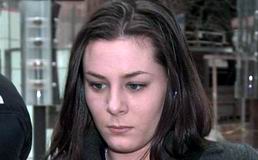
Kelly Ellard
Homicide Mary Beth Harshbarger
Homicide · Canada · 2006
Mary Beth Harshbarger (born February 19, 1965) was an American woman who rose t…
1 victim
Mary Beth Harshbarger
Homicide · Canada · 2006
Mary Beth Harshbarger (born February 19, 1965) was an American woman who rose t…
1 victim
 Rachel Capra Craig
Homicide · Canada · 2001
Rachel Capra Craig was a Canadian woman accused of the murder of her fourteen-y…
1 victim
Rachel Capra Craig
Homicide · Canada · 2001
Rachel Capra Craig was a Canadian woman accused of the murder of her fourteen-y…
1 victim
 Grace Marks
Homicide · Canada · 1843
Grace Marks (c. 1828 – after c. 1873) was a Canadian maid who was convicted in…
2 victims
Grace Marks
Homicide · Canada · 1843
Grace Marks (c. 1828 – after c. 1873) was a Canadian maid who was convicted in…
2 victims
 Gregory Despres
Homicide · Canada · 2005
July 1982 — Gregory Allan Despres was born in Minto, New Brunswick, Canada. · A…
2 victims
Gregory Despres
Homicide · Canada · 2005
July 1982 — Gregory Allan Despres was born in Minto, New Brunswick, Canada. · A…
2 victims
 Jeffrey Arenburg
Homicide · Canada · 1995
Jeffrey Arenburg was a Canadian gunman who shot and killed broadcaster Brian Sm…
1 victim
Jeffrey Arenburg
Homicide · Canada · 1995
Jeffrey Arenburg was a Canadian gunman who shot and killed broadcaster Brian Sm…
1 victim
 Michael Tyrone Crump
Murderer · USA · 1985
Defendant (Appellant): Michael Tyrone Crump · Plaintiff/Respondent (Appellee):…
2 victims
Michael Tyrone Crump
Murderer · USA · 1985
Defendant (Appellant): Michael Tyrone Crump · Plaintiff/Respondent (Appellee):…
2 victims
 Delbert Teague
Murderer · USA · 1985
Delbert Teague was executed by lethal injection in Texas on September 9, 1998.…
1 victim
Delbert Teague
Murderer · USA · 1985
Delbert Teague was executed by lethal injection in Texas on September 9, 1998.…
1 victim
 Dr. Yazeed Essa
Murderer · USA · 2005
Dr. Yazeed Essa was sentenced to life in prison with no chance of parole for 20…
1 victim
Dr. Yazeed Essa
Murderer · USA · 2005
Dr. Yazeed Essa was sentenced to life in prison with no chance of parole for 20…
1 victim
 Herbert James Coddington
Murderer · USA · 1981
Herbert James Coddington was accused of luring two teenaged models and holding…
3 victims
Herbert James Coddington
Murderer · USA · 1981
Herbert James Coddington was accused of luring two teenaged models and holding…
3 victims
- Gender
- female
- Country
- Canada
- Location
- Saanich, British Columbia, Canada
- Date of birth
- August 9, 1982
- Age at first offence
- 15
- Characteristics
- juvenile (15), domestic violence
- Victim profile
- Reena Virk, 14
- Method of murder
- Drowning
- Date(s) of murder
- November 14, 1997
- Years active
- 1997
- Date of arrest
- 7 days after
- Status
-
Life imprisonment
Sentenced to life in prison with no parole eligibility for seven years on April 12, 2005
Case record: Kelly Ellard
Background
Kelly Ellard was a juvenile in the relevant period. She was born August 9, 1982 and was 15 years old when she and Warren Glowatski drowned Reena Virk.
Reena Virk (March 10, 1983 – November 14, 1997) was a resident of Saanich, British Columbia, Canada. Virk’s status as a bullied murder victim attracted substantial media scrutiny in Canada. Virk was first swarmed by a group of “friends”.
Virk came from a large extended family that had immigrated from India. Virk’s immediate family was described as “a minority within a minority,” and the family was of the Jehovah’s Witness religion in a local South Asian community of 3,000 which was predominantly Sikh.
Virk was described as being desperate for acceptance amongst her peers, but was taunted and/or ostracized by girls whose subculture was influenced by Los Angeles street gangs. An academic thesis discussed the murder of Reena Virk from a feminist perspective and discussed why the argument from media and police that the murder was not racially motivated may not have been entirely accurate.
Six female perpetrators in court documents were referred to as N.C., N.P., M.G.P., C.A.K., G.O., and K.M.E.
N.C. was known to be Nicole Cook and M.G.P. was known to be Missy Grace Pleich. Both admitted involvement.
Kelly Ellard was referred to in some documents as K.M.E.
One girl in the group was found to be incapable of being kept in jail due to suicide attempts because of PTSD since she had witnessed her mother’s violent death as a child.
The offence
On the evening of Friday November 14, 1997, Reena Virk was invited to a “party” by her friend near the Craigflower Bridge, in a municipality in the city of Victoria, British Columbia.
While at the bridge, it was claimed that teenagers drank alcohol and smoked marijuana.
Virk was subsequently swarmed by a group later called the Shoreline Six. Witnesses said that one of the girls stubbed out a cigarette on Virk’s forehead, and that while seven or eight others stood by and watched, Virk was repeatedly hit, punched and kicked. Virk was found to have several cigarette burns on her skin, and apparently attempts were made to set her hair on fire. The first beating ended when one of the girls told the others to stop.
Virk managed to walk away, but was followed by two members of the original group, Ellard and Glowatski. The pair dragged Virk to the other side of the bridge, made her remove her shoes and jacket, and beat her a second time. Ellard held her head under water.
It was stated that despite an alleged pact amongst the people involved to not “rat each other out,” by the following Monday rumours of the alleged murder spread throughout Shoreline Secondary School. Reena Virk was a student at nearby Shoreline Secondary School.
Several uninvolved students and teachers heard the rumours, but no one came forward to report it to the police. The rumours were confirmed eight days later, on November 22, 1997, when police using a helicopter found Virk's partially clothed body washed ashore at the Gorge Inlet, a major waterway on Vancouver Island. The coroner ruled the death was by drowning. An autopsy later revealed that Virk had sustained significant injury, and that the head injuries were severe enough to have killed her if she had not been drowned. Virk was 14 years old.
In court, the case description included that Ms. Virk had been brutally beaten and then killed underneath the Craigflower Bridge in Victoria, in the fall of 1997. After being assaulted by a group of eight teenagers under the south end of the bridge, she made her way across the bridge to the north end, where she was again attacked and then drowned in the Gorge Waterway.
Investigation
On November 22, 1997, police found some of Ms. Virk’s clothing in the Gorge and later that day recovered her body.
On November 22, 1997, police using a helicopter found Virk’s partially clothed body washed ashore at the Gorge Inlet, a major waterway on Vancouver Island.
An autopsy later revealed that Virk sustained significant injury and that head injuries were severe enough to have killed her if she had not been drowned.
Arrest
On November 21, 1997, Glowatski was arrested and charged with Virk’s murder. Seven teenaged girls also faced charges ranging from assault to murder.
Trial
Overview of proceedings
Kelly Ellard was tried three times for the murder, and been convicted twice.
Her first conviction was overturned and a new trial was ordered. The second trial ended in a mistrial after the jury was deadlocked. The third trial resulted in conviction.
First trial and appellate history (2000-2003)
Ellard was initially convicted in March 2000 for second-degree murder in Virk's death.
In February 2003, this conviction was overturned and a new trial was ordered.
Second trial and mistrial (2004)
The second trial ended in a mistrial in July 2004 after the jury declared it was deadlocked 11-1.
A judge sitting without a jury convicted Glowatski and the case against Ellard involved jury trials.
Third trial and conviction (April 2005)
Ellard’s third trial opened on February 21, 2005, and on April 12, 2005 she was found guilty of second degree murder.
The Supreme Court of Canada later reinstated the second-degree murder conviction against Kelly Ellard in June 2009, putting an end to a legal case that spanned more than a decade.
Evidence and disputes at trial
The trial court described issues about identification and participation in the second attack and drowning, including whether Ellard participated in the second attack and then dragged Virk into waist deep waters and caused her death by holding her head under water.
Crown’s case rested principally on:
- incriminating statements allegedly made by Ms. Ellard to a number of persons
- observations of Ms. Ellard and Mr. Glowatski following Ms. Virk to the north end of the bridge and later returning together to the south end
- Mr. Glowatski’s testimony
Dr. Laurel H. Gray, a forensic pathologist, testified that her examination disclosed severe beating with injuries consistent with having been repeatedly kicked and punched, including a mark on Virk’s forehead consistent with a cigarette burn. Dr. Gray’s opinion was that Virk had been alive when she entered the water, and death by drowning would not have been instantaneous and would have taken from three to five minutes.
The Crown called 11 witnesses who recounted statements allegedly made by Ms. Ellard. One of the statements attributed to Ellard occurred during a conversation with Robert Harbicht.
Robert Harbicht testified that he encountered Ms. Ellard not far from the bridge as he was walking home at about 11:15 p.m. She asked him for a cigarette because she was “stressed out”. When he asked why she was “stressed out” she told him words to the effect that “she had got in a fight with a girl, that she held her head underwater”, and that this had happened “on the Gorge”. Harbicht said Ellard looked “a little wet”, but was not shivering. He said he told his father about the conversation that night, and a week later his father sent him to talk to the police.
Chandelle Naysmith gave evidence of another incriminating statement. Naysmith was 15 at the time and was a friend of Ellard and several members of the Shoreline Six. Naysmith said Ellard spoke to her on the afternoon of November 19, 1997, and took her to the south and north ends of the bridge. Naysmith testified that Ellard related an attack at the south end, that Ellard and Glowatski followed Virk to the north end where they again attacked her, and that she and Glowatski dragged Virk into the water. Naysmith testified Ellard said she held Virk’s head under water for ten minutes.
L.B., who had been in a youth detention centre with Ellard, testified that Ellard confessed to the murder and said she had held Virk’s head under water for five minutes. A corrections officer, Tony Guarascio, testified on cross-examination that L.B. and Ellard would never have been together in the bathroom described by L.B.
Glowatski testified that after the initial assault he accompanied Ellard to the north end of the bridge, and when they caught up to Virk, they assaulted her by punching and kicking her until she was unconscious. Glowatski testified they dragged her towards the water, and while standing waist deep in the water, Ellard held Virk’s head underwater until she stopped struggling. Glowatski and Ellard then walked back to the south end of the bridge.
The defence case relied on attacking the Crown witnesses’ credibility and reliability and advancing the position that N.C. and/or M.G.P. were more likely involved in the second attack with Glowatski.
The defence included evidence from witnesses including:
- Barry D. Hartwell regarding ill will between M.G.P., Ms. Virk, and Ms. Ellard, and his testimony that M.G.P. asked him to assist before the killing and that after beating Virk unconscious in the gorge she told him she came directly to his place “after beating [Ms. Virk] unconscious in the gorge”.
- Ellard’s stepmother, Karen R. Ellard, that Ellard arrived home at approximately 11:30 p.m. on November 14, 1997, and that Ellard changed into shorts and a t-shirt and sat in a hot tub. Karen Ellard said it was too cold for that attire but Ellard did not appear cold, and her skin colour was normal.
- B.E.M.’s testimony of conversations in which Glowatski complained that two girls involved had “walked free”, and that Ellard’s name was not mentioned among those involved.
- Michelle D. Coté’s testimony about conversations with M.G.P. on November 15, 1997 that could be interpreted as admission by M.G.P. that she and N.C. killed Virk.
- Michel B. Ducharme’s cold water simulations in March 2005, using young women with body characteristics similar to those of Ellard, presented through video recordings showing effects of cold exposure.
Quotations and key excerpts at trial
The trial judge instructed on jury evaluation of witness credibility, including:
Does the witness have any reason to remember the things about which he or she testified? Does the witness seem to be reporting to you what he or she saw or heard, or simply putting together an account based on information obtained from other sources rather than personal observation? Does the witness’s testimony seem reasonable and consistent? Is it similar to or different from what other witnesses say about the same events? Did the witness say or do something different on the earlier occasion?
[Emphasis added.]
The trial judge instructed on use of prior inconsistent statements:
Not every difference or omission is important. You should consider any explanation the witness gives for the differences. You should also consider the fact, nature, and extent of any differences when you decide whether to rely on the witness’s testimony. When you are taking the differences into account, you may use only the testimony given under oath in this trial as evidence of what actually happened. You must not use the earlier statement as evidence of what actually happened unless you conclude that the witness accepted it as true while in the witness box. You, rather, use the evidence given previously to test the reliability of the evidence given by the witness in this courtroom as you estimate or consider it in your final deliberations and even then, as with the evidence of any witness, it is for you to say whether, and how much you will rely on the evidence given by the witness in this courtroom.
The defence opening counsel’s remarks included:
Recollection. In this case, because of the passage of time and because of other events, recollection, I suggest, will be even more prominent than real evidence and there are a number of things that you need to assess when a witness testifies before you from recollection. First, has the witness been consistent in her or his recollection? Remember that consistency is the hallmark of truthfulness and reliability. It is the touchstone by which we measure such things. Look for it. Mark it when it’s there and mark it when it’s absent.
In closing submissions, Crown counsel stated:
In summary, with regards to the “talk” evidence, while all a bit different, all are consistent. Kelly Ellard was telling all of these people that she killed Reena Virk. Think about some of the detail, detail only the killer would know, or killers in this case, the hairy bum, the landmarks. While all different, all chillingly the same. And these people that came to tell you about it, is it something you’d think they’d forget? They told you not. It’s not everyday somebody confesses murder to you. That’s what they told you.
Defence counsel argued to the jury about “memory changes” and included:
One of the truly remarkable things about this trial is the memory changes you’ve heard about. And one of the things you have to consider when you assess a witness is whether the witness has a good memory. Were witnesses reporting to you what they actually heard, what they saw, or are they simply putting together some account from what other people told them? You have to think about that. And later: Are these witnesses reporting their personal observations or are they simply putting together stuff they got from others? There’s a couple of odd things, you know. Look at Chandelle Naysmith and her close friend, [M.G.P.]. They talked about this at great length at the donut shop. [M.G.P.] said they did it once. Chandelle said they did it twice.
Defence counsel also said:
With respect to Ms. Bowles, defence counsel said, “I wouldn’t call her a liar, but can you have any trust in what she remembers anymore”.
In the trial record, the defence argued about hearsay and memory contamination, including the concept of “changing memories” beneficial to the prosecution.
The trial judge gave a Vetrovec warning regarding Glowatski:
R. v. Vetrovec, [1982] 1 S.C.R. 811.
The jurors were told to approach Mr. Glowatski’s evidence “with the greatest of care and caution”, and it would be dangerous to found a conviction on his evidence unless it was supported by other evidence they accepted.
The trial judge described the accused’s alleged statements as summaries, stating:
You recall that the alleged statements made by the accused, Kelly Ellard, to the various witnesses who testified in this trial were summaries of verbal statements. The alleged statements were not a verbatim record of the questions asked and the answers given by Ms. Ellard. It is, therefore, quite possible that these summaries of what the accused allegedly said to these witnesses were innocently distorted. I want to emphasize that it is up to you to decide how much weight or importance, if any, you should give to these statements or any part of them, if you decide that the statements were made.
Jury verdict at third trial
After deliberations, the jury found Ms. Ellard guilty of second degree murder.
Sentencing
On July 7, 2005 Justice Robert Bauman sentenced Ellard to life in prison, requiring Ellard to serve seven years before she could seek parole.
The sentencing described that Virk’s death was called a senseless and remorseless crime, and Ellard had to serve seven years prior to parole eligibility.
The status line reflected the later phrasing: Sentenced to life in prison with no parole eligibility for seven years on April 12, 2005.
Appeals
Supreme Court of Canada reinstatement (June 2009)
June 12, 2009, The Supreme Court of Canada reinstated the second-degree murder conviction against Kelly Ellard, ending the legal case.
This was described as an 8-1 decision that upheld the conviction and sentence, and rejected a fourth trial.
The decision included a majority reasoning statement by Justice Rosalie Abella and a dissent by Justice Morris Fish.
Justice Rosalie Abella’s wording included:
“the absence of a limiting instruction in this case did not amount to a legal error.”
Justice Morris Fish dissented and would have ordered a new trial.
There were additional procedural details described in appellate discussion:
- The Crown option to appeal, hold a fourth trial, or abandon prosecution had been part of earlier procedural discussion in the case narrative.
- April 2009 appeal went before the Supreme Court of Canada.
Details of the 2008 British Columbia Court of Appeal decision (included with the case record)
The case record included Court of Appeal for British Columbia citation: R. v. Ellard, 2008 BCCA 341, docket CA033219, with:
- Hearing place and date: Vancouver, British Columbia 28 May 2008
- Written submissions received: 4 and 8 July 2008
- Place and date of judgment: Vancouver, British Columbia 5 September 2008
- Written Reasons by: The Honourable Mr. Justice Frankel
- Concurred in by: The Honourable Mr. Justice Chiasson (at p. 42, para. 98)
- Dissenting Reasons by: The Honourable Mr. Justice Low (at p. 51, para. 126)
In the reasons included:
- Justice Frankel concluded he would allow the appeal, set aside the conviction, and order a new trial, due to errors involving prior consistent statements and limiting instructions.
- Justice Chiasson’s reasons agreed with conclusions and commented on prior consistent statements and limiting instructions.
- Justice Low’s reasons stated he would dismiss the appeal.
Justice Frankel’s conclusion included:
I would allow this appeal, set aside the conviction, and order a new trial.
Justice Low stated:
I would dismiss the appeal.
Justice Frankel’s reasoning also included discussion about whether special caution on collusion was required and whether limiting instruction should have been given regarding prior consistent statements.
Outcome
Ellard’s conviction for second-degree murder was reinstated by the Supreme Court of Canada in June 2009.
Ellard was later denied parole on January 18, 2017.
Aftermath and later parole events
Parole and hearings
July 20, 2006: after serving nearly nine years of a life sentence, Warren Glowatski was granted unescorted temporary passes by the National Parole Board; the Virk family supported the decision.
August 9, 2006: Ellard appealed her conviction, asking for a fourth trial or an acquittal.
June 23, 2010: Warren Glowatski was released on parole.
January 18, 2017: Ellard was denied parole.
The Canadian Press report described that Ellard won’t get escorted releases from prison for medical appointments and parenting programs, with two board members split. It stated that Ellard told the panel that the birth of her baby has calmed her, and that the infant was the best therapy she could have hoped for.
The report stated Ellard asked the parole board for permission to leave prison for medical appointments and parenting programs, and it said the parole board said another hearing will be held for Ellard at a later date.
The report stated that at Ellard’s first parole hearing last May, she took responsibility for the death of Virk after repeatedly denying she was involved, but that the board members rejected her request for parole, stating she came across as “very entitled” in presenting her case for release.
The report stated that Ellard was tried three times in Virk’s death, and testimony from those trials heard that she and Warren Glowatski followed Virk after the girl limped away from the beating and then drowned the girl in the Gorge waterway near Victoria. The report also included that Ellard’s story to the parole board differed from that account.
The parole report included quoted statements including:
“I was only thinking of myself,” she said, describing the decision as panicked and impulsive based on the perceived consequences. “I pushed her in. … It’s like almost I just thought in my mind, it would just carry the problem away.”
The report also included:
“She was unconscious. I didn’t need to hold her head under water. There would have been no point,” she said.
A separate later report described Ellard being pregnant while serving life sentence for murder. It included that Darwin Dorozan (41) was granted full parole in August, but that it had since been revoked after an alleged breach. It stated that Dorozan had a seven-year, two-month sentence after pleading guilty in 2012 to 11 counts of break and enter and break and enter with intent, and that he broke into several homes in 2010 and 2011 to finance a heroin addiction, and that during a confrontation with a male victim, you sprayed him in the face about five times with bear spray.
The pregnancy report also stated that Ellard had three trials before she was convicted in 2005, and that she was first found guilty in 2000 but the B.C. Court of Appeal ordered a new trial; the second time around the jury couldn’t reach a verdict; and she was convicted of second-degree murder after her third trial.
The pregnancy report stated that:
- though she was 15 when she killed Virk, Ellard was raised to adult court and sentenced to life with no hope of parole for seven years
- last May, the Parole Board of Canada denied Ellard day parole, saying that while she was admitting some responsibility, there was “ongoing minimization”
- the board stated concerns about her admitted drug use inside prison, and “your lack of insight into why you committed the murder and your sense of entitlement with respect to parole.”
The pregnancy report included that Ellard and Dorozan got to know each other as pen pals and wrote for more than a year before being allowed to have a private family visit, and that the Correctional Service refused to comment on Ellard or her pregnancy because of the Privacy Act.
The report included statements by Correctional communications adviser Audrey Jacques:
“The Privacy Act prevents us from discussing the specifics of an offender’s case,”
and quoted policy and information regarding the mother-child residential program and eligibility.
It also included statements by Ellard’s mother, Susan Pakos:
“I have no comment on that whole subject and I would appreciate it if no one ever contacted me or my family again,”
and:
“I am not confirming whether it is true or not.”
It included her further statement:
“I wish the media and everyone would just let this case rest and everybody just get on their lives,”
and:
“have been through a lot and should be left alone.”
Case in popular culture and related works
The murder case was the subject of a book Under the Bridge. The True Story of the Murder of Reena Virk (2005) by Rebecca Godfrey was described as being currently developed into a feature film, and partly inspired a monologue play, The Shape of a Girl (2001) by Joan MacLeod. The Beckoners by Carrie Mac was also mentioned.
Film rights for Under the Bridge were described as being purchased by Type A Productions for adaptation into a movie.
The murder of Reena Virk was also described as being the subject of a thesis published in a book edited by Christine Alder and Anne Worrell titled Girls' Violence; Myths and Realities. Sheila Batacharya’s thesis titled “Racism, 'Girl Violence' and the Murder of Reena Virk” discussed the murder of Reena Virk from a feminist perspective and discussed why the argument that the murder was not racially motivated may not have been entirely accurate.
Reena’s father, Mr. Manjit Virk, was described as writing a book about the murder of his daughter: Reena: A Father’s Story (2008), highly critical of the B.C. Ministry of Children and Family Development and the B.C. justice system, stating that Reena was murdered under the voluntary care of the Ministry and that no apology was given or responsibility taken.
In December 2010 and 2012, students from Walkerville High School in Windsor, Ontario performed a play based on the death of Reena Virk for members of the community as well as the Virk parents. In May 2011, Meghan Gallagher from The Bush School in Seattle self-directed and performed The Shape of a Girl. In 2015, Soraya Peerbaye published a series of poems dedicated to the murder of Reena Virk entitled “Tell: poems for a girlhood”. The book was shortlisted for the 2016 Griffin Poetry Prize.
Timeline
- November 14, 1997 — Reena Virk was killed.
- November 21, 1997 — Warren Glowatski was arrested and charged with Virk’s murder; seven teenaged girls also faced charges ranging from assault to murder.
- November 22, 1997 — Police divers found Virk’s body in a shallow tidal pool; later that day police using a helicopter found Virk’s partially clothed body washed ashore at the Gorge Inlet; the coroner ruled the death was by drowning.
- February 9, 1998 — Three teenage girls pleaded guilty to assault causing bodily harm for their roles in the attack.
- February 13, 1998 — Three more girls were convicted of assault causing bodily harm.
- Between April and May 1998 — Six teenage girls were sentenced for their roles in the beating of Virk, with sentences ranging from 60-day conditional sentences to one year in jail.
- June 2, 1999 — Glowatski was convicted of second degree murder in the death of Virk.
- June 18, 1999 — Glowatski was sentenced to life in prison with no chance of parole for seven years for second-degree murder.
- May 3, 1999 — Glowatski admitted he took part in the beating of Virk but insisted he did not kill her.
- March 31, 2000 — Ellard was convicted of second-degree murder in the death of Virk.
- March 9, 2000 — The second-degree murder trial of Ellard opened in Vancouver.
- April 21, 2000 — A judge ruled Ellard must spend at least five years behind bars before she could apply for parole.
- March 9, 2000 — Ellard was convicted of second-degree murder in adult court where she was sentenced to life in prison with no chance of full parole for five years.
- November 15, 2000 — Virk’s parents, Manjit and Suman Virk, sued the teenagers who took part in the beating, the BC government, and several other parties.
- February 4, 2003 — The BC Court of Appeal ordered a new trial for Ellard due to improprieties in the way Ellard was questioned during her first trial.
- June 14, 2004 — Ellard’s second murder trial began.
- July 14, 2004 — Jury began deliberations in the murder trial of Ellard.
- July 18, 2004 — A mistrial was declared in Ellard’s second-degree murder trial after jurors said they were deadlocked 11-1.
- July 6, 2004 — Ellard admitted to punching Virk, but said she did so because she thought Virk was going to hurt one of her friends; she denied drowning her in the tidal inlet.
- February 21, 2005 — Ellard’s third trial opened.
- April 12, 2005 — Ellard was found guilty of second degree murder and was given an automatic life sentence with no parole for at least 7 years.
- July 7, 2005 — Justice Robert Bauman sentenced Ellard to life in prison and Ellard had to serve seven years before she could seek parole.
- April 2009 — Ellard’s appeal went before the Supreme Court of Canada.
- June 12, 2009 — The Supreme Court of Canada reinstated Ellard’s second-degree murder conviction.
- June 23, 2010 — Glowatski was released on parole.
- June 12, 2009 — Supreme Court of Canada reinstated the conviction, ending a legal case spanning more than a decade.
- January 18, 2017 — Ellard was denied parole.
- October 24, 2016 — A report described Ellard as about eight months pregnant while serving her life sentence for murder; it also described Darwin Dorozan and his parole status.
Other details
Possible motives and related claims
Under the Bridge by Rebecca Godfrey was described as detailing some motives that may have led to Virk’s death.
Two of the girls convicted in the initial beating allege that Virk stole a phone book from Nicole Cook and started calling Cook’s friends and spreading rumours about her. It was stated that Cook stubbed out a cigarette on Virk’s forehead during the attack.
Another girl, M.G.P, was allegedly angry with Virk for stealing her boyfriend. Virk once lived with the two girls in a youth group home. It was suggested she may have done those things in order to assert herself as “tough”.
It was stated that Virk was initially considered a runaway when her mother first reported her missing to the Saanich Police Department.
The book Under the Bridge was described as incorrectly documenting the Missing Persons report as being made to the Royal Canadian Mounted Police.
Two Russian sisters who lived in the youth group home were prompted to call the police upon hearing that Virk was most likely dead.
Prison and communications
A 2016 report stated that the Correctional Service of Canada refused to comment on Ellard or her pregnancy, citing the Privacy Act.
The report quoted Audrey Jacques about privacy and stated that all federal inmates were eligible for private family visits if criteria were met. It described private family visits occurring in a separate building within a prison complex every two months for up to 72 hours, and it described prenatals and postnatal care for pregnant inmates and outside-hospital childbirth arrangements.
The report stated that babies could stay with their incarcerated mother under the “mother-child residential program,” which began in 1997, and included a description of the purpose of the program as intended to foster positive relationships and promote stability and continuity, and assist in rehabilitation and reintegration.
It also stated cases were assessed individually and that the best interests of the child were the pre-eminent consideration, including safety, security and health of the child.
The report stated inmate visits with family members and friends could be limited where there were risks to penitentiary security and staff, inmates and visitors safety.
The report stated that due to policy, Ellard and Dorozan would not be allowed to meet up because an inmate was not eligible to participate in private family visits with other inmates. It also described police alleging Dorozan had violated parole conditions after spotting him with a criminal associate, with his parole revoked in mid-August.
Person: Nicole Cook
Nicole Cook, born 1983, lived in a group home at the time. On MSNBC’s documentary Bloodlust Under the Bridge, Cook spoke about how she took a lit cigarette and put it out on Reena Virk’s face, initiating the mayhem that followed, and explained that she repeatedly punched and kicked Virk as she was being pummeled by other assailants.
The documentary included that Cook lambasted an accusation that she had anything to do with Virk’s actual murder because Ellard was the participant charged for the murder.
The documentary included a quote from veteran Dateline reporter Keith Morrison asking:
“Would the murder have ever happened if you hadn't started the fight by burning her face with your cigarette?”
Cook replied:
“I don't know. Maybe.”
Cook also returned to the crime scene the day after the killing, accompanied by Pleich, and retrieved Reena’s shoes and sweater. They took these items back to their group home, and forced another, younger resident named “Stephanie” to hide them in her closet. Cook and Pleich forced this younger girl to make phone calls to Suman Virk, Reena’s mother, while the search for Reena was still active.

Spotted an error, or have more information about this case?