Catherine Wilson
Murderer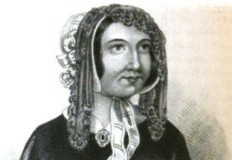 Maria Manning
Murderer · United Kingdom · 1849
Maria Manning was also identified as Marie Manning and Marie de Roux. Maria Man…
1 victim
Maria Manning
Murderer · United Kingdom · 1849
Maria Manning was also identified as Marie Manning and Marie de Roux. Maria Man…
1 victim
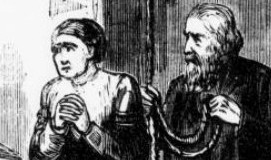 Margaret Waters
Murderer · United Kingdom · 1866
Margaret Waters was an English murderess who was hanged by executioner William…
19 victims
Margaret Waters
Murderer · United Kingdom · 1866
Margaret Waters was an English murderess who was hanged by executioner William…
19 victims
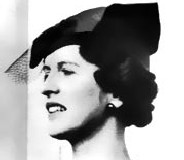 Florence Ransom
Murderer · United Kingdom · 1940
Florence Ransom was a middle-aged woman who was described as physically beautif…
3 victims
Florence Ransom
Murderer · United Kingdom · 1940
Florence Ransom was a middle-aged woman who was described as physically beautif…
3 victims
 John Eric Armstrong
Serial killer · USA · 1992
John Eric Armstrong was a former USS Nimitz sailor of Dearborn Heights, Michiga…
18 victims
John Eric Armstrong
Serial killer · USA · 1992
John Eric Armstrong was a former USS Nimitz sailor of Dearborn Heights, Michiga…
18 victims
 Mark Dixie
Murderer · United Kingdom · 2005
Mark Philip Dixie — defendant Sally Anne Bowman — victim; British model Lewis S…
1 victim
Mark Dixie
Murderer · United Kingdom · 2005
Mark Philip Dixie — defendant Sally Anne Bowman — victim; British model Lewis S…
1 victim
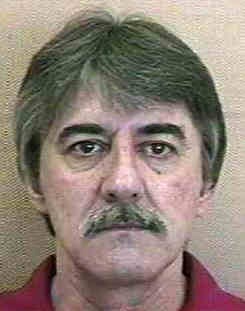 Arthur Martin Boyd
Murderer · USA · 1982
Arthur Martin Boyd was executed by lethal injection in North Carolina on Octobe…
1 victim
Arthur Martin Boyd
Murderer · USA · 1982
Arthur Martin Boyd was executed by lethal injection in North Carolina on Octobe…
1 victim
 Bobby Ray Hopkins
Murderer · USA · 1993
Bobby Ray Hopkins was convicted of capital murder and sentenced to death for ki…
2 victims
Bobby Ray Hopkins
Murderer · USA · 1993
Bobby Ray Hopkins was convicted of capital murder and sentenced to death for ki…
2 victims
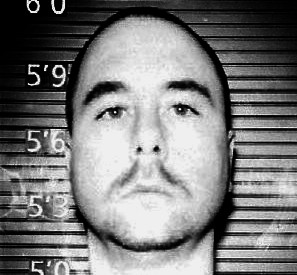 Herbert Underwood
Murderer · USA · 1984
Defendant Herbert Underwood was sentenced to death for murder and related crime…
1 victim
Herbert Underwood
Murderer · USA · 1984
Defendant Herbert Underwood was sentenced to death for murder and related crime…
1 victim
- Gender
- female
- Country
- United Kingdom
- Location
- England, United Kingdom
- Date of birth
- 1922
- Characteristics
- poisoner, nurse
- Victim profile
- Acquaintances
- Method of murder
- Poisoning ( colchicine - arsenic)
- Date(s) of murder
- 1854 - 1862
- Years active
- 1854–1862
- Date of arrest
- February 1862
- Status
-
Executed
Executed by hanging at Newgate Gaol on October 20, 1862; last woman publicly hanged in London
Case details
Catherine Wilson was a British nurse who poisoned victims after befriending them and persuading them to make out wills in her favour. She was born in 1822 in Boston. She was executed by hanging at Newgate Gaol on October 20, 1862, and she was described as the last woman to be publicly hanged in London.
Timeline
- October 1854 — Captain Peter Mawer died after making his will in Catherine Wilson’s favour.
- October 1856 — Mrs Maria Soames died after being ill for several days.
- June 1856 — Dixon died after a short illness during which he was nursed by Catherine Wilson.
- 1859 — Catherine Wilson was living with a Mrs Jackson in Boston; Mrs Jackson died four days after drawing money from her bank account.
- End of 1859 — Catherine Wilson’s next victim was Mrs Ann Atkinson, who was in London on business.
- 19 October — Mr Atkinson arrived in London the day before his wife died.
- April 1862 — Catherine Wilson was charged with attempted murder after administering poison to Mrs. Connell (spelled “Mrs. Connell” in the record).
- Several weeks later in 1862 — Catherine Wilson was apprehended after fleeing from Marylebone Police Court.
- 1862 (trial at the Central Criminal Court) — Catherine Wilson was tried for murder by poisoning Mrs Maria Soames and was found guilty and sentenced to hang.
- 25 September 1862 — Catherine Wilson was tried at the Old Bailey before Mr Justice Byles for the murder of Mrs Maria Soames.
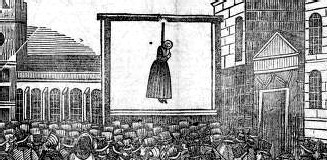
- 20 October 1862 — Catherine Wilson was hanged outside the Old Bailey at Newgate Gaol before a crowd of 20,000.
Background
Catherine Wilson worked as a nurse by trade. She gained access to victims by finding sick people of means, befriending them, and persuading them to leave her money in their wills. For a time she lived with a man named Dixon, who began to drink heavily; she poisoned him as well.
Catherine Wilson was recognised by Sarah Soames as the woman who had nursed her mother through her final illness several years earlier. Twelve years earlier, Catherine Wilson had been housekeeper to elderly Captain Peter Mawer in Boston, Lincolnshire. He died in October 1854 after making his will in Catherine Wilson’s favour.
After Mawer’s death, Catherine Wilson moved to London and became the mistress of James Dixon. Dixon had a serious drink problem, and he died in June 1856 after a short illness, during which he was nursed by Catherine Wilson.
Catherine Wilson and Dixon had been lodging in the Bloomsbury home of fifty-year-old Mrs Maria Soames, who had recently been widowed. The morning of 16 October 1856 saw Mrs Soames complaining of feeling unwell, and two days later the previously healthy woman was dead.
Catherine spread the rumour that Mrs Maria Soames had committed suicide.
During later events, Catherine Wilson made several trips back to Boston to visit a Mrs Jackson. During the last of these visits Mrs Jackson died four days after drawing a considerable amount of money from her bank account, and the money vanished immediately after her death.
Catherine Wilson later lived in Lambeth with a new lover, named Taylor. She also lodged with Mrs Sarah Carnell in 1862, and later in Brixton with Mrs Maria Soames is described in multiple places within the record.
The offences
Attempted murder of Mrs. Connell
Catherine Wilson was charged with attempted murder after administering poison to Mrs. Connell. In the record, Mrs. Connell had been living apart from her husband and began to long for reconciliation. Catherine Wilson was asked to act as intermediary and befriend Mrs. Connell.
A cry of pain from Mrs. Connell ended the conversation. Mrs. Connell had not noticed that while Catherine Wilson was only a guest, the last cup of tea was poured out for her and Catherine Wilson thought the illness was the result of worry and overstrain. Mrs. Connell was taken upstairs and Catherine Wilson brought a bottle of medicine from a chemist.
Mrs. Connell took a mouthful and tried to drink more of the medicine, but spilt it on the bed-clothes. The record describes the “medicine” as so strong that it burned holes in the linen. Mrs. Connell did not die, though she suffered and nearly succumbed. The pharmacist was called to explain what had been sold; the pharmacist demonstrated that the medicine was harmless and that the person who could have added any noxious ingredient was the woman who conveyed it.
Catherine Wilson disappeared after the incident and fled for several days, then was arrested. The mixture given to Mrs Carnell later in 1862 is described as containing enough sulphuric acid to kill fifty people; in the attempted-murder episode, the record refers to poisoning by sulphuric acid as “oil of vitriol.”
Murder of Mrs Sarah Carnell by poisoning (offence for which she was cleared initially, then later charged and re-arrested)
In 1862, Catherine Wilson was looking after Mrs Sarah Carnell. Mrs Carnell rewrote her will in Catherine Wilson’s favour. Shortly afterwards, Catherine brought Mrs Carnell a “soothing draught.” Mrs Carnell took a mouthful, promptly spat it out, and said it had burnt her mouth. Mrs Carnell’s husband noticed that what his wife had spat out had burnt a hole in the carpet.
Catherine Wilson fled and was arrested a couple of days later. She was charged with attempted murder.
Her defence argued that the pharmacist had given her the wrong bottle and that no one could be sure of the charge, leading to an acquittal on the attempted-murder charge.
After release, Catherine Wilson was re-arrested.
Murder of Mrs Maria Soames by poisoning
Catherine Wilson was later charged with murder after Mrs Maria Soames died. Post-mortems were described as being conducted on former patients, and poisons were found in seven exhumed bodies, though the trial focused on one murder.
Mrs Maria Soames was described as lodging with Catherine Wilson and a man named Dixon in the Bloomsbury home. The record describes that after receiving a legacy from a stepbrother, Catherine Wilson conducted an interview with Mrs Soames, asked her to come upstairs, and then acted as the only nurse during Mrs Soames’s illness. Mrs Soames’s illness progressed and Mrs Soames died after Catherine Wilson offered her another dose of medicine.
A doctor attended and certified that death had occurred from natural causes following a post-mortem examination. Mrs Soames’s nearest relation received the certificate, and Catherine Wilson was safe at that time. The record states that she then demanded payment of ten pounds which she said Mrs Soames owed her, and a signed promise to pay was produced.
Evidence in the record describes poisoning by colchicum as consistent with symptoms suffered by Mrs Soames, though a post-mortem had failed to find any traces of poison in her remains.
In the murder trial, toxicologist Alfred Swaine Taylor gave evidence relating to colchicine poisoning and detection limits after so long. The judge summed up to the jury, including the statement:
“Gentlemen, if such a state of things as this were allowed to exist no living person could sit down to a meal in safety” Catherine Wilson was found guilty.
Murder of other victims and poisonings (discussed as known murders not judicially proved in parts of the record; and as alleged additional crimes)
The record includes multiple alleged and/or discussed poisonings and deaths connected to Catherine Wilson’s nurse role and use of poisons.
- Captain Peter Mawer died in October 1854 after making his will in Catherine Wilson’s favour.
- Dixon died in June 1856 after a short illness, described in the record as following severe drinking problems and as being nursed by Catherine Wilson.
- Mrs Ann Atkinson died on 19 October after receiving and being told she was seriously ill, with Mr Atkinson arriving the day before her death.
- A Mrs Jackson died four days after drawing money from her bank account in Boston.
- The record states that post-mortems carried out on people she had nursed revealed a variety of poisons in seven exhumed bodies.
The record also states that it was later speculated Catherine Wilson was probably responsible for at least seven deaths by poisoning with either colchicum and arsenic being the agent.
Investigation
After Catherine Wilson was arrested following the attempted poisoning of Mrs Sarah Carnell, the police continued with investigations into earlier deaths. The record describes that once she was acquitted of attempted murder, she was immediately rearrested as the police had continued investigations and had exhumed bodies of former patients.
The authorities explored Catherine Wilson’s background after she had been recognised by Sarah Soames. During the remand and subsequent proceedings, corpses were exhumed and post-mortems were conducted.
When Catherine Wilson’s attempted-murder acquittal occurred, a detective identification is described in the record as approaching the defence counsel and saying that if Catherine Wilson were found not guilty, there were warrants for her arrest on no fewer than seven murder charges.
In the murder trial, the judge expressed strong certainty of her guilt, stating:
“The result upon my mind is that I have no more doubt that you committed the crime than if I had seen it committed with my own eyes.”
Arrest
Catherine Wilson was arrested a couple of days after the incident involving Mrs Sarah Carnell’s “soothing draught.” She was apprehended after the attempted-murder charge in Marylebone and was held while investigations continued.
After an acquittal on the attempted-murder charge, the record describes her as being immediately rearrested by police and then charged with murder.
In the narrative about Mrs. Connell, she was committed for trial after several appearances at the Marylebone Police Court and was arrested after being recognised by an officer off duty.
Trial
First trial: attempted murder acquitted
Catherine Wilson was tried for attempted murder after the poisoning of Mrs Sarah Carnell. The defence argued the pharmacist gave her the wrong bottle and that there was no accounting for juries.
The judge was described as pointing out that the theory was untenable because if the bottle contained sulphuric acid when she received it, it would have become red-hot or burst before she arrived at the invalid’s bedside.
At the end of the judge’s summing-up, the jury returned a verdict of not guilty for attempted murder.
Second trial: murder found guilty and sentenced to hang
Catherine Wilson was tried for the murder of Mrs Maria Soames. The record states that she was tried and found guilty, and that she was sentenced to hang. The record includes details that seven people were alleged to have died after rewriting wills, but evidence about those other alleged deaths was not admitted during the trial.
The trial was held on 25 September 1862 before Mr Justice Byles, with Montague Williams as defence counsel again. Toxicologist Alfred Swaine Taylor gave evidence of colchicine poisoning, while the defence argued that the poison could not be reliably detected after so long.
The judge also provided the quoted summing-up warning the jury about safety at meals: Catherine Wilson was found guilty and sentenced to hang.
Sentencing
The judge sentenced Catherine Wilson to death by hanging. After sentencing, the judge asked Montague Williams to come to his chambers. The record includes the judge’s remarks:
“I sent for you to tell you that you did that case remarkably well. But it was no good; the facts were too strong. I prosecuted Rush for the murder of Mr Jermy, I defended Daniel Good, and I defended several other notable criminals when I was on the Norfolk Circuit; but, if it will be of any satisfaction to you, I may tell you that in my opinion you have to-day defended the greatest criminal that ever lived.” The record also states that her punishment was the first death sentence handed down to a woman by the Central Criminal Court in 14 years.
Appeals
No appeal is described in the record.
Outcome
Catherine Wilson was executed by hanging at Newgate Gaol on October 20, 1862. A crowd of 20,000 turned out to see her execution outside the Old Bailey. She was described as the last woman to be publicly hanged in London.
Aftermath and public reaction
The record describes limited condemnation of her punishment and includes commentary about her crimes.
Harper’s Weekly is quoted in the record as describing her career and crimes. The record states:
“From the age of fourteen to that of forty-three her career was one of undeviating yet complex vice [...] She was as foul in life as bloody in hand, and she seems not to have spared the poison draught even to the partners of her adultery and sensuality. Hers was an undeviating career of the foulest personal vices and the most cold-blooded and systematic murders, as well as deliberate and treacherous robberies.” The record also includes Harper’s discussion that “Mr. Justice Byles” referenced the death of Mrs Soames and includes the phrase: “never heard of a case in which it was more clearly proved that murder had been committed, and where the excruciating pain and agony of the victim were watched with so much deliberation by the murderer,” and it adds that the same judge had “no more doubt” that Mrs Atkinson was murdered by Catherine Wilson than if he had seen it with his own eyes.
The record also describes crowd attendance and that Catherine Wilson ignored jeers and catcalls as hangman William Calcraft placed the noose around her slim neck.
The record mentions an incident involving executioner Thomas Cheshire’s wife, Ann Cheshire, who picked up four small children who shouted “Jack Ketch!” and dropped them into a cellar area ten feet deep, reportedly without hurting them to any great extent. The record states:
“Jack Ketch!” It further states that although Catherine Wilson claimed it was an accident, she was bound over to be of good behaviour in future.
Other details
Relationships and living arrangements
Catherine Wilson lived with Dixon for a time, and he died after a short illness. She later became close friends with Mrs Maria Soames, who allowed her lodging. The record also states that Catherine Wilson had a “new lover, named Taylor,” and lived in Lambeth.
Financial gain and theft
The record states that Catherine Wilson encouraged victims to leave her money in their wills and that money vanished immediately after certain deaths. It also states that Mrs Ann Atkinson had her purse disappear containing over £50, and that in one instance a bank account drawing by Mrs Jackson vanished immediately after her death.
Specific incidents involving poison and injuries
In the Mrs Sarah Carnell episode, Mrs Carnell spat out the “soothing draught” and it burnt her mouth and burnt a hole in the carpet. In the Mrs. Connell episode, the “medicine” was described as burning holes in the linen.
Named medical and legal figures
- Montagu Williams, Q.C. — defence counsel mentioned for both trials.
- Mr Baron Bramwell — judge described in the attempted-murder acquittal account.
- Mr Justice Byles — judge for the murder trial.
- Alfred Swaine Taylor — toxicologist mentioned for evidence relating to colchicine.
- Dr Whitburn — doctor mentioned as attending and conducting a post-mortem examination in the narrative about Dixon and Mrs Soames.
- William Calcraft — hangman mentioned on execution day.
- Thomas Cheshire — executioner mentioned in relation to the “Jack Ketch!” incident.
Charges and verdicts explicitly stated in the record
Catherine Wilson was charged with attempted murder in relation to poisoning and was cleared on that attempted-murder charge. She was later charged with murder and was found guilty.
Methods described
The record describes Catherine Wilson using poisons, including sulphuric acid and colchicum/colchicine. The record also mentions speculation involving arsenic.
Population of victims mentioned
The record states that there were seven former patients whose bodies were exhumed and poisons found in seven of the bodies, and it references seven murder charges in relation to warrants after the attempted-murder acquittal.


Spotted an error, or have more information about this case?