
Mona Fandey
Murderer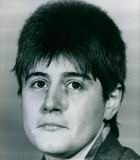 Michaela Roeder
Murderer · West Germany · 1984
Michaela Roeder, known as the “Angel of Death,” was a nurse who was charged in…
17 victims
Michaela Roeder
Murderer · West Germany · 1984
Michaela Roeder, known as the “Angel of Death,” was a nurse who was charged in…
17 victims
 Bobbie Sue Terrell
Murderer · USA · 1984
Bobbie Sue Dudley Terrell was a Pinellas County nurse and worked as the night s…
12 victims
Bobbie Sue Terrell
Murderer · USA · 1984
Bobbie Sue Dudley Terrell was a Pinellas County nurse and worked as the night s…
12 victims
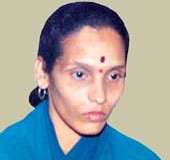 Renuka Shinde
Murderer · India · 1990
Renuka Shinde was sentenced to death on June 29, 2001. The High Court upheld th…
9 victims
Renuka Shinde
Murderer · India · 1990
Renuka Shinde was sentenced to death on June 29, 2001. The High Court upheld th…
9 victims
 Sabine Hilschenz
Murderer · Germany · 1988
Sabine Hilschenz was a German woman convicted of infanticide involving eight of…
9 victims
Sabine Hilschenz
Murderer · Germany · 1988
Sabine Hilschenz was a German woman convicted of infanticide involving eight of…
9 victims
 Seema Gavit
Murderer · India · 1990
Seema Mohan Gavit and her sister Renuka Shinde received death sentences. The se…
9 victims
Seema Gavit
Murderer · India · 1990
Seema Mohan Gavit and her sister Renuka Shinde received death sentences. The se…
9 victims
 Megan Huntsman
Murderer · USA · 1996
Megan Huntsman was 40 at sentencing. She was a mother of three children who wer…
6 victims
Megan Huntsman
Murderer · USA · 1996
Megan Huntsman was 40 at sentencing. She was a mother of three children who wer…
6 victims
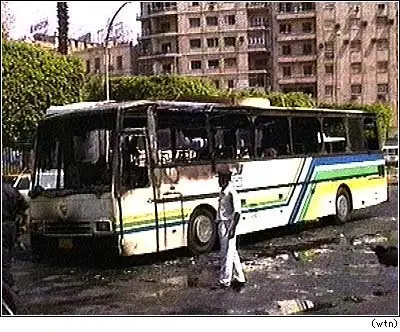 Saber & Mahmoud Abu el-Ulla
Mass murderers · Egypt · 1993
This case concerns Saber Abu el-Ulla and his brother, Mahmoud Abu el-Ulla, who…
13 victims
Saber & Mahmoud Abu el-Ulla
Mass murderers · Egypt · 1993
This case concerns Saber Abu el-Ulla and his brother, Mahmoud Abu el-Ulla, who…
13 victims
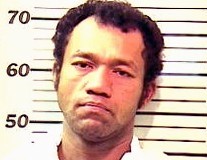 Lam Luong
Mass murderer · USA · 2008
Lam Luong was a Vietnamese refugee who was sentenced to death in Alabama for th…
4 victims
Lam Luong
Mass murderer · USA · 2008
Lam Luong was a Vietnamese refugee who was sentenced to death in Alabama for th…
4 victims
 Charles Milton
Murderer · USA · 1977
Charles Milton was convicted of capital murder by a Fort Worth, Texas jury and…
1 victim
Charles Milton
Murderer · USA · 1977
Charles Milton was convicted of capital murder by a Fort Worth, Texas jury and…
1 victim
 Lendell Hunter
Murderer ? · USA · 1975
Lendell Hunter carried out a string of violent rapes that shocked Augusta, Geor…
1 victim
Lendell Hunter
Murderer ? · USA · 1975
Lendell Hunter carried out a string of violent rapes that shocked Augusta, Geor…
1 victim
 Tonatihu Aguilar
Homicide · USA · 1996
Tonatihu Aguilar was sent to a juvenile-detention center on April 25, 1995 for…
3 victims
Tonatihu Aguilar
Homicide · USA · 1996
Tonatihu Aguilar was sent to a juvenile-detention center on April 25, 1995 for…
3 victims
 Allen Holman
Murderer · USA · 1997
Allen R. Holman, Sr. (born March 29, 1959) was sentenced to death for the first…
1 victim
Allen Holman
Murderer · USA · 1997
Allen R. Holman, Sr. (born March 29, 1959) was sentenced to death for the first…
1 victim
- Gender
- female
- Country
- Malaysia
- Location
- Pahang, Malaysia
- Date of birth
- 1966
- Age at first offence
- 27
- Characteristics
- dismemberment
- Victim profile
- Datuk Mazlan Idris ( assemblyman for central Pahang state)
- Method of murder
- Beheading with an axe
- Date(s) of murder
- July 2, 1993
- Years active
- 1993
- Date of arrest
- July 23, 1993
- Status
-
Executed
Executed by hanging at Kajang Prison on November 2, 2001
Case identification
Mona Fandey was also known as Maznah Ismail.
Status
Mona Fandey was executed by hanging at Kajang Prison on November 2, 2001.
Timeline
- 2 November 2001 — Mona Fandey was hanged at Kajang Prison.
- 13 April 1999 — Mona Fandey, Affandy, and Juraimi’s appeals were dismissed and their death sentences were upheld.
- 1999 — The Federal Court dismissed the appeals and upheld the death sentence.
- February 9, 1995 — The jury delivered a unanimous guilty verdict against Mona and Affendi.
- 1995 — Mona Fandey, Affandi, and Juraimi were sentenced to death by hanging.
- November 2, 2001 — The hangings were set for dawn on Friday 2 November 2001 in Kajang Prison.
- July 22, 1993 — Police found Mazlan’s body; Mona, her husband, and Juraimi were arrested.
- July 2, 1993 — Mazlan was reported missing after withdrawing RM 300,000 from a bank.
- July 18, 1993 — It was alleged that Mazlan was killed between 10:00 PM and 12 midnight.
Background
Maznah Ismail (1956 - 2 November 2001), better known as Mona Fandey, was a pop singer and a water ballet dancer during her youth. She later became involved in spiritual witchcraft activities and was known to be a bomoh, a local shaman. She offered services to clients, mostly from the upper-class society.
Mona worked with her husband Mohamad Nor Affandi Abdul Rahman, 44, and their assistant Juraimi Hassan, 31.
Mona used the stage name “Mona Fandey” to boost her popularity during her pop singer career.
The offence
A state assemblyman, Mazlan Idris, sought Mona’s services to boost his political career and climb the party ladder.
Mona and her husband promised to help Mazlan by giving him a talisman consisting of a cane and sbatmi headgear, supposedly owned by former Indonesian President Sukarno. Mona convinced Mazlan he would be “invincible” if he held the talisman.
Mona demanded RM 2.5 million. Mazlan paid RM 500,000 as a deposit and gave 10 land titles as surety for the remaining RM 2 million.
An appointment was made for cleansing rituals to be performed at Mona’s house. Mazlan was told to lie on the floor face up while Mona placed flowers on him. Mona told Mazlan to close his eyes and wait for the money to “fall from the sky”. Juraimi then, using an axe, chopped Mazlan’s head off. They dismembered and partially skinned Mazlan’s body.
Mazlan’s body was found in 18 parts buried in a storeroom near Mona’s house in Pahang. His body was also described as being found on July 22, 1993, buried 1.8m beneath the storeroom of an uncompleted house and sealed over with a concrete cap. It was also described as being buried in a hole near Mona’s home in the state of Pahang, about 130 kilometres north-east of Kuala Lumpur.
Investigation and discovery
Mazlan Idris was reported missing on July 2, 1993 after withdrawing RM 300,000 from a bank. After the murder, Mona was reported to have been on a shopping spree where she bought a Mercedes-Benz and had a facelift.
It was alleged that the murder occurred between 10:00 PM and 12 midnight on July 18, 1993. Police found Mazlan’s body on July 22, 1993. Mona, her husband, and Juraimi were arrested, and a highly publicized trial began.
During the trial, it was stated that Mona and Affandi were tried in Temerloh High Court by a 7-person jury (trial by jury was abolished from January 1, 1995). It was also described that the case lasted 65 days and heard evidence from 76 witnesses.
Arrest
On July 22, 1993, police found Mazlan’s body; Mona, her husband, and Juraimi were arrested.
Trial
Mona, Affandi, and Juraimi were tried in Temerloh High Court. They were charged with murder under section 302 of the Malaysian penal code, a crime carrying a mandatory death sentence.
Mona and Affandi were described as in their late 30’s accused of a gruesome, voodoo related murder. Mona dressed extravagantly with bright and colorful designs on her dress and had a penchant for wearing expensive outfits to court each day.
During the trial, Mona exhibited strange behaviour, including appearing cheerful, constantly smiling, and posing for press photographers. She was photographed smiling as she was led from the court to prison.
Mona remarked: “looks like I have many fans”.
The prosecution told the court that money was the motive for the killing and pointed to the shopping spree, the facelift, and the Mercedes.
Juraimi testified against Mona and Affandi and revealed the details of the murder.
It was alleged by the prosecution that Mazlan had been killed between 10 p.m. on July 2 and 12 midnight on July 18, 1993, in Kampung Peruas, Ulu Dong, Raub in Pahang state.
In Affandi’s defence, he said Mazlan owed him two million ringgit ($526,000) for a “magic cane”, talisman and a traditional hat said to have belonged to former Indonesian president Sukarno.
Mona testified that she also gave talismans and charms to several other UMNO politicians to boost their popularity with the electorate.
The case was described as lasting 65 days and hearing evidence from 76 witnesses.
The jury reached a unanimous verdict of guilty against all three defendants. It was stated that it only took the seven member jury 70 minutes to reach a unanimous verdict of guilty against all three defendants.
Affendi and Mona smiled when the foreman of the jury delivered the verdict on the 9th of February 1995.
Sentencing
Mona and Affandi were sentenced to death by hanging. The judge asked them if they had anything to say before he passed sentence and Affandi and Mona replied that they would leave to the discretion of the court.
After hearing her sentence Mona said “I am happy and thank you to all Malaysians.”
The judge passed the death sentence on each of them “that they be taken from court to a recognised prison and later be hanged till they were dead.”
Appeals
Their appeals were heard by the Chief Justice of the Federal Court, Tun Mohd Eusoff Chin, the Chief Judge of Malaya, Datuk Wan Adnan Wan Ismail, and Federal Court judge Datuk Dr Zakaria Yatim in the Federal Court, Malaysia’s highest court sitting in Kuala Lumpur.
It was stated that the appeal process started in June of 1998 and then was adjourned until 1999 after legal arguments on the admissibility of Juraimi’s statement to the police which led to the discovery of Mazlan’s body.
On the 13th April 1999 all three appeals were dismissed and the death sentences upheld. It was also described that in 1999 the court dismissed their appeals and upheld the death sentence.
Outcome
The Pardons Board of Pahang refused to give clemency to Mona, Affandy, and Juraimi.
The trio were finally hanged on November 2, 2001 at Kajang Prison.
Aftermath
Before dawn on the Friday morning, the trio were each handcuffed and hooded in their holding cells adjacent to the execution chamber and then led to the gallows with its three British style nooses dangling from the metal beam. On the trap, their legs were strapped and the noses adjusted round their necks. At 5.59am the drop fell and the three of them plummeted down.
An official stated: “They didn’t say anything, they were calm - just like those who accept that they are going to die.”
Jamil Razif Kassim told reporters: “All three have undergone their sentence as of this morning.”
After the executions, Mazlan’s widow, Datin Faridah Zainuddin, told reporters that she could finally bury the past behind her and said she hoped now to carry on living her life with her children without the painful memories.
Mona and Affandi were buried in a cemetery in Kajang later in the morning, while Juraimi was buried in his hometown of Port Klang, in the Telok Gong Muslim cemetery that afternoon.
It was reported that Mona said she would never die just before she was executed, and the words recorded were: “aku takkan mati”, meaning “I will never die”. It was also reported that the trio expressed no remorse at the pre-dawn execution.
Other details
Mona claimed to have provided politician clients in the ruling UMNO party with a variety of charms and talismans.
It was described that the trial was a media sensation, including that the prosecution told the court money was the motive, and that evidence included the shopping spree, the facelift, and the Mercedes.
The last female executed in Malaysia had been Tan Bee Lee in 1994 for a drug trafficking offence.
Publicity around Mona Fandey included local and international media coverage and plenty of public interest. Anti-death penalty movements including Amnesty International voiced their opposition to the execution of the trio.
In 2002, Malaysian film director Amir Muhammad made a short film entitled Mona in his 6horts series.
In 2006, a film by Dain Iskandar Said entitled Dukun was widely assumed to be based on Mona Fandey. It was stated that this highly anticipated film had not been released as of December 2011 and would most likely not be released for public screenings due to concerns relating to the contents of the film, the relationship with Mona Fandey, and the implications for her family.


Spotted an error, or have more information about this case?