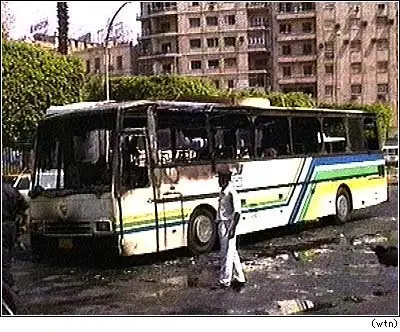
Saber & Mahmoud Abu el-Ulla
Mass murderers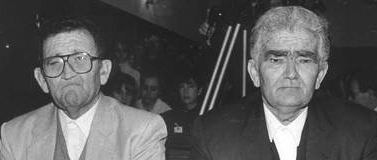 Emilio and Antonio Izquierdo
Mass murderers · Spain · 1990
Emilio Izquierdo and Antonio Izquierdo carried out a mass murder known as the P…
9 victims
Emilio and Antonio Izquierdo
Mass murderers · Spain · 1990
Emilio Izquierdo and Antonio Izquierdo carried out a mass murder known as the P…
9 victims
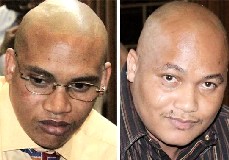 Sylvester & Gavin Beukes
Mass murderers · Namibia · 2005
The Kareeboomvloer massacre occurred on the Kareeboomvloer farm in the Hardap R…
8 victims
Sylvester & Gavin Beukes
Mass murderers · Namibia · 2005
The Kareeboomvloer massacre occurred on the Kareeboomvloer farm in the Hardap R…
8 victims
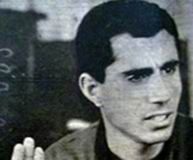 Suleiman Khater
Mass murderer · Egypt · 1985
Suleiman Mohammed Abdul-Hamid Khater (Arabic سليمان خاطر, also transcribed Sole…
7 victims
Suleiman Khater
Mass murderer · Egypt · 1985
Suleiman Mohammed Abdul-Hamid Khater (Arabic سليمان خاطر, also transcribed Sole…
7 victims
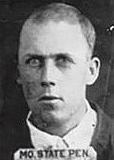 Harry & Jennings Young
Mass murderers · USA · 1932
Harry Young and Jennings Young took part in the “Young Brothers Massacre,” also…
6 victims
Harry & Jennings Young
Mass murderers · USA · 1932
Harry Young and Jennings Young took part in the “Young Brothers Massacre,” also…
6 victims
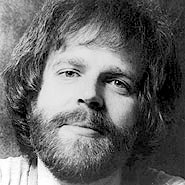 Jerry Harvey
Murderer · USA · 1988
Jerry Harvey (October 28, 1949 – April 9, 1988) was an American screenwriter an…
1 victim
Jerry Harvey
Murderer · USA · 1988
Jerry Harvey (October 28, 1949 – April 9, 1988) was an American screenwriter an…
1 victim
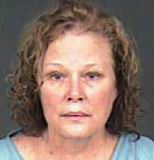 Mary Koontz
Murderer · USA · 2009
Mary Koontz was 60 years old at the time of the murder trial. She had been a fo…
1 victim
Mary Koontz
Murderer · USA · 2009
Mary Koontz was 60 years old at the time of the murder trial. She had been a fo…
1 victim
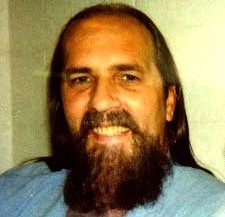 Jeffrey Dale Tiner
Murderer · USA · 1993
Name: Jeffrey Dale Tiner · Case title: State of Oregon, Plaintiff on Review, v.…
1 victim
Jeffrey Dale Tiner
Murderer · USA · 1993
Name: Jeffrey Dale Tiner · Case title: State of Oregon, Plaintiff on Review, v.…
1 victim
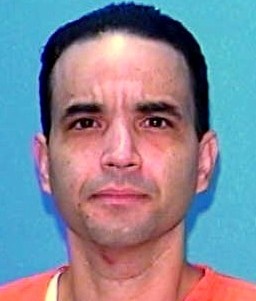 Marbel Mendoza
Murderer · USA · 1992
Marbel Mendoza (date of birth: 09/23/66) was sentenced to death on 08/02/94 in…
1 victim
Marbel Mendoza
Murderer · USA · 1992
Marbel Mendoza (date of birth: 09/23/66) was sentenced to death on 08/02/94 in…
1 victim
 Sibusiso Madubela
Mass murderer · South Africa · 1999
Sibusiso Madubela was a black army lieutenant serving with the 1st South Africa…
8 victims
Sibusiso Madubela
Mass murderer · South Africa · 1999
Sibusiso Madubela was a black army lieutenant serving with the 1st South Africa…
8 victims
- Gender
- male
- Country
- Egypt
- Location
- Cairo, Egypt
- Date of birth
- ???
- Characteristics
- abduction
- Victim profile
- T wo Americans and a Frenchman / Nine German tourists and an a bus driver
- Method of murder
- Shooting and firebombing
- Date(s) of murder
- 1993 / September 18, 1997
- Years active
- 1993–1997
- Date of arrest
- September 18, 1997
- Status
-
Sentenced to death
Sentenced to death October 29, 1997; Cairo President Hosni Mubarak ratified the death sentences passed on Saber Abu el-Ulla and his brother Mahmoud Abu el-Ulla on December 29, 1997
Case overview
This case concerns Saber Abu el-Ulla and his brother, Mahmoud Abu el-Ulla, who were sentenced to death by an Egyptian military court for an attack outside the Egyptian Museum in Cairo.
Timeline
- September 18, 1997 — Saber and Mahmoud Abu el-Ulla attacked a bus outside the Egyptian Museum in Cairo, leaving nine German tourist and their Egyptian driver dead; the attack also wounded 19 people and shook Egypt’s crucial tourist industry.
- (three days before September 18, 1997) — Saber Abu el-Ulla told interrogators he carried out the attack to avenge an insult to Muslims by a Jewish woman who distributed posters depicting the Prophet Mohammed as a pig in June in Hebron.
- September 19, 1997 — Tourists returned to Egypt’s museums and other sites after the firebomb and rifle attack on tour buses outside the Egyptian Museum in Cairo.
- October 14, 1997 — Trial began for Saber Abu el-Ulla and Mahmoud Abu el-Ulla.
- October 29, 1997 — An Egyptian military court sentenced Saber Abu el-Ulla and Mahmoud Abu el-Ulla to death for the fire-bombing of the tourist bus; after the verdict was read, the brothers chanted “God is great!”
- October 30, 1997 — Saber Abu elUlla and his brother Mahmoud Abu elUlla pleaded guilty to charges of premeditated murder, attacking tourists and damaging the economy through violence and terrorism; a co-defendant acquitted; verdicts cannot be appealed, but sentences can only be carried out after presidential approval.
- December 29, 1997 — Cairo President Hosni Mubarak ratified the death sentences passed on Saber Abu el-Ulla and his brother Mahmoud Abu el-Ulla.
People
Defendants
- Saber Abu el-Ulla — described as “a failed pop musician” and “mentally deranged” by Egyptian officials; later stated he carried out the attack to avenge a cartoon drawn by an Israeli woman depicting Islam’s Prophet Mohammed as a pig; also claimed to defend Islam and to punish Europe.
- Mahmoud Abu el-Ulla — Saber’s brother; charged alongside Saber and sentenced to death with him.
Other named individuals and groups
- Col. Mohammed Abdel Aziz el-Sheik — military prosecutor who called for death by hanging during their trial.
- Sayed el-Qut — official arrested and on trial for bribery; also described as being involved in paying to have Saber certified mentally ill.
- Hosni Mubarak — President of Egypt who ratified the death sentences on December 29, 1997.
- Hassan el-Alfy — Interior Minister who repeated claims about the militants.
- Mamdouh el-Beltagi — Tourism Minister.
- Joe Michel — operations manager of Seti First Travel.
- Michael Friedrichs — spokesman for Germany’s largest tour group, TUI.
- Nils Rautenberg — at Bonn’s Opera travel agency.
- Mursi Shehata — of Spring Tours, which organized the ill-fated German tour.
- Fabian Muir — Australian tourist who described the attack as “like 'gunfight at the OK Corral'.”
- Mohammed Fadl — Egyptian passerby who described seeing black smoke and flames.
- Moammed Fadl — (listed as a separate entry only if treated as distinct in the scraped text; otherwise included once as above)
- Mohamed Fadl — (if duplication exists in scraped text, it should refer to the same person as the quote attributed to him; no additional facts are introduced)
- Mohammed Fadl — (no new distinct facts; retained once in the record)
- Fabian Muir — (already listed; quote attributed to him retained below)
- Mursi Shehata — (already listed; quote retained below)
- Mamdouh el-Beltagi — (already listed; quote retained below)
- Hassan el-Alfy — (already listed; quote retained below)
- Saber Mohammed Farhat Abu el-Ulla — name as used by the Interior Ministry for the “deranged” gunman.
- Mahmoud — name as used when the Interior Ministry said he was arrested with Saber.
- Saber Mohammed Farhat Abu el-Ulla — also described as escaped from a mental institution three days ago (or after spending two years in the institution, as described by police officials).
- Al-Gama’a al-Islamiya (Islamic Group) — militant group described as having attacked tourists, Christians and police in the past.
- Jihad (Holy Struggle) — militant group described as having concentrated on security and political figures.
- Islamic Group — described as hailing the mujahedeen brothers and warning tourists not to come to Egypt.
- U.S. Department of State, British tourism officials, British Foreign Office, and German foreign ministry — issued travel warnings.
The offence
On September 18, 1997, the two brothers attacked a bus outside the Egyptian Museum in Cairo.
- Police described the gunmen as terrorists.
- Witnesses said the gunmen threw a firebomb under the bus and a second one at the vehicle.
- The attack resulted in nine German tourists and their Egyptian driver dead.
- Officials described the attack as staged by a “mentally deranged” man and his brother, not organized terrorists.
- The attack wounded 26 people (including 19 wounded reported in the CNN text) and shook Egypt’s crucial tourist industry.
Counts and victims
- Dead: nine German tourists and their Egyptian driver (also described as 10 killed in the CNN text, with Police describing 10 people at least seven of them German tourists; the record preserves the given figures as stated in the source text).
- Wounded: 19 people were wounded; eight hospitalized (CNN text); elsewhere it is stated the attack wounded 26 people.
Location
- The bus attack took place outside the Egyptian Museum, Cairo, near Tahrir Square in one of Cairo’s busiest areas.
Investigation and policing
- Police said they wounded and captured two of the attackers and that a third was arrested nearby as hundreds of panicked people fled the area around the museum.
- A third attacker was shot in the head, hospitalized in critical condition, according to authorities.
- The Interior Ministry identified Saber Mohammed Farhat Abu el-Ulla as the “deranged” gunman and said his brother, Mahmoud, was arrested.
- Police said seven of the victims were German; police could not confirm the nationalities of the other three victims and said they may have been Egyptian employees of the company operating the tour bus.
- An Egyptian state-owned newspaper quoted a government official as saying police had set up checkpoints around a city of 16 million and intensified security at hotels and tourist sites as a result of the attack.
- Officials denied tourists were targeted.
- Tourism Minister Mamdouh el-Beltagi said:
“We cannot attribute this to terrorist groups. Tourism is not targeted and tourists are not targets. This is not a political or terrorist act, but a criminal one by a mentally deranged person and his brother.”
Arrest and custody details
- Police described the brothers as Saber and his brother Mahmoud.
- The source contains information that Saber was released after spending two years in the institution, and elsewhere states that he escaped from a mental institution three days ago; these statements are preserved as given.
- Interior Ministry said Saber was put in a mental hospital after he fired on tourists at a hotel in Cairo four years ago, killing two Americans and a Frenchman.
Trial
Charges
The brothers were charged with:
- premeditated murder
- attempting to harm the Egyptian economy through the use of violence
- attempting to harm the Egyptian economy through the use of violence and terrorism (as reflected in the October 30 text)
Plea and courtroom remarks
- The brothers had pleaded guilty to charges of premeditated murder, attacking tourists and damaging the economy through violence and terrorism (October 30, 1997 text).
- The brothers appeared “chatting and smiling as the verdict was read.”
- After the verdict was read, Saber Abu el-Ulla cried out, “God is great!” and dropped to the floor in prayer.
- After a judge read the verdict, the brothers chanted, “God is great!”
Prosecutor statement and sentencing request
Military prosecutor Col. Mohammed Abdel Aziz el-Sheik called for death by hanging:
“This was a heinous crime against Egypt, the land of civilization ... the land of safety,” and: Col. Aziz called for death by hanging for the lethal siblings.
Defence explanations and statements attributed to Saber
- Saber initially said he launched the attack to avenge a cartoon drawn by a Jewish woman in Israel that depicted Islam's Prophet Mohammed as a pig.
- Egyptian officials insisted the attack was not linked to Islamic militants.
- Saber said he lacked the contacts to join militants but sympathized with them.
- During the trial, Saber repeatedly stated they only meant to target Jews.
- Saber said the victims had not been Jews as his only regret “at the start of the trial that began on October 14.”
- During wideranging comments during the trial, Saber told reporters from inside a steel cage:
he staged the attack to defend Islam and to punish Europe.
- Minutes after the verdict, Saber said:
“Jews, Jews, the army of Mohammed is coming back!”
Mental health and bribery allegations
- Saber had previously been incarcerated in a mental hospital for killing two Americans and a Frenchman at a Cairo hotel in 1993.
- Saber said his father paid the head of Egypt's mental institutions $14,700 to have him certified mentally ill so that he could escape the death penalty in that case.
- The official identified was Sayed el-Qut, who was arrested and on trial for bribery.
- Police described Saber’s release in custody terms as part of the mental institution history (including “escaped from a mental institution three days ago” and “released after spending two years in the institution” as stated in the source).
Co-defendants
- Seven other people were on trial on charges of selling arms and ammunition to the brothers.
- Six of seven co-defendants were found guilty on lesser charges of involvement in the attack and sentenced to terms ranging from one year to 10 years in prison at hard labor.
- In the October 30, 1997 text: one man was sentenced to 10 years in jail with hard labor; five co-defendants were sentenced to prison terms ranging from 15 months to seven years; one man was acquitted.
- Military court verdicts cannot be appealed, but sentences can only be carried out after they have been approved by the president as supreme commander of the armed forces.
Sentencing
- On October 29, 1997, an Egyptian military court sentenced the two brothers to death for the fire-bombing of the tourist bus outside the Egyptian Museum in Cairo.
- After a judge read the verdict in a heavily guarded courtroom, the brothers chanted, “God is great!”
- Minutes later, Saber said, “Jews, Jews, the army of Mohammed is coming back!”
- On December 29, 1997, Cairo President Hosni Mubarak ratified the death sentences passed on Saber Abu el-Ulla and his brother Mahmoud Abu el-Ulla.
Appeals
Outcome
- The two brothers received death sentences on October 29, 1997, and those sentences were ratified by President Hosni Mubarak on December 29, 1997.
- Co-defendants included one acquittal and guilty verdicts on lesser charges with sentences ranging from 15 months to 10 years, with hard labor terms described for some defendants.
Aftermath
Tourism and public response
- Tourists returned to Egypt’s museums and other sites Friday under the watchful eye of tourism and security officials.
- Joe Michel said:
“So far everything is calm,” and: “I had two groups ... going to the Egyptian Museum this morning.”
- Michael Friedrichs said:
“Egypt has been booming this year,” and: “It is hard to say at this point whether the boom will be ended by the attack. A lot of people are certainly having second thoughts.”
- Nils Rautenberg said:
“The calls started coming in as soon as we opened,” and: “One woman canceled even though her trip wasn't until next April.”
- Seti's Michel stated:
“We have only had two cancellations out of 500 bookings, and they didn't give a reason,” and: “After the attacks in 1992 we had almost 1,000 clients canceled after two hours.”
- Mursi Shehata said:
“some individual cancellations, but it is really going back to normal.”
- Several tours canceled planned trips into Cairo Friday, choosing instead to remain outside the capital.
- The German foreign ministry issued warnings cautioning against travel on ships, buses and trains in middle Egypt, south of Beni Suef to Qena, and advised seeking advice for Hurguada, Luxor and Qena.
- British tourism officials and the British Foreign Office warned travelers to be vigilant, as did the U.S. Department of State.
Security framing and statements
- Egyptian officials labeled the attack the work of a madman, not organized terrorists.
- Interior Minister Hassan el-Alfy said:
“The heads of the terrorists have been falling, and nothing of them remains except a few fugitives.”
Historical and contextual references in the source
- The source states that “More than 1,100 people have been killed during the five years of violence, many of them police and extremists.”
- The source states that the violence has claimed tourists, government officials and minority Coptic Christians.
- The September 18, 1997 attack is described as the first on tourists since Islamic Group activists shot dead 18 Greek tourists they mistook for Israelis in April 1996.
- The source also states that officials said Muslim militants have been all but wiped out and that violence in recent months had been mostly confined to battles in southern Egypt.
- The source notes militant groups: al-Gama'a al-Islamiya (Islamic Group) and the Jihad (Holy Struggle).
Other details
Media and descriptive quotes from witnesses and officials
- Fabian Muir said:
“It was like 'gunfight at the OK Corral',” “Totally out of control. It went on for like 20 minutes. It seemed to go on forever.”
- Mohammed Fadl said:
“It was horrible,” “There was black smoke coming out of the bus, and then it burst into flames.”
Descriptions of attackers and incident mechanics
- Egyptian security sources said all who died were in the bus parked near the Egyptian Museum at Tahrir Square.
- Witnesses said the attackers wore black pants, white shirts and ties and described them as looking like typical Egyptian tourist agency employees.
- The brothers chanted “God is great!” after a judge read the verdict.
- The source includes that Saber’s regret at the start of the trial involved victims not being Jews.
Attribution and naming variations preserved from the source
- The source identifies the gunman as Saber Mohammed Farhat Abu el-Ulla; it also refers to “Saber Abu el-Ulla” and “Saber Abu elUlla” in different scraped fragments; no additional distinct individual facts are introduced beyond the name variants.
Spotted an error, or have more information about this case?