
Kristina Fetters
Homicide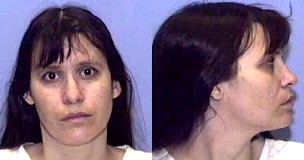 Andrea Yates
Homicide · USA · 2001
Andrea Pia Yates (born Andrea Pia Kennedy on July 2, 1964) was a former Houston…
5 victims
Andrea Yates
Homicide · USA · 2001
Andrea Pia Yates (born Andrea Pia Kennedy on July 2, 1964) was a former Houston…
5 victims
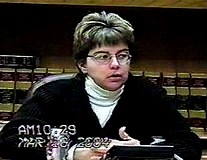 Coleen Thompson
Homicide · USA · 2002
Coleen Thompson was a former intensive care nurse at Shady Grove Adventist Hosp…
5 victims
Coleen Thompson
Homicide · USA · 2002
Coleen Thompson was a former intensive care nurse at Shady Grove Adventist Hosp…
5 victims
 Christine Paolilla
Homicide · USA · 2003
Christine Marie Paolilla was an American woman born on Long Island, New York on…
4 victims
Christine Paolilla
Homicide · USA · 2003
Christine Marie Paolilla was an American woman born on Long Island, New York on…
4 victims
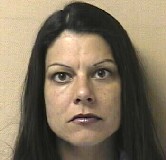 Melissa Marvin
Homicide · USA · 1999
Melissa Lynn Marvin was a 29-year-old waitress and amateur surfer at the time o…
4 victims
Melissa Marvin
Homicide · USA · 1999
Melissa Lynn Marvin was a 29-year-old waitress and amateur surfer at the time o…
4 victims
 Abby Grason
Homicide · USA · 2004
Abby Grason was a 25-year-old woman of Chicago. Her history included mental ill…
2 victims
Abby Grason
Homicide · USA · 2004
Abby Grason was a 25-year-old woman of Chicago. Her history included mental ill…
2 victims
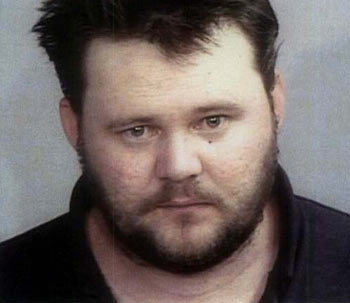 William Thomas Clare
Homicide · Australia · 2003
William Thomas Clare was a convicted killer who was also described as a paedoph…
1 victim
William Thomas Clare
Homicide · Australia · 2003
William Thomas Clare was a convicted killer who was also described as a paedoph…
1 victim
 Ralph Baze
Murderer · USA · 1992
Ralph Baze was sentenced to death on February 4, 1994. · January 15, 1992 — Aut…
2 victims
Ralph Baze
Murderer · USA · 1992
Ralph Baze was sentenced to death on February 4, 1994. · January 15, 1992 — Aut…
2 victims
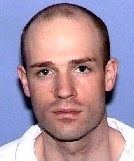 Randy Halprin
Murderer · USA · 2000
Randy Halprin (Randy Ethan Halprin), TDCJ Number 999453 · Date of birth: 09/13/…
1 victim
Randy Halprin
Murderer · USA · 2000
Randy Halprin (Randy Ethan Halprin), TDCJ Number 999453 · Date of birth: 09/13/…
1 victim
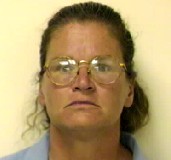 Debora Green
Murderer · USA · 1995
Debora Green (born Debora Jones, February 28, 1951) was an American physician.…
2 victims
Debora Green
Murderer · USA · 1995
Debora Green (born Debora Jones, February 28, 1951) was an American physician.…
2 victims
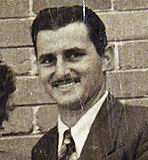 Tony Rawlins
Murderer · Australia · 1955
Tony Rawlins was a former stockman. He was an alcoholic and said he believed “o…
1 victim
Tony Rawlins
Murderer · Australia · 1955
Tony Rawlins was a former stockman. He was an alcoholic and said he believed “o…
1 victim
- Gender
- female
- Country
- USA
- Location
- Des Moines, Polk County, Iowa, USA
- Date of birth
- February 5, 1980
- Age at first offence
- 14
- Characteristics
- juvenile (14), robbery
- Victim profile
- Arlene Klehm, 73 (her great aunt)
- Method of murder
- Stabbing with knife
- Date(s) of murder
- October 25, 1994
- Years active
- 1994
- Date of arrest
- Same day
- Status
-
Life imprisonment
Sentenced to life in prison without parole on December 18, 1995
Case record: Kristina Fetters
Background
Kristina Joy Fetters was a resident of Orchard Place, a residential facility for the psychological and emotional treatment of children, located in Des Moines. She became a resident in January 1994.
Fetters was biracial; one parent was Caucasian and the other was African-American.
Fetters had an appearance at the Iowa Correctional Institution for Women in Mitchellville, where she spent the last 13 years.
Fetters was 29 years old at the time of the interview described in the case material.
The offence
Fetters killed her great aunt, Arlene Klehm, 73.
The State filed a trial information charging Fetters with first-degree murder with malice aforethought and premeditation and/or while participating in the forcible felony of robbery of Arlene Klehm.
Fetters had started planning to elope from Orchard Place in mid-October 1994. She ran away from Orchard Place earlier in the day with another girl and made her way to Klehm’s home in Klehm’s Polk County home.
At trial, testimony from Orchard Place residents and other witnesses described planning to kill Klehm and take property:
- Jessica Wilhite testified that during her conversations with Fetters she explained Klehm had a lot of money and that Fetters and Tisha Versendaal planned to kill her and take her truck and money.
- Tisha Versendaal testified she also had conversations with Fetters about eloping, and she explained Fetters planned to kill Klehm by stabbing her and cutting her throat while she was sitting in a chair and that Fetters informed her Klehm had money kept in a safe.
- Jeanie Fox, Fetters’s suite mate at Orchard Place, testified she and Fetters each packed a bag and left Orchard Place together. Fox testified that as they were leaving, Fetters mentioned to her that she was going to kill her aunt.
- Fox testified that that afternoon the two stopped at three different places before proceeding to the aunt’s home. Fox explained that one home occupant testified, after being asked to describe Fetters’s demeanor that afternoon: “She seemed to know what she was doing. She seemed to have it all down just what she was going to say and how she was going to do it.”
- Jeanie Fox and Fetters eventually made their way to the home of a friend of Fetters and obtained a small paring knife. Fox testified Fetters joked about killing Klehm before leaving the apartment.
Fox testified that the two girls were dropped off on the east side of Des Moines near Klehm’s home and concealed themselves outside the house near a fence and waited for the owners of the van to leave. While waiting, Fox testified Fetters repeated her plan to kill her aunt and explained Satan had given her the power to do so.
After the van left, Fox testified they went up to the house and Klehm let them in. At some point, Fox testified Fetters pulled her into a side room and again informed her that she was going to kill her aunt. Fetters then returned to the kitchen area where Klehm was sitting.
Fox testified about the attack:
- Fetters struck Klehm on the head from behind with a kettle while Klehm was seated in the kitchen.
- Klehm got up and asked her what happened.
- Fetters struck her in the head again with a frying pan.
- Fetters asked Fox for the paring knife.
- Fetters got on top of Klehm and attempted to slit her throat.
- Fetters got a bigger kitchen knife and proceeded to stab Klehm in the back.
- During the attack, Klehm was screaming and asked Fox for help.
- Klehm attempted to reach for a phone in the kitchen area; Fetters told her “no” and removed the phone from the hook.
After the attack, Fox testified that Fetters removed her bloody clothing. Fox also testified that Fetters took some necklaces and began looking for the keys to her aunt’s safe and truck but was unable to locate them. Fetters and Fox then left the scene.
Fox testified that once outside, Fetters thought she heard sirens. The two girls started running. Fetters began to cry. They then started pounding on neighborhood doors until they found someone who called the police.
After police arrived, Fetters cried and stated repeatedly she had killed her aunt.
Fetters denied she intended to steal anything. Court documents indicated Fetters wanted to take jewelry and money from her great aunt, but Fetters denied she intended to steal anything.
Investigation
At trial, Polk County Medical Examiner Dr. Francis L. Garrity testified during which the State introduced six color photographs of Klehm’s autopsy.
Garrity testified regarding five fatal stab wounds to Klehm’s back and other wounds on her hands and head. The autopsy photographs depicted:
- stab wounds on Klehm’s back,
- wounds on her hands,
- bruises and lacerations on her forehead,
- bruises and lacerations on her face,
- bruises and lacerations on the back of her head.
The autopsy photographs were described as “quite graphic” in nature and were utilized when Garrity testified about the autopsy and the cause of death.
Arrest
Fetters was convicted following the events described, with her trial following jurisdiction being transferred from juvenile court to district court.
Trial
Jurisdiction had been transferred from juvenile court to district court on February 17, 1995.
Fetters admitted to the murder but asserted insanity and diminished capacity defenses.
On December 18, 1995, a jury found Fetters guilty of the first-degree murder of Arlene Klehm.
Fetters was fifteen years old at the time of the conviction.
The district court denied Fetters’s motions for judgment of acquittal.
Fetters was sentenced to life imprisonment.
Insanity defense
Iowa Code section 701.4 (1993) provided in part: “A person shall not be convicted of a crime if at the time the crime is committed the person suffers from such a disease or deranged condition of the mind as to render the person incapable of knowing the nature and quality of the act the person is committing or incapable of distinguishing between right and wrong in relation to that act. Insanity need not exist for any specific length of time before or after the commission of the alleged criminal act.”
The statute also provided that when a defendant raises a defense of insanity, her burden of proof was by a preponderance of the evidence under Iowa Code § 701.4.
The defense argued Fetters produced sufficient evidence to establish she was either incapable of knowing the nature and quality of her actions in killing Klehm or that she could not distinguish right from wrong in relation to that act.
The State presented psychiatrist Michael Taylor, who examined Fetters and opined she was fully capable of understanding the nature and quality of her acts and fully capable of distinguishing right from wrong on October 25. Taylor testified he found no evidence of any diagnosable psychiatric disorder and believed she suffered from only a personality disorder.
Taylor testified that he noted defendant’s precise planning and deception in the execution of her plan and statements made after the killing reflecting she understood what she had done.
Taylor noted the various medications Fetters was receiving, including Prozac, would not have had any adverse consequences. Taylor also noted Fetters was receiving Thorazine at the time, which has the effect of making one less inclined to be aggressive.
The defense directed the court to trial testimony of psychiatrist Gaylord Nordine. Nordine testified Fetters did not know the difference between right and wrong and was incapable of understanding the nature of her acts on October 25 because she was in a psychotic state. Nordine opined she had a physical disorder involving the brain’s limbic system.
Nordine also believed Prozac prescribed to Fetters and her treatment at Orchard Place may have had a “toxic” effect on her.
The opinion summary also included Nordine’s testimony that Fetters was in a sustained affectively-centered psychotic state by approximately the first few days of October 1994 and that he believed defendant experienced an “affective storm” which totally overwhelmed all other operations of her brain, leaving her in a dangerous limbic psychotic state before murdering Klehm.
Nordine testified Fetters’s ability to carry out ministerial tasks just prior to the killing of her aunt did not alter his opinion that she was not sane when killing Klehm. He explained it was not inconsistent with her mental condition that she would have understood the nature and consequences of her actions one hour after the killing.
Jeanie Fox testified defendant was repeating the word “Anthony” while killing Klehm. There was also stipulated testimony at trial that shortly thereafter Fetters was experiencing hallucinations.
Taylor testified he was skeptical of Fetters’s claims of hallucinations. The decision described that two other professionals who had contact with Fetters indicated skepticism of her reports of symptoms of mental disturbances, with one noting a concern that Fetters’s reports might be made “to gain some particular objective.”
Taylor’s explanation included:
In talking with her I found absolutely no evidence of any type of psychiatric disorder, and in talking with her I found absolutely no indication that she was doing anything on October 25, 1994, other than killing her aunt.
The appellate decision stated that conflicting psychiatric testimony was presented to the fact finder and that sanity was “clearly an issue for the jury to decide.”
Insanity defense—jury question
The jury was instructed consistent with Iowa Code § 701.4 (1993). The decision stated that a defendant could not be acquitted by reason of insanity unless evidence showed Fetters suffered from a disease or deranged condition of the mind which rendered her either:
- incapable of knowing the nature and quality of the act; or
- incapable of distinguishing between right and wrong in relation to that act.
Dispositional consequences instruction for not guilty by reason of insanity
Fetters requested a jury instruction that if the jury entered a verdict of not guilty by reason of insanity, it did not mean the defendant went free but rather that further proceedings would be conducted to determine appropriate placement.
The request made of the district court by defense counsel included the following quotation: “Your honor ․ I would request the court give an instruction to the general effect that if the jury enters a verdict of not guilty by reason of insanity, it does not mean that the defendant goes free but rather that further proceedings are had in these courts to determine the appropriate placement of the defendant.”
The appellate decision quoted that the court did not impose an “absolute prohibition” and indicated limited circumstances may make it appropriate to instruct the jury, such as when a prosecutor stated in the jury’s presence the defendant would “go free” if found not guilty by reason of insanity.
Jury venire
At trial, Fetters challenged the jury venire. She requested the venire be discharged because the 46 prospective jurors were Caucasian, asserting the venire was not a fair cross-section of the community and violative of her Sixth Amendment rights.
The court overruled the motion to discharge the panel.
The decision addressed her argument that there was no meaningful possibility that the lack of representation of African-Americans from the Polk County venire summons occurred by chance and thus was due to systematic exclusion in the jury selection process.
The decision stated that Fetters failed to present evidence to the trial court regarding procedures utilized in Polk County for drawing jury venires and failed to provide statistical evidence or analysis as to probability that under-representation did not occur by chance. It found she did not establish a violation of her Sixth Amendment rights.
The decision also included that African-Americans represented 4.52% of the total population of Polk County according to the 1990 census and described taking judicial notice of these figures as defendant provided no evidence of the African-American population of Polk County to the trial court.
It stated that the absolute disparity between African-Americans in Polk County (4.52%) and African-Americans on the jury panel at trial (0%) would be 4.52%.
Admission of autopsy photographs
Fetters argued the trial court abused its discretion in admitting six color autopsy photographs of Klehm.
The appellate decision stated:
- Autopsy photographs were admissible to illustrate medical testimony and demonstrate viciousness in connection with the State’s claim of malice.
- The photographs were relevant and made it comprehensible for the jury.
- The probative value was not outweighed by prejudicial effect.
The appellate decision stated: “We find the trial court did not abuse its discretion in admitting the color autopsy photographs.”
Sentencing
On December 18, 1995, Fetters was sentenced to life imprisonment.
Her later status was described as “life in prison without parole,” with sentencing stated as “Sentenced to life in prison without parole on December 18, 1995.”
Appeals
Appeal from conviction (Iowa Court of Appeals)
Fetters appealed from the judgment and sentence following her conviction of first-degree murder. The appellate decision stated she challenged:
- the sufficiency of evidence to support her conviction;
- the district court's exclusion of her proposed jury instruction about consequences of a not guilty by reason of insanity or diminished capacity verdict;
- a violation of her Sixth Amendment right to a jury comprised of a fair cross-section of the community; and
- the district court's decision to allow color autopsy photos of the victim, Arlene Klehm.
The appellate decision stated: “AFFIRMED.”
The decision also described that defendant admitted to the murder but asserted insanity and diminished capacity defenses.
The appellate decision also addressed malice aforethought and specific intent. It stated the court rejected contentions relating to mental impairment precluding malice aforethought and specific intent, finding substantial evidence to support the conviction.
It further found substantial evidence supported the jury’s conclusion Fetters failed to show by a preponderance of the evidence she was incapable of knowing the nature and quality of her actions or incapable of distinguishing between right and wrong in relation to her actions at the time she killed Klehm.
The decision stated: “AFFIRMED.”
Procedendo issued on May 23, 1997.
The decision included the specific quoted instruction-related discussion and detailed analysis of juror venire challenge and autopsy photographs.
Appeal from dismissal of postconviction relief (Court of Appeals of Iowa)
A further appeal involved postconviction relief.
The case was titled: “IN THE COURT OF APPEALS OF IOWA No. 4-156 / 03-1088 Filed April 14, 2004 KRISTINA FETTERS , Applicant-Appellant, vs. STATE OF IOWA , Respondent-Appellee.”
The record stated the appeal was from the district court dismissing an application for postconviction relief.
It stated:
- The applicant-appellant Kristina Fetters appealed the decision dismissing her application for postconviction relief.
- It stated the appeal argued the State waived timeliness by failing to raise the issue in resistance.
- It stated on merits applicant claimed the district court erred in dismissing postconviction relief claiming ineffective assistance of trial and appellate counsel on several grounds.
- It stated: “We affirm this dismissal.”
- It stated: “We preserve these claims for possible postconviction proceedings.”
The decision described that Fetters was convicted by a jury of first-degree murder on December 18, 1995, and that the court affirmed the conviction and that procedendo issued on May 23, 1997.
More than five years later, on July 15, 2002, Fetters filed a pro se application for postconviction relief.
The specific grounds alleged included:
- Ineffective assistance of counsel.
- The attorney failed to pursue issues of medical malpractice relating to the State doctor’s prescription of Prozac to a child not FDA approved and failure by the juvenile court officer (lawyer’s) to follow proper procedure by allowing Dr. Dedney to make a ruling rather than taking it to a juvenile court judge.
- A claim under new information that “Recent medical information has resulted in restrictions upon the use of Prozac in children.”
- Counsel appointed to represent Fetters and ordered to determine whether the application had merit.
- If counsel determined the application was without merit, counsel was ordered by the district court to file a motion for summary judgment and accompany that motion with affidavits and a brief among other documents.
- On December 19, 2002 counsel determined the application was without merit and moved to withdraw from the case, and counsel did not file a motion for summary judgment or a brief as ordered by the district court.
- On January 22, 2003 the court permitted counsel to withdraw and ordered the State to file an answer to Fetters’s application.
- On January 27, 2003 the State filed an answer denying substantive grounds but did not raise timeliness.
- A trial on April 4, 2003 was set; Fetters did not appear and no one appeared on her behalf.
- No hearing was held, no evidence was taken, and no discussion occurred of issues raised in her application.
- On April 18, 2003 the court issued a Notice of Intent to Dismiss Postconviction Relief Application, finding there was no genuine issue of material fact and granting 30 days to reply.
- Fetters did not reply, and the court dismissed the application on May 20, 2003.
- On June 19, 2003 Fetters filed a pro se appeal of the dismissal.
The appeal decision also listed specific claims of ineffective assistance of postconviction counsel:
- appellate counsel failed to argue trial court applied incorrect standard of review to motion for a new trial;
- trial counsel erred in stipulating to the waiver of juvenile court jurisdiction prior to trial, and appellate counsel erred in failing to make this claim on appeal;
- trial counsel erred in failing to proffer evidence of Polk County jury selection system to support claim that African-Americans were excluded in jury selection process, and appellate counsel erred in failing to make this claim on appeal; and
- trial counsel failed adequately to investigate likelihood Fetters’s actions resulted from her Prozac use, and appellate counsel erred in failing to make this claim on appeal.
It also described Fetters’s claim that postconviction counsel was ineffective for failing to argue newly discovered evidence showed Prozac may cause violent outbursts in the individual taking it, and that the fact she was on Prozac may have been evidence of insanity or diminished capacity.
The decision described Iowa Code section 822.3 (2001) and a timeliness requirement for applications regarding appealed convictions filed within three years of issuance of procedendo, and noted there was no dispute Fetters did not file her application within three years of procedendo.
It addressed preservation and the State’s failure to raise the late filing argument at the district court level and said it declined to affirm on preservation grounds which it did not address.
The decision affirmed the dismissal of the postconviction relief application and stated that claims of ineffective assistance of postconviction counsel were not before the district court and were preserved for possible postconviction proceedings.
It stated: “AFFIRMED.”
Other details
Fetters made statements about responsibility and her expectations for prison life:
- “I take full responsibility. I don't justify - I can't justify - my behavior. I took her life,” Fetters said during an interview at the Iowa Correctional Institution for Women in Mitchellville.
Fetters stated:
- “I take full responsibility. I took her life,” Fetters said last week during an interview at the Iowa Correctional Institution for Women in Mitchellville.
The case material included statements by Fetters about growth during her incarceration:
- “I expect to remain in prison until she dies.”
- “I felt like I had to act hard. I felt like I had to protect myself, so I rebelled,” she said of her early days behind bars.
- “It's like I can almost forgive myself," Fetters said. "I never fully will be able to, but almost. It's like a tiny bit of peace.”
The case material described legislation and debate about parole for juvenile “lifers”:
- Senate File 74 was sponsored by Sen. Pam Jochum, D-Dubuque, and would allow juveniles sentenced to life in prison to apply for review after serving 15 years.
- The review would be conducted by the Iowa Board of Parole and could lead to eventual parole or work release.
- It would allow eligible offenders to apply for the review every two years after the initial 15-year wait.
Jochum was quoted:
- “Many young people do some pretty dumb things in life, and to make them stay in prison until the day they die in some cases is probably more than society needs to demand from that person,” Jochum said.
Iowa Board of Parole vice chairwoman Karen Muelhaupt was quoted:
- “We're busy, and we're concerned about more responsibility,” Muelhaupt said.
- “We want to make sure that we have the funding and the staff to do the workload.”
Clarence Key Jr., executive director of the parole board, was quoted:
- “It's going to change what we do a lot.”
- “It's going to slow us down a lot. And if that happens, oftentimes, quality of work decreases, and we don't want to do that either.”
Corwin Ritchie, executive director of the Iowa County Attorneys Association, was quoted:
- “What I think maybe some people are forgetting is this is someone who has committed a class A felony, and you are now subjecting the survivors of that deceased person to a reopening of that case every two years for who knows how many years into the future,” Ritchie said.
The material also stated that Fetters was tried as an adult and sentenced to life after she stabbed 73-year-old Arlene Klehm on Oct. 25, 1994, in Klehm's Polk County home.
The material also stated that Fetters had run away from Orchard Place earlier in the day with another girl. It stated she hit Klehm in the head with a frying pan and stabbed her with a kitchen knife.
The material also stated Fetters’s lawyers mounted an insanity defense.
The material stated that a juvenile court judge must give approval if a prosecutor wants to try a juvenile as an adult.
It also stated Iowa had 21 inmates serving life sentences who entered prison as juveniles, plus another 18 who committed their crimes as juveniles but turned 18 before going to prison, according to the Iowa Department of Corrections.
It further stated that of the 21 who began their sentences as juveniles, 19 were convicted of first-degree murder and the other two were convicted of first-degree kidnapping.
It added that three inmates who committed their crimes as juveniles were serving their terms in different states under compacts.
It also stated the parole board members said the bill would add to an already overwhelming workload, and Muelhaupt said the board reviewed 16,000 cases last year.
It stated inmates serving life sentences could apply for commutation every 10 years under a procedure in which the parole board makes a recommendation to the governor, who then decides whether to commute a sentence.
It also stated the legislation would give the parole board final authority on whether to grant parole or work release to an inmate.
Timeline
- January 1994 — Fetters became a resident of Orchard Place in Des Moines.
- mid-October 1994 — Fetters began planning to elope from Orchard Place.
- February 17, 1995 — Jurisdiction transferred from juvenile court to district court.
- December 18, 1995 — A jury found Fetters guilty of first-degree murder; she was sentenced to life imprisonment.
- May 23, 1997 — Procedendo issued.
- February 26, 1997 — The conviction appeal was heard by the Iowa Court of Appeals.
- July 15, 2002 — Fetters filed a pro se application for postconviction relief.
- December 19, 2002 — Postconviction counsel determined the application was without merit and moved to withdraw; counsel did not file a motion for summary judgment or a brief as ordered.
- January 22, 2003 — The court permitted counsel to withdraw and ordered the State to file an answer.
- January 27, 2003 — The State filed an answer denying substantive grounds without raising untimeliness.
- April 4, 2003 — The matter was set for trial on the postconviction application; Fetters did not appear and no one appeared on her behalf.
- April 18, 2003 — The court issued a Notice of Intent to Dismiss Postconviction Relief Application and granted 30 days to reply.
- May 20, 2003 — The court dismissed the postconviction relief application.
- June 19, 2003 — Fetters filed a pro se appeal of the dismissal.
- April 14, 2004 — The Court of Appeals of Iowa filed the postconviction dismissal appeal decision.


Spotted an error, or have more information about this case?