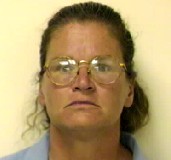
Debora Green
Murderer Megan Huntsman
Murderer · USA · 1996
Megan Huntsman was 40 at sentencing. She was a mother of three children who wer…
6 victims
Megan Huntsman
Murderer · USA · 1996
Megan Huntsman was 40 at sentencing. She was a mother of three children who wer…
6 victims
 Angela Johnson
Murderer · USA · 1993
Angela Jane Johnson was convicted in federal court of aiding and abetting the m…
5 victims
Angela Johnson
Murderer · USA · 1993
Angela Jane Johnson was convicted in federal court of aiding and abetting the m…
5 victims
 Catherine May Wood
Murderer · USA · 1987
Catherine May Wood was an American caregiver who worked at the Alpine Manor Nur…
5 victims
Catherine May Wood
Murderer · USA · 1987
Catherine May Wood was an American caregiver who worked at the Alpine Manor Nur…
5 victims
 Michele Kalina
Murderer · USA · 1996
Michele Kalina pleaded guilty to murder for one of five infants she initially w…
5 victims
Michele Kalina
Murderer · USA · 1996
Michele Kalina pleaded guilty to murder for one of five infants she initially w…
5 victims
 Amy Bishop
Murderer · USA · 1986
Amy Bishop — biology professor and perpetrator · James Anderson — Bishop’s husb…
4 victims
Amy Bishop
Murderer · USA · 1986
Amy Bishop — biology professor and perpetrator · James Anderson — Bishop’s husb…
4 victims
 Susan Eubanks
Murderer · USA · 1996
Susan Dianne Eubanks, also referred to as Susan Eubanks, was convicted by a jur…
4 victims
Susan Eubanks
Murderer · USA · 1996
Susan Dianne Eubanks, also referred to as Susan Eubanks, was convicted by a jur…
4 victims
 Ernesto Picchioni
Murderer · Italy · 1944
March 12, 1949 — He was sentenced to life in prison. · 2016 — The case record l…
16 victims
Ernesto Picchioni
Murderer · Italy · 1944
March 12, 1949 — He was sentenced to life in prison. · 2016 — The case record l…
16 victims
 Karl Denke
Serial killer · Germany · 1909
Karl Denke (August 12, 1870 – December 20, 1924) was a serial killer from Germa…
30 victims
Karl Denke
Serial killer · Germany · 1909
Karl Denke (August 12, 1870 – December 20, 1924) was a serial killer from Germa…
30 victims
 Raphael Leon Holiday
Murderer · USA · 2000
Raphael Leon Holiday (TDCJ Number 999419) was born on 07/20/1979 and was 22 whe…
3 victims
Raphael Leon Holiday
Murderer · USA · 2000
Raphael Leon Holiday (TDCJ Number 999419) was born on 07/20/1979 and was 22 whe…
3 victims
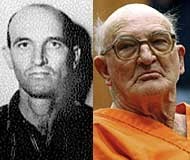 Edgar Ray Killen
Murderer · USA · 1964
Edgar Ray “Preacher” Killen (born 17 January 1925) was an American former Ku Kl…
3 victims
Edgar Ray Killen
Murderer · USA · 1964
Edgar Ray “Preacher” Killen (born 17 January 1925) was an American former Ku Kl…
3 victims
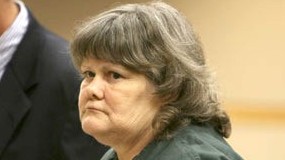 Barbara Burns
Murderer · USA · 2004
Name: Barbara Burns · Status: Plead guilty to manslaughter and receive 15 years…
1 victim
Barbara Burns
Murderer · USA · 2004
Name: Barbara Burns · Status: Plead guilty to manslaughter and receive 15 years…
1 victim
- Gender
- female
- Country
- USA
- Location
- Prairie Village, Johnson County, Kansas, USA
- Date of birth
- February 28, 1951
- Age at first offence
- 44
- Characteristics
- parricide, arson, poisoner
- Victim profile
- Two of her children, Kelly, 13, and Tim, 6
- Method of murder
- Fire (smoke inhalation)
- Date(s) of murder
- October 24, 1995
- Years active
- 1995
- Date of arrest
- November 22, 1995
- Status
-
Sentenced to two concurrent forty-year prison sentences on May 30, 1996, after pleading no contest on April 17, 1996
Case information
Debora Green (born Debora Jones, February 28, 1951) was an American physician. She pleaded no contest to setting a fire that burned down her family home and killed two of her children, and to poisoning her husband with ricin with the intention of causing his death.
Timeline
- February 28, 1951 — Debora Green was born as Debora Jones.
- October 24, 1995 — A fire destroyed the Prairie Village home of Debora Green and her estranged husband, killing Timothy and Kelly Farrar.
- November 22, 1995 — Debora Green was arrested in Kansas City, Missouri.
- April 17, 1996 — Debora Green appeared in court and pleaded no contest to five charges: two counts of capital murder, one of arson, and two of attempted first-degree murder.
- May 30, 1996 — Debora Green was sentenced to two concurrent forty-year prison sentences, minus the time she had already served.
- March 22, 2004 — Debora Green filed a motion to withdraw her plea as to all counts except the attempted first-degree murder of her husband.
- October 12, 2004 — The district court held a preliminary evidentiary hearing limited to whether the fire could not have been an arson fire.
- January 10, 2005 — The district court held a hearing on the motion to withdraw the plea.
- February 2005 — The district court denied the second request for a new trial.
- March 23, 2007 — The Kansas Supreme Court delivered its opinion affirming the denial of the motion to withdraw the plea.
Background
Debora Green was born in Illinois as the second of two daughters born to Joan and Bob Jones of Havana, Illinois. She attended the University of Illinois beginning in the fall of 1969 with a major in chemistry. She graduated in 1972 with a chemistry degree. She attended the University of Kansas School of Medicine from 1972 to 1975. She completed a residency in the Truman Medical Center Emergency Room.
Green dated Duane M. J. Green, an engineer, during her undergraduate and medical school careers, and married while studying at the University of Kansas. She later lived with Duane M. J. Green in Independence, Missouri while she finished her residency, but they separated and divorced by 1978. Green cited basic incompatibility as the reason for the divorce, later saying, "[...W]e had absolutely no common interests", and the divorce was described as friendly.
During the period when she and Duane M. J. Green were separated, Green met Michael Farrar, a student in his twenties who was completing his last year of medical school. The couple married on May 26, 1979. Green and Farrar had three children: Timothy, Kate, and Kelly, between 1982 and 1988.
Green and Farrar later had a tumultuous relationship and had an informal separation in 1994. During this separation, after a fire damaged the home Green and the children were living in, Green and Farrar reconciled. Farrar filed for divorce in July 1995. Green and Farrar’s marriage deteriorated further after that.
During the Peru trip in June 1995 sponsored by the Pembroke Hill School, Farrar met Margaret Hacker. Hacker was a registered nurse married to an anesthesiologist. Hacker and Farrar became friends on the trip and began a physical affair shortly after both families returned from Peru.
The offence
Fire at the Farrar-Green home
On October 24, 1995, the Farrar family home in Prairie Village, Kansas, occupied by Green and three of her children, caught fire. Kate Farrar and Debora Green escaped the home safely. Timothy and Kelly Farrar died in the blaze.
Fire investigators determined the cause of the fire was arson. Investigators found trails of accelerant in the house that led back to Green’s bedroom.
Poisoning of Michael Farrar with ricin
In the months prior to the fire, Farrar fell violently ill repeatedly in August and September 1995. He was hospitalized multiple times, including:
- hospitalization beginning August 18, 1995 with severe dehydration and high fever, with sepsis developed in the hospital
- release from the hospital on August 25, 1995, followed by renewed vomiting and diarrhea after a dinner Green served
- subsequent hospitalization after that relapse, with release on August 30, 1995
- another bout beginning September 4 after release on the second hospitalization, forcing him back into the hospital where he stayed until September 11
Farrar’s illness was not initially pinned down by doctors. Investigation later determined that the source of Farrar’s illness was ricin, described as a poison served to him in his food by Green.
Investigation
Arson investigation
The Eastern Kansas Multi-Agency Task Force conducted an arson investigation on October 24 on the ruined Prairie Village house. The task force included fire investigators and search teams, and it focused on determining the origin and cause of the fatal fire, searching through debris for usable evidence, and interviewing witnesses. A dog trained to detect the scent of fire accelerants assisted the investigators.
Arson investigators ruled out common causes of accidental fires, including electrical panels and furnaces. Pour patterns were found on the ground and second floors. Investigators found that a flammable liquid had been poured on multiple areas of the ground floor, blocking off the stairway from the second floor to the ground floor, and covering much of the hallway on the second floor. The pour patterns stopped at the door of the master bedroom but soaked into carpeting in the hallway leading to the children’s bedrooms.
Investigators were unable to determine the precise liquid used as an accelerant, but they proved that a can of gasoline stored in a shed had not been used. The amount of accelerant used was identified as "less than ten gallons and more than three gallons".
After determining the fire was arson, a second area task force focused on homicide investigation began on October 26, and on October 27 the district attorney for Johnson County was informed that the investigation was now criminal.
Poisoning investigation
Investigators traced the origin of castor beans after September 1995 domestic dispute events that had ended with Green being admitted to the hospital. The label on seed packets identified them as products of a chain of stores called Earl May, with contact information for an Earl May store in Olathe listed in Green’s address book.
Detectives contacted nearby Earl May stores to ask if employees recalled selling packets of castor beans. A clerk in Missouri reported speaking to a woman in September who requested ordering ten packets of out-of-season seeds for schoolwork, and the description corresponded to Green. The clerk tentatively identified Green in a photo line-up.
Register tapes in store records indicated a purchase corresponding to the amount the beans would have cost made on September 20 or 22. Records did not show earlier purchases that would have been necessary based on Farrar’s illness starting in the summer.
Farrar underwent surgery in November 1995 for ongoing health issues believed to be caused by poisoning. Before surgery, he submitted blood samples to Johnson County’s crime lab to be tested for ricin antibodies.
Arrest
Debora Green was arrested on November 22, 1995 in Kansas City, Missouri, shortly after dropping her daughter off for ballet practice.
Green was initially held in a Missouri jail and then extradited to the Johnson County Adult Detention Center in Kansas on $3,000,000 bond. This was described as the highest bail ever required by Johnson County at that time.
Green was charged with two counts of first-degree murder, two counts of attempted first-degree murder, and one count of aggravated arson. District Attorney Paul J. Morrison cited a "domestic situation" as motive for Green’s alleged crimes.
Trial and proceedings
Show cause hearing and pretrial events
A pretrial show cause hearing in the Green case began in January 1996 with Green represented by Dennis Moore and Kevin Moriarty.
Green’s defense claimed that the fire in the family home had been set not by Debora Green but by her son, Tim Farrar, who had once been caught by local police setting off Molotov cocktails. The defense also attempted to attribute Farrar’s poisoning to Tim, who did much of the cooking in the household.
Michael Farrar underwent surgery in December 1995 to treat an abscess in his brain caused by the poisoning. Prosecutors videotaped his testimony beforehand in case he did not survive. He then testified in person about Green’s problems with alcohol and the break-up of their marriage. Under cross-examination, he admitted he and Green had contributed to problems in the marriage, and that his relationship with his son had been so adversarial that it had sometimes come to blows.
Witnesses called by the State supported the earlier claims that police had been called to the home a month prior to the fire, that Green’s behavior had been a concern, and that Farrar had turned in seed packets containing castor beans. The Earl May store clerk who identified Green as the purchaser of multiple packets of castor bean seeds testified. Medical evidence was presented that Farrar’s illness matched the symptoms of ricin poisoning. An FBI criminologist testified about testing for ricin antibodies in Farrar’s blood approximately two months after Farrar’s last acute symptoms and found antibodies in large amounts. A police officer testified that as first responder to the fire scene, he found Kate Farrar "very frantic" but found Green showed little, if any, emotion or concern.
The defense argued that psychiatric medications Green had been on since her September hospitalization could cause blunted affect.
The State rested on January 31, 1996, and the defense rested on February 1. The presiding judge ruled probable cause was shown to hold Debora Green for trial and set her arraignment date for February 8, with trial projected to start in the summer.
Prosecutors resolved to ask for the death penalty when the case went to trial, citing that the alleged crime involved more than one victim. Faced with this possibility, Green’s defense team brought in Sean O’Brien, described as a representative of a Missouri anti-capital-punishment group. Legal maneuverings occurred in late winter and early spring of 1996, including requests related to barring cameras, which were rejected. Court-appointed psychologists judged Green competent to stand trial. The presiding judge ruled Green would stand trial once for all charges rather than separately for each charge.
Plea bargain and plea hearing
Green agreed to place an Alford plea of "no contest" to the charges against her. On April 13, the defense team notified Paul Morrison that Green wished to plea bargain.
On April 17, Green appeared in court to plead no contest to five charges: two counts of capital murder, one count of arson, and two counts of attempted first-degree murder. The plea was made public that date. In exchange for avoiding the death penalty, the no contest plea required Green to accept a prison sentence of a minimum of forty years without the possibility of parole. Green denied being under the influence of any drug that would affect her judgment or ability to understand the proceedings.
During the plea hearing, Green read a statement to the court. She stated:
"I am aware that the State can produce substantial evidence that I set the fire that caused the death of my children. My attorneys are ready willing and able to present evidence that I was not in control of myself when Tim and Kelly died. "However true that may be, defending myself at trial on these charges would only compound the suffering of my family and my daughter, Kate. I love my family very much. I never meant to harm my children but I accept the fact that I will be punished harshly. I believe that it is best to end this now so that we can begin to heal from our horrible loss."
Defense counsel Dennis Moore told reporters in a subsequent press conference:
"She is accepting responsibility for [the crimes]"
Moore also said:
"I don't think she ever intended to kill her children."
Sentencing
Green was sentenced on May 30, 1996 after testimony by the psychologist who adjudged her competency. Dr. Marilyn Hutchinson testified about Green’s immaturity and her lack of adult-level ability to cope with emotion.
Green read another statement to the court before sentencing. She was formally sentenced to two concurrent forty-year prison sentences, minus the one hundred ninety-one days she had already served.
Green was described as serving her sentence at the Topeka Correctional Facility. Kansas Department of Corrections records as of August 2012 showed her earliest possible release date as November 21, 2035.
Appeals
Motion to withdraw plea / new trial requests
After conviction, Green continued to stress that she had little or no memory of events the night of the fire. She wrote letters in the summer of 1996 to her daughter and to Michael Farrar, stating she had taken more than the recommended doses of her medications that night, and varying from claiming she had no memory of the night of the fire to remembering firmly that she was innocent of the arson.
Green petitioned for a new trial twice based on having been rendered incompetent for plea bargaining by psychiatric medications she was taking at the time of her hearings. Both motions were denied.
In 2000, represented by a new legal team, Green filed a request for a new trial based on alleged incompetence due to psychiatric medications and alleged that her original attorneys had not represented her adequately, focusing instead on avoiding a trial and the death penalty. She withdrew that request when informed prosecutors would seek the death penalty again.
After the Kansas Supreme Court ruled the state’s death penalty unconstitutional in 2004, Green filed a second request for a new trial, which was denied in February 2005.
Kansas Supreme Court appeal
Debora Green appealed the district court’s decision denying her motion to withdraw her no contest plea to two counts of capital murder, one count of attempted capital murder, and one count of aggravated arson.
In her motion filed March 22, 2004, she sought to withdraw her plea as to all counts except attempted first-degree murder of her husband, citing manifest injustice under K.S.A. 22-3210(d). She argued new advances in fire investigation science would have rendered the factual basis of the arson charge unreliable.
She argued that the fire investigation had relied on a 1992 manual, updated in 2001 and again in 2004, and she asserted the new version of NFPA 921 suggested factors relied upon by the task force might have been attributable to other phenomena. She argued:
- the fire’s "multiple points of origin" could be explained as "falldown"
- "pour patterns," low burn patterns, and speed and intensity could be explained by "flashover" rather than accelerant
- isoparaffins could have innocently appeared in debris because they were now associated with many commonplace household products
The district court limited the plea withdrawal proceeding to evidence that "this could not have been an arson fire." The hearing on the motion was held on January 10, 2005.
In the Kansas Supreme Court decision, the court held that the district court did not abuse its discretion in denying the motion to withdraw the plea, and affirmed. The opinion was filed March 23, 2007.
The court’s syllabus included these holdings:
- When no sentence of death is imposed, an appellate court is not required to review the factual basis for a defendant's plea of guilty or nolo contendere under a heightened reliability standard.
- Under K.S.A. 2006 Supp. 22-3210(d), a district judge may permit a defendant to withdraw a plea after sentencing to correct manifest injustice.
- Denying a motion to withdraw a plea after sentencing lies within the discretion of the district court, and an appellate court will not disturb it absent an abuse of discretion; the defendant bears the burden.
- In evaluating a post-sentencing motion, the court should consider whether the defendant was represented by competent counsel; whether the defendant was misled, coerced, mistreated, or unfairly taken advantage of; and whether the plea was fairly and understandingly made.
- If new evidence disproves an element of a crime, then the factual basis for a guilty or nolo contendere plea is undermined; withdrawal may be permitted because it corrects manifest injustice and comports with due process.
- Under the facts of this case, the district court did not abuse its discretion in denying the defendant’s motion to withdraw her guilty plea.
Outcome
Debora Green pleaded no contest on April 17, 1996 and was sentenced on May 30, 1996 to two concurrent forty-year prison sentences. Her motion to withdraw her plea was denied, and the Kansas Supreme Court affirmed the denial.
Aftermath and related publications
The crime writer Ann Rule covered the case in her book Bitter Harvest: A Woman's Fury, a Mother's Sacrifice. A May 1996 issue of Redbook featured an essay by Ann Slegman about her personal history with Green, the fire, and the investigation, ending with:
"It is also possible that an entirely different personality—disassociated from the Debora I knew—committed this crime.[...] The Debora I knew would not have killed her children."
A true-crime documentary program, Deadly Women, featured Green’s case in a 2010 episode about women who kill their children.

Spotted an error, or have more information about this case?