
Irina Gaidamachuk
Serial killer Tamara Samsonova
Serial killer · Russia · 1995
Tamara Samsonova (Russian: Тамара Самсонова; born 5 February 1947) was a Russia…
11 victims
Tamara Samsonova
Serial killer · Russia · 1995
Tamara Samsonova (Russian: Тамара Самсонова; born 5 February 1947) was a Russia…
11 victims
 Alexander Pichushkin
Serial killer · Russia · 1992
Alexander Yuryevich “Sasha” Pichushkin (Russian: Алекса́ндр Ю́рьевич Пичу́шкин,…
49 victims
Alexander Pichushkin
Serial killer · Russia · 1992
Alexander Yuryevich “Sasha” Pichushkin (Russian: Алекса́ндр Ю́рьевич Пичу́шкин,…
49 victims
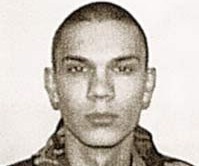 Artur Ryno
Serial killer · Russia · 2006
Artur Ryno led a skinhead gang described as the “Ryno skinhead gang” (also desc…
37 victims
Artur Ryno
Serial killer · Russia · 2006
Artur Ryno led a skinhead gang described as the “Ryno skinhead gang” (also desc…
37 victims
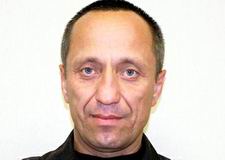 Mikhail Popkov
Serial killer · Russia · 1992
Mikhail Viktorovich Popkov (Russian: Михаил Викторович Попков; born March 7, 19…
29 victims
Mikhail Popkov
Serial killer · Russia · 1992
Mikhail Viktorovich Popkov (Russian: Михаил Викторович Попков; born March 7, 19…
29 victims
 Maxim Petrov
Serial killer · Russia · 1999
Maxim Vladimirovich Petrov (born 1966) (Russian: Максим Петров) was a Russian d…
19 victims
Maxim Petrov
Serial killer · Russia · 1999
Maxim Vladimirovich Petrov (born 1966) (Russian: Максим Петров) was a Russian d…
19 victims
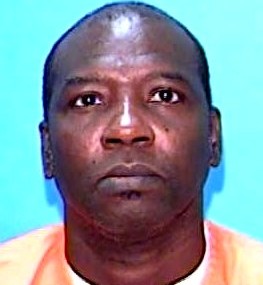 William Reaves
Murderer · USA · 1986
Name: William Reaves · Date of birth: 12/30/48 · Jurisdiction: Nineteenth Judic…
1 victim
William Reaves
Murderer · USA · 1986
Name: William Reaves · Date of birth: 12/30/48 · Jurisdiction: Nineteenth Judic…
1 victim
 Carl Henry Blue
Murderer · USA · 1994
Carl Henry Blue was sentenced to death for capital murder involving Carmen Rich…
1 victim
Carl Henry Blue
Murderer · USA · 1994
Carl Henry Blue was sentenced to death for capital murder involving Carmen Rich…
1 victim
 Gustavo Pissardo
Mass murderer · Brazil · 1994
Gustavo Pissardo (Flávio Craveiro) was sentenced to 63 years in prison in April…
5 victims
Gustavo Pissardo
Mass murderer · Brazil · 1994
Gustavo Pissardo (Flávio Craveiro) was sentenced to 63 years in prison in April…
5 victims
 Judy Kirby
Mass murderer · USA · 2000
Judy Kirby was found guilty of murder for intentionally causing a head-on crash…
7 victims
Judy Kirby
Mass murderer · USA · 2000
Judy Kirby was found guilty of murder for intentionally causing a head-on crash…
7 victims
 Lester Kills On Top
Murderer · USA · 1987
Lester Kills On Top No A027079 was incarcerated at Montana State Prison in Deer…
1 victim
Lester Kills On Top
Murderer · USA · 1987
Lester Kills On Top No A027079 was incarcerated at Montana State Prison in Deer…
1 victim
- Gender
- female
- Country
- Russia
- Location
- Krasnoufimsk, Sverdlovsk Oblast, Russia
- Date of birth
- 1972
- Age at first offence
- 30
- Characteristics
- alcohol, abuse, serial rapist
- Victim profile
- Women aged between 61 and 89
- Method of murder
- Beating with an axe or hammer
- Date(s) of murder
- 2002 - 2010
- Years active
- 2002–2010
- Date of arrest
- June 2010
- Status
-
Imprisoned
Sentenced to 20 years in prison on June 12, 2012
Case record: Irina Gaidamachuk
Background
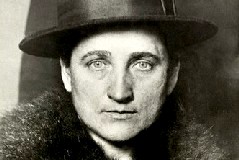
Irina Viktorovna Gaidamachuk (Russian: Ирина Викторовна Гайдамачук) was born in 1972. She was a Russian serial killer who killed 17 elderly women between 2002 and 2010.
Gaidamachuk became addicted to alcohol at a young age. Her parents were deprived of parental authority after she became addicted to alcohol. She moved to Krasnoufimsk in the early 1990s, where she met a man and later had two children with him.
Her husband, Yuri, reportedly refused to provide Gaidamachuk with money because he feared she would spend it on alcohol. Another account described her as not wanting to work and committing the crimes because she “did not want to work.” In relation to motive, she said she carried out her crimes for money and for “vodka.” She said she did not want to be caught.
The offence
Gaidamachuk’s murders mostly took place in Krasnoufimsk. Similar crimes were committed in Yekaterinburg, Serov, Achit and Druzhinino.
The first murder was said to be in 2003, and she was not detained until June 2010. A series of murders was described as beginning in June 2002 in the town of Krasnoufimsk and later spreading to the rest of the Sverdlovsk region.
Police described her method as gaining entry by posing as a social worker. She knocked on victims’ doors saying she was a social worker, and victims let her into their flats. Once inside, she attacked the women with an axe or hammer, and then searched their flats and robbed them of cash.
Forensic and investigation accounts described that investigators found out the murderer preferred to number victims and that the victims’ number was written on the walls of the entrance of their house.
In some cases, Gaidamachuk attempted to cover her traces by setting the flats on fire, leaving an iron on, or opening a gas tap. It was said that fires were kept under control by the vigilance of neighbours. For her final victim, she was described as posing as a decorator rather than a social worker.
In one description of her last victim, she offered to redecorate Alexandra Povaritsyna’s flat. After she bludgeoned the pensioner to death, neighbours gave a description of the painter and police arrested her.
The youngest victim was said to be 61 and the oldest 89. Another account said victims were between 61 and 86, and that she targeted lonely women aged 61 to 89.
Only one woman was described as surviving: Bilbinur Makshaeva, an elderly pensioner. The survivor was described as telling police that the killer had posed as a social worker to gain access to her flat.
Investigation
Investigators initially searched for a disguised man and believed that the killer might be male. Investigators were described as checking blond women in the region after learning that the killer was a woman with blond hair. Investigators also sought help from psychics.
After the lone survivor’s account, police still considered it possible the killer was a man dressed as a woman. After another murder in May 2010, police found Gaidamachuk while she was restoring a flat of one of the victims. She had no passport or official job, and after a long process of questioning she confessed.
Investigation steps included:
- police followed up descriptions from neighbours of the bogus tradeswoman;
- investigators questioned more than 3,000 people before she was caught;
- more than 2,000 forensic examinations were conducted;
- psychiatric tests ruled that she was mentally competent;
- her confession to the indictment was said to have been made during preliminary investigation, and she contested it throughout her trial;
- her fingerprints matched prints left at several murder scenes;
- in an investigative experiment, she was said to have pointed out exact addresses where the crimes took place and described the situation including details;
- a handwriting test helped identify the murderer after she left notes including: “Be home at 11.00, a social worker will visit.”
In one account, investigators found that Gaidamachuk decided she would never be caught, started searching for victims among people she knew, and began leaving notes. The account also said she started leaving notes: “Be home at 11.00, a social worker will visit.”
A court case was described as involving 436 charges.
During the investigation, an innocent woman was arrested and confessed after pressure from authorities. Another woman, Marina Valeeva, was initially suspected for the crimes. After pressure from authorities, Valeeva initially confessed to the murders of Gaidamachuk’s elderly victims. A later account described that police arrested the wrong woman, Irina Valeyeva, and extracted a confession from an entirely innocent person. The age of Irina Valeyeva was stated as 29.
One account described a police source as saying:
“We believed at first that only a man could be so cruel as to slaughter in this way.”
Another account attributed to investigator Kirill Melenkov:
“At some point, Gaidamachuk decided she would never be caught, and started searching for victims among the people she knew. Her last victim hired her to make repairs. That’s how we managed to find the killer. She also started leaving notes, ‘Be home at 11.00, a social worker will visit.’ A simple handwriting test helped identify the murderer.”
A spokesman for investigators described her confession as follows:
“The detainee has confessed to the murders,” Alexander Shulga, a spokesman for the investigators working on the case told the daily Rossiiskaya Gazeta newspaper. “The proof of her guilt is that during an investigative experiment she pointed out the exact addresses where the crimes took place and described the situation including all the details. In addition, her fingerprints matched the prints left at several murder scenes.”
Arrest
Gaidamachuk was found after another murder in May 2010 while she was restoring a flat of one of the victims. After a long process of questioning, she confessed.
Trial
Gaidamachuk was charged with 17 counts of murders and 1 attempted murder. In February 2012, the court case began.
Forensic psychiatric examination conducted in GNTSSSP Serbsky showed that Gaidamachuk, although she showed some variation in the mind, was legally sane. In addition, evidence from psychiatrists at trial was described as showing she was sane when she committed her murders.
Gaidamachuk gave a confession to the indictment during preliminary investigation but contested it throughout her trial.
In hearings, an Ekaterinburg city court was described as starting hearings on the case of 40-year old Irina Gaidamachuk, who was accused of murdering 17 pensioners.
Sentencing
On June 12, 2012, Gaidamachuk was sentenced to 20 years in prison.
One account stated that a judge exempted her for five years of the maximum 25 years “because she is a mother.” Her lawyer, Suren Sarkisyan, demanded greater leniency and vowed to appeal the sentence.
Another account stated that she was sent to prison for twenty years and that she killed seventeen elderly women so she could rob them. It also stated that she must pay expenses for her prosecution.
She was described as being 40 when she was sentenced, and another account described her as 41-year-old at the time the trial was covered.
Appeals
Her lawyer, Suren Sarkisyan, demanded greater leniency and vowed to appeal the sentence.
Outcome
Gaidamachuk was sentenced to 20 years in prison on June 12, 2012.
Aftermath
Statements were attributed to her husband, Yury, and to other people related to her victims and to Gaidamachuk’s acquaintances.
Gaidamachuk’s husband, Yury, said:
“I lived with her for 14 years but never suspected anything.”
In a separate account, Yury was also described as saying:
A friend was quoted as saying:
“I simply cannot believe Irina is a mass murderer. She was a kind and gentle mother, always eager to help.”
A relative of her elderly victims expressed outrage at the sentence and said:
“It’s little more than one year for each murder. She never deserves to be freed.”
Gaidamachuk was described as known as an ordinary mother who helped out at her younger daughter Anastasia’s school. She had two children.
Timeline
- June 2002 — A series of murders started in Krasnoufimsk and later spread to the rest of the Sverdlovsk region.
- 2003 — The first murder was described as occurring.
- 2005 — Investigators believed the killer was a disguised man and searched including by checking blond women.
- May 2010 — Investigators found Gaidamachuk while she was restoring a flat of one of the victims, after another murder.
- June 2010 — She was not detained until June 2010.
- October 29, 2011 — Gaidamachuk confessed to murdering seventeen female pensioners for cash, and she was awaiting trial.
- February 13, 2012 — Ekaterinburg city court started hearings on the case.
- February 2012 — The court case began.
- June 12, 2012 — Gaidamachuk was sentenced to 20 years in prison.
Other details
Gaidamachuk was dubbed “Satan in a Skirt” and described in coverage as Russia’s worst woman serial killer for murdering 17 pensioners. She was also described as an alcoholic killer.
She was described as claiming:
“I did it for money. I just wanted to be a normal mum, but I had a craving for drink. “My husband Yury wouldn’t give me money for vodka.”
She was described as robbing victims of sums as little as the equivalent of £20, and another account stated her hauls varied from the equivalent of just £20 to £330, with a total around £1,000.
Multiple towns and regions were linked to the crimes: Krasnoufimsk, Yekaterinburg, Serov, Achit and Druzhinino, within the Urals region and the Sverdlovsk region.
One account described police as searching for the criminal in various ways including checking all blond women and seeking help of psychics, but receiving no results.
The investigation was described as troubled by the gender of the perpetrator and by the possibility that the killer was a man dressed as a woman until a woman survived.
Expenses for prosecution were mentioned.
Her husband, Yury, was said to have begun a new relationship and to have moved in with a new partner.

Spotted an error, or have more information about this case?