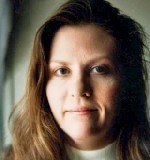
Kristen Gilbert
Serial killer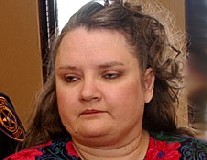 Vickie Dawn Jackson
Serial killer · USA · 2000
Vickie Dawn Jackson was a former nurse who received a life sentence after plead…
10 victims
Vickie Dawn Jackson
Serial killer · USA · 2000
Vickie Dawn Jackson was a former nurse who received a life sentence after plead…
10 victims
 Aileen Wuornos
Serial killer · USA · 1989
Aileen Carol Wuornos was an American serial killer who killed seven men in Flor…
7 victims
Aileen Wuornos
Serial killer · USA · 1989
Aileen Carol Wuornos was an American serial killer who killed seven men in Flor…
7 victims
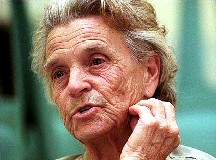 Faye Copeland
Serial killer · USA · 1986
Faye Della Copeland was born in 1921 and died on December 30, 2003. She was des…
5 victims
Faye Copeland
Serial killer · USA · 1986
Faye Della Copeland was born in 1921 and died on December 30, 2003. She was des…
5 victims
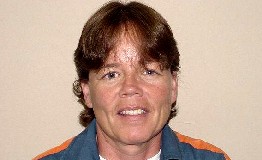 Gwendolyn Graham
Serial killer · USA · 1987
Gwendolyn Graham worked as a nurse’s aide at the Alpine Manor Nursing Home in W…
5 victims
Gwendolyn Graham
Serial killer · USA · 1987
Gwendolyn Graham worked as a nurse’s aide at the Alpine Manor Nursing Home in W…
5 victims
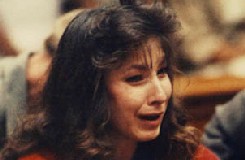 Cynthia Coffman
Serial killer · USA · 1986
Name: Cynthia Coffman · Race: White · Date of birth: 1962 · Age at crime: 24 ·…
4 victims
Cynthia Coffman
Serial killer · USA · 1986
Name: Cynthia Coffman · Race: White · Date of birth: 1962 · Age at crime: 24 ·…
4 victims
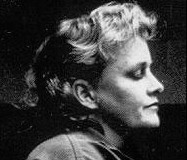 Dana Sue Gray
Serial killer · USA · 1994
Dana Sue Gray (born December 6, 1957) was an American serial killer who murdere…
3 victims
Dana Sue Gray
Serial killer · USA · 1994
Dana Sue Gray (born December 6, 1957) was an American serial killer who murdere…
3 victims
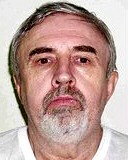 James Bryant Hudson
Murderer · USA · 2002
James Bryant Hudson was 57 at the time of execution and was pronounced dead at…
3 victims
James Bryant Hudson
Murderer · USA · 2002
James Bryant Hudson was 57 at the time of execution and was pronounced dead at…
3 victims
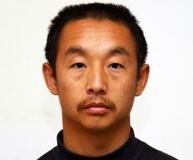 Zhao Zhihong
Serial killer · China · 1996
Zhao Zhihong received a death sentence in February 2015 for crimes including ra…
10 victims
Zhao Zhihong
Serial killer · China · 1996
Zhao Zhihong received a death sentence in February 2015 for crimes including ra…
10 victims
 Jack Owen Spillman
Murderer · USA · 1994
Jack Owen Spillman III was known as “The Werewolf Butcher.” Crimes evidence dev…
3 victims
Jack Owen Spillman
Murderer · USA · 1994
Jack Owen Spillman III was known as “The Werewolf Butcher.” Crimes evidence dev…
3 victims
 Dennis Wayne Bagwell
Mass murderer · USA · 1995
Dennis Wayne Bagwell was executed by lethal injection in Texas on February 17,…
5 victims
Dennis Wayne Bagwell
Mass murderer · USA · 1995
Dennis Wayne Bagwell was executed by lethal injection in Texas on February 17,…
5 victims
 Matthew Marshall
Murderer · USA · 1988
Matthew Marshall was identified in the case as: Florida Supreme Court opinion 7…
1 victim
Matthew Marshall
Murderer · USA · 1988
Matthew Marshall was identified in the case as: Florida Supreme Court opinion 7…
1 victim
 William Wyatt
Murderer · USA · 1997
William Wyatt was a Black, male corrections officer who was scheduled to be exe…
1 victim
William Wyatt
Murderer · USA · 1997
William Wyatt was a Black, male corrections officer who was scheduled to be exe…
1 victim
- Gender
- female
- Country
- USA
- Location
- Northampton, Hampshire County, Massachusetts , USA
- Date of birth
- November 13, 1967
- Age at first offence
- 28
- Characteristics
- angel of death, nurse
- Victim profile
- Stanley Jagodowski, 66 / Henry Hudon, 35 / Kenneth Cutting, 41 / Edward Skwira, 69 (hospitalized veterans)
- Method of murder
- Poisoning ( injecting them with overdoses of epinephrine )
- Date(s) of murder
- 1995 - 1996
- Years active
- 1995–1996
- Date of arrest
- July 11, 1996
- Status
-
Life imprisonment
Sentenced to four consecutive life terms without the possibility of parole, plus 20 years on March 27, 2001
Background
Kristen Gilbert (born November 13, 1967 as Kristen Strickland in Fall River, Massachusetts) was an American serial killer who was convicted for three first-degree murders, one second-degree murder, and two attempted murders of patients admitted for care at the Veterans Affairs Medical Center (VAMC) in Northampton, Massachusetts. She was described as a nurse at the Veterans Affairs Medical Center in Northampton.
As a child, Kristen Strickland exhibited a high scholastic aptitude. During her teen years, friends and family noticed that she had become a habitual liar and was prone to neurotic behavior. She graduated from high school at age sixteen. She graduated from Greenfield Community College and received licensure as a registered nurse in 1988. Later that year, she married Glenn Gilbert. In 1989, she joined the staff of the VAMC in Northampton. She was featured in the magazine VA Practitioner in April 1990.
Other nurses noticed a high number of deaths on Gilbert's watch and jokingly called her the "Angel of Death." Multiple accounts described her as killing patients by injecting them with epinephrine, causing them to have heart attacks. Authorities said autopsies showed that the victims died of epinephrine poisoning, not heart attacks as originally thought.
The offence
Kristen Gilbert injected patients admitted for care at the Veterans Affairs Medical Center in Northampton with epinephrine, a heart stimulant also described as adrenaline. Prosecutors said the murders were committed in connection with deaths of especially vulnerable patients and involved substantial planning and use of her position of trust and specialized knowledge as a nurse.
The convictions involved:
- First-degree murder in the deaths of three veterans.
- Second-degree murder in the death of a fourth veteran.
- Attempted murder in the attempted killing of two other veterans/patients.
Prosecutors said the case involved a pattern of medical emergencies on Gilbert’s ward, with an unusually high number of cardiac arrest deaths while she was on duty. Prosecutors said she tried to cover her tracks by falsifying medical reports. They also said she confessed to the murders to a hospital security guard (James Perrault) and to an estranged husband.
Prosecutors characterized the murders as serial killings using epinephrine overdoses, described as the “perfect poison” during closing arguments.
Investigation
Authorities and federal investigators said that from January 1995 until February 1996, a total of 37 patients died on Gilbert's ward while she was on duty.
In 1996, three nurses reported their concern about an increase in cardiac arrest deaths and a decrease in the supply of epinephrine; an investigation ensued. During the investigation, Gilbert telephoned in a bomb threat to attempt to derail the investigation. She was later sentenced for phoning the bomb threats to the hospital.
Staff at the Northampton VAMC speculated on possible motives, including that she might have been attempting to demonstrate her nursing skills by creating emergency situations, given that many patients survived despite unusual numbers of cardiac arrests during the time in question. Others claimed she used emergency situations to gain attention from James Perrault, a VA police officer/hospital security guard who later had an affair with her. VA hospital rules required that hospital police be present at any medical emergency, and hospital staff members speculated that Gilbert may have been responsible for eighty or more deaths and over three hundred medical emergencies.
Arrest and pre-trial status
Gilbert was in federal custody held without bail since the original indictment was filed late the year prior to the May 1999 reporting. She pleaded innocent at the time of at least one set of charges.
A prior bomb threat conviction led to a 15-month prison sentence in April 1998.
People involved
Kristen Gilbert
Kristen Gilbert was the defendant and a former veterans hospital nurse.
Glenn Gilbert
Glenn Gilbert was her husband at the time she married her in 1988. Prosecutors also said she confessed to an estranged husband.
James Perrault
James Perrault was a VA police officer/hospital security guard. Prosecutors asserted Gilbert wanted attention from him. Perrault testified against Gilbert and said she confessed at least one murder to him.
Victims named in the case
Gilbert was accused and convicted in connection with the following victims (patients/veterans):
- Henry Hudon, 35 (killed in 1995).
- Kenneth Cutting, 41.
- Edward Skwira, 69.
- Stanley Jagodowski (also spelled Jagodowski/Jagodowski in the material), 66.
Gilbert was also charged with attempted murder involving:
- Francis Marier.
- Angelo Vella.
- Thomas Callaghan.
Additional named individuals
- Assistant U.S. Attorney William M. Welch II / William Welch was a prosecutor who argued for the death penalty and was quoted in multiple passages.
- U.S. Attorney Donald Stern / Donald K. Stern was quoted regarding charges and seeking the death penalty.
- Defense counsel David P. Hoose was quoted regarding the defense.
- Defense attorney Paul Weinberg was quoted in defense arguments.
- Defense attorney David Hoose also said Gilbert was falsely accused by co-workers upset about an extramarital affair.
- Defense attorney David Hoose said “Where there is life there is hope” and “We will appeal. We will continue to fight.”
- Ariane Vuono was quoted making a statement to jurors during closing arguments.
- Judge Michael Ponsor was quoted in connection with formalizing the jury’s recommendation and sentencing.
The record also included family member quotes:
- Claire Jagadowski, whose brother Henry Hudon was killed in 1995.
- Stanley Jagadowski, 66-year-old (victim referenced in a statement to the judge).
- Gilbert’s father, Richard Strickland.
- Gilbert’s grandmothers (plural referenced as having pleaded with jurors).
Timeline
- April 1990 — Kristen Gilbert was featured in the magazine VA Practitioner.
- 1988 — Kristen Strickland received licensure as a registered nurse and later married Glenn Gilbert.
- 1989 — Kristen Gilbert joined the staff of the VAMC in Northampton.
- Fall 1989 — A multi-agency investigation said 37 deaths occurred in her ward during times she was on duty from the fall of 1989 onward.
- December 1995 — An incident occurred involving attempted murder of Francis Marier, injected with epinephrine and insulin on Dec. 20, 1995.
- February 2, 1996 — Prosecutors said Gilbert asked a supervisor if she could leave work early if a very ill patient died; Kenneth Cutting died 40 minutes later.
- August 21, 1995 — Prosecutors said Gilbert administered a lethal dose of epinephrine to Stanley Jagodowski.
- August 22, 1995 — Stanley Jagodowski died the following day.
- 1995 — Henry Hudon was killed in 1995.
- March 1996 — The record referenced that she served 15 months for bomb threats after coming under suspicion (with the bomb threat occurring in 1996).
- 1996 — Three nurses reported their concern about an increase in cardiac arrest deaths and a decrease in the supply of epinephrine, leading to an investigation; Gilbert telephoned in a bomb threat to attempt to derail the investigation.
- 1996 — Gilbert threatened to bomb the VA hospital and later served 15 months for that bomb threat conviction.
- March 14, 2001 — Gilbert was convicted in federal court.
- May 14, 1999 — Federal prosecutors announced a fourth murder charge and that they would seek the death penalty.
- May 15, 1999 — Federal prosecutors announced they would seek the death penalty.
- May 25, 1999 — Reporting stated Gilbert was charged with capital murder and that prosecutors would seek the death penalty.
- November 13, 1967 — Kristen Gilbert was born as Kristen Strickland in Fall River, Massachusetts.
- March 27, 2001 — A federal judge formalized the jury’s recommendation and sentenced Gilbert to four consecutive life terms without the possibility of parole, plus 20 years.
Trial
Gilbert's trial involved jury selection and opening statements. The record said opening statements were given in November and that her trial began with jury selection last October.
Prosecutors sought the death penalty based on the federal capital murder charges. The material stated that prosecutors argued Gilbert confessed to the murders to both Perrault and her estranged husband, while defense attorneys attacked the confessions, saying she made them while hospitalized and suffering from stress. Defense attorneys said the evidence was circumstantial and argued that the deaths were due to natural causes.
Closing arguments
During closing arguments, Assistant U.S. Attorney Ariane Vuono told jurors:
"These seven victims were veterans," Assistant U.S. Attorney Ariane Vuono told jurors. "They were vulnerable. They were the perfect victims. When Kristen Gilbert killed them, she used the perfect poison."
Defense statements and remarks
Defense attorney Paul Weinberg said:
"It is easier to incite good and decent people to kill when their target is not human but a demon," defense attorney Paul Weinberg said. "Kristen Gilbert is not a monster, she is a human being."
Defense attorney David P. Hoose said:
"I don't know what caused her to break down and spiral to the depths of where she is today," Hoose said. "I don't know that anyone could tell you the answer to that."
Defense attorney David Hoose also said:
"This defendant did not snap," he said. "People do not snap for a period of seven months when they kill four human beings."
The record also included a defense argument quoted as:
"She was scorned by her peers and her co-workers," defense attorney David Hoose told the jury. "You must understand how rumors about what was going on in Kristen Gilbert's life affected, colored and tainted everyone's opinions of what was going on in Ward C."
Another defense quote presented in the material was:
''Kristen Gilbert Is Not a Monster' Defense attorneys said a life term in prison was a punishment harsh enough for a young woman convicted on evidence they said was nothing more than circumstantial. They had argued that the deaths were due to natural causes. "It is easier to incite good and decent people to kill when their target is not human but a demon," defense attorney Paul Weinberg said. "Kristen Gilbert is not a monster, she is a human being."''
In addition, the material included an earlier defense quote:
Defense attorneys said a life term in prison was a punishment harsh enough for a young woman convicted on evidence they said was only circumstantial. They had argued that the deaths were due to natural causes.
Sentencing
On March 27, 2001, U.S. District Judge Michael Ponsor formalized the jury’s recommendation and sentenced Gilbert.
Sentence imposed
She was sentenced to:
- Four consecutive life terms without the possibility of parole.
- Two 20-year terms for trying to kill two other veterans.
- Additional “lesser charges” were referenced, and the status field stated “plus 20 years.”
The material stated that Ponsor could not overrule the jury to impose the death penalty, and that jurors deliberated for less than six hours Friday and Monday on whether to impose death.
Victim relatives and courtroom statements
Before formal sentencing, the judge allowed some relatives of the victims a last chance to speak. Claire Jagadowski told the judge of the loss of her husband, 66-year-old Stanley Jagadowski:
''I still listen for his key in the door. Now I have to face old age alone.''
The material stated that Gilbert declined an opportunity to address the judge and wept softly when the jury’s decision was read.
Richard Strickland, Gilbert’s father, was quoted:
''It's a very bittersweet day when you think your daughter is going to get life imprisonment instead of the death penalty,'' said Gilbert's father, Richard Strickland.
Assistant U.S. Attorney William Welch was quoted calling Gilbert a:
''shell of a human being''
Welch was also quoted in relation to the cold and calculating way she murdered her victims, injecting them with overdoses of epinephrine (adrenaline) causing hearts to race out of control.
Appeals
Defense counsel David Hoose said:
"We will appeal. We will continue to fight."
The record also stated that Gilbert dropped her federal appeal for a new trial after a recent U.S. Supreme Court ruling that would have allowed prosecutors to pursue the death penalty upon retrial.
Outcome
Gilbert was convicted on March 14, 2001 in federal court of:
- Trying to kill two other veterans.
The jury recommendation resulted in life imprisonment without parole rather than death. On March 27, 2001, the court sentenced her to four consecutive life terms without the possibility of parole plus 20 years.
Aftermath
Gilbert was transferred from a federal prison for women in Framingham, MA, to a federal prison in Texas, where she remained ever since. She was serving her sentence at Carswell Federal Medical Center in Fort Worth, Texas.
The record also stated that Gilbert was the subject of a book titled Perfect Poison by Connecticut author M. William Phelps.
Additional contextual statements in the material included that only two women had been executed by the federal government in the past century and that there was no state death penalty in Massachusetts, but federal eligibility applied because the crimes took place on federal property at the Veterans Affairs Medical Center in Northampton.

Spotted an error, or have more information about this case?